
Time constraints often make it difficult to stay current with every television series. Zentara.blog provides recaps of major plot points, including spoilers, to ensure you remain updated or are prepared for an upcoming season.
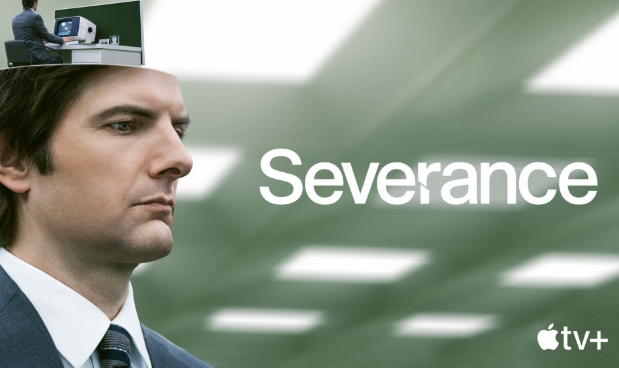
Apple TV+’s Severance, directed by Ben Stiller and Aoife McArdle, emerged as one of the most intellectually stimulating and visually distinct dramas of the early 2020s. Centered on the chillingly sterile offices of Lumon Industries, the series explores the concept of “severance”—a surgical procedure that bifurcates a person’s memories between their work and personal lives. The result is two distinct consciousnesses: the “Innie,” who only exists within the office walls, and the “Outie,” who lives in the outside world with no knowledge of their professional labor. Season 1 serves as a masterclass in world-building and slow-burn tension, utilizing a mid-century modern aesthetic to mask a deeper, more insidious corporate conspiracy. Critically acclaimed for its sharp commentary on late-stage capitalism, grief, and the ethics of technology, the show resonated deeply with an audience increasingly disillusioned by the modern workplace. Led by a career-best performance from Adam Scott, the first season moves from the mundane routine of “Macrodata Refinement” to a high-stakes psychological thriller, culminating in one of the most breathless cliffhangers in television history. This recap explores the narrative machinery that turned Lumon Industries into a house of horrors.
1. Petey’s Reintegration and the Catalyst for Doubt
The season begins with Mark S. being promoted to Department Head after his best friend and colleague, Petey, is abruptly terminated. However, Mark’s “Outie” is soon approached by a disheveled man claiming to be Petey, who has undergone “reintegration”—a supposedly impossible procedure to merge his two consciousnesses. Petey provides Mark with a cryptic map of Lumon’s basement and hints at the horrors occurring on the severed floor. Petey’s motivation is driven by a desperate need for wholeness and a desire to expose Lumon’s abuses, even at the cost of his own health. His subsequent death from “reintegration sickness” serves as the primary inciting incident for Mark’s Outie to begin questioning his reality. The long-term consequence of Petey’s sacrifice is the introduction of the “reintegration” possibility, which shatters the illusion of Lumon’s omnipotence and sets Mark on a collision course with the company’s leadership. It establishes that the barrier between Innie and Outie is not as impenetrable as the corporation claims.
2. Helly R.’s Arrival and the Failure of Resignation
The introduction of Helly R. as Petey’s replacement provides the audience with a surrogate for the horror of being “born” into a windowless office. Helly’s Innie immediately rejects her environment, attempting to quit multiple times and even resorting to self-harm and a suicide attempt in the elevator to send a message to her Outie. Her motivation is the purest form of survival instinct; she views her existence as a literal prison sentence. However, her Outie’s cold, recorded refusal to let her quit reveals a disturbing lack of empathy from the “outside” self. This conflict highlights the season’s central philosophical question: is an Innie a person with rights, or merely a tool? The consequence of Helly’s failed rebellion is her radicalization. Instead of seeking escape through legal means, she begins to lead the MDR (Macrodata Refinement) team toward a full-scale internal revolt, transforming her from a victim into a revolutionary leader within the office.
3. The Discovery of Ricken’s Book “The You You Are”
In a stroke of narrative irony, a book titled The You You Are, written by Mark’s pretentious brother-in-law Ricken, is accidentally left on the severed floor. While the “Outie” world views Ricken’s writing as shallow pseudo-philosophy, the “Innies”—who have no access to literature or external ideas—treat it as a revolutionary manifesto. Mark’s Innie reads the book in secret, finding profound meaning in its simple platitudes about individuality and resisting authority. His motivation to rebel is nurtured by these “radical” ideas, proving that in a vacuum of information, even the simplest suggestion of autonomy is dangerous. The long-term consequence of the book’s presence is the intellectual awakening of the MDR team. It provides them with the vocabulary to question their “handbook” and the cult-like worship of Lumon’s founder, Kier Eagan, shifting the power dynamic from corporate dogma to individual thought.
4. Irving and Burt: The Breaking of Departmental Segregation
Irving, the most loyal and dogmatic member of the MDR team, finds his faith in Lumon shaken when he forms a deep emotional connection with Burt, the head of Optics and Design (O&D). Lumon intentionally keeps departments isolated through myths of violent rivalries, but Irving and Burt’s burgeoning romance defies these protocols. Their motivation is a basic human need for connection and intimacy in a sterile environment designed to prevent both. When Burt is “retired” (his Innie effectively killed), Irving’s grief turns into rage. This relationship is crucial because it dismantles the departmental tribalism Lumon uses to control its workers. The consequence is Irving’s complete disillusionment; his transition from the “company man” to a key strategist in the rebellion is fueled by the loss of Burt, proving that love is a more potent motivator than the fear of the “Break Room.”
5. The Reveal of Mrs. Selvig as Harmony Cobel
Throughout the season, Mark’s neighbor, the eccentric Mrs. Selvig, is revealed to be his boss, Harmony Cobel, in disguise. Cobel’s Outie life is entirely dedicated to monitoring Mark, even going so far as to infiltrate his family life and lactation-consult for his sister. Her motivation is not merely corporate oversight but an obsessive, almost religious fascination with “reintegration.” She wants to see if Mark’s Innie and Outie can recognize each other or bridge the gap through grief. This reveals that Lumon’s management is not just cold and bureaucratic, but prone to its own rogue obsessions. The long-term consequence is the blurring of the “safe” line between Mark’s home and work lives. It also leads to Cobel’s eventual firing by the Board, which ironically makes her more dangerous as she no longer operates within the company’s official constraints, yet remains fiercely loyal to its founder’s legacy.
6. The “Break Room” and the Mechanics of Corporate Torture
The “Break Room” is revealed not as a place of rest, but as a site of psychological torture where Innies are forced to read a “compunction statement” thousands of times until they “mean it.” Helly and Mark are both subjected to this, highlighting the sheer cruelty of Lumon’s disciplinary measures. The motivation for Lumon is total psychological submission; they require not just obedience, but the total erosion of the Innie’s will. This milestone serves to raise the stakes of the series, moving it firmly into the realm of psychological horror. The long-term consequence is the collective trauma of the MDR team, which ultimately binds them together. The shared experience of the Break Room serves as the “fire” that forges their resolve to utilize the “Overtime Contingency,” realizing that no punishment for rebellion could be worse than the “peace” Lumon demands.
7. Dylan’s Awakening and the Overtime Contingency (OTC)
Dylan G., initially the most cynical and “perk-focused” member of the team, undergoes a radical shift after being “woken up” in his Outie’s home by supervisor Milchick using the Overtime Contingency. During this brief moment, Dylan sees that he has a son. His motivation shifts from earning “waffle parties” to a desperate, paternal need to know his child. This revelation is the turning point for the MDR team’s plan; Dylan agrees to stay behind and manually hold the switches that will wake up Mark, Irving, and Helly in the outside world. The consequence of this act is Dylan’s transformation into the team’s martyr. His physical and mental endurance during the finale is the only reason the truth is allowed to surface, and it positions him as the most vulnerable member of the team heading into the second season.
8. The Reveal of Ms. Casey as Gemma
In one of the season’s most heartbreaking twists, it is revealed that Ms. Casey, the soft-spoken wellness counselor, is actually Mark’s wife, Gemma, who supposedly died in a car accident. Mark’s motivation for undergoing severance was to escape the grief of her death for eight hours a day. The discovery that Lumon has “stolen” her body or faked her death to use her as a permanent Innie (a “Part-Time” employee) adds a layer of gothic horror to the corporate conspiracy. The consequence of this reveal is the total destruction of the “work-life balance” argument. It proves that Lumon is not just managing labor, but harvesting lives. This discovery becomes the ultimate weapon for Mark’s Innie, as his final act in the season is to find a way to tell his Outie that “she’s alive,” effectively ending his Outie’s peace and beginning his war.
9. Helly Eagan: The Ultimate Identity Crisis
As the Innies wake up in the outside world during the finale, Helly discovers she is actually Helena Eagan, the daughter of the current Lumon CEO and the heir to the Eagan empire. Her “Outie” motivation for undergoing severance was a PR stunt to prove the procedure is safe and “voluntary.” This creates a devastating irony: Helly’s greatest oppressor is herself. The long-term consequence for the franchise is a massive shift in the political landscape of the show. Helly’s Innie uses her moment on stage at a Lumon gala to tell the truth about the torture on the severed floor, effectively committing career (and potentially literal) suicide for her Outie. This sets up a massive internal conflict for the Eagan family and places Helly at the epicenter of the public debate over severance.
10. The Finale: The Overtime Switch and the Scream
The season culminates in a high-tension sequence where the Innies inhabit their Outie bodies for several minutes. Irving discovers Burt is already in a relationship; Helly sabotages the gala; and Mark discovers the truth about his wife while navigating a party at Ricken’s house. The motivation for this “jailbreak” is the collective desire for truth and the hope of destroying Lumon from the outside. The consequence is a total collapse of the status quo. As Milchick tackles Dylan and the switches are released, the Innies are yanked back into the darkness, but not before the “Outie” world—and specifically Mark’s sister, Devon—is alerted to the reality of their suffering. The season ends with the world forever changed, the bridge between the two halves of the self finally crossed, albeit briefly.
Conclusion
Severance Season 1 is a profound exploration of the parts of ourselves we try to hide and the systems that profit from our fragmentation. By the end of the ten-episode run, the MDR team has evolved from isolated workers into a unified front of resistance. The show’s narrative legacy is its ability to turn the mundane “office space” into a site of existential rebellion, leaving viewers with a haunting question about their own autonomy. As the characters’ two worlds collide, the series prepares for a second season where the boundary of the “severed floor” is no longer a shield, but a battlefield.
- From – Season 1 Full Recap and Spoilers Explained

- Stranger Things – Season 5 Full Recap and Spoilers Explained

- Stranger Things – Season 4 Full Recap and Spoilers Explained

- Stranger Things – Season 3 Full Recap and Spoilers Explained

- Stranger Things – Season 2 Full Recap and Spoilers Explained





3 responses to “SEVERANCE – Full Story Recap – Season 1”
[…] SEVERANCE – Full Story Recap – Season 1 […]
[…] SEVERANCE – Full Story Recap – Season 1 […]
[…] SEVERANCE – Full Story Recap – Season 1 […]