
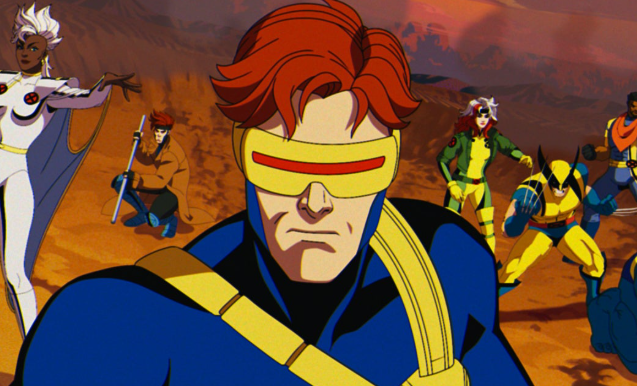
Time constraints often make it difficult to stay current with every television series. Zentara.blog provides recaps of major plot points, including spoilers, to ensure you remain updated or are prepared for an upcoming season.
The second season of X-Men: The Animated Series, which aired throughout 1993 and early 1994, solidified the show’s reputation as a pioneer of serialized storytelling in Western animation. Following the blockbuster success of the first season, the creators shifted focus from the broad, socio-political struggles of the “Mutant Registration Act” to a more personal, psychologically driven narrative. Season 2 is characterized by its exploration of the X-Men’s individual histories, the introduction of more complex antagonists like Mister Sinister, and the psychological trauma of its protagonists. The season famously centers on the “resurrection” of Morph and the genetic obsession of the Nasty Boys’ master, Mister Sinister. Critical reception remained high, as the show continued to balance high-octane action with sophisticated themes like genetic ethics, the weight of the past, and the fragility of mental health. This season also leaned more heavily into science fiction tropes, including time travel and inter-dimensional travel, without losing the grounded, emotional core that made the X-Men relatable to millions. It effectively expanded the Marvel Animated Universe, introducing teams like Alpha Flight and deeper lore surrounding the Thieves and Assassins guilds.
1. The Return of Morph and the Introduction of Mister Sinister
The season kicks off with the wedding of Scott Summers and Jean Grey, which is violently interrupted by the Nasty Boys. The biggest shock, however, is the reveal that Morph—previously thought dead—has been resurrected by the enigmatic Mister Sinister. Morph, now mentally unstable and physically scarred, acts as a double agent to dismantle the X-Men from within.
Morph’s motivation is driven by a deep-seated feeling of abandonment; Sinister convinced him that the X-Men left him to die in the Sentinel raid. His descent into madness and his eventual path to redemption are heartbreaking, portraying the toll of manipulation. Mister Sinister, on the other hand, is motivated by a cold, clinical obsession with the Summers-Grey bloodline, believing their genetic potential is the key to his own evolutionary goals. The long-term consequence of this arc was the introduction of a new kind of villain—one who doesn’t want to rule the world or kill mutants, but rather “farm” them for genetic material. It also left the X-Men with a permanent sense of vulnerability, knowing that even their closest friends could be turned against them.
2. The Failed Nuptials of Scott and Jean
The “Till Death Do Us Part” arc serves as a narrative anchor for the season. The wedding was intended to be a symbol of hope—a sign that mutants could have normal, happy lives. Instead, the kidnapping of Jean Grey by Sinister and the emotional sabotage by Morph turned the celebration into a nightmare that haunted Scott for the remainder of the season.
Scott’s motivation throughout this ordeal is a mixture of protective fury and crippling guilt, as he blames himself for both Morph’s “death” and Jean’s capture. Jean’s motivation focuses on psychic resilience; even while being held captive in the Nasty Boys’ lair, she attempts to reach out to Morph’s original personality. The consequence of the wedding’s failure was the postponement of the team’s personal happiness, reinforcing the theme that being an X-Man requires a total sacrifice of a “normal” life. It also set the stage for the Savage Land finale, as the search for Jean and the pursuit of Sinister became the primary driving force for the team’s strategic decisions.
3. The Resurrection of Omega Red and Soviet Ghosts
In “Red Dawn,” the series explores the geopolitical remnants of the Cold War. Radical Russian loyalists resurrect Omega Red, a Soviet super-soldier, in an attempt to restore the Soviet Union. Colossus returns to Russia to find his home in ruins, eventually teaming up with the X-Men to stop the “Death-Factor” wielding monster.
Omega Red is motivated by a nihilistic desire for survival and power; his “Carbonadium” coils require him to drain the life force of others to maintain his own. Colossus is motivated by a deep sense of patriotism and familial duty, representing the “heart” of the mutant struggle outside of America. The long-term consequence of this episode was the expansion of the show’s world-building, proving that the mutant struggle and the abuse of power were global issues. It also showcased the dangers of weaponizing mutants for nationalistic agendas, a theme that would recur with the introduction of other government-sanctioned mutant programs in later seasons.
4. Gambit and the Conflict of the Guilds
“X-Ternally Yours” delves into Gambit’s mysterious past in New Orleans. The episode explores the ancient conflict between the Thieves Guild and the Assassins Guild, and the “Tithe” they must pay to an external power known as the X-Ternal to maintain their peace and prosperity.
Gambit’s motivation is rooted in redemption and loyalty to his family, specifically his brother Bobby. He is forced to choose between his life as an X-Man and his heritage as a thief. This episode humanized the “Ragin’ Cajun,” showing that his flirtatious exterior was a mask for a man burdened by ancestral debt. The consequence of this storyline was the solidification of Gambit’s place on the team; by choosing to return to the X-Men, he proved that his loyalty was no longer for sale. It also introduced the concept of hidden mutant societies that exist outside of the Xavier/Magneto dichotomy, further enriching the show’s lore.
5. Time Fugitives: The Apocalypse Virus
In a complex two-part time-travel narrative, Bishop returns from the future to prevent a plague that decimates the mutant population. Meanwhile, Cable travels back from an even further future to ensure the virus is released, as its existence is necessary to create the antibodies that allow mutantkind to survive in his own timeline.
Bishop is motivated by the immediate salvation of his era, while Cable is motivated by the “greater good” of the far future. This conflict highlights the moral ambiguity of time travel. The true villain is Apocalypse, who uses the Graymalkin vessel to engineer the virus. The long-term consequence of this arc was the introduction of the techno-organic virus, a plot point that would have massive ramifications for Cable’s character and the future of the X-Men. It also established Cable as a more prominent, albeit grittier, hero who was willing to commit questionable acts to preserve the timeline, providing a sharp contrast to Xavier’s pacifism.
6. A Rogue’s Tale: The Ghost of Carol Danvers
Season 2 provides a definitive origin story for Rogue in “A Rogue’s Tale.” The episode explains how Rogue gained her permanent super-strength and flight by absorbing the powers—and the consciousness—of Ms. Marvel (Carol Danvers), leaving the latter in a permanent coma.
Rogue is motivated by a desperate need for forgiveness and a fear of losing her own mind to the “ghost” of Carol Danvers living inside her head. Mystique’s motivation is shown to be a warped form of maternal love; she recruited Rogue into the Brotherhood of Evil Mutants as a teenager, manipulating her into the act that ruined two lives. The consequence of this episode was a profound deepening of Rogue’s character. It shifted her from a “powerhouse” to a tragic figure living with the constant psychic echo of her greatest sin. This development made her eventual quest for a “cure” in other seasons much more poignant and understandable to the audience.
7. The Shadow King and Storm’s Heritage
In “Whatever It Takes,” the Shadow King escapes the Astral Plane by possessing a young boy named Mjnari in Mount Kilimanjaro, Africa. Storm must return to her homeland to confront her past and the entity that Professor Xavier originally defeated years prior.
Storm’s motivation is deeply personal; Mjnari is her godson, and she feels a spiritual responsibility to protect her people. The Shadow King is motivated by pure malice and a desire to feed on human suffering. The consequence of this battle was the reinforcement of Storm’s status as a “Goddess” and a leader. It also emphasized the spiritual and mystical side of the X-Men universe, moving away from pure genetic science. This arc proved that the X-Men’s influence and responsibilities extended far beyond the borders of the United States, cementing Storm’s role as the team’s most globally-minded member.
8. Wolverine and the Vengeance of Alpha Flight
The episode “Repo” brings Wolverine’s past with the Canadian government to the forefront. The Canadian superhero team, Alpha Flight, is sent to “repossess” Logan, claiming he is government property due to his history with Department H and the Weapon X program.
Alpha Flight’s motivation (specifically Vindicator’s) is a mix of nationalistic duty and a personal sense of betrayal over Logan leaving the team. Wolverine’s motivation is his fierce desire for autonomy; he refuses to be anyone’s weapon or property. The long-term consequence of this encounter was the revelation of the “Weapon X” mystery, which would become a recurring theme for the rest of the series. It also portrayed the X-Men’s status as a family; when Wolverine was captured, the team didn’t hesitate to invade a foreign country to save him, showing that their bonds were stronger than any government contract.
9. Beauty and the Beast: The Friends of Humanity
While the season featured many cosmic and genetic threats, “Beauty & the Beast” focused on the grounded horror of bigotry. Beast falls in love with a blind girl, Carly, whose father is a member of the anti-mutant hate group, the Friends of Humanity (FOH), led by Graydon Creed.
Beast’s motivation is the simple human desire for companionship and to be seen for his soul rather than his blue fur. The FOH’s motivation is pure, unadulterated hate fueled by the insecurity of Graydon Creed (who is later revealed to be the son of Sabretooth). The consequence of this episode was a stark reminder that even without Sentinels or Sinister, the X-Men lived in a world that fundamentally hated them. It provided a showcase for Beast’s gentleness and intellectualism, while also setting up the “Graydon Creed” subplot that would eventually reveal the secret parentage of several major characters.
10. The Savage Land Reunion: The Fall of Sinister
The season concludes in the Savage Land, a prehistoric jungle hidden in Antarctica. Mister Sinister has used a machine to nullify the X-Men’s powers, capturing them for his genetic experiments. Magneto, also trapped and depowered, is forced to team up with the X-Men to stop Sinister and his Mutates.
Sinister’s motivation reaches its peak here: he wants to use the X-Men’s DNA to create a master race under his control. The X-Men and Magneto are motivated by pure survival. The climax features a redeemed Morph returning to help his friends, ultimately shattering Sinister into pieces. The long-term consequence of the finale was the temporary defeat of Sinister and the psychological healing of Morph, who leaves the team to find himself. It also showed a rare moment of unity between Xavier and Magneto, suggesting that in the face of true “evil” like Sinister, their ideological differences could be set aside for the preservation of their species.
Conclusion
Season 2 of X-Men: The Animated Series successfully avoided the “sophomore slump” by pivoting from political drama to personal mythology. By focusing on the backstories of Rogue, Gambit, and Wolverine, the show built a deeper emotional connection with its audience. The introduction of Mister Sinister provided a terrifying new type of villain—the intellectual predator—while the return of Morph added a layer of tragedy that lasted the entire season. The narrative legacy of Season 2 is its insistence that the “X-Gene” was not just a source of power, but a source of profound personal struggle, setting the stage for the even more ambitious “Phoenix Saga” that would follow.




3 responses to “X-Men: The Animated Series 1993 – Full Story Recap – Season 2”
[…] X-Men: The Animated Series 1993 – Full Story Recap – Season 2 […]
[…] X-Men: The Animated Series 1993 – Full Story Recap – Season 2 […]
[…] X-Men: The Animated Series 1993 – Full Story Recap – Season 2 […]