
¡Ándale! ¡Ándale! 10 Surprising Facts About Speedy Gonzales That Redefine the Animation Icon
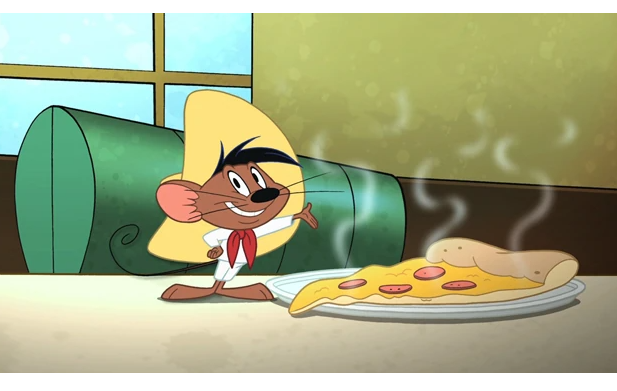
In the colorful pantheon of Looney Tunes legends, few characters move with the sheer velocity and wit of Speedy Gonzales. Known as “The Fastest Mouse in all of Mexico,” Speedy is a whirlwind of yellow felt, a giant sombrero, and a signature red neckerchief. While other characters like Bugs Bunny use high-concept trickery and Daffy Duck relies on manic energy, Speedy’s brilliance lies in his simplicity: he is faster, smarter, and more compassionate than any “gringo pussycat” who dares to stand in his way.
Emerging during the golden age of American animation, Speedy Gonzales quickly became a cultural touchstone. He wasn’t just a gimmick; he was a hero to the underdog. In an era where many animated characters were defined by their flaws or their greed, Speedy was often depicted as a selfless protector of his community, running circles around antagonists to secure food and safety for his fellow mice. However, the history of this lightning-fast rodent is far more complex than his simple catchphrases suggest. From radical visual redesigns to international controversies and Academy Award victories, the story of Speedy Gonzales is a fascinating window into the evolution of animation and cultural perception.
Whether you grew up cheering as he outran Sylvester or you are curious about the legacy of this controversial yet beloved figure, these ten facts provide a comprehensive look at the mouse who truly is “the fastest of them all.”
1. The Unrecognizable Debut in “Cat-Tails for Two”
Most fans would not recognize the original version of Speedy Gonzales. His first appearance was in a 1953 short titled Cat-Tails for Two, directed by Robert McKimson. In this debut, Speedy looked significantly different from the iconic design we know today. He was scrawny, rat-like, and wore a simple red t-shirt rather than his signature white outfit and sombrero. He also lacked the charming, heroic personality that would later define him, acting more like a mischievous pest.
This early version of the character was a prototype. While the core concept of a fast Mexican mouse was there, the visual appeal and the “hero of the people” archetype hadn’t yet been developed. It wasn’t until a few years later that the creative team at Warner Bros. realized the character had the potential to be a headliner. This original appearance serves as a fascinating piece of animation history, showing how even the most legendary characters often require a “rough draft” before they find the look and spirit that resonates with a global audience.
2. The Friz Freleng Redesign That Created an Icon
The Speedy Gonzales we know and love—the one with the massive yellow sombrero and the white “charro” inspired suit—was the brainchild of director Friz Freleng and layout artist Hawley Pratt. In 1955, they took the scrawny mouse from McKimson’s short and completely overhauled his appearance. They gave him a larger head, more expressive eyes, and the iconic outfit that transformed him from a generic rodent into a culturally specific folk hero.
Freleng’s redesign was instrumental in making Speedy a star. The new look communicated authority and confidence despite his small size. The giant hat became a comedic tool, often staying in place even as Speedy blurred across the screen at Mach speeds. This version of the character was also given a moral compass; he was no longer just running for his own benefit, but often acted as a provider for his hungry friends. This shift from “pest” to “protector” was what allowed Speedy to graduate from a one-off character to a recurring lead in the Looney Tunes library.
3. The Vocal Genius of Mel Blanc
No discussion of a Looney Tunes character is complete without mentioning the “Man of a Thousand Voices,” Mel Blanc. To bring Speedy to life, Blanc developed a high-pitched, energetic accent that matched the character’s physical speed. The challenge for Blanc was maintaining the clarity of the dialogue while speaking at an incredibly rapid-fire pace. He infused Speedy with a sense of joy and bravado, using the famous “¡Ándale! ¡Ándale! ¡Arriba! ¡Arriba! ¡Epa! ¡Epa!” to punctuate the character’s bursts of movement.
Blanc’s performance was more than just a funny voice; it was a rhythmic instrument. The timing of the catchphrases had to be perfect to sync with the frantic animation. While Blanc provided the voices for almost all the major Warner Bros. characters, his work on Speedy was unique because of the linguistic blend and the sheer optimism he projected. Even in moments of danger, Blanc’s Speedy sounded like he was having the time of his life, which made the audience feel like the outcome was never in doubt.
4. An Academy Award-Winning Introduction
When the redesigned Speedy Gonzales debuted in the self-titled 1955 short Speedy Gonzales, the impact was immediate and profound. The film, which pitted Speedy against Sylvester the Cat for the first time, was a masterpiece of comedic timing and animation. It followed a group of mice trying to bypass a guarded cheese factory, with Speedy acting as the only one fast enough to retrieve the “gold.” The short was so well-received that it won the Academy Award for Best Animated Short Subject.
Winning an Oscar solidified Speedy’s place in the upper echelon of cartoon stardom. It was a rare feat for a character’s “re-introduction” to be honored with the industry’s highest award. This victory encouraged Warner Bros. to produce a long-running series of shorts featuring the character, often pairing him with Sylvester. The Oscar win also proved that the audience was hungry for a new kind of hero—one who used intelligence and agility to overcome brute force and traditional barriers.
5. The Introduction of Slowpoke Rodriguez
In the world of Looney Tunes, every character needs a foil, and for Speedy, the writers created the perfect contrast: his cousin, Slowpoke Rodriguez. Introduced in the 1959 short Mexicali Shmoes, Slowpoke was billed as “the slowest mouse in all of Mexico.” While Speedy was a blur of motion, Slowpoke moved at a glacial pace, often speaking in a drawl that mirrored his physical lethargy.
However, the genius of the character was that while he was slow of foot, he was incredibly “fast” of mind. Slowpoke often carried a firearm (which he used with expert precision) or possessed hypnotic powers that allowed him to defeat enemies without moving an inch. The dynamic between the two cousins was a clever play on expectations; the fastest mouse in Mexico often had to save the slowest, only to find out that the slowest was more than capable of taking care of himself. Slowpoke remains a cult favorite among fans for providing a dry, understated humor that perfectly balanced Speedy’s high-octane energy.
6. The Great “Banning” Controversy and the Return
In the late 1990s and early 2000s, Speedy Gonzales became the center of a significant cultural debate. Fearing that the character’s portrayal was based on harmful stereotypes, some networks and executives decided to pull Speedy’s shorts from the airwaves. For a time, the fastest mouse in Mexico was effectively retired, relegated to the vaults because of concerns over how he represented Mexican culture to a modern audience.
However, a surprising thing happened: the very community the networks were trying to “protect” voiced their outrage. Groups like the League of United Latin American Citizens (LULAC) campaigned for the character’s return, stating that they viewed Speedy as a positive, clever, and heroic figure who always outsmarted his adversaries. To the Latino community, Speedy wasn’t a stereotype; he was a champion. Due to this massive fan support and organized pressure, the “ban” was lifted, and Speedy returned to television, proving that the character’s popularity was rooted in genuine affection and cultural pride.
7. Sylvester the Cat: The Ultimate Rivalry
While Bugs Bunny had Elmer Fudd and Wile E. Coyote had the Road Runner, Speedy Gonzales’ most consistent and hilarious rival was Sylvester the Cat. The “pussycat vs. mouse” trope was a staple of animation, but the dynamic between these two was unique. Sylvester was often depicted as a bumbling, hungry guard or a desperate hunter, while Speedy treated their encounters like a game.
The comedy in their rivalry came from the sheer impossibility of Sylvester’s task. Because Speedy was so much faster, the animators could play with “spatial comedy”—Speedy would be on one side of the screen, and before Sylvester could blink, Speedy would be behind him, tying his tail in knots. Unlike his encounters with Tweety Bird, where Sylvester often felt like a victim of bad luck, his encounters with Speedy highlighted his physical inferiority. This rivalry produced some of the most technically impressive animation of the 1950s and 60s, as the “smear” frames used to depict Speedy’s speed pushed the boundaries of the medium.
8. The “¡Ándale! ¡Arriba!” Origins and Cultural Rhythm
The catchphrases of Speedy Gonzales are among the most recognizable in the world. “¡Ándale! ¡Arriba! ¡Arriba! ¡Epa! ¡Epa!” isn’t just a collection of words; it’s a rhythmic chant that sets the pace for the character’s action. “Ándale” roughly translates to “go on” or “hurry up,” while “Arriba” means “up” or “upward.” These phrases were chosen for their percussive sounds, which allowed Mel Blanc to create a vocal “engine” for the character.
These phrases have since permeated global pop culture, used as shorthand for speed, enthusiasm, or a call to action. Interestingly, the specific combination of these words became so synonymous with Speedy that they are often used in parodies or homages to the character. The linguistic choice reinforced his identity as a Mexican character while providing a phonetic energy that transcended language barriers. Even if a viewer didn’t speak a word of Spanish, they understood the intent behind the words: something exciting was about to happen very, very quickly.
9. A Global Symbol of the Underdog
One of the most important things to know about Speedy Gonzales is his role as a symbol for the marginalized. In many of his classic shorts, the plot involves a group of mice who are being exploited or kept away from resources (usually cheese) by a larger, more powerful entity (usually a cat or a human). Speedy is the only one who has the courage and the capability to challenge the status quo.
This theme of “social justice” on a micro-scale is why the character has remained popular for decades. He represents the idea that no matter how small you are or where you come from, you can win if you are clever and fast enough. Speedy doesn’t just defeat his enemies; he embarrasses them, stripping away their power through wit and agility. This universal “David vs. Goliath” narrative is at the heart of Speedy’s enduring appeal, making him a hero not just in Mexico, but to anyone who has ever felt like the little guy fighting against the odds.
10. The Pat Boone Song and Pop Culture Crossover
In 1961, the character’s popularity reached a fever pitch, crossing over from the movie theater to the radio charts. Singer Pat Boone released a song titled “Speedy Gonzales,” which featured Mel Blanc providing the character’s voice for the backing track. The song was a massive international hit, reaching the top of the charts in several countries and further cementing the mouse’s status as a household name.
The song’s success illustrated just how deeply Speedy had penetrated the public consciousness. He wasn’t just a cartoon character anymore; he was a brand. The track blended pop sensibilities with the character’s signature catchphrases, creating a catchy, albeit era-specific, tribute to the fastest mouse in Mexico. While the song is a product of its time, its existence proves that Speedy was one of the few animated characters of the mid-20th century to achieve true “multimedia” stardom, influencing music, fashion, and language long after his original theatrical run ended.
Further Reading
- Warner Bros. Animation Art: The Characters, the Creators, the Limited Editions – Jerry Beck and Will Friedwald
- The 50 Greatest Cartoons: As Selected by 1,000 Animation Professionals – Jerry Beck
- That’s Not All Folks: My Life in Cartoons – Mel Blanc
- Friz Freleng and the Looney Tunes Mastery – Various Authors
- 10 Things You Should Know About Foghorn Leghorn – Looney Tunes
- 10 Futurama TV SHOW Facts That Still Hold Up
- 10 Things You Should Know About Speedy Gonzales – Looney Tunes
- 10 Things You Should Know About Yosemite Sam – Looney Tunes
- 10 Things You Should Know About The Looney Tunes
- 10 Things You Should Know About Road Runner – Looney Tunes
- 10 Things You Should Know About Wile E. Coyote – Looney Tunes
- 10 Things You Should Know About Tweety Pie – Looney Tunes
- 10 Things You Should Know About Sylvester The Cat – Looney Tunes
- 10 Things You Should Know About Porky Pig – Looney Tunes



