
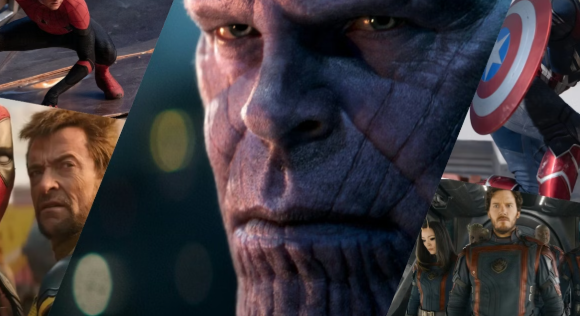
The Marvel Cinematic Universe (MCU) is a monumental achievement in serialized storytelling, a sprawling epic that has reshaped how we experience cinema. What began as a risky gamble with a secondary character has evolved into a multi-layered tapestry of interconnected films, television series, and specials. To truly understand the narrative depth of this universe, one must look at its structure—the “Phases” that define its growth. These phases aren’t just blocks of time; they are thematic chapters that evolve from grounded heroics to cosmic wars and, eventually, the shattering of reality itself.
Understanding the progression from the “Infinity Saga” to the “Multiverse Saga” is essential for any fan. It allows you to see the blueprints of how a shared universe is built, how stakes are escalated, and how legacy is passed from one generation to the next. This guide serves as your comprehensive field manual, breaking down the first five phases of the MCU into ten critical pillars of storytelling.
The 10 Defining Pillars of MCU Phases 1-5
1. Phase One: The Birth of the Shared Universe Model
Phase One is the foundation upon which everything else stands. Its primary mission was to introduce the world to individual icons—the billionaire, the soldier, the god, and the monster—before attempting the unprecedented feat of bringing them together. This era is characterized by “origin stories” that felt distinct in tone. We saw a high-tech industrial thriller, a Shakespearean cosmic drama, and a gritty World War II period piece. The brilliance of Phase One lay in its patience; it didn’t rush the team-up. Instead, it focused on making us care about the heroes as individuals first.
The connective tissue was subtle: a mysterious director in a trench coat, a glowing cube of immense power, and the mention of a secret government agency. This phase proved that audiences were willing to follow a serialized narrative across different films, provided the characters were grounded in relatable human struggles. By the time the first major crossover occurred, the “Marvel Formula” had been perfected: a blend of high-stakes action, irreverent humor, and deep emotional resonance. This era established the “shared universe” as the new gold standard for blockbuster filmmaking.
2. The First Assembly: A Proof of Narrative Concept
The conclusion of Phase One was a cinematic event that changed the industry forever. The first time the “core six” heroes stood in a circle in the middle of a devastated city remains the definitive milestone of the MCU. This point in the timeline wasn’t just about a battle; it was about the collision of worlds. It proved that a technology-based hero could fight alongside a mythological deity and a super-soldier without the story losing its internal logic. The “Battle of New York” became the historical anchor for the entire universe, a moment that every future story would reference as the day the world changed.
This assembly also introduced the first hint of a much larger cosmic threat. While the heroes were busy fighting an alien army, the audience was given a glimpse of the “Mad Titan” pulling the strings from the shadows. This set the stage for a decade of storytelling. It taught viewers to stay through the credits and to look for the tiny clues that would pay off years later. The success of this first team-up gave the studio the creative freedom to take bigger risks in the phases to come, moving from grounded heroics into the truly bizarre and cosmic.
3. Phase Two: The Burden of the Hero and Cosmic Expansion
Once the team was established, Phase Two moved into a more introspective and expansive territory. The central theme of this era was “the cost of heroism.” We saw the billionaire inventor struggling with post-traumatic stress, the super-soldier uncovering a deep-seated conspiracy within his own government, and the god of thunder dealing with ancient, dark magic. This phase also took the massive risk of leaving Earth behind entirely, introducing a group of interstellar outlaws who proved that the MCU could thrive even without its most famous faces.
The expansion into the “Cosmic Frontier” was a pivotal moment. It introduced the concept of the “Nine Realms” more deeply and gave us our first clear look at the Infinity Stones—artifacts of unimaginable power. Phase Two also emphasized the theme of family, whether it was the biological family of a king or the “found family” of a group of galaxy-saving misfits. By the end of this phase, the universe had grown significantly more complex, and the technology of Earth was beginning to merge with the magic of the stars, setting the stage for the ideological fractures that would follow.
4. The Rise of Artificial Intelligence and Internal Fractures
A major turning point in Phase Two was the creation of a sentient, villainous artificial intelligence born from the heroes’ own fears and hubris. This story served as a warning about the dangers of unchecked power and the desire to “put a suit of armor around the world.” It introduced the idea that the greatest threat to the Avengers might not be an alien invasion, but their own differing philosophies on how to protect the planet. This conflict led to the introduction of several key new heroes, including a powerful sorceress and an advanced synthetic being.
The fallout of this event was immediate. It left the heroes divided and the world’s governments wary of “enhanced individuals.” This era also introduced the concept of the “micro-verse,” showing that adventure could be found in the subatomic world just as easily as in deep space. The contrast between the massive, city-levelling battles and the small-scale, personal heist stories during this phase demonstrated the MCU’s incredible range. It proved that the universe could support many different genres—from political thrillers to comedy-heists—all while moving toward the same ultimate destination.
5. Phase Three: Global Conflict and the End of Innocence
Phase Three is widely considered the peak of the “Infinity Saga.” This was the longest phase to date, and it was defined by a sense of escalating consequences. It began with an ideological civil war that physically and emotionally shattered the hero community. This division was crucial because it meant that when the ultimate cosmic threat finally arrived, the world’s protectors were at their most vulnerable. This era also introduced heavy-hitters like the Sorcerer Supreme and the King of a hidden, technologically advanced African nation.
The storytelling in Phase Three was relentless. It balanced deeply personal stories about identity and legacy with massive, reality-shattering stakes. We saw the introduction of a teenage hero from New York who brought a sense of youthful wonder back to the universe, as well as the arrival of a cosmic powerhouse who had been missing for decades. The phase was built on the idea that everything—every stone, every hero, every choice—was leading to one final confrontation. It was the era where the “Infinity Stones” moved from being Easter eggs to being the central focus of the entire narrative.
6. The Infinity War: A Universal Catastrophe
The climax of the Infinity Saga was a two-part event that served as the ultimate payoff for over twenty films. For the first time, the “villain” was the protagonist of the story, and his success led to a catastrophe that affected every single living being in the universe. The “Decimation” was a narrative masterstroke that fundamentally changed the MCU timeline. It took the concept of “losing” and made it permanent for a period of five years, allowing the characters—and the audience—to sit with the grief and the consequences of failure.
This era showcased the sheer scale of the MCU’s planning. Characters from every corner of the universe—from the streets of Queens to the far reaches of the galaxy—finally met and fought side-by-side. The resolution of this conflict required a “Time Heist” through the history of the previous films, rewarding long-time viewers for their investment. It was a celebration of everything that had come before, ending with the retirement or sacrifice of the universe’s founding icons. This point in the release order served as a “Series Finale” for the first decade of stories while simultaneously planting the seeds for what would come next.
7. Phase Four: The Dawn of the Multiverse Saga
After the world-shattering events of the Infinity Saga, Phase Four entered a period of transition. This was the first phase to officially integrate long-form television series into the main narrative. The theme of this era was “processing trauma.” The stories focused on how the survivors of the universal conflict coped with their grief and how new heroes emerged to fill the void. This phase also introduced the concept of the “Multiverse”—the idea that our reality is just one of an infinite number of branching timelines.
Phase Four was significantly more experimental than its predecessors. It utilized different formats, including television specials and animated series, to tell more diverse and specialized stories. We were introduced to new cultures, new mythologies, and a “darker” side of the universe involving monsters and the supernatural. The “rules” of reality began to break down, with sorcery and multiversal travel becoming more common. This era was about expansion and exploration, asking the question: “What happens when the boundaries of the universe are removed?”
8. The Intersection of Cinema and Streaming
The integration of Disney+ series changed how fans consumed the MCU during Phase Four and beyond. These shows allowed for “deep dives” into characters who were previously sidelined in the movies. We saw a master archer train a successor, a former sidekick become a symbol of a nation, and a reality-warping sorceress confront her own grief in a suburban nightmare. This transition meant that the MCU was no longer just a movie franchise; it was a constant, year-round story.
This “transmedia” approach required more from the audience but offered greater rewards. A plot point introduced in a streaming series would often become a major factor in the next theatrical release. This created a level of interconnectedness that was previously impossible. It also allowed the MCU to tackle social issues and personal identity in a way that felt more nuanced and character-driven. The “streaming era” made the universe feel more “lived-in,” showing the day-to-day life of a world where superheroes are a common reality.
9. Phase Five: Escalation and the Subatomic Threat
Phase Five officially launched the “middle chapter” of the Multiverse Saga. If Phase Four was about the discovery of the multiverse, Phase Five was about its danger. The stories moved into the “Quantum Realm”—a subatomic dimension where time and space behave differently—and introduced a new, multiversal antagonist who could exist in many places at once. This era was defined by the realization that a threat was coming that could not be punched or out-scienced; it was a threat to the very structure of time.
This phase also focused on the formation of new teams and the strengthening of current ones. We saw the return of cosmic guardians, the rise of a new leader with a familiar shield, and the assembly of a group of “anti-heroes” and former villains. The stakes in Phase Five began to feel more global and multiversal simultaneously. It was an era of preparation, as characters from across the different films and shows began to realize they were part of a much larger, much more dangerous game than they ever imagined during the early days of the universe.
10. Legacy and the Road to the Multiversal Climax
As the MCU moves through the final beats of Phase Five, the theme of “Legacy” has become the primary driver of the story. The original heroes have largely passed their mantles to a new generation—protegés, children, and successors who must find their own path in a world that is far more complex than the one the original Avengers faced. This era is about honoring the past while embracing a future that includes mutants, gods, and variants from alternate realities.
The structure of the phases has allowed the MCU to stay relevant by constantly reinventing itself. From the grounded realism of a man in a cave to the infinite chaos of the multiverse, the journey has been one of constant growth. Phase Five serves as the final setup for the massive crossovers that will define the end of the Multiverse Saga. It reminds us that while the faces may change, the core message remains the same: that heroism is defined by sacrifice, and that even in an infinite multiverse, individual choices still matter.
Further Reading
- The Story of Marvel Studios: The Making of the Marvel Cinematic Universe by Tara Bennett and Paul Terry
- Marvel Studios: The Marvel Cinematic Universe An Official Timeline by Anthony Breznican, Amy Ratcliffe, and Rebecca Theodore-Vachon
- Marvel Encyclopedia (New Edition) by Stephen Wiacek and Adam Bray
- MCU: The Reign of Marvel Studios by Joanna Robinson, Dave Gonzales, and Gavin Edwards




One response to “The Master Roadmap: Navigating Every MCU Phase from Iron Man to the Multiverse”
[…] Before the sprawling multiverses and the record-breaking ensembles, there was a single, high-stakes gamble that centered on a billionaire in a metal suit. The release of Iron Man in 2008 didn’t just launch a successful franchise; it rewrote the blueprint for modern blockbuster filmmaking. At the time, the idea of a self-financed Marvel movie featuring a “B-list” character was considered a massive financial risk. However, the perfect storm of a visionary director, a revitalized lead actor, and a grounded approach to superheroics resulted in a cinematic masterpiece. This article dives deep into the fascinating production, the revolutionary casting, and the hidden details that make this film the cornerstone of the Marvel Cinematic Universe (MCU). […]