
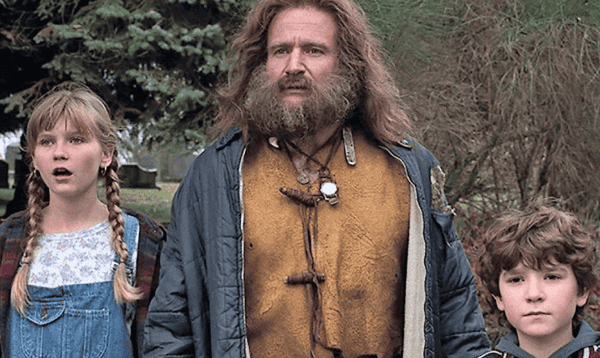
The sound of distant, rhythmic drumming isn’t just a cinematic trope; for many, it is the auditory trigger for a specific brand of childhood wonder and terror. When the original adaptation of Chris Van Allsburg’s picture book hit the silver screen, it didn’t just tell a story—it unleashed a visceral, “home invasion” style of fantasy that had never been seen before. Unlike traditional fairy tales that whisked children away to a magical land, this story brought the untamed, predatory chaos of the jungle into the pristine, quiet halls of a New England mansion.
The original Jumanji movie remains a cornerstone of adventure cinema, blending cutting-edge (for its time) digital effects with a deeply moving story about lost time and the courage required to grow up. It is a film that balances the whimsical with the perilous, anchored by a legendary lead performance that gave the movie its soul. To understand why this specific iteration of the game continues to resonate, one must look past the stampeding rhinos and into the heart of the game itself.
1. The Charcoal Origins: From Page to Screen
The DNA of the film is rooted in the haunting, monochromatic illustrations of Chris Van Allsburg. When he wrote the book in the early 1980s, his goal was to explore the “anarchy” that can exist within a domestic space. The movie expanded this 32-page book into a sprawling epic, but it stayed true to the author’s core concept: a game where the consequences are physical and irreversible. Van Allsburg’s involvement ensured that the film didn’t lose the “quiet dread” of the original story. The filmmakers realized that the true horror wasn’t just a lion in the bedroom, but the idea that your home—the place where you are supposed to be safest—could be reclaimed by nature at any moment. This transition from static, charcoal drawings to a loud, chaotic cinematic experience was a monumental task that required a delicate balance of fantasy and grounded, human stakes.
2. The Weight of Twenty-Six Years: Robin Williams’ Soulful Performance
While the movie is marketed as a family adventure, its emotional weight is carried entirely by the portrayal of Alan Parrish. Having been trapped inside the game for over two decades, Alan returns to the world as a man who has missed his entire youth. The casting was pivotal; the producers needed someone who could convey the manic energy of a survivor and the profound sadness of a lost child. The performance delivered is a masterclass in vulnerability. Behind the jokes and the wide-eyed wonder at “modern” inventions like outdoor plumbing, there is a palpable sense of trauma. This wasn’t just a man who escaped a jungle; it was a man who escaped a twenty-six-year-long nightmare of isolation. This depth is what separates the original from its more comedy-focused sequels, providing a somber reminder of the “time” the game steals from its players.
3. The Mirror of Authority: The Van Pelt and Father Connection
One of the most brilliant narrative choices in the film is a subtle piece of “double casting” that many viewers miss on their first watch. The actor who plays the terrifying big-game hunter, Van Pelt, also portrays Alan’s stern, demanding father, Samuel Parrish. This was a deliberate choice to manifest Alan’s internal conflict. In the “real world,” Alan felt hunted by his father’s expectations and his desire to send him to a strict boarding school. Inside the game, that fear takes the literal form of a hunter who wants to “collect” him. To beat the game, Alan doesn’t just have to reach the end of the board; he has to face the hunter and, by extension, face the shadow of his father. This psychological layer adds a “coming-of-age” subtext to the action, suggesting that the monsters we flee as children will continue to hunt us until we stand our ground.
4. A Revolution in Motion: The Industrial Light & Magic VFX
The production of this film occurred during a pivotal “bridge” era in cinematic history. It was one of the first major films to attempt photorealistic animals using computer-generated imagery (CGI), courtesy of the wizards at Industrial Light & Magic. While some of the digital effects have aged, the ambition was staggering. The film had to create digital fur, skin textures, and muscle movements for lions, monkeys, and stampeding herds. To ensure the world felt tactile, the director blended these digital creations with state-of-the-art animatronics and puppetry. The giant spiders and the animatronic lion were physical presences on set, giving the actors something real to react to. This “hybrid” approach to visual effects is why the movie still feels remarkably “present” and dangerous, providing a texture that purely digital films often lack.
5. The Sentient Board: The Logic and Lore of the Game
The board game itself is treated as a living, breathing antagonist. Constructed from wood with a central “eye” made of glass, the prop was designed to look ancient and slightly malevolent. In the lore of the film, the game is sentient—it “knows” when someone is trying to cheat and it punishes them accordingly (as seen when a player is turned into a monkey). The game uses magnetic pieces and a glowing green screen to display rhyming riddles that predict the next catastrophe. This sense of “inevitability” is what drives the tension. Once a roll is made, the event must happen. The game doesn’t just create obstacles; it transforms the world around the players to suit its own internal logic. This established a “magical realism” where the rules are absolute, making the board more of a character than a mere toy.
6. The Sonic Landscape: The Power of the Tribal Drums
The sound design of the original masterpiece is perhaps its most enduring legacy. The “Jumanji Drums” are an auditory warning that the game is calling out for a new player. The sound team created a specific, low-frequency heartbeat that felt like it was coming from everywhere and nowhere at once. This sonic signature was designed to bypass the ears and hit the audience in the chest, creating a feeling of primal anxiety. Throughout the film, the silence is often broken by these drums, signaling that the jungle is never far away. The music score further complements this by blending traditional orchestral adventure themes with tribal percussion, creating a sense of “civilization” being overwhelmed by the “untamed.” The drums represent the game’s heartbeat, reminding the characters that until the game is finished, the jungle owns the room.
7. The House as a Character: Destruction and Transformation
The Parrish Mansion is the primary setting of the film, and its systematic destruction is a visual metaphor for the collapse of Alan’s childhood. The production team built a massive, functional house set that was designed to be flooded, vines-choked, and eventually split in half by a giant floor-to-cracking earthquake. The “domestic-turned-wild” aesthetic is captured perfectly as the floorboards turn into quicksand and the library becomes a monsoon-drenched swamp. By keeping the action largely contained within the walls of a single house, the film heightens the claustrophobia. There is no “running away” from the game because the game has occupied your living room. The transformation of the house from a symbol of wealth and safety into a deathtrap is one of the most effective uses of production design in 90s cinema.
8. The Rising Stars: Kirsten Dunst and the Young Perspective
Long before she was a household name in superhero films or prestige dramas, a young Kirsten Dunst helped ground the movie’s fantastical elements. Alongside Bradley Pierce, the two child actors provided the “audience surrogate” perspective. Their reactions to the chaos—fear, curiosity, and eventual bravery—are what make the stakes feel real. Unlike the adult characters who are bogged down by the past, the children approach the game with a pragmatic “we have to finish this” attitude. The chemistry between the four leads (the two children and the two adults who haven’t quite grown up) creates a makeshift family dynamic. This ensemble is crucial because it reminds the viewer that the game is ultimately about connection. To survive the jungle, these four strangers must learn to trust each other, filling the emotional voids left by their respective family tragedies.
9. The Horror Element: Why Jumanji Is Genuinely Scary
One thing that modern viewers often forget is that the original film is surprisingly dark. It flirts heavily with the horror genre. From the “giant mosquitoes” that can pierce through car glass to the terrifying “man-eating vines” that drag characters into the dark, the film doesn’t pull its punches. The sequence in the shed with the giant spiders or the stalking of the lion through the dark house are shot like scenes from a suspense thriller. This “edge” is what made the movie a “rite of passage” for many young viewers. It respected the intelligence of its audience by acknowledging that nature is indifferent and dangerous. By leaning into these “scary” elements, the film made the eventual victory feel earned. The “happy ending” only works because the characters—and the audience—survived a genuine gauntlet of terror.
10. The Infinite Cycle: The Ending and the French Beach
The conclusion of the film offers a rare sense of “cosmic” closure and a chilling “to be continued.” After Alan shouts the name of the game and is transported back to his childhood, the timeline is reset, but his memories (and Sarah’s) remain. This creates a bittersweet “second chance” at life. However, the final scene of the movie moves away from the main characters to a beach in France, where the board game is seen half-buried in the sand, its drums beginning to beat again for two new children. This suggests that the “Jumanji” entity is a global, eternal force. It isn’t a “haunted house” that can be burned down; it is a game that exists in the world, waiting for someone curious—or bored—enough to roll the dice. This ending transformed the movie from a standalone adventure into a piece of modern mythology, suggesting that the jungle is always waiting just beneath the surface of the sand.
Further Reading
- Jumanji by Chris Van Allsburg
- The Widow’s Broom (For more of Van Allsburg’s style) by Chris Van Allsburg
- Industrial Light & Magic: The Art of Innovation by Pamela Glintenkamp
- Robin Williams: A Biography (General Reference)
- Podcast Episode: Classic Films And Horror Icons
- 10 The Exorcist III (1990) Movie Facts You Didn’t Know
- 10 Scream (1996) Movie Facts That Changed Horror
- 10 The Lion King (1994) Facts That Made It Iconic – Classic Movie
- 10 Forrest Gump (1994) Facts That Make It Timeless – Classic Movie



