
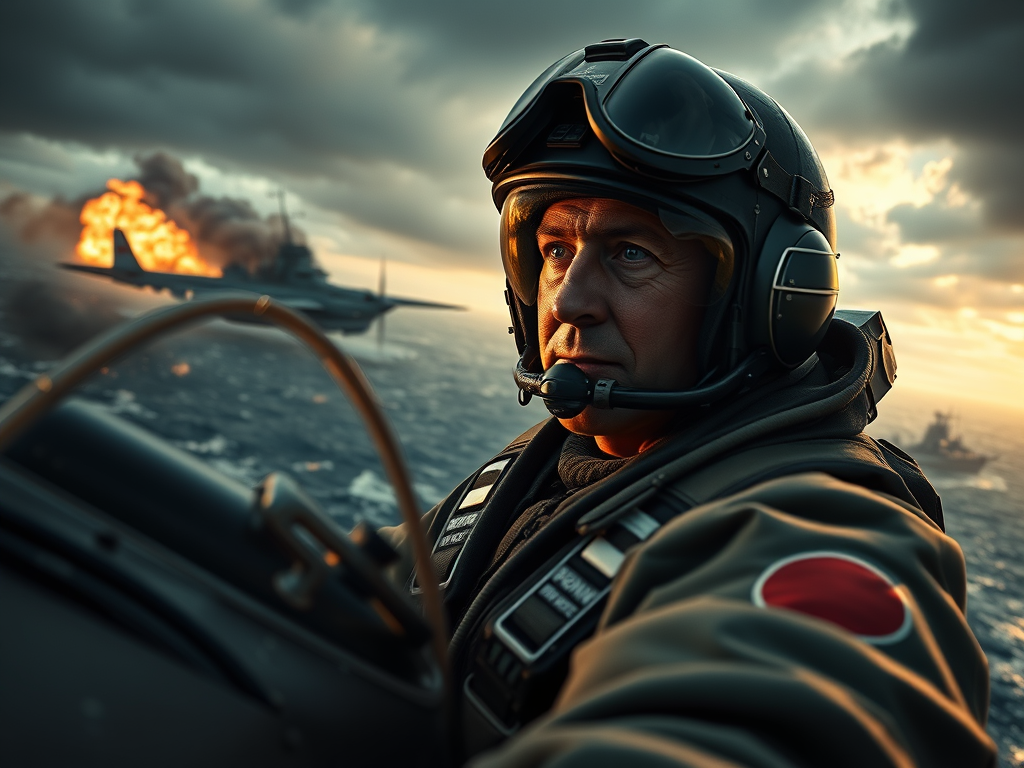
Imagine a desperate situation where an entire nation, facing overwhelming odds, chooses to sacrifice its own people in a final, shocking attempt to turn the tide of war. This was the grim reality behind the Kamikaze attacks during World War 2. As the war in the Pacific turned against Japan, its leaders resorted to a radical and tragic strategy: intentionally crashing planes filled with explosives into Allied warships. These “divine wind” attacks were a desperate and terrifying gamble by a dying empire trying to hold onto power.
The Kamikaze pilots were young Japanese men, often barely out of their teens, who volunteered (or were pressured) for these one-way missions. Their actions were rooted in a fierce loyalty to their emperor and a deep sense of national honor, but also in a growing desperation as Japan’s military might faded. Their sacrifice caused fear and destruction, but ultimately, it could not change the outcome of the war. This article will explore ten key aspects of the Kamikaze phenomenon, the reasons behind it, and its lasting legacy.
1. The Meaning of Kamikaze: “Divine Wind”
The word “Kamikaze” means “divine wind” in Japanese. This name comes from a famous historical event in the 13th century, when two powerful typhoons (storms) miraculously saved Japan from Mongol invasions. The Japanese believed these storms were a divine intervention, sent by the gods to protect their land. By naming these suicide attack units “Kamikaze,” the Japanese leadership hoped to evoke a similar sense of divine protection and miraculous victory in their desperate time of need during World War 2.
This name wasn’t just a label; it was meant to inspire a powerful feeling of spiritual purpose and national destiny. Pilots were told they were acting as a new “divine wind” that would once again protect Japan from foreign invaders. This belief was deeply rooted in Japanese culture and the idea of ultimate sacrifice for the emperor and nation. It was a way to make the pilots’ one-way missions seem glorious and necessary for the survival of their homeland, even as their empire was collapsing.
2. A Desperate Measure: When Did Kamikaze Begin?
The Kamikaze attacks did not start at the beginning of World War 2. They were a sign of Japan’s extreme desperation, emerging late in the war when it was clear that the Allied forces (especially the United States) were winning. By late 1944, Japan’s navy and air force had suffered massive losses, and its pilots were becoming less experienced. Traditional attacks were no longer effective against the overwhelming power of the Allied fleet, particularly the fast and well-defended aircraft carriers.
The first organized Kamikaze attacks took place during the Battle of Leyte Gulf in October 1944 in the Philippines. This was the largest naval battle in history, and Japan was facing utter defeat. Seeing no other way to inflict significant damage, Japanese naval commanders approved the Special Attack Units. This decision marked a turning point, showing that Japan was willing to use its young men as human bombs, a truly grim and last-ditch strategy in a war they were rapidly losing.
3. The Pilots: Young Men and Their Sacrifice
The young men who became Kamikaze pilots were often very young, some barely out of their teens. Many were university students who had joined the military with fervent patriotic ideals. They were trained specifically for these one-way missions, which meant they learned how to take off, navigate, and aim their planes, but not necessarily how to land. They were seen as heroes who would make the ultimate sacrifice for their country and emperor.
While some pilots volunteered with intense enthusiasm, others were pressured by their superiors and the culture of sacrifice. Before each mission, they would participate in ceremonies, write farewell letters to their families, and sometimes drink sake (Japanese rice wine). They were strapped into their planes with just enough fuel for a one-way trip to their target. Their youth and the forced nature of some of these “volunteers” add to the tragedy of the Kamikaze strategy, highlighting the immense psychological and societal pressure they faced.
4. Targets and Tactics: Aiming for Allied Warships
The primary targets for Kamikaze pilots were large Allied warships, especially aircraft carriers and battleships. These ships were vital to the Allied war effort, launching planes and providing powerful firepower. A direct hit from a plane carrying bombs and fuel could cause immense damage, sometimes sinking a ship or putting it out of action for months.
The tactic was brutally simple: fly at high speed towards the target ship, trying to avoid anti-aircraft fire, and crash directly into it. Pilots aimed for vulnerable spots like the flight deck or the bridge. While many planes were shot down before reaching their targets, those that got through caused chaos and destruction. The sheer psychological impact of knowing an enemy pilot was intentionally trying to crash into your ship was also a terrifying new aspect of warfare for Allied sailors.
5. Okinawa: The Peak of Kamikaze Attacks
The Battle of Okinawa in April-June 1945 saw the most intense and sustained use of Kamikaze attacks. As Allied forces prepared to invade the Japanese home islands, Okinawa was considered the last major stepping stone. Japan’s resistance was desperate and fanatical, and Kamikaze attacks became a daily occurrence. The Japanese launched thousands of these missions, often in waves, hoping to destroy the Allied invasion fleet.
During this battle, over 1,900 Kamikaze attacks were launched. They sank or damaged hundreds of Allied ships and killed thousands of sailors. The fierce resistance and the sheer scale of the Kamikaze operations made Okinawa one of the bloodiest battles of the Pacific War. Despite the heavy losses inflicted by these attacks, the Allied invasion of Okinawa ultimately succeeded, demonstrating that even such extreme measures could not stop the momentum of the Allied forces.
6. The Impact on Allied Forces: Fear and Damage
The Kamikaze attacks had a significant and terrifying impact on Allied forces, particularly the U.S. Navy. The shock of seeing an enemy pilot intentionally commit suicide by crashing his plane into a ship was something never before experienced on such a scale. Sailors often described feelings of dread and anxiety, knowing that at any moment, a plane could emerge from the sky with a pilot determined to die taking them with him.
While many Kamikaze planes were shot down, those that hit caused severe damage. Aircraft carriers, which were critical for air superiority, were particularly vulnerable. Many ships were severely damaged, and some were sunk. Thousands of Allied sailors were killed or wounded by these attacks. The Kamikaze strategy forced Allied forces to develop new defensive tactics, including more powerful anti-aircraft guns and fighter patrols, to try and intercept the incoming threats.
7. The Psychological Warfare: A Weapon of Terror
Beyond the physical damage, the Kamikaze attacks were also a form of psychological warfare. The Japanese hoped that the sheer terror and the unexpected nature of these suicide missions would break the morale of the Allied sailors and force them to reconsider their invasion plans. The idea was to create so much fear and death that the Allies would lose their will to fight on.
However, while the attacks were terrifying, they ultimately failed to achieve this psychological goal. Instead of breaking morale, they often hardened the resolve of the Allied forces. Sailors and soldiers became even more determined to defeat an enemy that would resort to such extreme measures. The Kamikaze attacks became a symbol of Japanese desperation, rather than a sign of insurmountable strength, and only fueled the Allied commitment to victory.
8. Beyond Planes: Other Kamikaze Weapons
While Kamikaze is most famously associated with aircraft, the Japanese also developed other forms of suicide weapons. These included:
- Ohka (Baka Bomb): A rocket-powered piloted bomb carried to its target by a bomber plane, then released for a high-speed glide into a ship. These were truly one-way missiles with a human guide.
- Shinyo: Motorboats packed with explosives, designed to ram Allied ships.
- Kaiten: Piloted torpedoes, essentially small submarines with a single person inside, aiming to guide the torpedo directly into an enemy vessel.
- Fukuryu: “Crouching dragons” – divers equipped with explosives, intended to attack ships from underwater.
These different types of suicide weapons show the extent of Japan’s desperation and their willingness to sacrifice their own personnel in any way possible to defend their homeland. Each of these represented a terrifying and deadly threat, further highlighting the desperate nature of Japan’s final stand.
9. The Code of Bushido: Roots of Sacrifice
The willingness of Kamikaze pilots to sacrifice their lives was deeply rooted in Japan’s historical warrior code known as Bushido. Bushido literally means “the way of the warrior” and emphasized honor, courage, loyalty to one’s lord (in this case, the Emperor), and a readiness to die with dignity rather than surrender or face shame. For centuries, this code influenced Japanese society and military culture.
During World War 2, the Japanese government and military leaders heavily promoted and twisted the ideas of Bushido to encourage extreme self-sacrifice. Dying for the Emperor and the nation was presented as the highest honor. This cultural background helped to explain, though not excuse, why so many young men were willing to undertake these one-way missions. It created a powerful societal pressure to fulfill what was presented as their ultimate duty, even when it meant certain death.
10. A Tragic Legacy: Lessons from Desperation
The story of the Kamikaze attacks is a tragic and grim chapter in World War 2 history. It highlights the extreme desperation of a nation facing defeat and the terrible consequences when patriotism is twisted into a demand for human sacrifice. While the pilots were often portrayed as heroes in Japan, their actions represented a profound loss of life and a desperate strategy that ultimately failed to alter the outcome of the war.
The Kamikaze attacks serve as a powerful reminder of the human cost of conflict and the dangers of extreme ideologies that value national honor over individual life. It’s a testament to the fact that even the most fanatical efforts often cannot change the course of history when facing overwhelming forces. The legacy of the Kamikaze is not one of victory, but one of tragedy, sacrifice, and the dire consequences of a “dying empire” making its last, desperate stand.
Further Reading
- “Kamikaze” by Will Fowler (A general introduction to the topic)
- “Death from the Sky: The Kamikaze Pilot’s Story” by Patrick C. Roe (A focus on the pilots’ experiences)
- “World War II: The Pacific” by Russell Freedman (Provides broader context of the Pacific War)
- “Kids’ Guide to World War II” by Andrew Donkin (Offers a broader understanding of the war for younger readers)
- “Flyboys: A True Story of Courage” by James Bradley (Contains sections on Kamikaze from an American perspective)
Here at Zentara.blog, our mission is to take those tricky subjects and unlock them, making knowledge exciting and easy to grasp for everyone. But the adventure doesn’t stop on this page! We’re constantly exploring new frontiers and sharing discoveries across the digital universe.
Want to dive deeper into more mind-bending Top 10s and keep expanding your world? Come join us on our other platforms – we’ve got unique experiences waiting for you on each one!
- Get inspired by visual wonders and bite-sized facts: See the world through Zentara’s eyes on Pinterest! Pin our fascinating facts and stunning visuals to your own boards. Explore Pins on Pinterest: https://uk.pinterest.com/zentarablog/
- Discover quick insights and behind-the-scenes peeks: Hop over to Tumblr for snippets, quotes, and unique content you won’t find anywhere else. It’s a different flavour of discovery! Follow the Fun on Tumblr: https://www.tumblr.com/zentarablog
- Ready for deep dives you can listen to or watch? We’re bringing our accessible approach to video and potentially audio! Subscribe to our YouTube channel and tune into future projects that make learning pop! Subscribe on YouTube: https://www.youtube.com/@ZentaraUK
- Seeking even more knowledge in one place? We’ve compiled some of our most popular topic deep dives into fantastic ebooks! Find them on Amazon and keep the learning journey going anytime, anywhere. Find Our Ebooks on Amazon: https://www.amazon.co.uk/s?k=Zentara+UK&ref=nb_sb_noss
- Connect with us and fellow knowledge seekers: Join the conversation on BlueSky! We’re sharing updates, thoughts, and maybe even asking you what wonders we should explore next. Chat with Us on BlueSky: https://bsky.app/profile/zentarablog.bsky.social
- Perfect for learning on the move! We post multiple 10-minute podcasts per day on Spotify. Pop on your headphones and fill your day with fascinating facts while you’re out and about! Listen on Spotify: https://open.spotify.com/show/3dmHbKeDufRx95xPYIqKhJ
Every click helps us keep bringing honest, accessible knowledge to everyone. Thanks for exploring with us today – see you out there in the world of discovery!




Leave a Reply