
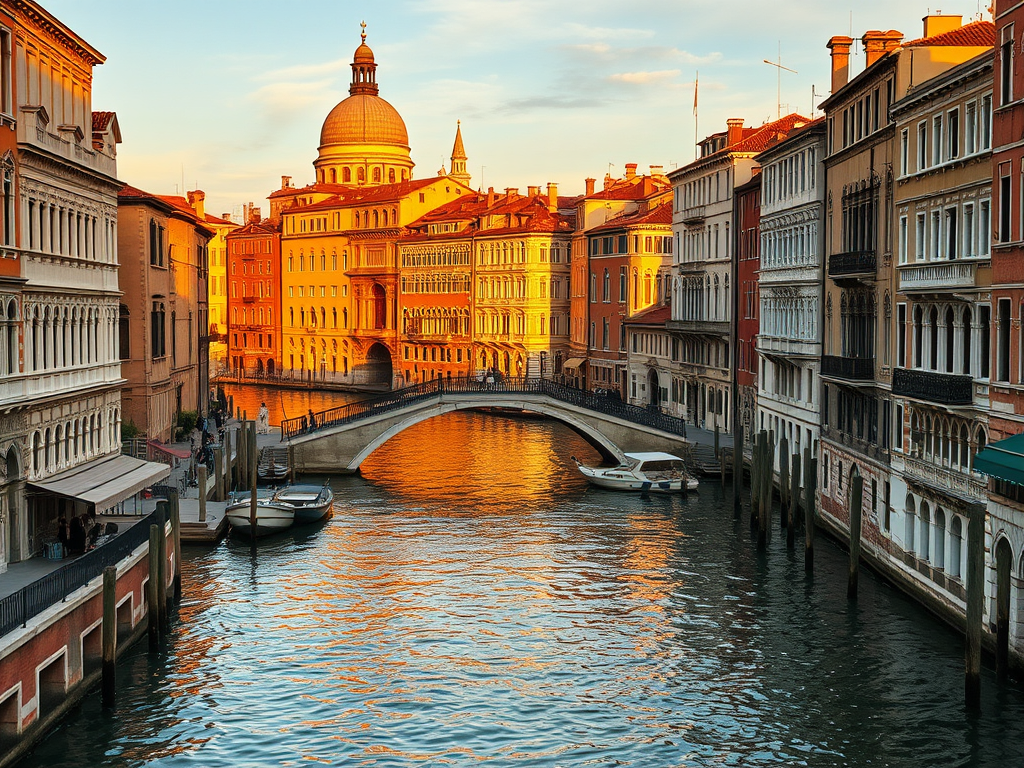
Imagine a city where streets are made of water, where boats replace cars, and where ancient buildings seem to float on the shimmering surface. That’s Venice! This incredible city in Italy is famous all over the world for being utterly unique. It’s a place that, at first glance, seems to ignore all the rules of how a city should be built. It’s like a masterpiece that someone decided to paint upside down – beautiful, but completely unexpected.
For centuries, Venice has stood strong, defying logic and the very passage of time. Building a city on a lagoon, with shifting mud and unpredictable tides, was an incredible feat of engineering and perseverance. It’s a constant dance with nature, a testament to human ingenuity and determination. Every bridge, every canal, every leaning building tells a story of a city that chose to live by its own rules.
In this article, we’re going to dive into the truly extraordinary world of Venice. We’ll explore ten fascinating ways its unique architecture and layout seem to defy common sense, yet have allowed it to thrive for over a thousand years. From its countless bridges that connect a maze of islands to the peculiar way its houses are numbered, get ready to discover the challenges, the beauty, and the sheer audacity of a city truly built on water. Let’s uncover the secrets of Venice’s timeless charm!
1. Built on Millions of Wooden Pilings, Not Solid Ground
One of the most mind-boggling facts about Venice is that it isn’t built on solid ground in the way most cities are. Instead, it’s constructed on a vast network of wooden pilings driven deep into the soft, muddy seabed of the Venetian Lagoon. Imagine millions of tree trunks, mostly alder wood known for its water resistance, driven incredibly close together to form a dense, stable foundation. These pilings go down through the mud until they hit a layer of compressed clay. Because the wood is constantly submerged in oxygen-free saltwater, it doesn’t rot; instead, it petrifies, becoming rock-hard over centuries. This ingenious technique, perfected over hundreds of years, created a surprisingly stable platform for the heavy stone and brick buildings above, allowing Venice to rise seemingly from the water. It’s a fundamental defiance of conventional building practices, showing how ancient Venetians adapted to their unique environment.
2. A Labyrinth of 400+ Bridges Connecting 118 Islands
Venice is not one continuous landmass but a collection of 118 small islands, all interconnected by an astonishing number of bridges – over 400 of them! This intricate web of bridges is a defining characteristic of Venice’s unique architecture. Imagine a city where your primary way of getting from one ‘block’ to another is by crossing a bridge, rather than walking down a street. Each bridge, from the grand Rialto Bridge to tiny, unassuming ones, serves as a vital pedestrian link, defying the logic of typical road networks. This creates a pedestrian-focused city where walking is paramount, and the journey from one point to another is a constant visual delight. The sheer number and variety of these bridges, each with its own history and design, underscore the incredible engineering required to navigate a city built entirely on water, turning a potential obstacle into a defining feature.
3. Grand Canal as the Main “Street” for Traffic
Forget busy highways and bustling avenues; in Venice, the Grand Canal is the city’s main artery, serving as its primary “street” for all forms of transportation. This wide, S-shaped waterway carves through the heart of the city, and instead of cars and buses, you’ll find gondolas, water taxis (vaporetti), and delivery barges navigating its waters. This unique traffic system defies the logic of land-based urban planning. Imagine every single delivery, emergency service, or daily commute taking place by boat. This reliance on water transport means that the front of buildings, facing the canal, are often more elaborately decorated than their land-facing sides, as they were designed to be seen from the water. It’s a complete inversion of typical city design, where the water is not a barrier but the very pathway that connects everything, making Venice an utterly unique living organism.
4. Houses Numbered by Sestiere, Not Street-by-Street
Trying to find an address in Venice can be a truly baffling experience for visitors, and it’s another way the city’s logic defies conventional urban planning. Unlike most cities where houses are numbered sequentially along each street, Venetian addresses are numbered uniquely within each of its six historical districts, known as “sestieri.” This means you might find house number 500 right next to house number 1, or even across a canal. The numbers typically run in a continuous sequence, starting from one end of the sestiere and snaking through its intricate alleys and canals, making it incredibly difficult to navigate by address alone without a detailed map or local knowledge. This system, which evolved organically over centuries, reflects a time before modern cartography and highlights the city’s organic, island-based development rather than a planned grid. It’s a charming, if confusing, quirk that further illustrates Venice’s distinct approach to urban organization.
5. No Cars, Trucks, or Bicycles – Only Foot and Water Travel
One of the most striking and immediately noticeable ways Venice defies modern urban logic is its complete absence of wheeled vehicles. There are no cars, no trucks, no buses, and remarkably, even bicycles are prohibited in most public areas. This makes Venice one of the largest pedestrian-only urban areas in the world. All transportation happens either on foot, navigating the narrow calli (alleys) and countless bridges, or by boat on the canals. Imagine living in a city where everything, from groceries to furniture, has to be delivered by boat or hand-cart. This unique characteristic profoundly shapes daily life, promotes a slower pace, reduces pollution, and enhances the city’s serene atmosphere, despite its many visitors. It’s a truly radical departure from the car-centric design of most contemporary cities, forcing a different relationship with urban movement and space.
6. The “Acqua Alta” – Living with Rising Water, Not Fighting It
Unlike most cities that build elaborate flood defenses to keep water out, Venice has historically learned to live with the “acqua alta,” or high water. This phenomenon, where tides rise significantly and flood parts of the city, is a regular occurrence, especially in autumn and winter. While recent large-scale engineering projects like the MOSE barriers aim to protect the city from extreme flooding, Venice’s daily existence has long involved adapting to the ebb and flow of the lagoon. Shopkeepers have special barriers, residents wear boots, and temporary elevated walkways (passerelle) are deployed in flooded squares. This acceptance and adaptation to the natural environment, rather than a total war against it, is a remarkable defiance of typical urban development. It highlights the city’s unique relationship with its watery foundation, where the elements are an intrinsic part of its character, dictating daily rhythms and architectural resilience.
7. Foundations That “Breathe” and Shift with the Tides
The buildings of Venice, constructed on those millions of wooden pilings, aren’t rigidly fixed in place like structures on solid ground. Instead, their foundations subtly “breathe” or shift minutely with the tides and the settling of the underlying mud and clay. This might sound alarming, but it’s part of the ingenious design that has allowed them to stand for centuries. The flexibility of the piling system, coupled with the relatively lightweight construction of the upper brick and stone layers (compared to modern steel and concrete skyscrapers), allows the buildings to absorb minor movements without cracking or collapsing. It’s a remarkable engineering feat that defies the modern architectural principle of absolute rigidity. This subtle give-and-take with the lagoon is a testament to the Venetians’ deep understanding of their unique environment, allowing the city to gracefully endure the passage of time despite its seemingly precarious perch.
8. Buildings Without “Backsides” – Designed for Water Views
In typical cities, buildings often have a “front” that faces a main street and a less attractive “back” that faces an alley or service area. Venice completely defies this logic. Because so much of the city’s movement and public life happens on its canals, many buildings, especially the grand palaces along the Grand Canal, are designed to be equally impressive from both their water-facing side and their land-facing side. The primary entrance for important visitors was often directly from a gondola, leading into an elaborate water-gate. This means there are no true “backsides” to many of Venice’s architectural gems; instead, they present beautiful facades to the watery thoroughfares. This reflects a fundamental shift in perspective, where the canals are not merely conduits for water but extensions of the public realm, demanding architectural attention and beauty on all visible fronts, a truly unique approach to urban aesthetics.
9. The Unique “Fondamenta” – Walkways Along Canals
While most cities have sidewalks alongside streets, Venice has its “fondamenta” – walkways built directly alongside the canals. These are not just paths; they are an integral part of the city’s unique architecture and urban fabric. Unlike land-based cities where buildings directly front onto streets, in Venice, the fondamenta often acts as a public corridor between the canal and the buildings. This creates a distinct visual and functional experience. Imagine walking directly beside boats, seeing the reflections of buildings shimmer on the water, and often having direct access to canal-side restaurants and shops. This design forces a closer interaction with the water and the boats, turning every stroll into a picturesque journey. It’s a physical manifestation of Venice’s intimate relationship with its liquid environment, transforming what might be considered the “edge” of a city into its central pathway.
10. Surviving for Centuries Despite the Threat of Sinking
Perhaps the most astonishing way Venice defies logic is its very existence and survival over more than a thousand years, despite the constant threat of sinking. Built on soft ground and exposed to the changing sea levels and tides of the Adriatic, the continued endurance of Venice seems to defy natural odds. Early Venetians developed incredibly sophisticated techniques, from the wooden pilings to robust flood defenses and adaptive building practices, to ensure their city’s longevity. While the city still faces challenges from subsidence and rising sea levels, its long history is a testament to extraordinary human ingenuity, resilience, and a deep understanding of its unique environment. It’s a living monument to the idea that with enough determination and clever engineering, humans can build and sustain a magnificent city in the most improbable of locations, truly standing as a timeless wonder.
Further Reading
To learn more about the incredible history and architecture of Venice, check out these fascinating books:
- Venice: A New History by Thomas F. Madden
- The World of Venice by Jan Morris
- A History of Venice by John Julius Norwich
- Invisible Cities by Italo Calvino (fiction, but deeply inspired by Venice’s unique character)
Here at Zentara.blog, our mission is to take those tricky subjects and unlock them, making knowledge exciting and easy to grasp for everyone. But the adventure doesn’t stop on this page! We’re constantly exploring new frontiers and sharing discoveries across the digital universe.
Want to dive deeper into more mind-bending Top 10s and keep expanding your world? Come join us on our other platforms – we’ve got unique experiences waiting for you on each one!
- Get inspired by visual wonders and bite-sized facts: See the world through Zentara’s eyes on Pinterest! Pin our fascinating facts and stunning visuals to your own boards. Explore Pins on Pinterest: https://uk.pinterest.com/zentarablog/
- Discover quick insights and behind-the-scenes peeks: Hop over to Tumblr for snippets, quotes, and unique content you won’t find anywhere else. It’s a different flavour of discovery! Follow the Fun on Tumblr: https://www.tumblr.com/zentarablog
- Ready for deep dives you can listen to or watch? We’re bringing our accessible approach to video and potentially audio! Subscribe to our YouTube channel and tune into future projects that make learning pop! Subscribe on YouTube: https://www.youtube.com/@ZentaraUK
- Seeking even more knowledge in one place? We’ve compiled some of our most popular topic deep dives into fantastic ebooks! Find them on Amazon and keep the learning journey going anytime, anywhere. Find Our Ebooks on Amazon: https://www.amazon.co.uk/s?k=Zentara+UK&ref=nb_sb_noss
- Connect with us and fellow knowledge seekers: Join the conversation on BlueSky! We’re sharing updates, thoughts, and maybe even asking you what wonders we should explore next. Chat with Us on BlueSky: https://bsky.app/profile/zentarablog.bsky.social
- Perfect for learning on the move! We post multiple 10-minute podcasts per day on Spotify. Pop on your headphones and fill your day with fascinating facts while you’re out and about! Listen on Spotify: https://open.spotify.com/show/3dmHbKeDufRx95xPYIqKhJ
- Follow us on Instagram for bytesize knowledge! We post multiple posts per day on our official Instagram account.
https://www.instagram.com/zentarablog/
Every click helps us keep bringing honest, accessible knowledge to everyone. Thanks for exploring with us today – see you out there in the world of discovery!




Leave a Reply