
Video games, much like film, literature, or music, are a dynamic and evolving art form, constantly pushing the boundaries of technology, storytelling, and player interaction. While thousands of games are released each year, a select few achieve a legendary status, not just for their commercial success or critical acclaim, but for fundamentally altering the landscape of interactive entertainment. These are the genre-defining video games – titles that either pioneered an entirely new category of gameplay, established conventions that future games would emulate, or perfected existing formulas to such an extent that they became the benchmark for all that followed. They are the foundational pillars upon which entire genres are built, influencing countless developers and shaping the expectations of millions of players worldwide. This article delves into ten such iconic video games, exploring their innovative mechanics, lasting influence, and how they carved out their enduring place in the annals of gaming history.
1. Super Mario Bros. (1985): The Blueprint for Platformers
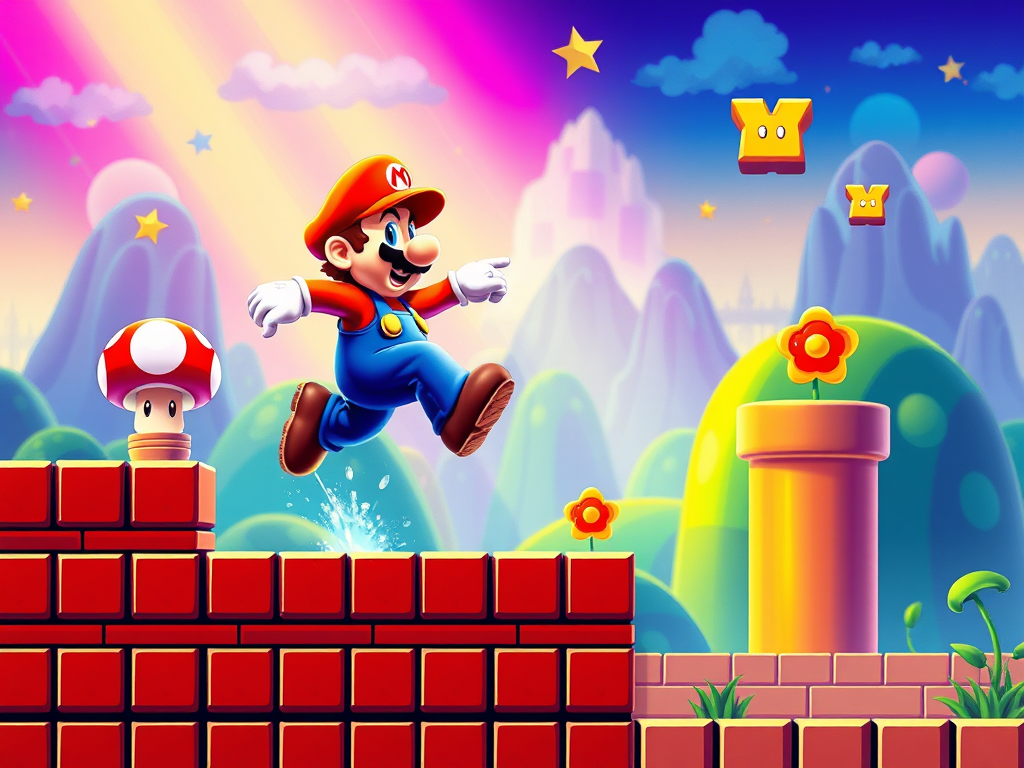
Released in 1985 for the Nintendo Entertainment System (NES), Super Mario Bros. wasn’t the first platformer game, but it was undoubtedly the one that perfected the formula and set the gold standard for the genre. Designed by Shigeru Miyamoto, the game introduced players to the iconic plumber Mario as he embarked on a quest through the Mushroom Kingdom to rescue Princess Peach from Bowser. Its genius lay in its precise controls, intuitive level design, and a gradual introduction of new mechanics that kept players engaged and challenged. This Nintendo classic revolutionized side-scrolling gameplay.
Super Mario Bros. taught players how to navigate a 2D world with nuanced jumps, distinguish between various enemy types, and discover hidden secrets. The concept of power-ups – from the Super Mushroom that made Mario grow to the Fire Flower that allowed him to shoot fireballs – became an instant and enduring staple of the genre. Its colorful graphics, catchy soundtrack, and accessible yet deep gameplay made it a massive commercial success, selling over 40 million copies and single-handedly revitalizing the ailing video game industry after the crash of 1983. The game’s influence is immeasurable; virtually every 2D platformer that followed, from Sonic the Hedgehog to countless indie titles, owes a debt to Super Mario Bros. for establishing the core principles of platformer mechanics and its status as a genre-defining masterpiece.
2. Doom (1993): The Birth of the First-Person Shooter
In 1993, id Software unleashed Doom upon the world, and nothing in gaming history was quite the same. While not the very first first-person shooter (FPS) (a distinction often given to its predecessor, Wolfenstein 3D), Doom was the game that popularized the genre, setting the template for countless shooters that would follow. Its visceral, fast-paced action, groundbreaking 3D graphics (at the time), and immersive demon-infested hellscapes immediately captivated players. Doom redefined action gaming and became a cultural touchstone for its sheer intensity and groundbreaking technology.
Doom‘s influence was profound for several reasons. It innovated in level design, introducing complex maps with verticality, secret areas, and environmental hazards. Its diverse arsenal of weapons, each with a distinct feel and tactical use, became a hallmark of the genre. Crucially, Doom was one of the pioneers of multiplayer gaming, specifically deathmatch, which became an instant phenomenon and a cornerstone of competitive gaming. Furthermore, id Software’s decision to release the game as shareware, allowing players to try the first episode for free, contributed significantly to its widespread adoption and viral spread. The ability to mod the game, creating custom levels and content, also fostered a vibrant community. Doom established the core mechanics, visual language, and cultural impact of the FPS genre, making it an undisputed video game pioneer and a technological breakthrough that shaped PC gaming.
3. Street Fighter II: The World Warrior (1991): The Fighting Game Phenomenon
Before Street Fighter II: The World Warrior exploded onto arcade cabinets in 1991, fighting games were a niche genre. After its release, they became a global phenomenon, defining the competitive landscape for years to come. Capcom’s masterpiece perfected the fighting game genre, establishing many of the conventions that are still in use today. Its intricate combat system, diverse roster of characters, and accessible yet deep gameplay mechanics made it an instant classic and a staple of arcade gaming.
Street Fighter II‘s brilliance lay in its character design, each fighter possessing unique special moves, distinct fighting styles, and memorable personalities. The introduction of complex inputs for special moves, combos, and “super” moves created a high skill ceiling that rewarded dedication and precision. The game’s balanced roster, where each character had strengths and weaknesses against others, fostered a competitive scene that encouraged mastery and strategic play. It popularized the concept of “tiers” and competitive matchups. The game’s stunning sprite animation, vibrant backgrounds, and iconic sound effects also contributed to its appeal. Street Fighter II ignited the esports scene before the term even existed, sparking countless tournaments and inspiring a generation of competitive players. Its influence can be seen in virtually every fighting game that followed, solidifying its place as a genre-defining fighting game and a cultural icon in gaming history.
4. The Legend of Zelda: Ocarina of Time (1998): The Blueprint for 3D Action-Adventure
In 1998, Nintendo once again redefined a genre with the release of The Legend of Zelda: Ocarina of Time for the Nintendo 64. This game wasn’t just a critical darling; it set the standard for 3D action-adventure games, influencing countless titles with its innovative mechanics, immersive world-building, and groundbreaking approach to narrative and exploration. It took the beloved Zelda formula into the third dimension, transforming how players interacted with virtual worlds and becoming a Nintendo 64 masterpiece.
Ocarina of Time‘s key innovations included the revolutionary “Z-targeting” system, which allowed players to lock onto enemies and interact with objects in a 3D space with unprecedented precision, making combat intuitive and dynamic. The game’s vast, interconnected Hyrule Field provided a sense of scale and freedom, encouraging exploration and discovery. The implementation of a context-sensitive action button streamlined interactions, making the complex world feel accessible. Furthermore, the game’s use of time travel mechanics to alter the world and progress the story was a novel and engaging narrative device. Ocarina of Time crafted a rich narrative with memorable characters, challenging puzzles, and epic boss battles, all set to an unforgettable orchestral score. Its lasting influence is evident in almost every modern action-adventure game, making it a genre-defining game that set the bar for 3D exploration and narrative gaming.
5. World of Warcraft (2004): The Definitive MMORPG
When Blizzard Entertainment launched World of Warcraft (WoW) in 2004, it didn’t invent the Massively Multiplayer Online Role-Playing Game (MMORPG), but it perfected it, broadened its appeal, and transformed it into a mainstream phenomenon. Building upon the foundations laid by games like EverQuest and Ultima Online, WoW refined the core mechanics, user experience, and accessibility of the genre, attracting millions of subscribers and becoming the undisputed king of online gaming. It became a cultural phenomenon that shaped the very definition of MMORPGs.
WoW‘s genius lay in its meticulous blend of accessible gameplay for newcomers and deep, rewarding content for hardcore players. Its vibrant, expansive world of Azeroth, filled with rich lore, diverse races, and compelling quests, provided an unparalleled sense of discovery and adventure. The game’s intuitive questing system, streamlined user interface, and robust instanced dungeons and raids made complex group content manageable and enjoyable. Crucially, WoW fostered an incredibly strong sense of community, allowing players to form guilds, embark on epic journeys together, and forge lasting friendships. Its subscription model, coupled with continuous content updates and expansions, ensured its longevity and kept players engaged for over a decade. World of Warcraft set the standard for MMORPG design, influencing countless successors and creating a digital ecosystem that impacted social interaction and online communities. It remains a testament to online multiplayer gaming and a truly genre-defining MMORPG.
6. Grand Theft Auto III (2001): The Open-World Revolution
Rockstar Games’ Grand Theft Auto III (GTA III), released in 2001, wasn’t just a hit; it was a watershed moment that revolutionized open-world gaming. While open-world elements existed in earlier games, GTA III brought the concept to the mainstream, offering players unprecedented freedom to explore a vibrant, living, breathing city teeming with possibilities. Its gritty narrative, satirical humor, and groundbreaking non-linear gameplay transformed the industry and defined a new era of sandbox games.
GTA III’s major innovation was its fully 3D, seamless urban environment – Liberty City – that players could traverse without loading screens. This sense of complete freedom, combined with the ability to hijack any vehicle, pursue various side missions, and engage in chaotic antics, created an unparalleled sense of agency. The game’s narrative, while guiding players through a crime syndicate storyline, allowed for countless emergent gameplay moments driven by player choice. The game’s impact on game design was immediate and widespread; the “open-world” became a coveted feature in many subsequent titles, often incorporating elements of GTA III’s mission structure and player freedom. Despite its controversies over violence and mature themes, Grand Theft Auto III undeniably set the standard for modern open-world games, demonstrating the immersive potential of sandbox environments and becoming a cultural phenomenon that reshaped action-adventure gaming and influenced urban video games.
7. Myst (1993): The Pioneer of Puzzle-Adventure Gaming
In an era dominated by action games, Myst, released in 1993 by Cyan Worlds, presented a radically different vision for interactive entertainment. This puzzle-adventure game became a phenomenon, selling millions of copies and pioneering a new style of immersive, contemplative gameplay. Eschewing combat, Myst focused entirely on exploration, logical deduction, and unraveling a complex narrative through environmental puzzles. It became a PC gaming landmark for its unique approach.
Myst‘s innovation lay in its stunning, pre-rendered 3D graphics, which created a visually rich and atmospheric world that felt tangible and mysterious. Players explored beautifully crafted “Ages” – surreal, isolated islands filled with intricate contraptions, cryptic clues, and hidden mechanisms. The game’s non-linear progression, where players could tackle puzzles in various orders, encouraged experimentation and critical thinking. The absence of a traditional inventory or dialogue options forced players to rely purely on observation and intellect. Myst‘s quiet, immersive atmosphere, coupled with its challenging yet rewarding puzzles, created a profound sense of discovery and wonder. It proved that video games could be cerebral, artistic, and appeal to a broad audience beyond traditional gamers. Myst defined the puzzle game genre and cemented its legacy as a genre-defining adventure game, inspiring countless story-driven games and demonstrating the power of environmental storytelling in interactive entertainment.
8. Dune II: The Building of a Dynasty (1992): The Birth of Real-Time Strategy
While not the first game to feature strategic elements, Dune II: The Building of a Dynasty, released by Westwood Studios in 1992, is widely credited as the game that established and popularized the Real-Time Strategy (RTS) genre. Based on Frank Herbert’s Dune universe, this game brought together resource gathering, base building, unit production, and tactical combat in a real-time environment, laying the foundational mechanics for countless iconic RTS titles that followed. It became a PC gaming classic and a strategy game pioneer.
Dune II‘s innovations were numerous and profound. It introduced the now-standard “click-and-drag” unit selection, allowing players to command multiple units simultaneously. The concept of building structures to unlock new units and technologies, a clear tech tree, became a core RTS mechanic. The game’s distinct factions, each with unique units and strategies, added significant replayability and strategic depth. Crucially, Dune II demonstrated how to effectively translate the complex decision-making of turn-based strategy games into a dynamic, real-time format, requiring quick thinking and adaptability. Its intuitive interface and engaging gameplay loop of harvesting spice, building a base, and deploying armies against the enemy factions became the blueprint for future giants like Warcraft, StarCraft, and Command & Conquer. Dune II is undeniably a genre-defining RTS game, a strategic innovation that shaped PC strategy gaming and established the core tenets of real-time combat.
9. Pokémon Red and Blue (1996/1998): The Phenomenon of Collectible RPGs
Released in Japan in 1996 and internationally in 1998, Pokémon Red and Pokémon Blue for the Game Boy were not just immensely popular; they created a global phenomenon and defined the collectible RPG genre. While earlier games featured monster collection, Pokémon perfected the concept, turning it into a social and cultural touchstone that transcended gaming itself. The core loop of “catching ’em all” became an irresistible draw, particularly for younger audiences. This handheld gaming landmark became a cultural phenomenon.
The genius of Pokémon Red and Blue lay in their simple yet addictive gameplay loop: explore the region of Kanto, battle wild Pokémon, capture them, train them, and then use them to battle other trainers. The game’s innovative link cable functionality allowed players to trade Pokémon with friends, a revolutionary social feature that fostered connection and encouraged completionism. The concept of type advantages and disadvantages introduced a surprisingly deep layer of strategic combat, making battles engaging. The vast array of unique creatures, each with its own design, abilities, and evolutions, sparked the imaginations of millions. Pokémon launched a multimedia franchise encompassing anime, trading card games, and merchandise, becoming one of the most successful entertainment properties of all time. These games defined the monster-collecting RPG genre, profoundly influencing Japanese RPGs, portable gaming, and creating an enduring gaming franchise that continues to evolve.
10. Deus Ex (2000): The Immersive Sim Apex
Released in 2000, Deus Ex by Ion Storm was not just a game; it was a profound statement about player choice and consequence, solidifying and elevating the immersive sim genre. While not the first game to blend RPG elements with first-person action and stealth (System Shock being a notable predecessor), Deus Ex perfected the formula, offering unparalleled player agency in navigating a complex narrative and an intricately designed world. It became a PC gaming classic and a benchmark for narrative choice in games.
Deus Ex‘s core innovation was its dedication to giving players multiple viable paths to overcome any obstacle. Whether it was through stealth, direct combat, hacking, diplomacy, or a clever combination, the game allowed players to approach situations in a manner that truly reflected their playstyle and choices. The robust RPG skill system, allowing players to customize their cybernetically enhanced protagonist, JC Denton, further reinforced this sense of agency. The game’s rich, conspiracy-laden cyberpunk narrative, filled with moral ambiguities and branching dialogue options, reacted directly to player decisions, leading to multiple endings. This level of player agency, combined with a richly detailed world and compelling characters, made Deus Ex a deeply immersive experience. Deus Ex defined the immersive sim genre, showcasing the potential for emergent gameplay, player-driven narratives, and complex decision-making in video game design, setting a high bar for RPG-shooter hybrids and interactive storytelling.
These ten video games stand as towering achievements in the medium, each a testament to creative vision, technical prowess, and a deep understanding of what makes interactive entertainment compelling. They didn’t just entertain; they innovated, inspired, and fundamentally reshaped the landscapes of their respective genres. From the precise jumps of a plumber to the chaotic battlegrounds of online fantasy worlds, these titles remind us that video games are not merely pastimes, but powerful cultural forces that continue to push the boundaries of what is possible, leaving an indelible mark on how we play, connect, and experience digital worlds.
Further Reading
- Console Wars: Sega, Nintendo, and the Battle that Defined a Generation by Blake J. Harris
- Masters of Doom: How Two Guys Created an Empire and Transformed Pop Culture by David Kushner
- Blood, Sweat, and Pixels: The Triumphant, Turbulent Stories Behind How Video Games Are Made by Jason Schreier
- Ready Player One by Ernest Cline (fictional, but heavily references foundational video games)
- Extra Credits (YouTube Channel – Dune II and Myst episodes are particularly relevant)
Here at Zentara.blog, our mission is to take those tricky subjects and unlock them, making knowledge exciting and easy to grasp for everyone. But the adventure doesn’t stop on this page! We’re constantly exploring new frontiers and sharing discoveries across the digital universe. Want to dive deeper into more mind-bending Top 10s and keep expanding your world? Come join us on our other platforms – we’ve got unique experiences waiting for you on each one!
Get inspired by visual wonders and bite-sized facts: See the world through Zentara’s eyes on Pinterest!
Pin our fascinating facts and stunning visuals to your own boards. Explore Pins on Pinterest: https://uk.pinterest.com/zentarablog/
Discover quick insights and behind-the-scenes peeks: Hop over to Tumblr for snippets, quotes, and unique content you won’t find anywhere else. It’s a different flavour of discovery! Follow the Fun on Tumblr: https://www.tumblr.com/zentarablog
Ready for deep dives you can listen to or watch? We’re bringing our accessible approach to video and potentially audio! Subscribe to our YouTube channel and tune into future projects that make learning pop! Subscribe on YouTube: https://www.youtube.com/@ZentaraUK
Seeking even more knowledge in one place? We’ve compiled some of our most popular topic deep dives into fantastic ebooks! Find them on Amazon and keep the learning journey going anytime, anywhere. Find Our Ebooks on Amazon: https://www.amazon.co.uk/s?k=Zentara+UK&ref=nb_sb_noss
Connect with us and fellow knowledge seekers: Join the conversation on BlueSky! We’re sharing updates, thoughts, and maybe even asking you what wonders we should explore next. Chat with Us on BlueSky: https://bsky.app/profile/zentarablog.bsky.social
Perfect for learning on the move! We post multiple 10-minute podcasts per day on Spotify. Pop on your headphones and fill your day with fascinating facts while you’re out and about! Listen on Spotify: https://open.spotify.com/show/3dmHbKeDufRx95xPYIqKhJ
Follow us on Instagram for bytesize knowledge! We post multiple posts per day on our official Instagram account. https://www.instagram.com/zentarablog/ Every click helps us keep bringing honest, accessible knowledge to everyone. Thanks for exploring with us today – see you out there in the world of discovery!

Leave a Reply