
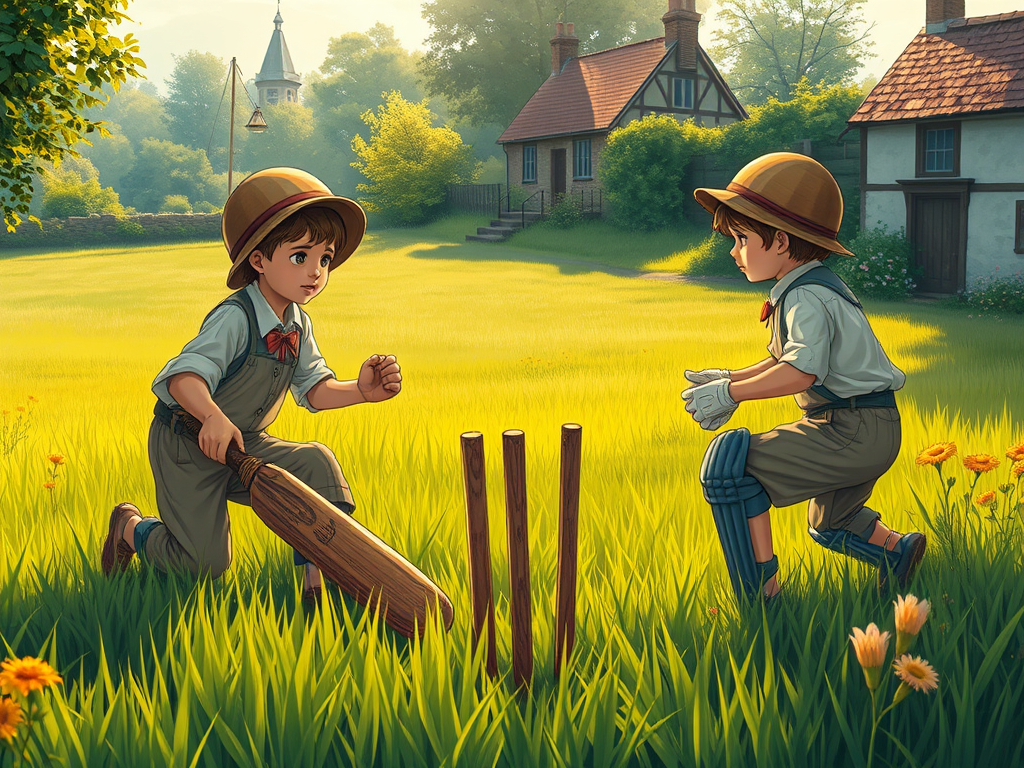
Cricket is a sport loved by millions around the world, with its long matches, exciting boundaries, and nail-biting finishes. But have you ever wondered where this unique game came from? It didn’t just appear out of nowhere! Cricket has a fascinating past, full of surprising starts, changing rules, and the evolution of everything from bats to how players dress.
Imagine a game that started in quiet English villages centuries ago and grew into a global phenomenon! The journey of cricket is a bit like a long test match – it takes time, has many different parts, and is full of interesting twists and turns.
We’re going to explore some of the most exciting and important moments and facts from the history of cricket. From its humble beginnings to the sport we know today, let’s dive into 10 cool facts that will give you a whole new appreciation for the sound of leather on willow!
1. The Secret Village Origins of Cricket
Did you know that the origins of cricket are a bit mysterious? Experts think the game first started way back in the 1500s in the quiet villages of South-East England, probably in places like Surrey and Sussex. It didn’t begin as a grand sport played in big stadiums, but as a simple game enjoyed by children and later, adults, in fields and clearings.
Think of it like playing a simple game of catch or tag with your friends in a park. That’s kind of how cricket started! People used simple equipment – maybe a sheep’s wicket gate for the stumps and a shepherd’s crook or a simple wooden bat to hit a ball made of wool or rags. It was a real folk game, played for fun and maybe a bit of local pride. The name “cricket” might even come from old words for a curved stick or a low stool (which could have been the early wicket!). So, the next time you see a professional match, remember it all began with humble roots in English countryside, a long, long time ago.
2. When Cricket Started Getting Serious: Early Matches Emerge
While cricket was played informally for a long time, things started to get a bit more organized in the 1600s. We have records that mention cricket being played as an adult game, and people even started betting on the outcomes of matches! This showed that the game was becoming more than just a casual pastime; it was starting to be taken seriously.
The first recorded cricket match we know about was played in 1646 in Kent, England. Imagine that – nearly 400 years ago! These early matches weren’t quite like today’s games. They were often played between villages or groups of people from the same area. The rules were probably quite flexible and varied from place to place. Think of it like different neighborhoods having slightly different rules for a game of football in the park. But these early games were crucial because they helped the game grow and spread. They were the first steps towards cricket becoming a structured sport with agreed-upon ways of playing.
3. The Birth of Early Cricket Rules (and Why They Changed!)
One of the most important steps in the history of cricket was writing down the rules. Before this, rules were often agreed upon by the players before a match, which could lead to arguments! The first known set of written Laws of Cricket was created in 1744. These early rules helped standardize the game, meaning everyone playing knew what was expected.
These original rules were different from today’s. For example, the wickets were lower and had only two stumps, and the bowler had to roll or skim the ball along the ground, not pitch it through the air like they do now! The bat was also a different shape, more like a hockey stick, which was good for hitting a rolling ball. As players started experimenting and bowling the ball in different ways, the rules had to change too. This shows that cricket’s rules have always evolved as players found new techniques and strategies. It’s a bit like updates to a video game – the core idea stays the same, but things are tweaked to make it better or fairer.
4. The First Cricket Match That Made History: More Than Just a Game
Pinpointing the absolute first cricket match is tricky because of its informal beginnings. However, as mentioned, the 1646 match in Kent is the earliest recorded game. But as the 18th century arrived, matches started to gain more attention and were even reported in newspapers! This helped spread the word about cricket beyond the villages where it was played.
Matches between county teams became more common, leading to bigger crowds and more formal organization. One of the most significant early matches involved teams like Kent and London. These games were a big deal locally, bringing communities together and showcasing the skills of the best players. These weren’t just friendly knockarounds; they were competitive events that helped build the foundation for organized cricket. They showed that cricket had the potential to be a popular spectacle, not just a village game, and were a key part of how cricket started its journey to wider fame.
5. The Straight Bat Arrives: How Evolution of Cricket Equipment Changed the Game
For many years, cricket bats were curved, like a modern hockey stick. This was because bowlers rolled the ball along the ground, and a curved bat was good for hitting a low-bouncing delivery. However, in the 1760s, bowlers started experimenting with pitching the ball through the air. This was a major change!
Players needed a different kind of bat to hit a ball that bounced higher. This led to the invention and widespread adoption of the straight bat, similar to the one used today. This change in equipment completely transformed how the game was played. It allowed for a wider variety of shots and made the game more dynamic. Imagine trying to hit a fast-bouncing ball with a curved stick – it would be much harder! The switch to the straight bat is a great example of how the evolution of cricket equipment has always gone hand-in-hand with changes in playing style and rules.
6. The Importance of the Hambledon Club: A Hub of Early Cricket
In the mid-18th century, a cricket club in Hambledon, Hampshire, became incredibly important in the development of the game. Often called the “Cradle of Cricket,” the Hambledon Club was home to some of the best players of the time and played a key role in refining the rules and techniques of cricket.
Think of them as the pioneers of modern cricket. They were at the forefront of changes like pitching the ball and using the straight bat. They played against teams from all over England and helped to popularize these new ways of playing. Many of the rules that were later adopted by the Marylebone Cricket Club (MCC) were influenced by the practices and ideas that came from Hambledon. Their matches were famous and drew large crowds, further establishing cricket as a major sport in England. The Hambledon Club’s influence shows how specific places and groups of people can have a huge impact on the history of cricket.
7. Lord’s and the MCC: Becoming the Home of Cricket Laws
While the Hambledon Club was hugely influential, the most famous and important cricket club in the world is undoubtedly the Marylebone Cricket Club (MCC), founded in 1787. The MCC eventually took on the responsibility of being the guardian of the Laws of Cricket. They moved to their famous ground, Lord’s, in London, which is now known as the “Home of Cricket.”
Having a central body like the MCC in charge of the rules was essential for standardizing the game across the growing number of clubs and counties. They would review and update the laws, making sure they kept pace with the way the game was being played. This role continues today, with the MCC still owning the copyright to the Laws of Cricket. Think of the MCC as the ultimate rulebook keepers for the game. Their establishment and their home at Lord’s are significant landmarks in the history of cricket, providing a stable and respected authority for the sport.
8. Cricket Travels the World: Spreading with the British Empire
As the British Empire expanded across the globe, it took cricket with it. British soldiers, sailors, traders, and colonists played the game in the new lands they settled in, introducing it to local populations. This is why cricket is now popular in countries like India, Pakistan, Australia, New Zealand, the West Indies, and South Africa.
Imagine teaching a game you love to people in a completely different part of the world! That’s what happened with cricket. It wasn’t always a smooth process, and the game sometimes adapted to local conditions and cultures. This spread was crucial in transforming cricket from a purely English game into an international sport. The connections made through cricket helped build rivalries and traditions that continue to this day, like the famous Ashes series between England and Australia. The global reach of cricket is a direct result of this historical spread, making it a sport with deep roots in many different countries, contributing to the fascinating facts about the history of cricket.
9. The Birth of Test Cricket: International Rivalries Begin
A huge moment in the history of cricket was the start of international matches, specifically Test cricket. The first-ever Test match was played in 1877 between England and Australia at the Melbourne Cricket Ground (MCG). This was a groundbreaking event, pitting two national teams against each other in a formal, multi-day contest.
Test cricket became the ultimate test of skill and endurance in the sport. It created fierce rivalries and iconic moments that are still talked about today. The Ashes, the famous series between England and Australia, was born from a humorous newspaper obituary for English cricket after an early loss to Australia in 1882. These early international matches laid the foundation for the global competition we see in cricket today, bringing countries together through sport and adding a whole new layer to the evolution of cricket.
10. Cricket Keeps Changing: From Timeless Tests to T20 Thrills
Cricket hasn’t stood still since the 19th century. The game has continued to evolve, with changes to rules, equipment, and formats to keep it exciting and relevant. Over time, match lengths have changed, from “timeless” Tests (which could go on for many days until a result was reached) to the timed Test matches we have today.
The biggest recent change has been the rise of shorter formats like One Day Internationals (ODIs) and Twenty20 (T20) cricket. These faster-paced versions of the game have brought new fans to cricket and changed the strategies players use. The introduction of things like हेलमेट (helmets) and improved protective gear has also made the game safer as bowlers have become faster. The ongoing evolution of cricket shows that it’s a living sport, adapting to new times and new players while still holding onto its long and rich history of cricket.
Cricket’s journey from a simple village game to a complex international sport is a long and exciting one. These ten facts only scratch the surface, but they give you a glimpse into how this beloved game came to be and how it has changed over the centuries. The next time you watch a match, you’ll know a little more about the amazing history behind it!
Further Reading
Here are some books that can help you learn even more about the history of cricket:
- The Cricket War by Gideon Haigh
- A History of Cricket in 100 Objects by Jon Gemmell
- The Young Wisden: A New Fan’s Guide to Cricket (various authors)
- Amazing Cricket Facts by Jon Richards
- My Story (autobiographies of famous cricketers like Sachin Tendulkar, Shane Warne, etc., which touch upon the modern history)
Here at Zentara.blog, our mission is to take those tricky subjects and unlock them, making knowledge exciting and easy to grasp for everyone. But the adventure doesn’t stop on this page! We’re constantly exploring new frontiers and sharing discoveries across the digital universe.
Want to dive deeper into more mind-bending Top 10s and keep expanding your world? Come join us on our other platforms – we’ve got unique experiences waiting for you on each one!
- Get inspired by visual wonders and bite-sized facts: See the world through Zentara’s eyes on Pinterest! Pin our fascinating facts and stunning visuals to your own boards. Explore Pins on Pinterest: https://uk.pinterest.com/zentarablog/
- Discover quick insights and behind-the-scenes peeks: Hop over to Tumblr for snippets, quotes, and unique content you won’t find anywhere else. It’s a different flavour of discovery! Follow the Fun on Tumblr: https://www.tumblr.com/zentarablog
- Ready for deep dives you can listen to or watch? We’re bringing our accessible approach to video and potentially audio! Subscribe to our YouTube channel and tune into future projects that make learning pop! Subscribe on YouTube: https://www.youtube.com/@ZentaraUK
- Seeking even more knowledge in one place? We’ve compiled some of our most popular topic deep dives into fantastic ebooks! Find them on Amazon and keep the learning journey going anytime, anywhere. Find Our Ebooks on Amazon: https://www.amazon.co.uk/s?k=zentara+uk&crid=2273NA7RAJ1EU&sprefix=zentara+uk%2Caps%2C90&ref=nb_sb_noss
- Connect with us and fellow knowledge seekers: Join the conversation on BlueSky! We’re sharing updates, thoughts, and maybe even asking you what wonders we should explore next. Chat with Us on BlueSky: https://bsky.app/profile/zentarablog.bsky.social
- Perfect for learning on the move! We post multiple 10-minute podcasts per day on Spotify. Pop on your headphones and fill your day with fascinating facts while you’re out and about! Listen on Spotify: https://open.spotify.com/show/3dmHbKeDufRx95xPYIqKhJ
Every click helps us keep bringing honest, accessible knowledge to everyone. Thanks for exploring with us today – see you out there in the world of discovery!




Leave a Reply