
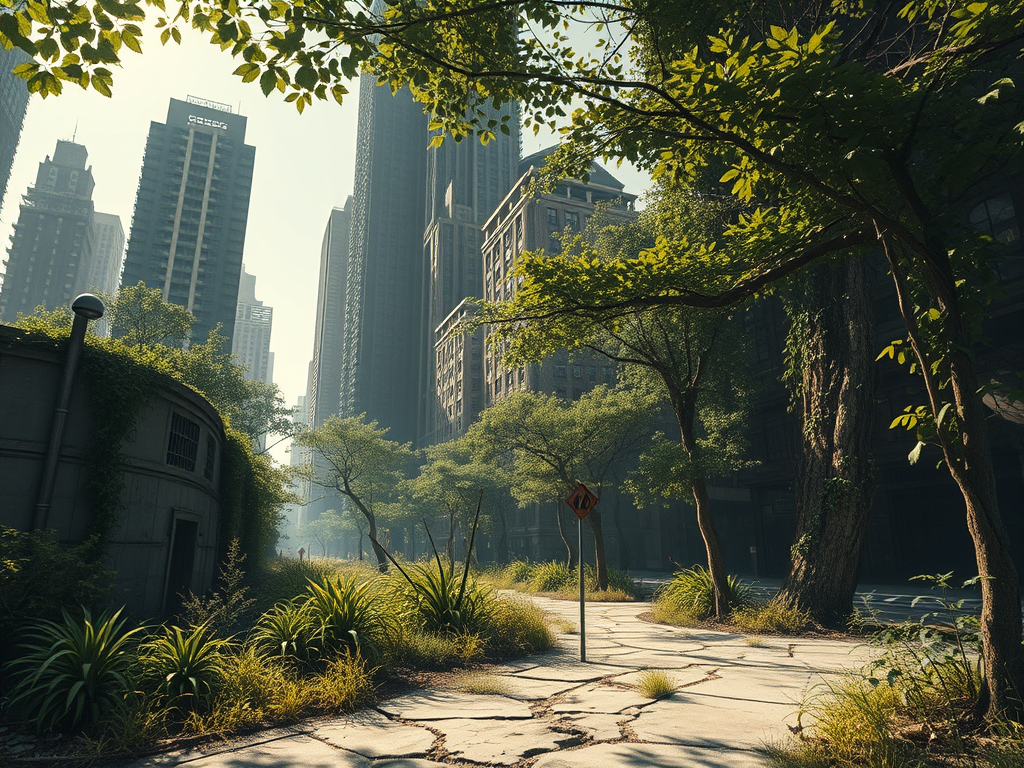
Have you ever wondered what the world would be like without us? Imagine if, all of a sudden, every single person on Earth simply vanished. Poof! No more cars, no more factories, no more cities buzzing with people. What would happen to our buildings? What about the animals? Would nature just take over?
It’s a wild idea, right? While it’s purely hypothetical – humans aren’t going anywhere anytime soon! – thinking about what would happen if humans disappeared is a cool way to understand how powerful nature is and how much of an impact we have on the planet. Scientists and thinkers have explored this idea, and they predict some amazing and surprising changes would begin almost immediately and continue over vast amounts of time.
Let’s take a look at the top 10 things that would likely happen if humans left the Earth!
1. The Lights Would Go Out (Very Quickly)
In our world, electricity is everywhere, powering our homes, schools, and cities. Most of this electricity is generated at power plants that need constant human attention – people to manage the machines, deliver fuel, and make repairs.
If humans suddenly disappeared, these power plants would eventually shut down. Hydroelectric dams might keep generating power for a while, but without maintenance, even they would fail. Solar panels and wind turbines would stop working as components wore out or got damaged without anyone to fix them. Within days or weeks, most of the artificial lights that twinkle across the globe at night would go dark. The planet without people would become a much, much dimmer place after sunset.
2. Our Pets and Farm Animals Would Face Big Challenges
Our furry friends, pets like dogs and cats, and farm animals like cows and chickens, rely on humans for food, water, and shelter. If we were gone, they would suddenly be on their own.
Some domesticated animals might struggle greatly, especially those not used to fending for themselves. House cats might have an easier time adapting to hunting, but many breeds of dogs, cows, and chickens would find it very difficult to survive in the wild. Some might become prey for wild animals. Others might slowly decline in numbers. Over generations, some might adapt and become wilder, while others would likely disappear entirely. This is one of the sad immediate consequences if humans disappeared.
3. Nature Would Start Reclaiming Our Cities
Think about a crack in a sidewalk. What happens if you don’t clear it? Weeds and grass start to push through! Without constant human maintenance – mowing lawns, trimming bushes, fixing roads – plants would begin to grow everywhere.
In cities, streets would crack and buckle as roots push through. Parks and gardens would become overgrown. Vines would climb buildings. Within just a few years, many urban areas would start to look less like concrete jungles and more like actual jungles, with greenery pushing its way through every available space. This is a striking image of nature reclaims cities.
4. Wildlife Populations Would Change Dramatically
With billions of humans removed from the picture, many pressures on wildlife would vanish. Hunting would stop, habitats would no longer be destroyed for farms and cities at the same rapid pace, and pollution would decrease significantly over time.
In many areas, populations of animals that were previously hunted or had their homes taken away would likely increase. Animals that learned to live alongside humans, like rats and pigeons, might initially thrive on leftover resources but would face new challenges from returning predators. Larger animals, like deer, wolves, and bears, might venture into former human areas. It would be a fascinating, and sometimes unpredictable, shift in wildlife after humans.
5. Our Buildings Would Begin to Crumble
Modern buildings are designed to last for decades, but they need constant maintenance to fight against the forces of nature: weather, water, and plant growth.
Without humans to fix leaky roofs, repair cracks, and maintain drainage systems, water would get into buildings, causing rot and rust. Wood would decay, and metal would corrode. Freezing and thawing cycles would crack concrete and brick. As plants grow on and around structures, their roots would cause further damage. Buildings crumble over time without care. Smaller homes might collapse within a few decades, while larger structures like skyscrapers could stand for a couple of centuries before gravity and nature eventually bring them down.
6. Subways and Tunnels Would Flood
Many of our underground structures, like subways, road tunnels, and basements, rely on pumps to remove water that naturally seeps into them from the surrounding soil.
If humans weren’t there to operate and maintain these pumps, they would quickly fail. As a result, underground tunnels and basements in low-lying areas would fill with water. Subway systems would become flooded waterways. This would happen relatively quickly, within days or weeks after the pumps stopped running.
7. Plastic Would Last for a Very Long Time
We talked about the problem of plastic waste. If humans disappeared, all the plastic we’ve ever created would still be here. While sunlight and weather would cause some of it to break into smaller pieces over time, most types of plastic are incredibly durable and take hundreds or even thousands of years to truly break down into their basic components.
So, even without humans adding to the problem, plastic bottles, bags, and other waste would persist in the environment – in landfills, in the oceans, and scattered across the landscape – for a very, very long time. The fate of plastic without humans is a slow, slow disintegration into microplastics, not a quick disappearance.
8. Air and Water Would Become Much Cleaner
Human activity is the main source of many types of pollution, including air pollution from cars and factories, and water pollution from industrial waste and agriculture.
If humans were gone, these sources of pollution would cease almost immediately. Particle pollution in the air would settle, and smog would disappear within weeks or months. Rivers and lakes would no longer receive industrial runoff. While it would take time for ecosystems to recover from past pollution, the air and water would become significantly cleaner over the years and decades that followed.
9. Nuclear Power Plants Would Eventually Cause Problems
Nuclear power plants use controlled nuclear reactions to generate electricity. They require constant monitoring and maintenance to keep them running safely and to manage the highly radioactive waste they produce.
If humans left, the safety systems at nuclear plants would eventually fail. This could lead to meltdowns and releases of radioactive material into the environment. The pools used to cool spent nuclear fuel rods would evaporate without being refilled, causing the rods to overheat and potentially catch fire, releasing dangerous radiation. These areas would become uninhabitable for a long time, posing a significant long-term environmental hazard.
10. The Planet Would Slowly Heal and Rebalance
Over millions of years, without human intervention, Earth’s natural systems would work to recover and rebalance. Forests would regrow in areas that were cleared for agriculture or cities. Animal populations would stabilize based on the available resources and predator-prey relationships. The levels of greenhouse gases in the atmosphere would slowly decrease as human-caused emissions stopped and natural processes absorbed carbon dioxide.
While evidence of human civilization – crumbling ruins, plastic waste, altered landscapes – would persist for incredibly long periods in geological terms, the planet itself would continue to evolve. New species might emerge, and the Earth’s surface would be reshaped by natural forces like erosion, volcanic activity, and tectonic shifts, long after the last trace of humanity had faded. How long does earth take to recover? Millions of years to erase most traces, but nature starts reclaiming immediately.
Further Reading
Curious to learn more about nature, ecology, and how Earth’s systems work? Check out these fascinating books:
- The Wild Robot by Peter Brown (Fiction, but explores nature reclaiming)
- A Child’s Introduction to the Environment by Michael Driscoll and Glenn Ringtved
- Earth! My First 4.54 Billion Years by Stacy McAnulty
- The Magic School Bus and the Climate Challenge by Joanna Cole and Bruce Degen
- Tree Finder: A Manual for Identification by May Theilgaard Watts (Great for understanding local nature)
Exploring the idea of what happens if humans disappeared helps us see just how interconnected everything is on Earth and how powerful natural processes are. It’s a reminder of our impact, both big and small, on the amazing planet we call home.
Here at Zentara.blog, our mission is to take those tricky subjects and unlock them, making knowledge exciting and easy to grasp for everyone. But the adventure doesn’t stop on this page! We’re constantly exploring new frontiers and sharing discoveries across the digital universe.
Want to dive deeper into more mind-bending Top 10s and keep expanding your world? Come join us on our other platforms – we’ve got unique experiences waiting for you on each one!
- Get inspired by visual wonders and bite-sized facts: See the world through Zentara’s eyes on Pinterest! Pin our fascinating facts and stunning visuals to your own boards. Explore Pins on Pinterest: https://uk.pinterest.com/zentarablog/
- Discover quick insights and behind-the-scenes peeks: Hop over to Tumblr for snippets, quotes, and unique content you won’t find anywhere else. It’s a different flavour of discovery! Follow the Fun on Tumblr: https://www.tumblr.com/zentarablog
- Ready for deep dives you can listen to or watch? We’re bringing our accessible approach to video and potentially audio! Subscribe to our YouTube channel and tune into future projects that make learning pop! Subscribe on YouTube: https://www.youtube.com/@ZentaraUK
- Seeking even more knowledge in one place? We’ve compiled some of our most popular topic deep dives into fantastic ebooks! Find them on Amazon and keep the learning journey going anytime, anywhere. Find Our Ebooks on Amazon: https://www.amazon.co.uk/s?k=zentara+uk&crid=2273NA7RAJ1EU&sprefix=zentara+uk%2Caps%2C90&ref=nb_sb_noss
- Connect with us and fellow knowledge seekers: Join the conversation on BlueSky! We’re sharing updates, thoughts, and maybe even asking you what wonders we should explore next. Chat with Us on BlueSky: https://bsky.app/profile/zentarablog.bsky.social
- Perfect for learning on the move! We post multiple 10-minute podcasts per day on Spotify. Pop on your headphones and fill your day with fascinating facts while you’re out and about! Listen on Spotify: https://open.spotify.com/show/3dmHbKeDufRx95xPYIqKhJ
Every click helps us keep bringing honest, accessible knowledge to everyone. Thanks for exploring with us today – see you out there in the world of discovery!

Leave a Reply