
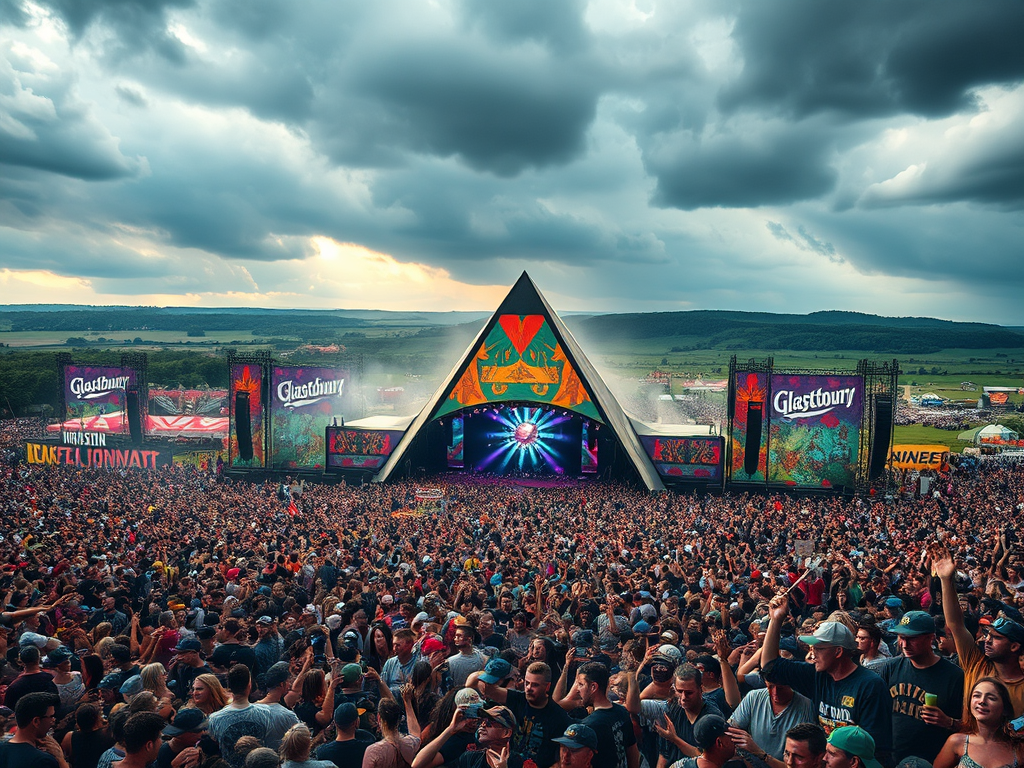
Glastonbury Festival. The name alone conjures images of iconic performances, muddy fields, and half a million people celebrating music and life. It’s one of the most famous festivals in the world, a truly massive event that takes over the landscape of rural Somerset, England, for five unforgettable days.
We all know about the huge Pyramid Stage, the legendary headliners, and the unpredictable British weather. But behind the magic and the mayhem lies a world of incredible facts, surprising statistics, and Glastonbury secrets that even seasoned festival-goers might not know. It’s not just a music festival; it’s a temporary city, a logistical marvel, and a place with a fascinating, often bizarre, Glastonbury history facts.
If you think you know Glastonbury, think again! We’ve dug up some of the most absolutely wild facts about this incredible event that will make you see it in a whole new light. Prepare to have your mind blown by the sheer scale and unusual goings-on at Worthy Farm.
Let’s dive into the unusual things at Glastonbury that make it truly unique!
1. It Becomes a City Bigger Than Oxford
Imagine a major city appearing out of nowhere in the countryside, existing for just five days. That’s essentially what happens at Glastonbury. While the official capacity for ticket holders is around 135,000, when you add in all the performers, crew, volunteers, and staff, the total population on site can soar to over 200,000 people!
To put that into perspective, that’s a population larger than major UK cities like Oxford or Norwich. For a few days, Worthy Farm becomes more populous than many well-known urban areas. This instant city needs everything a real city needs: power, water, waste disposal, emergency services, roads, and places for everyone to sleep, eat, and be entertained. Thinking about this temporary metropolis helps you grasp the immense Glastonbury size comparison to everyday life. It’s not just a field with stages; it’s a fully functioning, albeit temporary, urban centre.
2. The Festival Site is Absolutely Enormous
Just how big is this temporary city? The Glastonbury Festival site covers a staggering area. While the exact acreage can fluctuate slightly depending on the year and specific layout, it typically spans around 900 to 1,100 acres.
What does that mean in real terms? It’s roughly equivalent to about 500-600 football pitches! Walking from one end of the site to the other can take well over an hour, sometimes much longer depending on crowds and mud. Exploring the entire festival would require days of solid walking. This incredible size is why it’s so easy to get lost, discover hidden gems, and feel like you’re on an epic adventure without ever leaving the farm. Understanding this scale is key to appreciating the Glastonbury Festival facts about its physical footprint.
3. It’s Protected by the “Super Fence”
Given its size and popularity, security is a massive undertaking. One of the most visible and impressive security measures is the perimeter fence, affectionately nicknamed the “Super Fence.” This isn’t your average garden fence. It’s a formidable structure, standing around 10-12 feet tall and stretching for approximately 8 kilometers (about 5 miles) around the site’s perimeter.
Built specifically to deter fence-jumpers and prevent people from entering without tickets, the Super Fence is equipped with security features and constantly monitored. Its sheer scale and cost (reportedly millions of pounds) are mind-boggling and highlight the extreme measures needed to manage access to such a huge event. The Super Fence is a wild fact that underscores the security challenges and the value placed on having a ticket to get inside this unique world. It’s a crucial part of the behind the scenes Glastonbury operations.
4. It’s Still a Working Dairy Farm
This is one of the facts that often surprises people the most. Glastonbury Festival doesn’t take place on a dedicated event site; it’s held on Michael Eavis’s (the festival’s founder) actual home and workplace: Worthy Farm, a working dairy farm in Somerset.
For 350 days a year, the fields where world-famous musicians play and hundreds of thousands camp are home to hundreds of cows happily grazing. Before the festival build begins and after the clear-up finishes, the farm returns to its usual rhythm of milk production. The cows are moved to other fields away from the main hustle and bustle during the festival week. This dual life as both a functioning farm and a global cultural landmark is a truly unusual thing at Glastonbury and a core part of its identity. Yes, milk is still being produced nearby while you’re watching your favorite band!
5. The Infrastructure is Like Building a Small City’s Utilities
Think about everything a city needs: water pipes, sewage systems, electricity supply, roads, and waste disposal. Glastonbury Festival requires all of this, built from scratch, temporarily, every year. We’re talking about incredible numbers: thousands of flushing toilets and even more composting toilets and long drops (essential for hygiene!), hundreds of miles of temporary water pipes, and a complex temporary power grid requiring hundreds of miles of cables.
Getting clean water to everyone and dealing with the vast amount of wastewater and sewage are huge engineering challenges. Similarly, powering dozens of stages, thousands of lights, countless food stalls, and all the other facilities requires a massive, temporary electrical network. The sheer logistical scale of providing these basic services for over 200,000 people in a field is one of the most impressive and often unseen behind the scenes Glastonbury facts.
6. The Very First Festival Cost Just £1 and Included Free Milk
Wind back the clock to 1970. The first event at Worthy Farm, then called the Pilton Pop, Blues & Folk Festival, was a far cry from the global phenomenon we know today. The ticket price? A mere £1! And that wasn’t all – the price of admission famously included free milk from the farm.
Attendance was much smaller, around 1,500 people, a tiny fraction of today’s numbers. The headline act was T. Rex, booked last minute after the original headliner pulled out. The festival was much more laid-back and spontaneous, heavily influenced by hippie counter-culture. Comparing that initial, small-scale, milk-fueled gathering to the enormous production of today highlights the incredible evolution and makes the Glastonbury history facts truly fascinating. It shows just how much this event has grown from its humble, dairy-assisted beginnings.
7. It Generates a Staggering Amount of Waste
With over 200,000 people on site, it’s probably not surprising that the festival generates a colossal amount of waste. We’re talking hundreds of tonnes of rubbish, from food wrappers and plastic bottles to broken tents and discarded camping gear. While the festival puts enormous effort into encouraging recycling and provides thousands of bins, the sheer volume remains a massive challenge.
The clear-up operation after the festival is itself a monumental task, employing hundreds of people for weeks to clean the site and separate recyclable materials. The amount of waste left behind is a stark reminder of the environmental impact of such a large gathering and underscores the importance of the festival’s “Leave No Trace” campaign, which encourages attendees to take their rubbish and camping equipment home. This fact sheds light on the less glamorous, but critically important, side of the Glastonbury Festival facts.
8. There Are Secret Areas and Hidden Tunnels
While the main stages are obvious, part of the magic of Glastonbury is getting lost and discovering hidden gems. Beyond the well-known areas, there are numerous smaller, unofficial, or less-publicized venues, bars, and art installations tucked away across the massive site.
In certain areas, particularly in the late-night realms like the South East Corner, you might stumble upon a secret piano bar hidden in a bus, a tiny stage in a peculiar structure, or even hear rumors of old tunnels or hidden pathways (though access is often restricted or purely mythological). These hidden spaces add to the festival’s mystique and reward the adventurous explorer. Discovering these Glastonbury secrets makes the experience feel personal and adds to the sense of stepping into another world, separate from the main crowds.
9. The Logistics of Getting Everyone In and Out Are a Masterclass
Imagine the challenge of moving over 200,000 people, plus their vehicles and mountains of gear, into a relatively small area over a couple of days, and then getting them all out again. The traffic management and transport planning for Glastonbury is an absolutely colossal undertaking, a true logistical masterclass.
Temporary road closures, extensive signage, dedicated car parks spread over vast fields (which themselves become temporary villages), shuttle buses running constantly, and managing the influx and outflow at the nearest train station (Castle Cary) are all part of the intricate plan. Despite meticulous planning, traffic jams stretching for miles are legendary on the Wednesday and Monday of the festival. It highlights the sheer scale of humanity converging on one spot and the complexity involved in managing such a massive, temporary migration. These behind the scenes Glastonbury logistics are mind-blowing.
10. Miles Upon Miles of Cable Power the Site
Powering a temporary city the size of Glastonbury requires an unbelievable amount of cabling. Think about all the stages, sound systems, lighting rigs, food stalls, market traders, showers, toilets, production offices, and camping areas – every single one needs electricity.
Estimates for the total length of temporary power, lighting, sound, and data cables snaking across Worthy Farm during the festival are staggering, often cited in the hundreds of miles. Laying, managing, and ensuring the safety of this vast network is a monumental task carried out by specialist crews before the festival opens. It’s a hidden, complex web that keeps the entire event running, a truly wild Glastonbury Festival fact that you don’t see but relies upon constantly. It’s another layer of the temporary infrastructure that makes the festival possible.
From its humble beginnings on a dairy farm to becoming a temporary city hosting hundreds of thousands, Glastonbury Festival is an event packed with absolutely wild and unbelievable facts. The scale, the logistics, the history, and the sheer effort that goes into creating this magical experience are truly astounding. Whether you’re one of the lucky attendees or just curious about this global phenomenon, these Glastonbury Festival facts offer a peek behind the curtain of the greatest show on Earth (in a field!).
Further Reading
Interested in learning more about the history and culture of Glastonbury Festival? Check out these books:
- Glastonbury 50: The Official Story of the UK’s Greatest Festival by Emily Eavis & Michael Eavis
- Glastonbury: The Pyramid Stage and Other Stages by Caroline Barton & Anna Parkinson
- Glastonbury Tales by John Robb
- Worthy Farm: Home of Glastonbury Festival by Michael Eavis
Here at Zentara.blog, our mission is to take those tricky subjects and unlock them, making knowledge exciting and easy to grasp for everyone. But the adventure doesn’t stop on this page! We’re constantly exploring new frontiers and sharing discoveries across the digital universe.
Want to dive deeper into more mind-bending Top 10s and keep expanding your world? Come join us on our other platforms – we’ve got unique experiences waiting for you on each one!
- Get inspired by visual wonders and bite-sized facts: See the world through Zentara’s eyes on Pinterest! Pin our fascinating facts and stunning visuals to your own boards. Explore Pins on Pinterest: https://uk.pinterest.com/zentarablog/
- Discover quick insights and behind-the-scenes peeks: Hop over to Tumblr for snippets, quotes, and unique content you won’t find anywhere else. It’s a different flavour of discovery! Follow the Fun on Tumblr: https://www.tumblr.com/zentarablog
- Ready for deep dives you can listen to or watch? We’re bringing our accessible approach to video and potentially audio! Subscribe to our YouTube channel and tune into future projects that make learning pop! Subscribe on YouTube: https://www.youtube.com/@ZentaraUK
- Seeking even more knowledge in one place? We’ve compiled some of our most popular topic deep dives into fantastic ebooks! Find them on Amazon and keep the learning journey going anytime, anywhere. Find Our Ebooks on Amazon: https://www.amazon.co.uk/s?k=zentara+uk&crid=2273NA7RAJ1EU&sprefix=zentara+uk%2Caps%2C90&ref=nb_sb_noss
- Connect with us and fellow knowledge seekers: Join the conversation on BlueSky! We’re sharing updates, thoughts, and maybe even asking you what wonders we should explore next. Chat with Us on BlueSky: https://bsky.app/profile/zentarablog.bsky.social
- Perfect for learning on the move! We post multiple 10-minute podcasts per day on Spotify. Pop on your headphones and fill your day with fascinating facts while you’re out and about! Listen on Spotify: https://open.spotify.com/show/3dmHbKeDufRx95xPYIqKhJ
Every click helps us keep bringing honest, accessible knowledge to everyone. Thanks for exploring with us today – see you out there in the world of discovery!




Leave a Reply