
Beyond the Latkes and Lights
Table of Contents
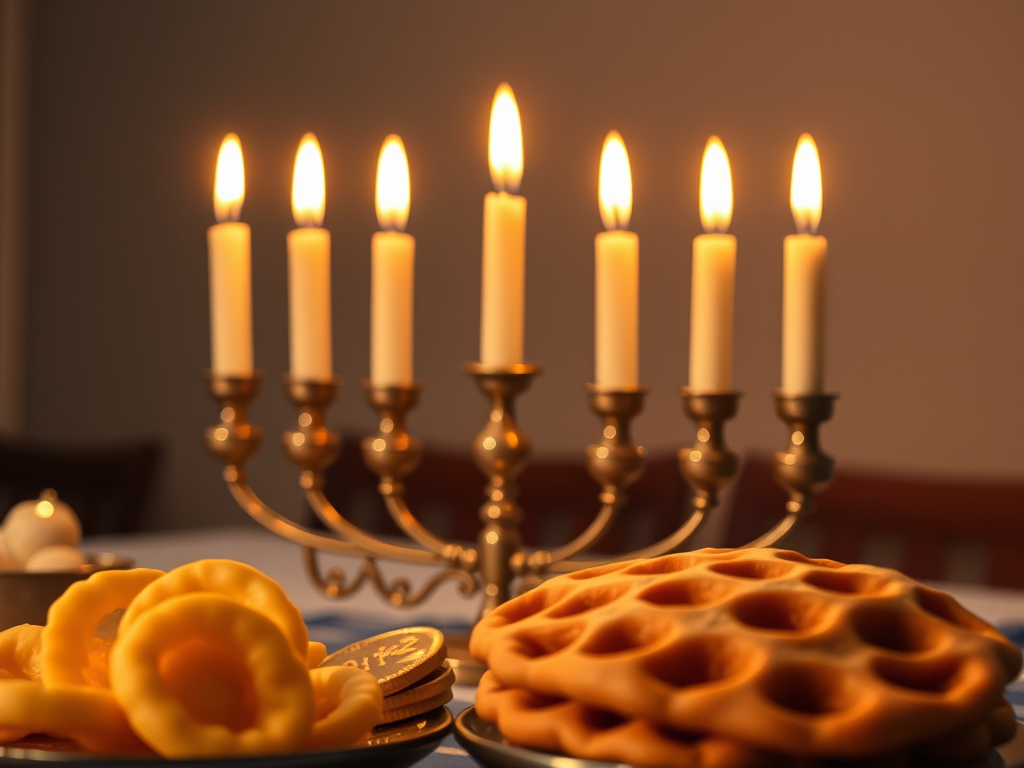
For many, Hanukkah is the most recognizable Jewish holiday on the calendar, famous for its flickering candles, golden chocolate coins, and potato pancakes. Often viewed by the wider world as a sort of “Jewish Christmas” due to its proximity to December 25th, the “Festival of Lights” actually possesses a distinct, gritty, and fascinating history that has nothing to do with Santa Claus or snowy mangers. It is a holiday born from a violent revolution, theological debates, and a fight for cultural survival that dates back over 2,000 years.
While the story of the single jar of oil lasting for eight days is the version most children learn in Hebrew school, the historical reality is far more complex and intriguing. From its origins as a delayed harvest festival to the surprising roots of its gambling traditions, Hanukkah is a layered celebration that has evolved significantly over centuries. As of June 12, 2025, it remains a vibrant symbol of resilience and identity, celebrated by millions globally.
Whether you are lighting the candles yourself or simply curious about the traditions of your neighbors, understanding the deeper context of Hanukkah reveals a story of adaptation and endurance. Here are ten fundamental facts that illuminate the true meaning and history of the Festival of Lights.
1. The “Miracle of the Oil” Wasn’t in the Original Story
If you ask someone why Hanukkah is celebrated, they will almost certainly tell you the story of the oil: when the Jews retook the Temple, they found only enough pure olive oil to keep the eternal flame lit for one day, but miraculously, it burned for eight. However, this defining miracle is completely missing from the earliest historical accounts of the holiday.
The story of Hanukkah is primarily recorded in the Books of Maccabees, which were written shortly after the events took place in the 2nd century BCE. In these texts, the focus is entirely on the military victory of the Maccabees—a small band of Jewish guerilla fighters—over the mighty Seleucid Empire. The books describe the rededication of the Temple in great detail but make no mention of a supernatural oil event.
It wasn’t until centuries later, when the Talmud (a central text of Rabbinic Judaism) was compiled, that the story of the oil appeared. Historians believe the ancient rabbis may have emphasized the miracle of the oil to shift the holiday’s focus away from a celebration of military might and human warfare, centering it instead on Divine intervention and spiritual purity. This shift helped transform Hanukkah from a commemoration of a battle into a celebration of faith, ensuring its relevance even when the Jewish people no longer had a standing army.
2. Hanukkah Was Originally a Delayed Sukkot Celebration
One of the most common questions about Hanukkah is, “Why does it last for eight days?” While the miracle of the oil provides a beautiful spiritual explanation, history offers a practical one. When the Maccabees were fighting to liberate Jerusalem, they were living in caves and conducting guerilla warfare, which made it impossible for them to celebrate the major biblical holiday of Sukkot.
Sukkot, known as the Feast of Booths, is an eight-day harvest festival that was one of the most important pilgrimages to the Temple in ancient times. The Second Book of Maccabees explicitly states that when the Jews finally recaptured the Temple, they celebrated the rededication with “gladness like the Feast of Tabernacles” (Sukkot) because they had been unable to observe it at its proper time in the autumn.
Essentially, the very first Hanukkah was a makeup date for Sukkot. The eight-day duration of the celebration was carried over from the harvest festival. Over time, as Hanukkah developed its own unique identity, the connection to Sukkot faded from popular memory, but the eight-day structure remained. This historical link reminds us that religious traditions often evolve from practical necessities and the human need to maintain order and celebration even amidst the chaos of war.
3. The Menorah and the Hanukkiah Are Not the Same
The candelabra is the central symbol of Hanukkah, and while most people call it a “menorah,” that term is technically a bit broad. In Hebrew, menorah simply means “lamp.” The specific lamp used during Hanukkah is distinct from the ancient symbol used in the Holy Temple, and the difference lies in the number of branches.
The original Temple Menorah, a symbol dating back to the Bible, had seven branches. It was a holy object used in daily worship, and according to Jewish law, it was forbidden to replicate it exactly for personal use. This is why the lamp used for Hanukkah has nine branches: eight for the nights of the holiday and one for the “helper” candle (the shamash).
In modern Hebrew, this nine-branched candelabra is more accurately called a hanukkiah. The design change was both practical—to accommodate the eight-day festival—and respectful of religious law, distinguishing the holiday lamp from the sacred Temple vessel. While English speakers almost universally use the word “menorah,” knowing the distinction reveals a fascinating layer of reverence for the past. The hanukkiah is not just a light source; it is a specifically designed tool for publicizing a miracle without infringing on the sanctity of the Temple’s original design.
4. Cheese Was the Original Hanukkah Food
Today, the potato latke is the undisputed king of Hanukkah cuisine in the West. However, potatoes were unknown in the Old World until they were brought over from the Americas in the 16th century. For nearly a thousand years before the first potato was fried, the traditional food of Hanukkah was actually cheese and other dairy products.
This tradition is linked to the story of Judith, a beautiful widow who saved her town from an invading Assyrian army. According to the legend, Judith charmed the enemy general, Holofernes, and fed him salty cheese to make him thirsty. When he drank copious amounts of wine to quench his thirst and passed out, she beheaded him, leading to a Jewish victory.
Although Judith’s story predates the Maccabees, medieval Jewish tradition linked her bravery to the fight against tyranny celebrated during Hanukkah. For centuries, Jews ate cheese pancakes and dairy dishes to honor her courage. It was only when potatoes became a cheap, staple crop in Eastern Europe that the fried potato latke took over, largely displacing the dairy tradition in Ashkenazi (European) communities. Yet, in many Sephardic and Italian communities, dairy dishes remain a central, delicious part of the holiday feast.
5. The Dreidel Game Has Gambling Roots
The dreidel, a four-sided spinning top, is the most famous game associated with Hanukkah. Children are taught that the Hebrew letters on the sides—Nun, Gimel, Hey, and Shin—stand for the phrase Nes Gadol Haya Sham (“A Great Miracle Happened There”). While this acronym is a clever and meaningful reinterpretation, the game itself likely originated from a popular European gambling game.
Historians trace the dreidel to a generic “teetotum” game played in Germany and England during the Middle Ages. The letters on the German tops were N (Nichts – nothing), G (Ganz – all), H (Halb – half), and S (Stell ein – put in). These rules are identical to the modern dreidel game. Yiddish-speaking Jews adopted the game, adapting the German letters to the closest Hebrew sounds (Nun, Gimel, Hey, Shin).
Later, the religious meaning was layered onto the game to give it spiritual significance. Interestingly, in modern Israel, the letter Shin (“There”) is often replaced with the letter Pe, standing for Po (“Here”), changing the phrase to “A Great Miracle Happened Here.” This small change reclaims the geography of the story, reminding players that they are standing on the very land where the Maccabean revolt took place.
6. The “Shamash” Candle serves a Legal Purpose
On every Hanukkiah, one candle stands apart from the rest—usually higher, lower, or to the side. This is the shamash, or “helper” candle. Its presence is not just for aesthetic balance; it solves a specific religious problem regarding the use of holy objects.
According to Jewish tradition, the Hanukkah lights are sacred. Their sole purpose is to “publicize the miracle,” and they are strictly forbidden from being used for any practical task. You cannot use a Hanukkah candle to read a book, sew a button, or even light another candle. Doing so would demean the holiness of the mitzvah (commandment).
The shamash acts as a loophole. It is the worker bee of the menorah. We use the shamash to light the other candles, and once lit, it remains burning so that if we accidentally use the light of the menorah to find our keys or read a label, we can say we were using the light of the shamash, not the holy lights. This “ninth candle” represents the separation between the sacred and the profane, ensuring that the act of remembrance remains pure and focused solely on the spiritual celebration.
7. “Gelt” Evolved from Tipping Teachers
Chocolate coins, known as gelt, are a beloved treat during Hanukkah, but this tradition didn’t start with candy. The word gelt is Yiddish for “money,” and the custom of giving cash during Hanukkah began in Eastern Europe as a way to support Jewish education.
Originally, students would give coins to their teachers during Hanukkah as a holiday tip or bonus. It was a way for the community to show appreciation for the educators who taught Torah throughout the year. Eventually, the custom expanded. Teachers began giving a few coins back to the students to encourage their studies, and soon, parents started giving small amounts of money to their children as well.
It wasn’t until the 1920s, largely in America, that chocolatiers saw a marketing opportunity. They began producing foil-wrapped chocolate coins as a sweet, kid-friendly substitute for real money. This innovation allowed children to enjoy the tradition of “wealth” without the inflation, and the chocolate coins became a staple for betting in games of dreidel. The shift from real currency to chocolate reflects the holiday’s transition into a more child-centric family celebration in the modern era.
8. The “Festival of Lights” Name is a Mystery
We take the nickname “Festival of Lights” for granted, assuming it refers to the menorah. However, the first person to use this term was the historian Josephus in the 1st century CE, and his explanation for the name is surprisingly vague. Writing for a Roman audience, Josephus called the holiday “Lights” (Phota in Greek), but he didn’t mention the oil miracle at all.
Instead, Josephus speculated that the name referred to the sudden “light” of liberty that appeared for the Jewish people when they regained their freedom to worship. He wrote, “I suppose the reason was because this liberty beyond our hopes appeared to us; and that thence was the name given to that festival.”
This suggests that the association with physical light might have been metaphorical before it became literal. The lighting of torches and lamps was a common way to celebrate victories in the ancient world. Over the centuries, the physical ritual of lighting the menorah and the metaphorical light of freedom merged, cementing the title “Festival of Lights” in the public consciousness. It serves as a reminder that Hanukkah is as much about the abstract light of freedom as it is about the physical flame of a candle.
9. There is No “Correct” English Spelling
If you have ever hesitated before typing “Hanukkah” in a text message, unsure if it needs two Ns, two Ks, or a Ch, you are not alone. The confusion stems from the fact that the word is Hebrew, not English, and the Hebrew alphabet contains sounds that do not have perfect equivalents in the Latin alphabet.
The Hebrew word Ḥanukkah begins with the letter ḥet, a guttural throat sound similar to the “ch” in the Scottish “Loch.” English doesn’t have this sound. As a result, transliterations vary wildly. “Chanukah” attempts to capture the sound with a “Ch,” while “Hanukkah” uses an “H” to make it easier for English speakers to pronounce.
The double “k” in “Hanukkah” comes from the Hebrew letter kaf, which contains a dot (dagesh) indicating a strong or doubled sound. While “Hanukkah” has become the most widely accepted spelling in American media and the Library of Congress, “Chanukah” is still favored by many traditionalists. Ultimately, because it is a transliteration, there is no single “correct” spelling—so you can stop worrying about the typos. The variety of spellings is simply a linguistic footprint of the holiday’s journey across cultures.
10. It is religiously “Minor” but Culturally “Major”
Perhaps the most surprising fact for non-Jewish observers is that, from a strictly religious standpoint, Hanukkah is a minor holiday. It is not mentioned in the Torah (the five books of Moses) because the events took place after the Bible was written. Unlike the “High Holy Days” of Rosh Hashanah and Yom Kippur, or the pilgrimage festivals like Passover, there are no restrictions on working or driving during Hanukkah.
However, culturally, Hanukkah has become a heavyweight, particularly in North America. This elevation is largely due to its timing. As Jewish immigrants settled in America, they wanted their children to feel pride in their heritage during a season dominated by Christmas. Hanukkah provided a perfect counter-narrative: a festival that involved lights, gifts, and family gatherings.
This evolution highlights the adaptability of tradition. While the religious requirements of Hanukkah are relatively simple—light the candles and recite the blessings—the cultural attachment to the holiday is immense. It demonstrates how a community can elevate a minor festival into a major touchstone of identity to preserve a sense of belonging in a multicultural society.
Further Reading
- Hanukkah in America: A History by Dianne Ashton.
- My Glorious Brothers by Howard Fast.
- The Hanukkah Anthology by Philip Goodman.
- Hanukkah: The Oil That Didn’t Burn Out by David A. Adler (Great for families).
- The Sword of Judith: Judith Studies Across the Disciplines by Kevin R. Brine (For a deep dive into the Judith connection).
Keep the Discovery Going!
Here at Zentara, our mission is to take tricky subjects and unlock them, making knowledge exciting and easy to grasp. But the adventure doesn’t stop at the bottom of this page. We are constantly creating new ways for you to learn, watch, and listen every single day.
Watch & Learn on YouTube
Visual learner? We publish 4 new videos every day, plus breaking news shorts to keep you smarter than the headlines. From deep dives to quick facts, our channel is your daily visual dose of wonder.
Click here to Subscribe to Zentara on YouTube
Listen on the Go on Spotify
Prefer to learn while you move? Tune into the Zentara Podcast! We drop a new episode daily, perfect for your commute, workout, or coffee break. Pop on your headphones and fill your day with fascinating facts.
Click here to Listen on Spotify
Every click, view, and listen helps us keep bringing honest knowledge to everyone. Thanks for exploring with us today—see you out there in the world of discovery!




Leave a Reply