
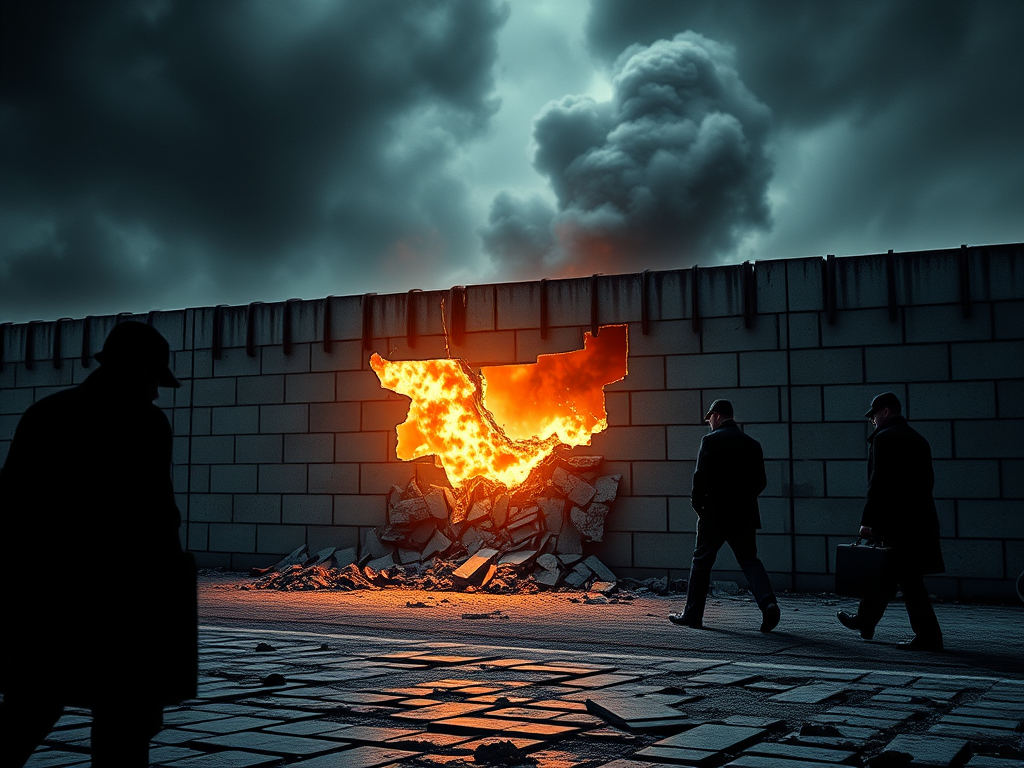
The Cold War was a time of tension and mystery, a decades-long standoff between superpowers where secrets were powerful weapons. From the end of World War II until the early 1990s, the United States and the Soviet Union, along with their allies, engaged in a global struggle that thankfully never turned into a full-scale “hot” war between them. Instead, it was fought with spies, propaganda, proxy conflicts, and a terrifying arms race.
For years, both sides kept their most sensitive projects and operations hidden away, locked behind layers of top secret clearance. People on both sides of the Iron Curtain could only guess at the full extent of what the other was doing. But then, dramatic changes swept across the world. The Berlin Wall fell in 1989, a symbol of the division between East and West crumbling down. Soon after, the Soviet Union itself dissolved in 1991.
When the Cold War ended, it was like a giant, heavy curtain was lifted. Suddenly, archives began to open, former agents started to talk, and declassified documents revealed truths that had been hidden for decades. These post Cold War revelations changed how we understood this critical period of history. What astonishing Cold War secrets revealed themselves once the dust settled? Let’s uncover some of the most surprising facts that came to light after the world breathed a collective sigh of relief.
Here are 10 astonishing secrets we only truly understood after the Cold War ended:
1. The Stasi’s Unbelievable Web of Spies in East Germany
Imagine living in a place where it felt like someone was always watching you. That was life for many in East Germany (officially called the German Democratic Republic, or GDR) under the watchful eye of the Stasi, the secret police. During the Cold War, it was known the Stasi were powerful and spied on their own people, but the sheer scale of their operation was only fully grasped when the Stasi files secrets were revealed after the Berlin Wall fell.
When their headquarters were stormed by citizens in 1990, people discovered vast rooms filled floor-to-ceiling with files. These weren’t just files on suspected enemies of the state; they contained detailed reports on millions of ordinary citizens. Friends spied on friends, neighbours on neighbours, and even family members on each other. The Stasi had official officers, but they relied heavily on a massive network of unofficial informants – regular people who were persuaded, pressured, or paid to report on their fellow citizens. These revelations were shocking, showing a level of surveillance and control that was far more extensive than most outsiders, or even many East Germans, had ever imagined. The declassified Cold War files from the Stasi archive continue to shed light on this chilling aspect of life behind the Iron Curtain.
2. The True Depth of Soviet Espionage in the West
Espionage was a constant, shadowy battle throughout the Cold War. Both sides tried to steal each other’s secrets, especially regarding military and nuclear technology. The West knew the Soviets were trying to spy on them, but the full, damaging extent of Soviet secrets exposed through moles placed high within Western governments and intelligence agencies only became truly clear after the Cold War’s end. Cases like those of Aldrich Ames in the CIA and Robert Hanssen in the FBI, both exposed in the 1990s and early 2000s respectively, revealed that Soviet intelligence had managed to compromise national security at incredibly high levels for years.
These weren’t low-level spies; they were people with access to critically important information. The damage they caused, including the deaths of Western agents whose identities they revealed to the Soviets, was immense. The collapse of the Soviet Union and the defection or capture of key figures, along with the opening (to some extent) of former Soviet archives, allowed investigators to piece together a more complete picture of the networks and the information that had been stolen, highlighting just how deeply the spy war had penetrated Western institutions.
3. Alarming Nuclear Near Misses We Didn’t Know About
The threat of nuclear war loomed large over the entire Cold War. Both the US and the Soviet Union built up massive arsenals of nuclear weapons, capable of destroying the world many times over. While the Cuban Missile Crisis in 1962 was a famously tense standoff, it turns out there were other moments where the world came terrifyingly close to nuclear catastrophe, only for us to learn the full details much later.
As declassified Cold War files and accounts from former officials on both sides emerged after the Cold War, stories of technical malfunctions, misinterpreted radar signals, and human errors came to light. For example, a Soviet system once mistook sunlight reflecting off clouds for incoming US missiles. Another time, a US early warning system indicated incoming Soviet missiles due to a faulty computer chip. In several instances, military personnel on duty had to make split-second decisions that could have escalated into nuclear war, and thankfully, they chose de-escalation. These nuclear near misses Cold War revelations were sobering reminders of the fragility of peace and how close humanity came to disaster due to technical glitches or misjudgment during the height of tensions.
4. More Startling Details About Project MKUltra
The idea of mind control sounds like something out of a science fiction movie, but during the Cold War, the CIA actually ran a top-secret program called Project MKUltra. Its goal was to research and develop techniques for interrogation, manipulation, and mind control, often involving experiments with drugs like LSD, hypnosis, and psychological torture. Some information about MKUltra was revealed in the 1970s through government investigations like the Church Committee, but many documents had been destroyed.
However, more details and a fuller understanding of the program’s scope and methods continued to emerge in the post Cold War revelations, as further documents were declassified under Freedom of Information Act requests in the years that followed. These later revelations confirmed that the CIA had conducted experiments on unwitting American and Canadian citizens, often with devastating psychological effects. The Project MKUltra details revealed highlighted the extreme measures some were willing to take in the name of national security during the paranoia of the Cold War, and raised serious ethical questions about government power and human rights.
5. Secret Wartime Plans That Were Never Used (Like Operation Unthinkable)
The Cold War was characterized by proxy wars and the threat of direct conflict. While the main superpowers never fought each other directly, they made detailed plans for what would happen if they did. One astonishing plan revealed after the Cold War was “Operation Unthinkable,” developed by the British military in 1945, right as World War II was ending and tensions with the Soviet Union were rising.
Declassified in 1998, this was a plan for a surprise attack on the Soviet Union by Allied forces (primarily British and American) shortly after the defeat of Nazi Germany. The goal was vaguely defined as imposing the “will of the United States and British Empire upon Russia,” particularly regarding the future of Poland. The plan was ultimately deemed militarily unfeasible due to the sheer size and position of the Soviet forces. The revelation of Operation Unthinkable was surprising because it showed that even before the term “Cold War” was widely used, serious consideration was given to a military conflict between the recent allies, highlighting the deep mistrust that existed from the very beginning and providing context for the decades of tension that followed.
6. The Scale of Environmental Destruction in the Eastern Bloc
Behind the Iron Curtain, the drive for rapid industrialization in the Soviet Union and its satellite states often came at a terrible cost to the environment. During the Cold War, information about pollution and environmental damage was heavily suppressed by these governments. It was seen as a sign of weakness or failure compared to the West. When the Cold War ended and these countries opened up, the true scale of the environmental problems became appallingly clear.
Vast areas were found to be heavily polluted by unchecked industrial waste, acid rain, and the consequences of reckless resource extraction. Rivers were poisoned, air quality was dangerously poor in many cities, and regions suffered long-term ecological damage. The environmental legacy of the Cold War in Eastern Europe and the former Soviet Union was a shocking post Cold War revelation, demonstrating that the intense focus on military and industrial power had led to a hidden crisis that would take decades and enormous resources to address. It was a stark reminder that the cost of the Cold War wasn’t just measured in military spending and political tension.
7. The Untold Failures and Setbacks of the Soviet Space Program
The Space Race was a thrilling and highly visible part of the Cold War competition between the US and the Soviet Union. Both nations poured vast resources into achieving milestones like launching the first satellite (Sputnik) or putting the first human in space (Yuri Gagarin). While the Soviets trumpeted their successes, their failures and setbacks were closely guarded secrets, only fully revealed after the Soviet Union’s collapse.
We learned about catastrophic rocket failures that killed engineers and cosmonauts, including the Nedelin catastrophe in 1960 where a prototype missile exploded on the launchpad, killing scores of people, a disaster kept secret for decades. We also learned the full story of their ambitious but ultimately failed program to land a cosmonaut on the Moon, complete with details of their giant N1 rocket, which repeatedly failed during test launches. These Soviet secrets exposed after the Cold War painted a more complete, and at times tragic, picture of the intense pressure and risks involved in the Space Race on the Soviet side, showing that their journey to the stars was far from the seamless series of triumphs it was presented as during the Cold War.
8. The Bizarre Reality of Some Cold War Spy Technology
The world of Cold War espionage conjures images of trench coats and secret documents, but it also involved incredible, sometimes outlandish, technology. Both the CIA and the KGB developed ingenious gadgets and techniques for surveillance, communication, and sabotage. While some spy tools were publicly known or suspected, the full details and the sheer creativity (and sometimes strangeness) of Cold War spy technology secrets were revealed through declassified documents, museum exhibits, and accounts from former spies after the conflict ended.
Examples include tiny cameras hidden in buttons, microphones concealed in everyday objects like shoes or even plants, and elaborate methods for secretly passing information. There were also more bizarre projects, like attempts to use trained animals for surveillance or developing toxins and poisons for assassination attempts. The declassified Cold War files showcased a level of ingenuity and paranoia that pushed the boundaries of technology and ethics, turning ordinary items into tools of intrigue and revealing a hidden world of high-tech cat-and-mouse games played out in the shadows.
9. The “City Under Ice”: Project Iceworm’s Secret Purpose
Deep under the Greenland ice sheet, the US Army once embarked on a highly ambitious project called Camp Century, often publicly described as an Arctic research station. However, one of the most astonishing Cold War secrets revealed years later was the project’s hidden military purpose: Project Iceworm. The real goal was to build a vast network of underground tunnels and launch sites for nuclear missiles, hidden from Soviet detection.
The idea was to create a mobile missile base under the ice, making it virtually impossible for the Soviets to target. Construction of the “city under ice” with its own power plant, research labs, and living quarters began in the late 1950s. However, the project faced significant technical challenges, primarily the movement of the ice sheet itself, which threatened to crush the tunnels. The project was eventually deemed impractical and shut down in 1966, but its secret purpose as a potential nuclear missile base was not widely known or confirmed until long after the Cold War, when details emerged from declassified Cold War files, revealing the audacity and risks taken in the nuclear arms race.
10. The True Weakness of the Soviet Economy
During the Cold War, the Soviet Union projected an image of economic strength and stability, claiming that communism was a superior system to capitalism. While there were signs of economic problems, especially in comparison to the booming economies of the West, the true depth of the Soviet economy’s weakness and inefficiency was one of the most significant post Cold War revelations.
After the collapse of the USSR, internal documents and analysis revealed a system plagued by central planning failures, chronic shortages of basic goods, low productivity, rampant corruption, and unsustainable military spending that drained resources. The Soviet economy was much closer to collapse than most in the West had realized. This understanding fundamentally changed how historians and economists viewed the Cold War, highlighting that the internal pressures of a failing economic system played a crucial role in the Soviet Union’s eventual dissolution, a far cry from the image of an unshakeable economic power it had tried to maintain for decades.
The end of the Cold War didn’t just change the political map; it opened a window into a hidden history, revealing astonishing secrets that reshaped our understanding of this tense and transformative era.
Further Reading
- The Cold War: A Very Short Introduction by Robert J. McMahon
- Spying and the Cold War by Susana Zarate
- The Stasi: The East German Secret Police by John Almond
- A Young People’s History of the Cold War: From the Beginning to the End by Michael L. Printz
Here at Zentara.blog, our mission is to take those tricky subjects and unlock them, making knowledge exciting and easy to grasp for everyone. But the adventure doesn’t stop on this page! We’re constantly exploring new frontiers and sharing discoveries across the digital universe.
Want to dive deeper into more mind-bending Top 10s and keep expanding your world? Come join us on our other platforms – we’ve got unique experiences waiting for you on each one!
- Get inspired by visual wonders and bite-sized facts: See the world through Zentara’s eyes on Pinterest! Pin our fascinating facts and stunning visuals to your own boards. Explore Pins on Pinterest: https://uk.pinterest.com/zentarablog/
- Discover quick insights and behind-the-scenes peeks: Hop over to Tumblr for snippets, quotes, and unique content you won’t find anywhere else. It’s a different flavour of discovery! Follow the Fun on Tumblr: https://www.tumblr.com/zentarablog
- Ready for deep dives you can listen to or watch? We’re bringing our accessible approach to video and potentially audio! Subscribe to our YouTube channel and tune into future projects that make learning pop! Subscribe on YouTube: https://www.youtube.com/@ZentaraUK
- Seeking even more knowledge in one place? We’ve compiled some of our most popular topic deep dives into fantastic ebooks! Find them on Amazon and keep the learning journey going anytime, anywhere. Find Our Ebooks on Amazon: https://www.amazon.co.uk/s?k=zentara+uk&crid=2273NA7RAJ1EU&sprefix=zentara+uk%2Caps%2C90&ref=nb_sb_noss
- Connect with us and fellow knowledge seekers: Join the conversation on BlueSky! We’re sharing updates, thoughts, and maybe even asking you what wonders we should explore next. Chat with Us on BlueSky: https://bsky.app/profile/zentarablog.bsky.social
- Perfect for learning on the move! We post multiple 10-minute podcasts per day on Spotify. Pop on your headphones and fill your day with fascinating facts while you’re out and about! Listen on Spotify: https://open.spotify.com/show/3dmHbKeDufRx95xPYIqKhJ
Every click helps us keep bringing honest, accessible knowledge to everyone. Thanks for exploring with us today – see you out there in the world of discovery!




Leave a Reply