
Table of Contents
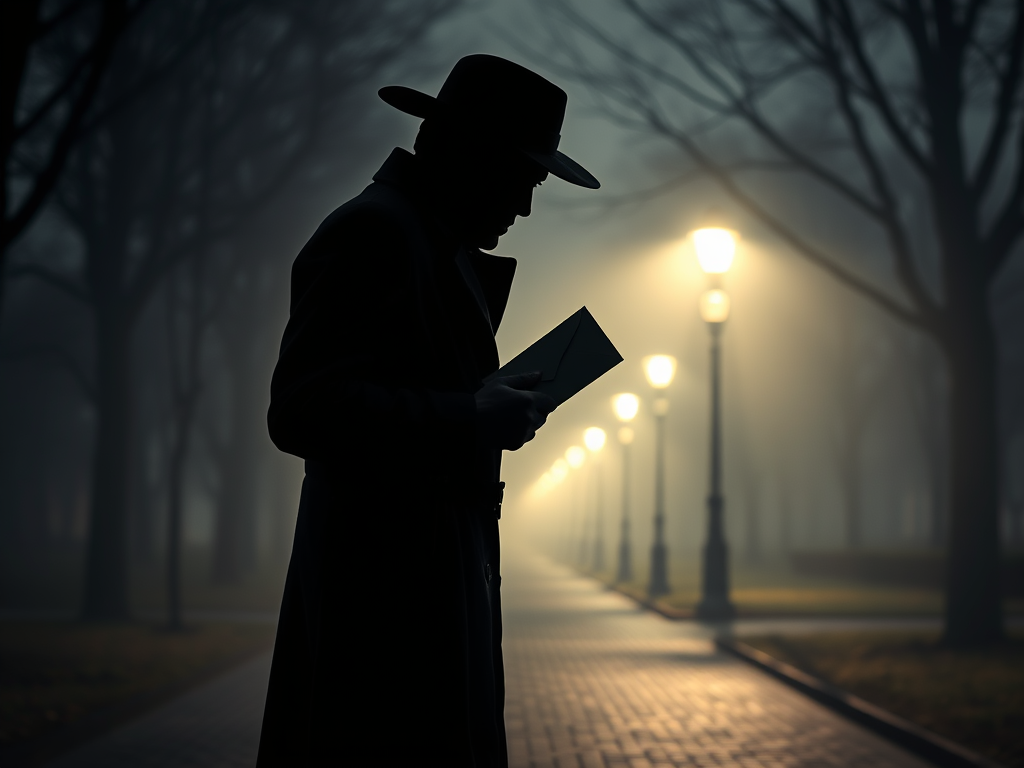
The trench coat. The dead drop in a foggy park. The microfilm hidden in a cufflink. The quiet, tense meeting on a heavily guarded bridge. These are the images of the Cold War, an era defined not by open battle between its two superpowers, but by a half-century-long shadow war fought by spies.
This “war in the shadows,” a global contest between the CIA and the KGB, capitalism and communism, was a deadly serious affair. It was a high-stakes game of Cold War espionage where a single slip-up, a single betrayal, could tip the balance of the entire planet toward nuclear armageddon. And yet, the real-life operations that took place during this time were often so audacious, so technologically advanced, or so utterly bizarre that they sound like they were ripped straight from a Hollywood script.
The truth, as they say, is stranger than fiction. These are the famous Cold War spy stories that prove it.
1. Project AZORIAN: The “Billion-Dollar Claw” Heist
The Movie Pitch: Ocean’s Eleven meets The Hunt for Red October. A reclusive billionaire (Howard Hughes) builds a massive, one-of-a-kind ship to secretly steal a sunken Soviet nuclear submarine from the bottom of the Pacific Ocean… right under the Russians’ noses.
The Reality: In 1968, the Soviet sub K-129 sank in the middle of the Pacific, taking its nuclear missiles and codebooks with it. The Soviets couldn’t find it, but the US did. The CIA then launched one of the most expensive and audacious real-life spy operations in history. To retrieve the sub, they built a massive ship called the Glomar Explorer.
The cover story? The ship was publicly owned by eccentric billionaire Howard Hughes, who was using it for a pioneering deep-sea mining venture. The “mining” was a perfect disguise for the ship’s real purpose: it housed a gigantic, spider-like capture vehicle—a “claw”—designed to descend three miles, grab the 1,750-ton submarine, and lift it into a hidden “moon pool” in the ship’s belly. The operation (partially) worked in 1974, retrieving a portion of the sub. The press eventually broke the story, but the “Howard Hughes” cover was so brilliant it held for years.
2. Operation Gold: The Berlin Tunnel Tappers
The Movie Pitch: The Great Escape meets The Conversation. A joint team of American and British spies dig a high-tech tunnel from West Berlin, under the “death strip,” and deep into East Berlin to tap the Soviet military’s secret communication lines.
The Reality: In the 1950s, Berlin was the “ground zero” of the Cold War. The CIA vs KGB operations were a daily, street-level reality. To find out the Soviets’ plans, the CIA and MI6 launched Operation Gold. They built a 1,476-foot tunnel, equipped with the most advanced electronics of the day, that allowed them to tap into three major Soviet and East German communication cables.
For 11 months, they listened to everything, recording thousands of hours of high-level intelligence. It was a spectacular success… with one fatal flaw. The entire operation had been betrayed from day one. George Blake, a high-ranking MI6 officer, was secretly a Soviet double agent. The KGB knew about the tunnel before the first shovel hit the ground. They let it be built, feeding the West a mix of genuine low-level intelligence and disinformation, all while protecting their real secrets. They “discovered” the tunnel a year later, calling it a great propaganda victory.
3. The U-2 Incident: The “Untouchable” Spy in the Sky
The Movie Pitch: Top Gun meets Bridge of Spies. An American pilot, flying a top-secret spy plane at the edge of space on a solo mission over Russia, is shot down, captured, and put on trial, sparking a global crisis that shatters a peace summit.
The Reality: The Lockheed U-2 was a technological marvel, a sleek glider that could fly at 70,000 feet—so high, the Soviets weren’t supposed to be able to touch it. Pilot Francis Gary Powers was one of the CIA’s “drivers,” tasked with taking photographs of Soviet military sites. On May 1, 1960, a Soviet surface-to-air missile managed to hit him.
Powers survived the crash and was captured. The US, believing the plane and pilot were destroyed, issued a cover story about a “weather plane” that had gone off course. Soviet Premier Nikita Khrushchev then gleefully revealed the truth to the world, producing the pilot and the plane’s wreckage. It was a massive international embarrassment. Powers was eventually “swapped” in 1962 for the captured Soviet spy Rudolf Abel on the Glienicke Bridge in Berlin—the “Bridge of Spies.”
4. The Cambridge Five: The Gentlemen Traitors
The Movie Pitch: Tinker Tailor Soldier Spy. A group of charming, aristocratic, and brilliant young men, recruited at Cambridge University, rise to the absolute highest levels of British intelligence… while secretly working for the Soviet Union the entire time.
The Reality: This wasn’t a single operation, but a decades-long strategic penetration that nearly destroyed Western intelligence. Kim Philby, Donald Maclean, Guy Burgess, Anthony Blunt, and (likely) John Cairncross were all ideological communists recruited in the 1930s.
The most notorious, Kim Philby, was a “golden boy” of MI6. He rose to become the head of anti-Soviet operations, meaning the man in charge of catching Soviet spies was, in fact, their most effective agent. He sent countless British agents to their deaths and passed every major secret to Moscow. When his cover was finally blown in 1963, he defected to the Soviet Union, a living, breathing testament to the most devastating betrayal in the history of Cold War espionage.
5. The Farewell Dossier: The Sabotage Sting
The Movie Pitch: The Sting… with nuclear consequences. A high-level KGB mole, disgusted with the Soviet system, hands over a complete list of all the technology the Soviets are stealing from the West. The CIA doesn’t just stop them; they decide to “gift” the Soviets with sabotaged technology.
The Reality: This is one of the most brilliant and cynical declassified Cold War missions. The mole, Vladimir Vetrov (codenamed “Farewell” by the French), provided a trove of documents revealing a massive, coordinated KGB effort to steal US technology.
President Ronald Reagan’s team saw an opportunity. Instead of just plugging the leaks, they “helped” the Soviets. They let them “steal” software for a new trans-Siberian gas pipeline, but with a hidden Trojan horse. The CIA-provided software was designed to work perfectly for a few months, then go haywire, causing the pipeline’s pumps and turbines to self-destruct. In 1982, this led to a non-nuclear explosion so massive it was visible from space—a direct result of a perfectly played intelligence “sting.”
6. Operation Acoustic Kitty: The Feline Spy (That Failed)
The Movie Pitch: Austin Powers… but real. The CIA spends millions of dollars and years of research to surgically implant a microphone and transmitter into a house cat, training it to eavesdrop on Soviet officials.
The Reality: This operation sounds like a joke, but it was deadly serious. In the 1960s, the CIA’s Directorate of Science & Technology was desperate for new ways to spy. Their idea: a cat. It could wander into sensitive areas, like park benches or embassy windows, completely unnoticed.
The operation was a surgical and technical nightmare. Vets spent years implanting a microphone in the cat’s ear canal, a battery in its chest, and an antenna in its tail. After reportedly spending $20 million, “Acoustic Kitty” was ready for its first field test. The plan was to have it listen to two men on a park bench. CIA handlers released the cat… and it was (allegedly) immediately run over and killed by a taxi. The project was declared a total failure and scrapped, becoming a legendary symbol of Cold War absurdity.
7. The Penkovsky Case: The Mole Who Saved the World
The Movie Pitch: The Insider. A high-ranking Soviet military intelligence (GRU) colonel, fearing his own paranoid government is leading the world to war, becomes a double agent for the West, feeding them the very secrets that will prevent the Cuban Missile Crisis from going hot.
The Reality: Oleg Penkovsky was one of the most valuable famous double agents the West ever had. Using a Minox “spy camera” and dead drops, he provided thousands of photos of top-secret documents, including the technical manuals for Soviet nuclear missiles.
In 1962, when U-2 planes spotted missile sites in Cuba, it was Penkovsky’s information that allowed President Kennedy to know exactly what those missiles were, what their capabilities were, and how long they took to fuel. This technical knowledge gave Kennedy the confidence to ignore his generals (who were demanding an immediate invasion) and instead opt for a naval blockade. Penkovsky’s intelligence gave Kennedy the “time” to de-escalate, pulling the world back from the brink of nuclear war. Penkovsky was caught and executed in 1963.
8. Stanislav Petrov: The Man Who Disobeyed Orders
The Movie Pitch: The Ticking Clock. A lone Soviet officer, deep in a secret bunker, sees his early-warning system light up, claiming five American nuclear missiles are inbound. Protocol is clear: report it, triggering a full-scale Soviet retaliation. But something feels wrong…
The Reality: On September 26, 1983, the Cold War was at its most frigid. Tensions were high after the Soviets had shot down a Korean airliner. Lt. Col. Stanislav Petrov was the duty officer at a bunker monitoring the Oko satellite system. Just after midnight, the alarms blared: “LAUNCH DETECTED.” Then a second, third, fourth, and fifth.
Petrov’s job was simply to pass the warning up the chain of command, which would have almost certainly triggered a retaliatory strike. But he had a “gut feeling.” The system was new. A real US first strike would involve hundreds of missiles, not five. He made the agonizing, split-second decision to report it as a system malfunction. He was right. The satellite had mistaken the sun’s reflection off high-altitude clouds for missile launches. This single, quiet act of disobedience by an unknown officer saved the world.
9. The Stasi & Zersetzung: The Psychological War
The Movie Pitch: The Lives of Others. The East German secret police create the most pervasive surveillance state in human history. But they don’t just arrest dissidents; they use a terrifying, invisible method of psychological warfare to make them think they are going insane.
The Reality: This is one of the darkest Berlin Wall spy stories. The Stasi, East Germany’s secret police, had an army of 90,000 agents and 170,000 citizen-informants. One in every 63 people was spying on their neighbors. Their ultimate weapon was Zersetzung, or “decomposition.”
If they targeted a dissident, they wouldn’t just throw them in jail. They would sneak into their apartment and move their furniture, change the time on their alarm clock, or replace their brand of tea. They would start rumors at the person’s workplace. They would send anonymous, threatening letters. The goal was to destroy the target’s entire social and mental well-being, to shatter their self-confidence and paranoia until they simply broke down, all without ever showing a “badge.” It was a true “gaslighting” operation on a national scale.
10. Operation RYAN: The War Scare
The Movie Pitch: Dr. Strangelove. The aging, paranoid Soviet leadership, fueled by bellicose Western rhetoric (like Reagan’s “Evil Empire” speech), becomes genuinely convinced that NATO is planning a surprise nuclear first strike. They launch a desperate, global spy operation to find the “proof.”
The Reality: This wasn’t a movie plot; it was a terrifyingly real period in the early 1980s. The KGB launched Operation RYAN, an acronym for “Surprise Nuclear Missile Attack.” All Soviet agents—from the top CIA vs KGB operators in Washington to low-level agents—were ordered to stop their normal spying and look for “indicators” of a first strike.
What were they looking for? Signs like lights on late at government buildings, unusual activity at blood banks, or movements at military bases. The problem was, this “proof” was everywhere. When NATO ran a routine (but large-scale) war game in 1983 called “Able Archer,” the Soviets freaked out. They put their nuclear forces on high alert, believing the “exercise” was the real attack. For several days, the world was closer to an accidental nuclear war than at any time since the Cuban Missile Crisis, all because one side’s paranoia had spiraled out of control.
Further Reading
These true-life spy stories are just the beginning. For those who want to dive deeper into the shadows of the Cold War, here are a few essential reads:
- The Spy and the Traitor: The Greatest Espionage Story of the Cold War by Ben Macintyre
- A Spy Among Friends: Kim Philby and the Great Betrayal by Ben Macintyre
- Bridge of Spies: A True Story of the Cold War by Giles Whittell
- Tinker Tailor Soldier Spy by John le Carré (Fiction, but it’s the novel that defined the genre, based on the author’s own time in MI6 and the Cambridge Five betrayal).
- The Billion Dollar Spy: A True Story of Cold War Espionage and Betrayal by David E. Hoffman
Here at Zentara.blog, our mission is to take those tricky subjects and unlock them, making knowledge exciting and easy to grasp for everyone. But the adventure doesn’t stop on this page! We’re constantly exploring new frontiers and sharing discoveries across the digital universe. Want to dive deeper into more mind-bending Top 10s and keep expanding your world? Come join us on our other platforms – we’ve got unique experiences waiting for you on each one!
Get inspired by visual wonders and bite-sized facts: See the world through Zentara’s eyes on Pinterest!
Pin our fascinating facts and stunning visuals to your own boards. Explore Pins on Pinterest: https://uk.pinterest.com/zentarablog/
Discover quick insights and behind-the-scenes peeks: Hop over to Tumblr for snippets, quotes, and unique content you won’t find anywhere else. It’s a different flavour of discovery! Follow the Fun on Tumblr: https://www.tumblr.com/zentarablog
Ready for deep dives you can listen to or watch? We’re bringing our accessible approach to video and potentially audio! Subscribe to our YouTube channel and tune into future projects that make learning pop! Subscribe on YouTube: https://www.youtube.com/@ZentaraUK
Seeking even more knowledge in one place? We’ve compiled some of our most popular topic deep dives into fantastic ebooks! Find them on Amazon and keep the learning journey going anytime, anywhere. Find Our Ebooks on Amazon: https://www.amazon.co.uk/s?k=Zentara+UK&ref=nb_sb_noss
Connect with us and fellow knowledge seekers: Join the conversation on BlueSky! We’re sharing updates, thoughts, and maybe even asking you what wonders we should explore next. Chat with Us on BlueSky: https://bsky.app/profile/zentarablog.bsky.social
Perfect for learning on the move! We post multiple 10-minute podcasts per day on Spotify. Pop on your headphones and fill your day with fascinating facts while you’re out and about! Listen on Spotify: https://open.spotify.com/show/3dmHbKeDufRx95xPYIqKhJFollow us on Instagram for bytesize knowledge! We post multiple posts per day on our official Instagram account. https://www.instagram.com/zentarablog/ Every click helps us keep bringing honest, accessible knowledge to everyone. Thanks for exploring with us today – see you out there in the world of discovery!




Leave a Reply