
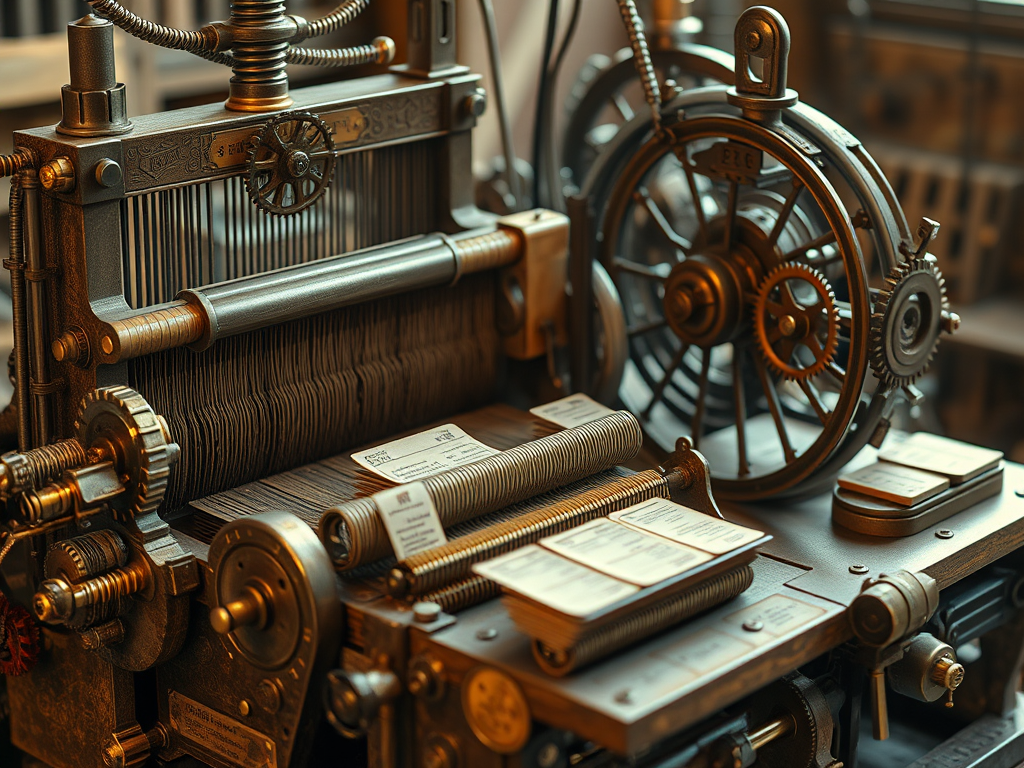
The Industrial Age, roughly from the late 1700s to the early 1900s, was a time of incredible change. It was when people started using machines to do work that used to be done by hand, leading to factories, trains, and a totally new way of life. When you think about this era, you probably picture steam engines puffing along or noisy cotton gins whirring away. These were definitely revolutionary!
But the Industrial Age wasn’t just about the big, famous inventions. It was also a time of wild ideas, strange contraptions, and clever solutions to problems that seem totally bizarre today. Inventors were experimenting with all sorts of weird industrial revolution inventions, pushing the boundaries of what was possible with gears, levers, steam, and eventually, electricity.
Some of these inventions might look completely bonkers to us now, like something out of a wacky science fiction story. But at the time, they were cutting-edge technology, trying to solve real problems or explore brand new possibilities. They show us that innovation often comes from unexpected places and can look quite different from what we imagine. Get ready to explore some of the strange industrial age machines that were revolutionary, even if they were a little (or a lot) weird!
1. The Jacquard Loom: Programming with Punch Cards
When you think of weaving fabric, you probably imagine threads going over and under each other. Simple enough, right? But weaving complex patterns, like intricate tapestries, was incredibly difficult and time-consuming, requiring highly skilled workers to manually control every single thread.
Enter the Jacquard Loom, invented by Joseph Marie Jacquard in the early 1800s. This wasn’t just any loom; it was a loom controlled by punch cards! Think of punch cards like early computer programs. Holes punched in specific patterns on stiff cards would tell the loom’s mechanisms exactly which threads to raise or lower. By stringing together sequences of these cards, weavers could automatically produce incredibly complex and detailed patterns with relative ease.
This might sound like a niche invention for fancy fabrics, but the concept of using punch cards to store information and control a machine was incredibly revolutionary. It was a very early form of programming and had a direct influence on later inventors like Charles Babbage, who designed early mechanical computers. So, this seemingly odd weaving machine was actually a precursor to the digital age, making it one of the most significant, and perhaps unexpected historical inventions, of its time.
2. Babbage’s Difference Engine: A Giant Mechanical Calculator
Before electronic computers, people dreamed of machines that could do calculations automatically. Charles Babbage, a brilliant but sometimes eccentric mathematician in the 19th century, designed something truly ambitious: the Difference Engine. This wasn’t just a simple adding machine; it was designed to automatically calculate polynomial functions and print out the results, eliminating human error in creating mathematical tables that were essential for navigation, science, and engineering.
Picture a massive, intricate sculpture of brass and steel gears, rods, and cogs – that’s what the Difference Engine looked like. It was enormous, complex, and purely mechanical. Babbage secured government funding for the project, but it was plagued by difficulties, including the precision needed to manufacture the thousands of parts and Babbage’s constant desire to tinker and improve the design.
The full Difference Engine was never completed in Babbage’s lifetime, though parts of it were built. It was a clever contraption 19th century science produced, but its sheer mechanical complexity and the cost of building it made it impractical for the era. However, the idea behind it – a machine that could perform complex calculations automatically based on a set sequence of operations – was a huge step towards modern computing, even if the machine itself was a weird, clanking behemoth.
3. The Phonautograph: Capturing Sound Visibly
Today, recording sound is easy. We just talk into our phones! But imagine a time when capturing a sound after it was made seemed like magic. In 1857, even before Thomas Edison invented his phonograph, a French inventor named Édouard-Léon Scott de Martinville created the Phonautograph. This device couldn’t play back sound, but it could create a visual record of sound waves.
The Phonautograph worked by having someone speak or make noise into a horn. The sound waves traveled through the horn and vibrated a diaphragm (a thin membrane). A stylus (a needle or bristle) was attached to the diaphragm and rested on a sheet of paper or glass coated with soot. As the paper moved along, the vibrating stylus scratched wavy lines into the soot, creating a physical trace of the sound waves.
It looked like a bizarre scientific instrument crossed with a musical horn. While not useful for listening to music or voices later, the Phonautograph was the very first device known to record sound waves. It was a fascinating step in understanding the nature of sound and paved the way for later inventions that could both record and reproduce audio. This forgotten industrial revolution technology was a vital, albeit strange-looking, piece of the puzzle in the history of sound recording.
4. The Photophone: Sending Sound on Light
Imagine talking to someone across town, not with wires or radio waves, but using a beam of light! That was the idea behind the Photophone, invented by Alexander Graham Bell (famous for the telephone) and his assistant Charles Sumner Tainter in 1880. While the telephone sent sound through electrical signals on wires, the Photophone aimed to transmit sound wirelessly using sunlight or a strong artificial light source.
The device worked by reflecting sunlight onto a diaphragm. As someone spoke into the transmitter, the diaphragm vibrated, causing tiny changes in the intensity of the reflected sunlight. This varying light beam was then directed to a receiver, where a selenium cell (a material whose electrical resistance changes with light) converted the changes in light intensity back into electrical signals, which could then be turned back into sound.
It was a truly ingenious concept and worked surprisingly well over short distances. Bell himself considered it his greatest invention, even more significant than the telephone, because it transmitted sound wirelessly. However, the Photophone had practical limitations – it required clear line of sight and was affected by weather like clouds or fog. Despite not becoming a mainstream communication tool, it was a fascinatingly surprising history of inventions moment, demonstrating a completely different approach to transmitting sound and foreshadowing later technologies that use light for communication, like fiber optics. It was definitely a weird old machine with a revolutionary idea at its heart.
5. The Pneumatic Dispatch System: Underground Mail Tubes
Before emails and even widespread telephone use, how did people send urgent messages or small packages quickly across a city? In the mid-19th century, some cities in Europe and later in the US experimented with a rather unusual solution: pneumatic dispatch systems. This involved sending containers through underground tubes using compressed air or vacuum.
Imagine a network of pipes running beneath the city streets. You would place your document or package into a cylindrical container, put it into an opening, and then, with a whoosh of air, it would be propelled through the tube system to its destination. It sounds like something out of a Victorian science fiction novel, and in some ways, it was!
These systems were used by post offices, banks, and businesses for rapid internal communication and transport of documents. London, Paris, Berlin, and New York all had versions of pneumatic dispatch. While they were efficient for their specific purpose, they were expensive to build and maintain and were eventually replaced by telephones, telex machines, and later, fax machines and the internet. Still, the idea of moving physical objects through tubes using air pressure was a decidedly odd invention that changed the world of urban communication for a time, proving that sometimes the most direct solution involves building an underground tube network!
6. Early Diving Suits and Bells: Venturing Beneath the Waves
Humans have always been curious about what lies beneath the surface of the water. While simple diving bells existed earlier, the Industrial Age saw the development of more advanced, and sometimes very strange-looking, diving equipment that allowed people to stay underwater for longer periods and work on things like shipwrecks or underwater construction.
Early diving suits could be quite cumbersome and eerie. Some designs involved rigid metal helmets with air pumped down from the surface through hoses, while the diver wore waterproof suits that could be heavy and restrictive. Diving bells were essentially weighted chambers lowered into the water, trapping air inside for divers to breathe as they worked underneath the bell’s opening.
These early contraptions were far from the sleek scuba gear we know today. They were often bulky, dangerous, and looked like something a deep-sea monster would wear. However, they were revolutionary because they opened up the underwater world for exploration, salvage, and engineering in ways never before possible. They allowed for work on harbors, bridges, and shipwrecks, demonstrating the ingenuity of the time in creating clever contraptions 19th century engineers needed to conquer new frontiers, even if those contraptions looked like weird old machines designed for aquatic aliens.
7. The Hydro-Pneumatic Accumulator: Storing Power with Water and Air
Factories in the Industrial Age needed reliable sources of power to operate machinery. While steam engines were dominant, inventors also explored other ways to store and distribute power. One fascinating example was the hydro-pneumatic accumulator, which was essentially a way to store energy using pressurized water and air.
Imagine a large cylinder with a piston inside. Water would be pumped into the cylinder, pushing the piston up against a cushion of compressed air or a heavy weight. This stored potential energy. When power was needed, a valve would be opened, and the pressurized water would be released, driving hydraulic machinery like presses, cranes, or even early hydraulic lifts.
These accumulators were often large, imposing structures located near factories or docks. They provided a way to deliver a strong, steady force for heavy work, overcoming some limitations of direct steam power for certain applications. It’s a less famous invention than the steam engine, but this method of storing and transmitting power was an important piece of forgotten industrial tech that enabled heavy industry and engineering projects, looking like a weird old factory machine designed for giant hydraulic muscles.
8. The Fog Detector: Seeing Through the Murk
Fog has always been a hazard, especially for ships at sea or trains on land. Reducing accidents caused by poor visibility was a significant challenge in the Industrial Age. While not as famous as lighthouses or foghorns, inventors also tinkered with devices designed to actually detect the presence and density of fog.
One example was a fog detector invented in the late 19th century. It used a beam of light shone across a gap to a light sensor. When fog was present, the water droplets in the fog would scatter the light, reducing the amount of light reaching the sensor. The device would then measure this reduction in light intensity to determine how thick the fog was.
This might seem simple now, but at the time, accurately measuring atmospheric conditions automatically was quite advanced. These early fog detectors were attempts to provide objective data to help with navigation and safety, supplementing human observation. While perhaps not a single “revolutionary” invention on the scale of the steam engine, the concept represents the era’s efforts to use technology to overcome environmental challenges, resulting in some surprising industrial revolution gadgets aimed at seeing through the impenetrable, like a weird old machine trying to stare down a cloud.
9. The Zoopraxiscope: Early Motion Pictures
Long before Hollywood, people were fascinated by the idea of capturing and displaying moving images. One of the pioneers in this area was Eadweard Muybridge, an English photographer famous for his studies of motion. In the late 1870s, he developed the Zoopraxiscope, an early device for projecting a sequence of images to create the illusion of motion.
Muybridge would set up multiple cameras to take pictures of a moving subject (like a horse galloping) in rapid succession. He would then transfer these images onto a glass disc. The Zoopraxiscope was essentially a projector that spun this disc rapidly, shining light through the images and projecting them onto a screen. Because the images were slightly different from each other, and they were projected quickly one after another, it tricked the eye into seeing movement.
Compared to modern film or digital video, the Zoopraxiscope produced jerky, short loops of action. It looked like a fancy spinning lantern designed to show brief, repetitive animations. However, it was a crucial step in the development of motion pictures, proving that projecting a series of still images in quick succession could create the illusion of continuous movement. This odd invention that changed history for entertainment and scientific study was a weird and wonderful ancestor of the cinema we know today.
10. The Telharmonium: Creating Music with Electricity
The Industrial Age wasn’t just about making physical work easier; it also saw the first explorations into using electricity to create sound. One of the most ambitious and bizarre early electrical instruments was the Telharmonium, invented by Thaddeus Cahill in the late 19th century.
The Telharmonium was absolutely enormous. It was a gargantuan machine that used rotating electromagnetic generators called “tonewheels” to produce musical notes. Different tonewheels produced different frequencies (pitches). Operators would play music on a keyboard, which would control which tonewheels were active and how their sounds were combined. The music was then transmitted over telephone lines to listeners.
Imagine a machine the size of a power plant designed to make music! It weighed over 200 tons in its later versions. It was incredibly complex, expensive, and its signal sometimes bled into regular phone calls, causing strange musical interference. Despite these issues, the Telharmonium was a groundbreaking invention. It was arguably the first electronic musical instrument and the first attempt to transmit live music electronically to a paying audience. This weird old machine was a wild, early experiment in the intersection of electricity and music, proving that industrial ingenuity could create revolutionary, albeit strange, forms of art and entertainment.
These ten inventions are just a few examples of the weird industrial revolution inventions that existed alongside the more famous ones. They highlight the incredible creativity and willingness to experiment that characterized the Industrial Age. While some were more successful than others, they all represent fascinating steps in the history of technology and show us that the path of innovation is often filled with strange, clever, and totally unexpected contraptions.
Further Reading
Want to learn more about the fascinating and sometimes strange history of inventions? Check out these books:
- The Way Things Work by David Macaulay
- Stuff Matters: The Strange Stories of the Marvellous Materials that Shape Our Man-made World by Mark Miodownik
- Extraordinary Origins of Everyday Things by Charles Panati
- Maker of Machines: The Story of James Watt by Steve Parker (Focuses on a key inventor)
- The Industrial Revolution: Changes and Innovations by Jeff Hill
Here at Zentara.blog, our mission is to take those tricky subjects and unlock them, making knowledge exciting and easy to grasp for everyone. But the adventure doesn’t stop on this page! We’re constantly exploring new frontiers and sharing discoveries across the digital universe.
Want to dive deeper into more mind-bending Top 10s and keep expanding your world? Come join us on our other platforms – we’ve got unique experiences waiting for you on each one!
- Get inspired by visual wonders and bite-sized facts: See the world through Zentara’s eyes on Pinterest! Pin our fascinating facts and stunning visuals to your own boards. Explore Pins on Pinterest: https://uk.pinterest.com/zentarablog/
- Discover quick insights and behind-the-scenes peeks: Hop over to Tumblr for snippets, quotes, and unique content you won’t find anywhere else. It’s a different flavour of discovery! Follow the Fun on Tumblr: https://www.tumblr.com/zentarablog
- Ready for deep dives you can listen to or watch? We’re bringing our accessible approach to video and potentially audio! Subscribe to our YouTube channel and tune into future projects that make learning pop! Subscribe on YouTube: https://www.youtube.com/@ZentaraUK
- Seeking even more knowledge in one place? We’ve compiled some of our most popular topic deep dives into fantastic ebooks! Find them on Amazon and keep the learning journey going anytime, anywhere. Find Our Ebooks on Amazon: https://www.amazon.co.uk/s?k=zentara+uk&crid=2273NA7RAJ1EU&sprefix=zentara+uk%2Caps%2C90&ref=nb_sb_noss
- Connect with us and fellow knowledge seekers: Join the conversation on BlueSky! We’re sharing updates, thoughts, and maybe even asking you what wonders we should explore next. Chat with Us on BlueSky: https://bsky.app/profile/zentarablog.bsky.social
- Perfect for learning on the move! We post multiple 10-minute podcasts per day on Spotify. Pop on your headphones and fill your day with fascinating facts while you’re out and about! Listen on Spotify: https://open.spotify.com/show/3dmHbKeDufRx95xPYIqKhJ
Every click helps us keep bringing honest, accessible knowledge to everyone. Thanks for exploring with us today – see you out there in the world of discovery!




Leave a Reply