
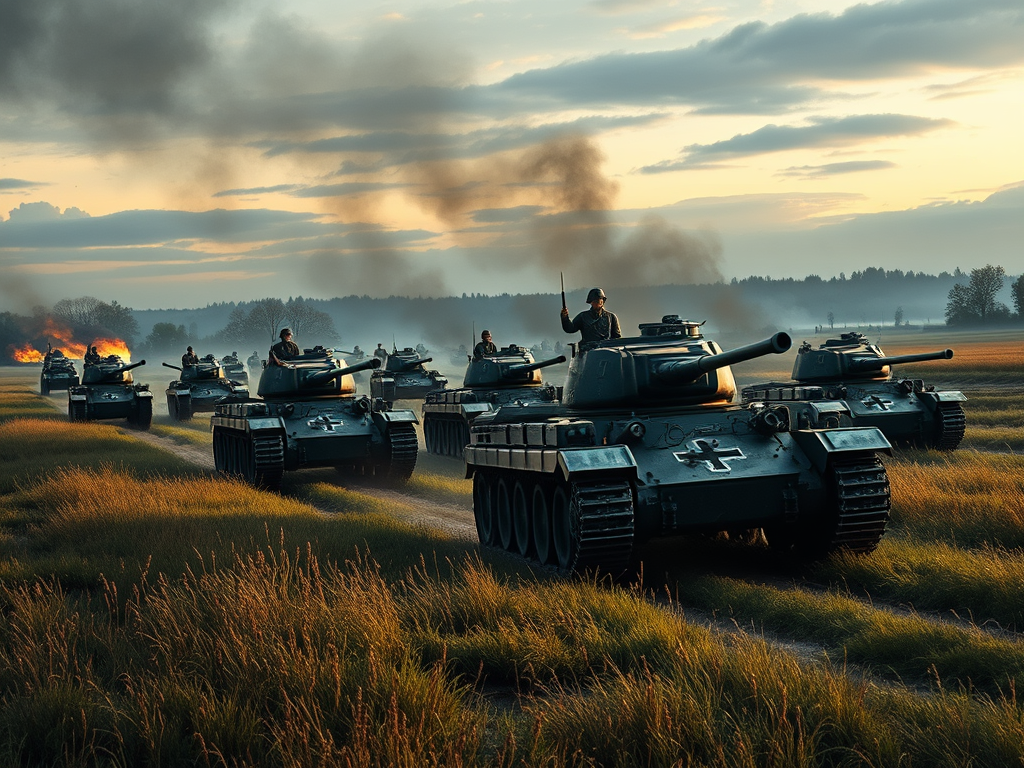
World War II was a massive conflict that involved countries all over the globe. When we think about Nazi Germany, led by Adolf Hitler, we often picture tanks rolling across borders and armies clashing. But did you know that formally declaring war is a specific thing, and it didn’t happen every single time Germany fought another country?
Think of it like this: if you get into an argument with someone, it doesn’t always start with you shouting, “I declare war on you!” Sometimes, disagreements just happen, and things get unfriendly very quickly. In the lead-up to and during World War II, countries often became enemies because one country invaded another, or because of alliances, rather than a formal declaration of war being announced first.
So, while Nazi Germany ended up fighting against many countries, the number of countries they formally declared war on is actually quite small. It’s a bit like the tip of an iceberg – you only see a small part above the water, but there’s a lot more going on underneath!
In this article, we’re going to explore the times Nazi Germany did declare war and look at some of the key moments when other countries became their enemies, even without that official announcement. It’s a fascinating look at how wars can start and spread.
1. The Start of the War: The Invasion of Poland
The event that most historians agree kicked off World War II in Europe was Germany’s invasion of Poland on September 1, 1939. This wasn’t preceded by a formal declaration of war in the traditional sense. Instead, German troops simply crossed the border, a swift and brutal attack often called a “blitzkrieg” (lightning war) because of how fast it happened using tanks and airplanes.
Imagine playing a game of chess, and instead of saying “I attack your pawn,” your opponent just knocks your pawn over and starts moving their pieces into your side of the board. That’s a bit what the invasion of Poland was like. It was an act of aggression that immediately created a state of war. While there wasn’t a specific document handed over saying, “We declare war,” the invasion itself was a clear hostile act that meant war had begun. The courage of the Polish people in trying to defend their homeland against this sudden attack is an important part of this story. This invasion showed the world that Hitler’s Germany was willing to use military force to get what it wanted.
2. When Britain and France Stepped In
Just two days after Germany invaded Poland, on September 3, 1939, something very significant happened: Great Britain and France declared war on Germany. They had agreements to help Poland if it was attacked.
Think of it like seeing a bully picking on someone smaller. If you and your friend have promised to stand up for the smaller person, you would then confront the bully. That’s essentially what Britain and France did. Germany’s action against Poland was the trigger, and Britain and France responded by formally declaring war on Nazi Germany. This was a crucial moment because it meant the conflict was no longer just between Germany and Poland; it was becoming a much larger European war. The declarations from London and Paris signaled that they would not stand by and let Hitler’s Germany take over other countries.
3. The Invasion of Western Europe
In the spring of 1940, Nazi Germany launched a massive attack on countries in Western Europe, including Belgium, the Netherlands, Luxembourg, and France. Just like with Poland, these were primarily invasions, not preceded by formal declarations of war against each country individually.
Imagine a domino effect. Germany’s military machine was incredibly powerful at this time, and they moved quickly through these neighboring nations. The goal was to defeat France and push British forces off the European continent. These invasions were swift and overwhelming for many of the defending armies. The speed and effectiveness of these attacks highlighted a new way of waging war, relying on fast movement and coordinated attacks from the air and ground. The fact that Germany didn’t formally declare war often left these countries with little warning before troops crossed their borders.
4. The Massive Attack on the Soviet Union
One of the most significant moments when Nazi Germany did issue a formal declaration of war was against the Soviet Union. On June 22, 1941, Germany launched a surprise invasion, codenamed Operation Barbarossa. A declaration of war was delivered to the Soviet Union as the invasion began.
Think of it as a sudden, thunderous storm. Germany had signed a non-aggression pact with the Soviet Union a few years earlier, promising not to attack each other. Breaking this promise with a massive invasion and a formal declaration showed the scale of Hitler’s ambitions and his disregard for agreements. This opened up a massive new front in the war, the Eastern Front, which would become the largest and deadliest theater of the entire conflict. The fighting here was incredibly fierce and involved millions of soldiers on both sides.
5. Germany Declares War on the United States
Perhaps one of the most surprising declarations of war by Nazi Germany came on December 11, 1941, just four days after Japan attacked the United States at Pearl Harbor. Germany was an ally of Japan through the Tripartite Pact, but they weren’t required by the pact to declare war if Japan was the attacker.
Imagine two friends who have promised to help each other if they are attacked. One friend gets into a fight, and even though the other friend wasn’t directly involved in starting that specific fight, they jump in anyway. That’s somewhat similar to Germany’s declaration against the U.S. Hitler’s decision to declare war on the United States, bringing the immense industrial power of America directly into the European conflict, is seen by many historians as a critical turning point in the war. The United States had already been helping the countries fighting Germany through programs like Lend-Lease, but this declaration meant full, open warfare.
6. Involvement in the Balkans: Yugoslavia and Greece
In April 1941, Germany, along with its Axis partners, invaded Yugoslavia and Greece. While Italy had already attempted to invade Greece, Germany’s intervention was decisive. Again, the start of these conflicts was primarily through invasion rather than a formal declaration from Germany to each country beforehand.
Think of it as expanding the battleground. Germany needed to secure its southern flank before the planned invasion of the Soviet Union and also wanted to support its Italian allies. The invasions were quick and brutal, leading to the occupation of these countries. The resistance movements that formed in Yugoslavia and Greece to fight against the occupation forces played a significant role throughout the war. These campaigns showed Germany’s willingness to use military force to bring more of southeastern Europe under its control or influence.
7. The War in North Africa
While primarily involving Italy and later the British Commonwealth forces, Germany’s Afrika Korps, led by General Erwin Rommel (the “Desert Fox”), became heavily involved in the fighting in North Africa starting in early 1941. This was another theater of war where Germany’s participation wasn’t initiated by a direct declaration of war on the countries in North Africa themselves, but rather as support for their Italian ally and to control strategically important territory.
Imagine a fight happening in a sandbox, and one friend calls another friend over to help them. Germany sent troops to North Africa to help the struggling Italian forces against the British. The battles here, like the famous Battle of El Alamein, were fought over control of vital resources and supply lines, especially the Suez Canal. The harsh desert conditions presented unique challenges for all the soldiers involved.
8. Countries Joining the Axis
It’s also important to remember that Germany had allies, forming the Axis powers. Countries like Italy, Japan, Hungary, Romania, and Bulgaria joined the Axis. While Germany didn’t declare war on them, their joining the Axis meant they became Germany’s partners in fighting against the Allied nations.
Think of forming a team to play a game. These countries chose to join Germany’s side for various reasons, often hoping to gain territory or political power. Their entry into the war meant that Germany had more resources and soldiers fighting alongside them, but it also meant the war expanded to include their territories and armies. These alliances shifted over time, with some countries changing sides later in the war.
9. Why So Many Countries Ended Up Fighting Germany
So, if Germany only formally declared war on a few countries like the Soviet Union and the United States, why did they end up fighting so many others? The answer lies in how wars spread and the complex web of alliances and invasions.
Imagine a small fire starting, and because it’s windy and there are dry leaves everywhere, the fire quickly spreads to other areas that weren’t initially on fire. Germany’s initial invasions and aggressions, particularly against Poland, triggered responses from countries like Britain and France. As Germany invaded more countries, those nations joined the ranks of the Allied powers fighting against them. Countries that were occupied formed resistance movements. When Japan attacked the U.S., Germany’s alliance with Japan led to a declaration. It was a chain reaction, where each action led to new countries becoming involved in the fight against Nazi Germany and the Axis powers.
10. The Global Scale of the Conflict
By the time World War II ended in 1945, virtually every major country in the world was involved in some way, either directly fighting, providing support, or being occupied. While the number of German declarations of war was small, the number of countries that were at war with Nazi Germany was vast.
Consider how many countries were part of the British Commonwealth (like Canada, Australia, New Zealand, South Africa) or were colonies of Allied powers; when Britain or France were at war, they often were too. Many countries in North and South America eventually declared war on Germany and the other Axis powers after events like Pearl Harbor. The war became a truly global conflict, affecting people and places far from where the first shots were fired in Europe. Understanding this helps us see the true immense scale of World War II and the impact of Nazi Germany’s actions on the world.
Ultimately, the question of “Just how many countries did the Nazis declare war on?” has a surprisingly low number if you only count the formal announcements. But looking at the bigger picture reveals that Nazi Germany’s aggressive actions and invasions pulled dozens of nations into the largest and most destructive conflict in human history. It’s a crucial reminder that wars don’t always start with a polite announcement and that actions often speak louder than words, especially in the terrible context of war.
Further Reading
Here are some books that can help you learn more about World War II and this period of history:
- The Diary of a Young Girl by Anne Frank
- Code Talker: A Novel About the Navajo Marines of World War Two by Joseph Bruchac
- The Boy in the Striped Pyjamas by John Boyne
- Anne Frank: The Graphic Adaptation by Ari Folman (Author), David Polonsky (Illustrator)
Here at Zentara.blog, our mission is to take those tricky subjects and unlock them, making knowledge exciting and easy to grasp for everyone. But the adventure doesn’t stop on this page! We’re constantly exploring new frontiers and sharing discoveries across the digital universe.
Want to dive deeper into more mind-bending Top 10s and keep expanding your world? Come join us on our other platforms – we’ve got unique experiences waiting for you on each one!
- Get inspired by visual wonders and bite-sized facts: See the world through Zentara’s eyes on Pinterest! Pin our fascinating facts and stunning visuals to your own boards. Explore Pins on Pinterest: https://uk.pinterest.com/zentarablog/
- Discover quick insights and behind-the-scenes peeks: Hop over to Tumblr for snippets, quotes, and unique content you won’t find anywhere else. It’s a different flavour of discovery! Follow the Fun on Tumblr: https://www.tumblr.com/zentarablog
- Ready for deep dives you can listen to or watch? We’re bringing our accessible approach to video and potentially audio! Subscribe to our YouTube channel and tune into future projects that make learning pop! Subscribe on YouTube: https://www.youtube.com/@ZentaraUK
- Seeking even more knowledge in one place? We’ve compiled some of our most popular topic deep dives into fantastic ebooks! Find them on Amazon and keep the learning journey going anytime, anywhere. Find Our Ebooks on Amazon: https://www.amazon.co.uk/s?k=zentara+uk&crid=2273NA7RAJ1EU&sprefix=zentara+uk%2Caps%2C90&ref=nb_sb_noss
- Connect with us and fellow knowledge seekers: Join the conversation on BlueSky! We’re sharing updates, thoughts, and maybe even asking you what wonders we should explore next. Chat with Us on BlueSky: https://bsky.app/profile/zentarablog.bsky.social
- Perfect for learning on the move! We post multiple 10-minute podcasts per day on Spotify. Pop on your headphones and fill your day with fascinating facts while you’re out and about! Listen on Spotify: https://open.spotify.com/show/3dmHbKeDufRx95xPYIqKhJ
Every click helps us keep bringing honest, accessible knowledge to everyone. Thanks for exploring with us today – see you out there in the world of discovery!



Leave a Reply to The Real Rommel: Desert Fox or Nazi Loyalist? – Zentara.blog: Knowledge Made Accessible | Science, History, Tech & MoreCancel reply