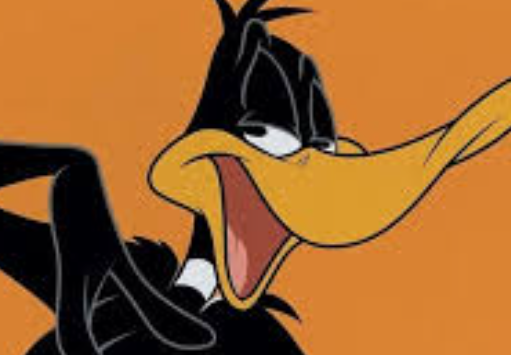
The Duck Who Refused to Quit: 10 Surprising Truths About Daffy Duck’s Chaotic Legacy
If Bugs Bunny is the cool, collected superstar of the animation world, Daffy Duck is the raw, unbridled “id” of the human psyche. He is the character who says what we’re thinking, feels the sting of rejection we all fear, and gets back up—no matter how many times his beak is blown to the back of his head. Daffy is a masterclass in complexity, transitioning through the decades from a manic, “screwball” force of nature to a deeply neurotic, ego-driven anti-hero.
To truly understand the Looney Tunes universe, one must understand the duck. He is the perfect foil to every other character in the roster, providing a grounding sense of fallibility that makes the impossible world of cartoons feel strangely relatable. Whether he is hunting for treasure, trying to steal the spotlight from a certain rabbit, or defending the galaxy as a space hero, Daffy remains one of the most resilient and fascinating figures in cinematic history. Let’s dive into the pond and explore the essential truths of the world’s favorite black duck.
1. The Birth of the “Screwball” Archetype
In the early days of animation, most characters followed a predictable, somewhat polite formula inherited from the silent film era. Everything changed when a manic black duck burst onto the screen, bouncing off the walls and whooping with uncontrollable glee. This was the birth of the “screwball” character—a figure defined by unpredictable behavior and a total disregard for social norms. Daffy didn’t just break the rules; he didn’t even acknowledge they existed.
This early version of Daffy was a “wild” duck in every sense of the word. He was smaller, more avian in his movements, and possessed a high-pitched, frantic energy that left his antagonists (and the audience) breathless. This revolutionary approach to character comedy paved the way for the high-octane slapstick that would define the Golden Age of cartoons. He proved that audiences didn’t just want cute animals; they wanted characters who mirrored the chaotic energy of life itself.
2. The Secret Behind the Signature Lisp
One cannot think of Daffy Duck without hearing that thick, wet, sibilant lisp. This vocal choice was a stroke of genius by the legendary voice actor Mel Blanc. The inspiration for the lisp has been the subject of much debate, with some suggesting it was a parody of studio executives and others claiming it was simply a creative way to make the character’s dialogue more physically expressive. Regardless of its origin, the lisp became Daffy’s most defining trait.
Recording the voice was a physically demanding task for Blanc. To achieve that specific “spitting” sound, he had to exert a great deal of effort, often leaving the recording booth quite damp. The lisp serves a comedic purpose beyond just sounding funny; it highlights Daffy’s frustration. The more agitated he becomes, the more pronounced and messy the lisp gets. It is a brilliant example of how a vocal “imperfection” can be utilized to build a character’s entire personality and emotional range.
3. From Wild Animal to Neurotic Everyman
As the years progressed, Daffy underwent one of the most significant personality shifts in animation history. Under the direction of visionaries like Chuck Jones, he transitioned from the “screwball” who annoyed others into the “neurotic” who was annoyed by the world. This “modern” Daffy is driven by a desperate need for recognition, wealth, and status. He is the ultimate striver, constantly reaching for a level of success that remains just out of his grasp.
This shift made Daffy a much more complex and, arguably, more human character. While we admire Bugs Bunny’s perfection, we recognize ourselves in Daffy’s insecurities. He represents the frustration of the average person who works hard but sees the “lucky” person next to them succeed effortlessly. By giving Daffy an ego and a set of very human flaws, the animators transformed him from a simple cartoon animal into a timeless psychological portrait of ambition and envy.
4. The Legendary “Rabbit Season” Rivalry
The dynamic between Daffy Duck and Bugs Bunny is arguably the greatest rivalry in the history of comedy. This reached its peak in the “Hunting Trilogy,” a series of shorts where the two characters vie to convince a bumbling hunter to shoot the other. These cartoons established a perfect comedic hierarchy: Bugs is the effortless “straight man” who uses logic and calm, while Daffy is the frantic “fall guy” who is undone by his own greed and temper.
In these interactions, Daffy is essentially the engine of the plot. His attempts to outsmart Bugs always backfire, often resulting in his bill being blasted into various comical positions. The brilliance of this pairing lies in the contrast of their temperaments. Daffy’s explosive reactions make Bugs’ cool demeanor even funnier, and vice versa. It is a classic “smart vs. lucky” or “calm vs. chaos” setup that has been studied by comedy writers for generations as a blueprint for character-driven humor.
5. The Master of the “Anti-Hero” Role
Daffy Duck was an anti-hero long before the term became popular in prestige television. He is often greedy, selfish, and cowardly, yet the audience never stops rooting for him. Why? Because his motivations are transparent. He doesn’t hide his flaws; he wears them on his sleeve. We forgive his schemes because we know they come from a place of deep-seated inadequacy. He isn’t a villain; he’s just a guy trying to get ahead in a world that seems stacked against him.
This anti-hero status allows Daffy to go places other characters cannot. He can be the “heavy” in a story or the “protagonist,” and the audience will follow him either way. His resilience is his most redeeming quality. No matter how many times he fails—or how many times he is literally blown up—he returns in the next scene with a new plan. This “never-say-die” attitude, even in the service of a selfish goal, is strangely inspiring and deeply endearing.
6. Duck Dodgers and the Art of the Alter-Ego
Daffy is a character of many faces, often literally. He has a penchant for taking on grandiose personas that reflect his desire for importance. The most famous of these is Duck Dodgers, a parody of space-faring heroes. In this role, Daffy’s incompetence is scaled up to a galactic level. He commands a starship with a mix of unearned confidence and total panic, usually relying on his “Eager Young Space Cadet” (Porky Pig) to actually save the day.
Another iconic alter-ego is the Scarlet Pumpernickel, where Daffy plays a swashbuckling hero in a tale he supposedly wrote himself. These episodes within episodes allow the animators to satirize different genres—from sci-fi to historical drama—while keeping Daffy at the center of the parody. These personas highlight Daffy’s delusional nature; he truly believes he is a leading man, even when the reality of the situation proves he is anything but.
7. The Physics of the Displaced Beak
In the world of Looney Tunes, anatomy is a suggestion, not a rule. Daffy Duck is the primary victim and beneficiary of this philosophy. A hallmark of his physical comedy is the “displaced beak.” Whether it’s spun around his head like a propeller, flattened against his face, or blown completely off by a shotgun blast, his bill is an expressive tool in its own right. The way he manually readjusts his beak after a disaster is a recurring gag that never loses its impact.
This use of “squash and stretch” animation is vital to his character. Because Daffy is a character who takes a lot of physical and emotional punishment, his body needs to be incredibly elastic. The animators use his physical distortions to mirror his emotional state. When he is defeated, he literally sags; when he is indignant, his neck stretches to impossible lengths. This visual language ensures that even without dialogue, the audience knows exactly what Daffy is feeling at any given moment.
8. A Reflection of Different Director Visions
Like his counterpart Bugs Bunny, Daffy was molded by the varying styles of the directors at Warner Bros. To Tex Avery, he was a creature of pure, logic-defying speed. To Bob Clampett, he was a rubbery, hyperactive lunatic who existed in a state of constant motion. However, it was Chuck Jones who refined him into the cynical, self-obsessed intellectual we recognize today. Jones famously said that Bugs is who we want to be, but Daffy is who we actually are.
These different interpretations created a “layered” character. Because he was handled by so many brilliant minds, Daffy developed a versatility that few characters share. He can fit into a dark, moody noir parody just as easily as a bright, zany chase sequence. This flexibility is the reason he has remained relevant across different eras of entertainment. He is not a static drawing; he is a multifaceted personality who adapts to the needs of the story.
9. The Comedy of the “Slow Burn”
While Daffy is known for his explosions of temper, some of his funniest moments come from the “slow burn.” This is the period where he tries to remain calm while everything goes wrong, his eyes twitching and his voice trembling with suppressed rage. It is the suspense of waiting for the inevitable outburst that creates the comedy. He is a master of the “take”—the look of pure, unadulterated disbelief directed at the camera when he realizes he’s been outsmarted.
This comedic timing is essential to his appeal. It’s not just that he gets angry; it’s how he gets there. The process of Daffy convincing himself that he is in control, only to have reality crumble around him, is a recurring narrative structure that provides endless entertainment. This psychological tension makes his eventual “explosions” feel earned and hilarious, rather than just loud or random.
10. Why Daffy is the Ultimate Survivor
At the end of the day, Daffy Duck is the ultimate survivor of the animation world. He has survived being shot, flattened, evaporated, and replaced by younger characters, yet he remains a cornerstone of global culture. His longevity is rooted in his persistence. He is the underdog who refuses to accept his status. Even when the universe seems determined to keep him down, he maintains his dignity (or at least, his version of it).
He teaches us that it’s okay to fail, it’s okay to be frustrated, and it’s okay to want more than you have. In a world of perfect heroes, Daffy is the beautifully flawed alternative. He reminds us that there is a certain glory in the struggle itself, even if you end up with your beak on backward. As long as there are people who feel like they’re being treated unfairly by the “rabbits” of the world, there will always be a place for the indomable spirit of Daffy Duck.
Further Reading
- Chuck Reducks: Drawing from the Inner Life of a Cartoon Duck by Chuck Jones
- The Life and Death of Looney Tunes by Jerry Beck
- Hollywood Cartoons: American Animation in Its Golden Age by Michael Barrier
- That’s Not All Folks! by Mel Blanc and Philip Bashe
- 10 Things You Should Know About Speedy Gonzales – Looney Tunes
- 10 Things You Should Know About Yosemite Sam – Looney Tunes
- 10 Things You Should Know About The Looney Tunes
- 10 The Incredibles (2004) Facts That Made It Unique – Classic Movie
- 10 Things You Should Know About Road Runner – Looney Tunes
- 10 Things You Should Know About Wile E. Coyote – Looney Tunes
- 10 Things You Should Know About Tweety Pie – Looney Tunes
- 10 Things You Should Know About Sylvester The Cat – Looney Tunes
- 10 Things You Should Know About Porky Pig – Looney Tunes
- 10 Things You Should Know About Daffy Duck – Looney Tunes