
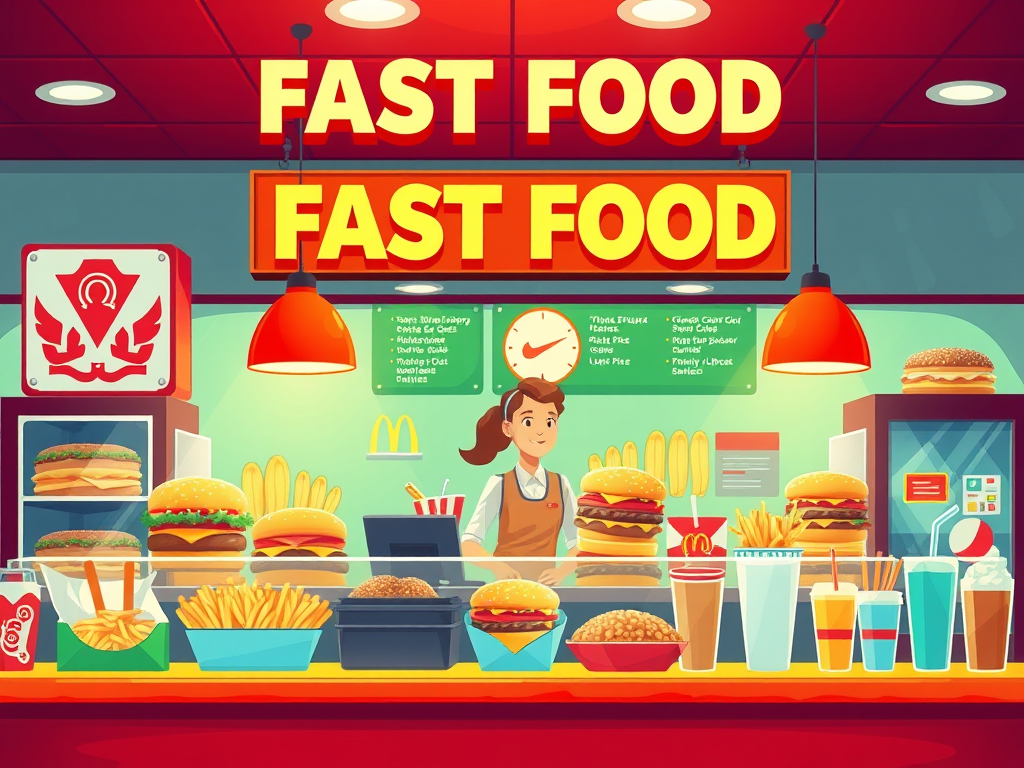
Have you ever popped into a fast food place for a quick, cheap snack and walked out with a super-sized meal, an extra side, and a dessert you hadn’t planned on? You’re definitely not the only one! Fast food restaurants are masters of persuasion, using a whole menu of clever fast food psychology tricks to nudge us into buying more, eating more, and coming back for more, more often.
It’s like a super-speedy magic show where the tricks are all designed to make you crave their food and spend a little extra cash without even realizing it. But guess what? Once you know the secrets behind how fast food restaurants make you spend more, you can become a smarter customer, spotting these tactics and making choices that are better for your health and your wallet. Think of this as your special decoder ring for understanding the secrets of fast food marketing. Ready to find out why fast food is so tempting and what tricks fast food chains use? Let’s unwrap these tasty tactics!
1. The Power of Pictures: Mouth-Watering Menu Photos That Sizzle and Entice
When you walk into a fast food restaurant or browse their app, the first thing that often grabs your attention is the menu board, illuminated with vibrant, juicy-looking pictures of burgers, fries, and shakes. These aren’t just random snapshots; they are carefully crafted illusions. This is a core component of fast food menu design tricks. Professional food stylists spend hours meticulously arranging every sesame seed, making the lettuce look perfectly crisp, and the burger patty appear thicker and more succulent than the one you’ll actually receive. The cheese is often melted just so, and the colours are enhanced to look incredibly appetizing. These perfect pictures trigger your brain, making you feel hungry and creating a strong craving for that specific item. It’s like a movie poster that makes a film look like the most epic adventure ever, even if the actual movie is just okay. The goal is to make the food look irresistible, tapping into why fast food is so tempting before you’ve even ordered. They know that if they can make you want it with your eyes, you’re much more likely to buy it.
2. “Would You Like to Go Large?”: The Artful Upselling Game at the Counter
“Would you like to make that a large meal for just 50p more?” or “How about adding a hot apple pie to your order today?” These questions, casually asked by the cashier or prompted on a screen, are a classic example of upselling – one of the most effective fast food upsizing techniques. It seems like a small extra cost for a lot more food or an extra treat, making it feel like a good deal. However, these little additions are a big part of how fast food restaurants make you spend more. That small extra amount, multiplied by thousands of customers each day, adds up to huge profits for the restaurant. They train their staff to suggest these upgrades or additions because they know many people will say “yes” without much thought, especially if they’re feeling rushed or hungry. It’s like playing a video game where you’re offered a small, cheap power-up that seems insignificant, but the game designers know these tiny purchases accumulate. Resisting the urge to automatically say yes to upsizing can save you money and help you stick to your original, perhaps healthier, choice.
3. Combo Confusion: Making “Deals” Seem Better Value Than They Often Are
Fast food menus are often dominated by “combo meals” or “value meals,” which bundle a main item (like a burger or chicken nuggets), a side (usually fries), and a drink together for a set price. This is a clever fast food menu design trick that makes these combinations seem like the best possible value. Our brains are wired to look for shortcuts, and a pre-packaged deal feels easier than figuring out the cost of individual items. However, sometimes these combos aren’t significantly cheaper than buying the items separately, or they might push you to buy more food than you actually wanted – like a larger drink or fries you wouldn’t have ordered otherwise. The menus can also be intentionally a bit confusing or overwhelming with options, so the highlighted combo meal stands out as the simplest, most obvious choice. It’s like a magician distracting you with a flourish of one hand (the “great deal!”) while the real trick (getting you to buy more) happens with the other. Always take a second to see if the combo truly suits your hunger and budget, or if you’d be better off with individual items. This is one of the key tricks fast food chains use to guide your choices.
4. Speedy Service, Speedy Spending: The “Fast” in Fast Food That Rushes Your Choices
The very name “fast food” tells you a lot about its strategy. The emphasis is always on speed: quick ordering, quick preparation, and quick consumption. While this is convenient when you’re in a hurry, this rapid pace is also one of the subtle fast food psychology tricks. When you feel rushed, you’re less likely to carefully consider your options, compare prices, or think about the nutritional content of your meal. The environment itself often contributes to this – bright lights, sometimes slightly louder music than a sit-down restaurant, and staff who are trained to process orders efficiently all encourage a quick decision. You might feel pressure from the line behind you or simply want to get your food and go. It’s like being in a race against the clock; your main goal becomes finishing the task (ordering) as quickly as possible, rather than making the most considered choice. This rush is part of how fast food restaurants make you spend more, as you’re more likely to opt for familiar, heavily advertised items or fall for upselling prompts without giving them a second thought.
5. Color Psychology: How Red and Yellow Can Actually Make You Hungrier
Have you ever noticed how many fast food chains use the colours red and yellow in their logos, packaging, and restaurant décor? This isn’t a coincidence; it’s a strategic use of colour psychology, a key element in the secrets of fast food marketing. The colour red is believed to stimulate appetite, create a sense of urgency, and even increase heart rate. It’s a bold, attention-grabbing colour that can make you feel more impulsive. Yellow is often associated with happiness, optimism, and friendliness, and it’s highly visible, catching your eye from a distance. When used together, these colours create a powerful combination that subconsciously shouts “food, fun, and fast!” It’s like a set of traffic lights designed to direct your cravings: red encourages you to “stop and eat!” while yellow promises a quick and happy experience. This colour scheme is a subtle yet effective way of making their brands memorable and why fast food is so tempting, influencing your mood and potentially your hunger levels from the moment you spot their sign.
6. The Aroma Advantage: Pumping Out Appetizing Smells to Lure You In
Your nose often knows before your eyes do! The delicious smell of sizzling burgers, salty fries, or even freshly baked cookies can be an irresistible draw, and fast food restaurants are experts at using this to their advantage. This is one of the most powerful ways of explaining why fast food is so tempting. Some restaurants are designed so that cooking smells naturally waft through the air and even out onto the street, acting like an invisible invitation. Others might even use artificial scent machines to enhance or create specific appetizing aromas, ensuring that the smell of “tasty food” is always present. These smells trigger immediate hunger pangs and cravings, even if you weren’t planning on eating. It’s like following a cartoon scent trail that leads you directly to the source of the deliciousness. This sensory marketing, a key part of their fast food advertising tactics, bypasses rational thought and appeals directly to your basic instincts, making it much harder to resist popping in for a “quick bite” that might turn into a full meal.
7. Limited-Time Offers: Creating False Urgency with “Get It Before It’s Gone!” Deals
“Limited Time Only!” “Get the McRib before it disappears!” “Seasonal Special!” These phrases are all designed to create a sense of urgency and a psychological phenomenon known as FOMO – the Fear Of Missing Out. This is one of the most common tricks fast food chains use. By making a product available for only a short period, fast food companies encourage you to buy it now, even if you weren’t particularly hungry or didn’t really need it. The thought that you might miss out on something special or popular can be a powerful motivator. Often, these limited-time offers (LTOs) are for indulgent, higher-profit items. They also generate buzz and get people talking about the brand. It’s like when a special edition toy or video game is released; there’s a rush to get it because it feels exclusive and won’t be around forever. These fast food advertising tactics are very effective at driving immediate sales and creating excitement, often overriding your more rational decision-making processes about what and when to eat.
8. Kid-Focused Fun: Toys, Playgrounds, and Happy Meals to Hook Them Young
Fast food restaurants put a lot of effort into appealing to children, and for a very strategic reason: kids influence what their parents buy, and positive childhood associations can build lifelong brand loyalty. This is a crucial part of the secrets of fast food marketing. Think about it: colourful kids’ meals that come with a “free” toy, playgrounds attached to restaurants, cartoon characters in their advertising, and brightly decorated spaces designed to feel fun and exciting. These tactics create a strong desire in children to visit these specific restaurants. This “pester power” often leads parents to choose a particular fast food outlet to keep their children happy. While a toy might seem like a small thing, it’s a powerful tool. It’s like a funfair being attached directly to a food stall; the kids are drawn in by the promise of play and prizes, and the food becomes part of that exciting experience. These fast food advertising tactics effectively bypass the parents and market directly to the child’s desire for fun and novelty.
9. “Healthy” Illusions: The Salad with a High-Calorie Catch
As people become more health-conscious, fast food restaurants have started offering “healthier” options like salads, grilled chicken, or fruit bags. While this seems like a positive step, it can sometimes be a fast food psychology trick to make their entire menu appear healthier by association, a phenomenon known as the “health halo” effect. You might feel better about ordering a burger and fries if you know there are salads on the menu, even if you don’t choose one. Furthermore, not all “healthy” options are created equal. A large salad can quickly become very high in calories, fat, and sodium once you add creamy dressings, crispy chicken, croutons, and cheese. Sometimes, a seemingly healthy salad can have more calories than a regular burger! It’s like putting a tiny sprig of parsley on a giant, greasy pizza and calling it a “garden delight.” It gives the illusion of a balanced choice, but the reality can be different. Always check the nutritional information if you’re genuinely trying to pick a healthier meal, and don’t let the presence of a few green options fool you about the rest of the fast food menu design tricks.
10. The Price is (Almost) Right: Charm Pricing and Decoy Items to Guide Your Choice
Fast food restaurants are very clever with how they price their items. One common tactic you’ll see everywhere is “charm pricing,” where prices end in .99 or .95 (like $2.99 instead of $3.00). Even though it’s only a tiny bit less, our brains tend to focus on the first digit, making $2.99 feel significantly cheaper than $3.00. This is one of the simplest tricks fast food chains use to make you feel like you’re getting a better deal. Another subtle strategy is “decoy pricing.” This involves placing a very expensive or very large item on the menu, not necessarily because they expect to sell many of them, but to make other, slightly less expensive (but still profitable) items look like much better value in comparison. For example, a “Super Mega Giant Burger” for $15 makes the “Large Burger” for $7 seem like a bargain. Charm pricing is like someone saying an event is “just under 3 hours long” instead of “almost 3 hours” – the first sounds shorter and more appealing. The decoy item is like having one friend who is a professional basketball player; they make everyone else look average height by comparison! These pricing strategies are all part of how fast food restaurants make you spend more by subtly influencing your perception of value.
So, the next time you step into a fast food restaurant, remember these behind-the-scenes tactics. They are all part of a carefully designed system to make their food appealing, encourage quick decisions, and nudge you to spend a bit more than you planned.
Being aware of these fast food psychology tricks, from the enticing menu photos and fast food upsizing techniques to the strategic use of colours and limited-time offers, doesn’t mean you can never enjoy fast food. It just means you can make more informed choices. Look beyond the flashy fast food advertising tactics, take an extra moment to decide what you really want, and don’t be afraid to just say “no, thank you” to that extra upsell. Now you’re equipped to be a smarter, more mindful fast food consumer!
Further Reading
If you’re interested in learning more about food, how our minds work when we make choices, or the effects of advertising, these books might be interesting:
- Fast Food Nation by Eric Schlosser (While a bit older and for mature readers, it gives a deep dive into the fast food industry. Younger readers might need parental guidance for some sections.)
- Salt Sugar Fat: How the Food Giants Hooked Us by Michael Moss (Explains how processed food, including fast food, is engineered to be irresistible. Again, better for older teens or with parental discussion.)
- Chew on This: Everything You Don’t Want to Know About Fast Food by Eric Schlosser and Charles Wilson (This is an adaptation of Fast Food Nation specifically for a younger audience and is highly recommended.)
- The Omnivore’s Dilemma: Young Readers Edition by Michael Pollan (A fantastic book that helps young people understand where their food comes from and the choices they have.)
- Ad Nauseam: A Survivor’s Guide to American Consumer Culture by Carrie McLaren and Alissa Quart (Editors). (This book, aimed at teens, deconstructs advertising and consumer culture.)
Here at Zentara.blog, our mission is to take those tricky subjects and unlock them, making knowledge exciting and easy to grasp for everyone. But the adventure doesn’t stop on this page! We’re constantly exploring new frontiers and sharing discoveries across the digital universe.
Want to dive deeper into more mind-bending Top 10s and keep expanding your world? Come join us on our other platforms – we’ve got unique experiences waiting for you on each one!
- Get inspired by visual wonders and bite-sized facts: See the world through Zentara’s eyes on Pinterest! Pin our fascinating facts and stunning visuals to your own boards. Explore Pins on Pinterest: https://uk.pinterest.com/zentarablog/
- Discover quick insights and behind-the-scenes peeks: Hop over to Tumblr for snippets, quotes, and unique content you won’t find anywhere else. It’s a different flavour of discovery! Follow the Fun on Tumblr: https://www.tumblr.com/zentarablog
- Ready for deep dives you can listen to or watch? We’re bringing our accessible approach to video and potentially audio! Subscribe to our YouTube channel and tune into future projects that make learning pop! Subscribe on YouTube: https://www.youtube.com/@ZentaraUK
- Seeking even more knowledge in one place? We’ve compiled some of our most popular topic deep dives into fantastic ebooks! Find them on Amazon and keep the learning journey going anytime, anywhere. Find Our Ebooks on Amazon: https://www.amazon.co.uk/s?k=zentara+uk&crid=2273NA7RAJ1EU&sprefix=zentara+uk%2Caps%2C90&ref=nb_sb_noss
- Connect with us and fellow knowledge seekers: Join the conversation on BlueSky! We’re sharing updates, thoughts, and maybe even asking you what wonders we should explore next. Chat with Us on BlueSky: https://bsky.app/profile/zentarablog.bsky.social
- Perfect for learning on the move! We post multiple 10-minute podcasts per day on Spotify. Pop on your headphones and fill your day with fascinating facts while you’re out and about! Listen on Spotify: https://open.spotify.com/show/3dmHbKeDufRx95xPYIqKhJ
Every click helps us keep bringing honest, accessible knowledge to everyone. Thanks for exploring with us today – see you out there in the world of discovery!




Leave a Reply