
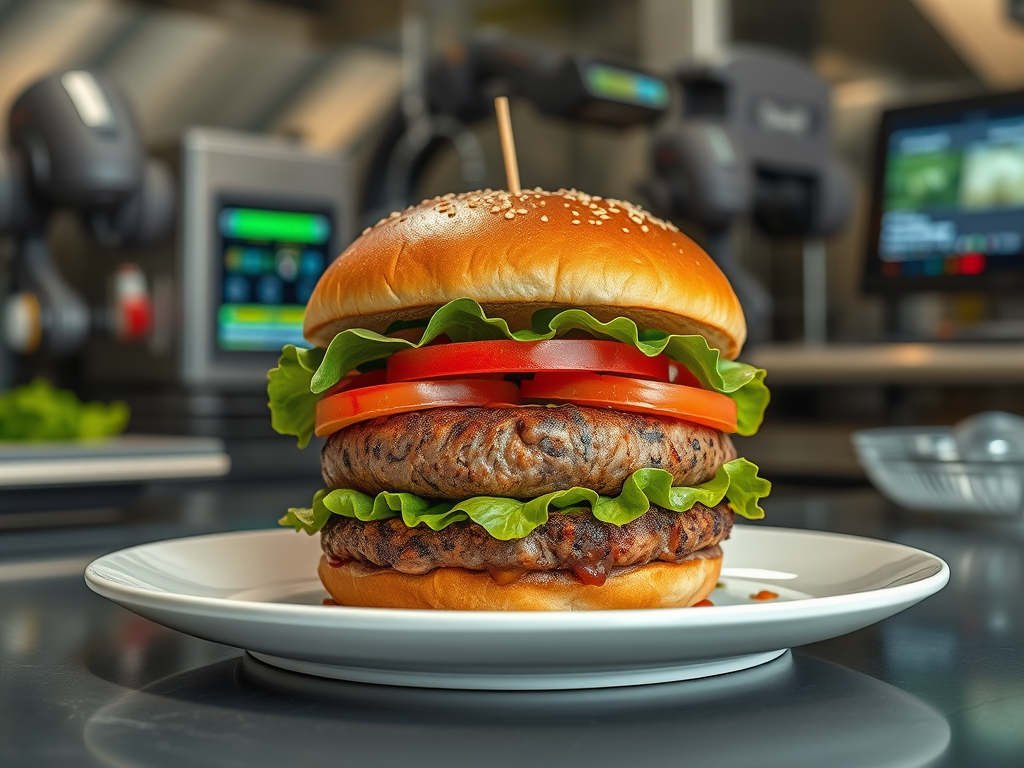
If you’ve ever sat in a drive-thru and marveled at how a perfectly seared burger can reach your window in under three minutes, you’ve witnessed one of the most complex logistical feats of the modern age. Fast food is no longer just about “greasy spoons” and mystery meat; in 2025, it is a high-tech industry driven by satellite-monitored supply chains, robotic precision, and increasingly stringent ethical standards.
When you unwrap a burger from a global franchise, you aren’t just eating a patty; you are consuming the end product of a global network that manages millions of pounds of protein with the precision of a Swiss watch. From the way cattle are tracked via blockchain to the specific gases used in packaging to keep meat looking “cherry red” without chemicals, the journey from farm to flattop is far more scientific than most diners realize. This article pulls back the curtain on the fundamental and enduring aspects of how your favorite chains source and prepare their meat today.
1. The “100% Beef” Claim and the Reality of Additives
When a major franchise like McDonald’s or Wendy’s advertises “100% pure beef,” they are often speaking the literal truth, but with a scientific caveat. To carry the 100% USDA beef label in the United States, the patty must be composed entirely of skeletal muscle meat. However, the “100%” often refers to the composition of the meat itself, not necessarily the exclusion of seasonings or the process used to form the patty.
In 2025, while the core patties of leading chains are free from “pink slime” (lean finely textured beef), some secondary items—like budget tacos or “signature” blended patties—may use additives like yeast extract, maltodextrin, or soy lecithin to enhance “mouthfeel” and flavor stability. Think of it like a high-end paint: the pigment might be 100% pure, but the additives in the bucket help it stick to the wall and stay the same color for years. For the consumer, understanding fast food meat sourcing means distinguishing between a “whole muscle” burger and a “prepared meat product” found in value menus.
2. The Logistical Miracle of “Fresh, Never Frozen”
We’ve all seen the commercials, but the actual science behind Wendy’s fresh never frozen beef is a masterclass in “just-in-time” manufacturing. To keep beef fresh across thousands of locations without it ever touching a freezer, franchises must maintain a “Cold Chain” that never breaks. This isn’t just a refrigerated truck; it’s a system of thousands of GPS-tracked vehicles that move meat from regional processing plants to the restaurant in a window of usually 48 to 72 hours.
If a truck’s temperature fluctuates by even a few degrees, smart sensors immediately alert the headquarters, and the shipment is diverted or discarded before it ever reaches the grill. This commitment to freshness is an “enduring aspect” of brand identity because it changes the texture of the meat. When meat is frozen, the water inside the cells expands into ice crystals, which can puncture cell walls and lead to a “mushy” texture upon thawing. By staying fresh, the proteins remain intact, providing that specific “snap” and juice that differentiates premium fast food from its frozen competitors.
3. Blockchain and the Quest for Total Sourcing Transparency
As of 2025, “mystery meat” is becoming a thing of the past thanks to fast food supply chain transparency powered by blockchain technology. Leading franchises are now using digital ledgers to track a single batch of beef back to the specific ranching cooperative it came from. This isn’t just for marketing; it’s a critical tool for food safety.
In the old days, a meat recall might mean throwing away every burger in a three-state area because no one knew exactly where the problem started. Today, using blockchain in food sourcing, a franchise can “surgical-strike” a recall, identifying the specific 500-pound batch of beef and the 12 restaurants that received it within minutes. For the consumer, this means your burger comes with a digital “passport,” ensuring that if there was a deforestation issue in a high-priority origin like Brazil or a health issue at a domestic plant, the system caught it before it hit the broiler.
4. AI “Meat Inspectors” and the Precision of the Modern Kitchen
The person flipping your burger isn’t the only one watching the meat. In 2025, fast food meat processing technology has introduced AI-powered cameras at the processing plant and even inside some high-volume kitchens. These cameras analyze the meat for “valence”—a technical term for its color, fat distribution (marbling), and texture.
If a patty is too lean, it will be dry; if it’s too fatty, it will shrink and cause flare-ups on the grill. AI systems ensure that every single patty is an identical clone of the one before it. This level of precision butchery ensures consistency, which is the “holy grail” of franchising. Whether you are in New York or New Delhi, the fat-to-lean ratio (usually 80/20 for premium burgers) remains identical because a computer has “vetted” every ounce of beef before it was shaped into a disk.
5. The Great Antibiotic Phase-Out of 2025
One of the most significant shifts in fast food animal welfare standards has been the industry-wide move toward antibiotic-free fast food meat. For decades, sub-therapeutic antibiotics were used to help livestock grow faster in crowded conditions. However, due to the rise of antibiotic-resistant “superbugs,” consumers and regulators have pushed for a “No Antibiotics Ever” (NAE) or “Responsible Use” policy.
By 2025, almost all major chicken-based franchises have achieved 100% antibiotic-free status, while the beef industry is trailing slightly behind due to the longer life cycles of cattle. This change isn’t just about health; it’s about the “fundamental aspect” of how animals are raised. Without the “crutch” of constant antibiotics, ranchers must provide cleaner environments and more space for their animals to keep them healthy. This shift has fundamentally changed the sourcing of fast food meat, moving the industry away from the “factory farm” image toward more sustainable, managed health programs.
6. Cryogenic Freezing: The Science of the Fast Food “Snap”
For those chains that do use frozen beef, the technology is light-years ahead of your home freezer. They utilize cryogenic freezing, which uses liquid nitrogen or carbon dioxide to drop the temperature of a patty to -320°F in seconds. This is called “Flash Freezing,” and it is essential for maintaining fast food food safety.
Because the freezing happens so fast, the ice crystals that form are microscopic. They don’t have time to grow and damage the meat’s fibers. This allows the meat to retain its structural integrity and moisture. When that patty hits the grill at the restaurant, it thaws and cooks almost simultaneously, releasing juices that were “locked” in place by the cryogenic process. It’s a perfect example of how high-end physics is used to ensure that a frozen product can still provide a “fresh” eating experience for the consumer.
7. The Humane Shift: Group Housing and Ethical Sourcing
In 2025, the “how” of meat sourcing includes the psychological well-being of the animals. Major franchises like McDonald’s and Wendy’s have officially moved away from “gestation crates”—tiny metal cages for pigs that prevent them from even turning around. Instead, they have transitioned to group housing systems.
This shift is a response to the “above average” consumer’s demand for ethical treatment. In these systems, animals can socialize and move freely. While this might seem like a small detail, it actually affects meat quality. High-stress environments produce cortisol and other hormones that can lead to “PSE” (Pale, Soft, and Exudative) meat, which is tough and flavorless. By prioritizing humane fast food sourcing, franchises aren’t just doing the “right thing”—they are ensuring a higher-quality protein that behaves predictably on the grill.
8. The Anatomy of the “Flash-Grill” Process
Preparation at the restaurant level is just as scientific as the sourcing. Most modern franchises use clamshell grills, which are two-sided heating elements that press down on the burger. This prepares the meat using “conductive heat” from both the top and bottom simultaneously.
This serves two purposes: speed and safety. By cooking both sides at once, the meat reaches its target internal temperature of 165°F in about 40 to 60 seconds, which is far safer than a traditional grill where the center might stay cool while the outside burns. Furthermore, this “seals” the juices inside the meat immediately. The “vivid example” here is a panini press for burgers—it ensures that the fast food preparation techniques remain consistent regardless of how busy the kitchen gets, eliminating human error from the cooking process.
9. Circular Processing: Repurposing the “Whole Cow”
Fast food franchises are among the most efficient users of animal products on Earth, practicing what is known as circular processing. When a cow is processed for a franchise, nothing goes to waste. While the “prime cuts” go to steakhouses and the “trim” becomes your burger patty, the by-products are funneled into a massive secondary economy.
Fats are rendered into “tallow,” which was famously used for frying potatoes and is now often converted into biofuels to power the very trucks that deliver the meat. Bones are ground into high-protein meals for other industries, and hides are meticulously tracked for the leather market. This “fundamental aspect” of the business model is what allows fast food to remain affordable. By selling “everything but the moo,” franchises can keep the cost of the burger low while still paying for the high-tech sourcing and welfare standards mentioned above.
10. Hybrid Meats and the Future of the Blended Burger
The final fact you might not know is that in 2025, the “meat” in your burger might not be 100% animal. We aren’t talking about “veggie burgers,” but hybrid meats. Some franchises have begun experimenting with “blended patties”—mixing high-quality beef with plant-based proteins like mushrooms or pea protein.
This isn’t to trick you; it’s to meet the “flexitarian” demand for lower-carbon-footprint meals without sacrificing the taste of real beef. These plant-based fast food integrations allow for a burger that has 30% fewer calories and a significantly lower environmental impact while still providing the savory “umami” flavor of traditional meat. As we look toward the future, the “burger” will likely become a high-tech blend of traditional ranching and laboratory-grade plant science, representing the ultimate evolution of how fast food franchises source and prepare their meats.
Further Reading
- “The Omnivore’s Dilemma: A Natural History of Four Meals” by Michael Pollan
- “Fast Food Nation: The Dark Side of the All-American Meal” by Eric Schlosser
- “Pressure Cooker: Why Home Cooking Won’t Solve Our Problems and What We Can Do About It” by Sarah Bowen, Joslyn Brenton, and Sinikka Elliott
- “The Way We Eat Now: How the Food Revolution Has Transformed Our Lives, Our Bodies, and Our World” by Bee Wilson
Keep the Discovery Going!
Here at Zentara, our mission is to take tricky subjects and unlock them, making knowledge exciting and easy to grasp. But the adventure doesn’t stop at the bottom of this page. We are constantly creating new ways for you to learn, watch, and listen every single day.
Watch & Learn on YouTube
Visual learner? We publish 4 new videos every day, plus breaking news shorts to keep you smarter than the headlines. From deep dives to quick facts, our channel is your daily visual dose of wonder.
Click here to Subscribe to Zentara on YouTube
Listen on the Go on Spotify
Prefer to learn while you move? Tune into the Zentara Podcast! We drop a new episode daily, perfect for your commute, workout, or coffee break. Pop on your headphones and fill your day with fascinating facts.
Click here to Listen on Spotify
Every click, view, and listen helps us keep bringing honest knowledge to everyone. Thanks for exploring with us today—see you out there in the world of discovery!




Leave a Reply