
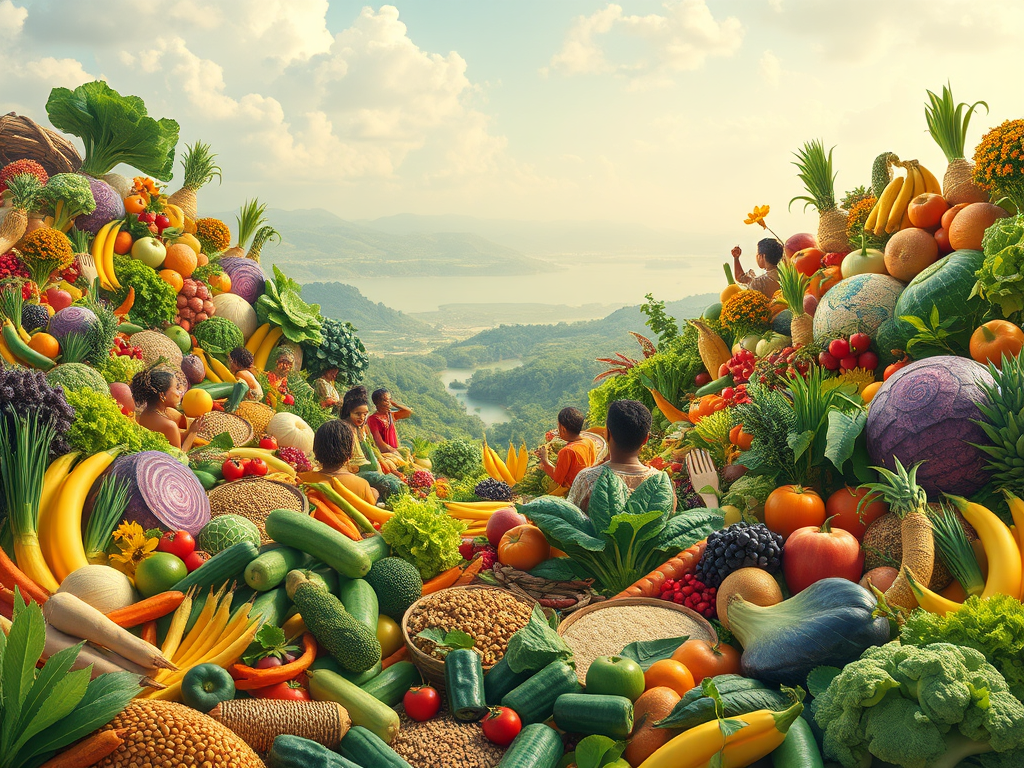
Imagine a world where nobody eats meat – no burgers, no chicken nuggets, no holiday roasts. Is that even possible? And if it were, how in the world could we make such a massive change happen for billions of people all across the planet? It’s one of the biggest “what if” questions you can ask about food and how we live!
Right now, most people around the world eat some kind of meat. It’s part of our meals, our traditions, and our cultures. But some people choose not to eat meat for different reasons, like helping the environment, caring for animals, or for their health. Could everyone make that choice? Scientists and thinkers agree that, yes, from a health point of view, humans can absolutely live and be healthy on diets that don’t include meat, as long as they are planned properly to get all the necessary nutrients.
So, it’s physically possible. But going from some people not eating meat to everyone on Earth stopping is a giant leap! It wouldn’t happen overnight, and it would involve changing almost everything about how we produce, distribute, think about, and eat food. Let’s explore the huge puzzle pieces that would need to fit together to make this “what if” a reality.
1. The Big Question: Is it Even Really Possible for Seven Billion People?
The very first piece of the puzzle is just thinking about the sheer number of people on Earth – over seven billion! Each person has their own tastes, habits, and beliefs about food. Getting everyone to agree on anything is hard enough, let alone convincing every single person to change such a fundamental part of their daily life.
Think about your own family meals or what your friends eat. Food is tied to celebrations, comfort, and identity. For many communities around the world, raising animals and eating meat is central to their way of life and has been for centuries. So, while a plant-based diet is healthy and possible for individuals, getting everyone to make that change simultaneously involves overcoming deeply rooted personal, cultural, and social factors. It’s not just about changing what’s on the plate; it’s about changing hearts and minds on a global scale. This is the core challenge when we ask can the world go vegetarian.
2. Growing Enough Food: Can Plants Feed Us All?
If nobody ate meat, we would need a lot more plant-based food – way more grains, beans, vegetables, fruits, nuts, and seeds than we grow now for people to eat directly. Currently, a large amount of the world’s crops (like corn and soy) are grown specifically to feed livestock animals, not humans.
If we stopped eating meat, we could use much of that land and those resources (like water and fertilizer) to grow food for people instead. In theory, this could actually make it easier to produce enough calories for the world, as it takes many pounds of feed to produce one pound of meat. However, scaling up edible plant production to feed everyone nutritious meals every single day, year-round, in every climate and country, is a massive agricultural and logistical challenge. It would require new farming techniques, better storage, and global distribution systems. This is a key point when considering the future of food production.
3. Getting All the Right Nutrients: Planning is Key!
While plant-based diets can be perfectly healthy, you have to pay attention to make sure you get all the nutrients your body needs. Meat is a source of complete protein, iron, zinc, and important vitamins like B12. Plants provide most of these things too, but sometimes in different amounts or forms that are harder for the body to use.
For a world without meat, everyone would need to understand which plant foods provide which nutrients. For example, beans, lentils, and tofu are great sources of protein. Leafy greens and legumes provide iron. However, Vitamin B12 is the biggest challenge, as it’s not reliably found in unfortified plant foods. This would likely require widespread use of B12 supplements or fortifying common foods (like cereals or plant milks) everywhere in the world. Ensuring everyone, especially children, gets proper nutrition without meat requires significant education and access to the right foods or supplements, a major hurdle in plant based diet challenges.
4. Changing Farms and Jobs: A Huge Economic Shift
Right now, millions upon millions of people around the world make their living from raising animals – farmers, ranchers, and those who work in slaughterhouses, meatpacking plants, transportation, and retail selling meat. For everyone to stop eating meat, all these jobs and businesses would disappear.
This would cause enormous economic and social disruption, especially in rural communities that depend heavily on livestock. Governments and communities would need to plan and invest in helping these people and businesses transition to new ways of making a living, such as growing different crops, producing plant-based alternative foods, or working in other industries. It would be a massive undertaking to manage this economic shift smoothly on a global scale. This is a complex part of the challenges of global veganism.
5. Food and Culture: More Than Just Fuel
Food is so much more than just something to eat; it’s deeply connected to our identity, our history, and our relationships. Think about Thanksgiving turkey, barbecues with friends, traditional stews, or ceremonial meals. Meat plays a central role in the cultures and traditions of people all over the world, from nomadic herders to urban families.
Suddenly removing meat from all these cultural contexts would be a huge social and emotional change. It would require finding new foods and new ways to celebrate and connect that don’t involve meat. While food traditions do evolve over time, asking for a complete and rapid global change like this goes against centuries of human history and cultural practice. Addressing the cultural significance of meat is a major factor in whether can the world go vegetarian is possible.
6. Making Plant Food Accessible and Affordable Everywhere
Today, access to diverse and nutritious food varies greatly around the world. In some regions, particularly those facing poverty or difficult climates, animal protein might be a crucial, readily available source of nutrients that are harder to get from locally grown plants alone.
For everyone to stop eating meat, there would need to be robust global food systems that ensure access to a wide variety of affordable, nutritious plant-based foods and supplements in every country, city, and remote village. This means improving infrastructure for transportation, storage (like refrigeration), and distribution, especially in areas that currently rely heavily on subsistence farming or local animal protein. Ensuring feeding the world without meat equitably is a monumental logistical challenge.
7. Learning New Ways to Cook and Eat
Even if nutritious plant foods were available everywhere, people would need to know how to prepare them in tasty and satisfying ways that provide balanced meals. Cooking meat is a skill that many people have learned from their families. Cooking with a wider variety of beans, lentils, tofu, tempeh, vegetables, and grains requires different knowledge and techniques.
Widespread education about plant-based cooking, nutrition, and meal planning would be necessary. Cookbooks, classes, and public health campaigns would need to reach billions of people in different languages and cultural contexts. Getting people to change their daily cooking and eating habits is often a slow process, driven by personal preference and comfort, which adds another layer to the challenges of global veganism.
8. Developing New Food Technologies
The possibility of everyone stopping meat consumption could be helped by new technologies. Scientists are working on creating plant-based meat alternatives that mimic the taste and texture of meat more closely, making the transition easier for people. Another area of research is lab-grown or “cultured” meat, which is grown from animal cells in a lab without needing to raise and slaughter animals.
If these technologies become affordable, widely available, and accepted by consumers around the world, they could provide alternatives that meet people’s expectations for taste and texture while potentially having a lower environmental impact than traditional meat. However, these technologies are still developing and face their own challenges in terms of scaling production and public acceptance. New food tech is part of the future of food production.
9. Governments Making Big, Coordinated Changes
Achieving a global shift away from meat wouldn’t happen just because individuals decide to change. Governments and international organizations would need to play a massive role. This would involve coordinating agricultural policies worldwide, potentially offering financial incentives for plant farming, investing in research for plant-based foods and nutrition, and implementing public health campaigns about diet.
International agreements might be needed to manage trade in plant foods and ensure equitable distribution. Getting nearly 200 countries to agree on and implement such coordinated, widespread changes to food systems and economies would be an unprecedented act of global cooperation. Policy changes are crucial for addressing the impact of eating meat on planet and moving towards alternatives.
10. The Power of Billions of Individual Choices
Ultimately, whether everyone stops eating meat comes down to the individual choices of billions of people, made day after day, meal after meal. Even with all the agricultural, economic, and policy changes in the world, each person would need to decide for themselves to adopt a diet without meat and stick with it.
Changes in diet are often personal and driven by a mix of factors: health, cost, taste preference, convenience, culture, family habits, and personal beliefs about the environment or animals. While global trends can shift, convincing every single person to make the same dietary choice is a level of uniformity that is incredibly difficult, perhaps even impossible, to achieve in a diverse world that values personal freedom. The combined impact of these individual choices is the ultimate determinant of whether can the world go vegetarian.
Further Reading
Want to learn more about food, sustainability, and how the world works? Check out these books:
- The Omnivore’s Dilemma: Young Readers Edition by Michael Pollan (Adapted by Richie Chevat)
- National Geographic Kids Cookbook: A Year of Yum! by Barton Seaver
- What a Waste: Trash, Recycling, and Protecting Our Planet by Jess French (Includes sections on food waste and production)
- How We Got to Now: Six Innovations That Made the Modern World by Steven Johnson (Young Readers Edition) (Look for chapters on things like clean/cold)
Here at Zentara.blog, our mission is to take those tricky subjects and unlock them, making knowledge exciting and easy to grasp for everyone. But the adventure doesn’t stop on this page! We’re constantly exploring new frontiers and sharing discoveries across the digital universe.
Want to dive deeper into more mind-bending Top 10s and keep expanding your world? Come join us on our other platforms – we’ve got unique experiences waiting for you on each one!
- Get inspired by visual wonders and bite-sized facts: See the world through Zentara’s eyes on Pinterest! Pin our fascinating facts and stunning visuals to your own boards. Explore Pins on Pinterest: https://uk.pinterest.com/zentarablog/
- Discover quick insights and behind-the-scenes peeks: Hop over to Tumblr for snippets, quotes, and unique content you won’t find anywhere else. It’s a different flavour of discovery! Follow the Fun on Tumblr: https://www.tumblr.com/zentarablog
- Ready for deep dives you can listen to or watch? We’re bringing our accessible approach to video and potentially audio! Subscribe to our YouTube channel and tune into future projects that make learning pop! Subscribe on YouTube: https://www.youtube.com/@ZentaraUK
- Seeking even more knowledge in one place? We’ve compiled some of our most popular topic deep dives into fantastic ebooks! Find them on Amazon and keep the learning journey going anytime, anywhere. Find Our Ebooks on Amazon: https://www.amazon.co.uk/s?k=zentara+uk&crid=2273NA7RAJ1EU&sprefix=zentara+uk%2Caps%2C90&ref=nb_sb_noss
- Connect with us and fellow knowledge seekers: Join the conversation on BlueSky! We’re sharing updates, thoughts, and maybe even asking you what wonders we should explore next. Chat with Us on BlueSky: https://bsky.app/profile/zentarablog.bsky.social
- Perfect for learning on the move! We post multiple 10-minute podcasts per day on Spotify. Pop on your headphones and fill your day with fascinating facts while you’re out and about! Listen on Spotify: https://open.spotify.com/show/3dmHbKeDufRx95xPYIqKhJ
Every click helps us keep bringing honest, accessible knowledge to everyone. Thanks for exploring with us today – see you out there in the world of discovery!




Leave a Reply