
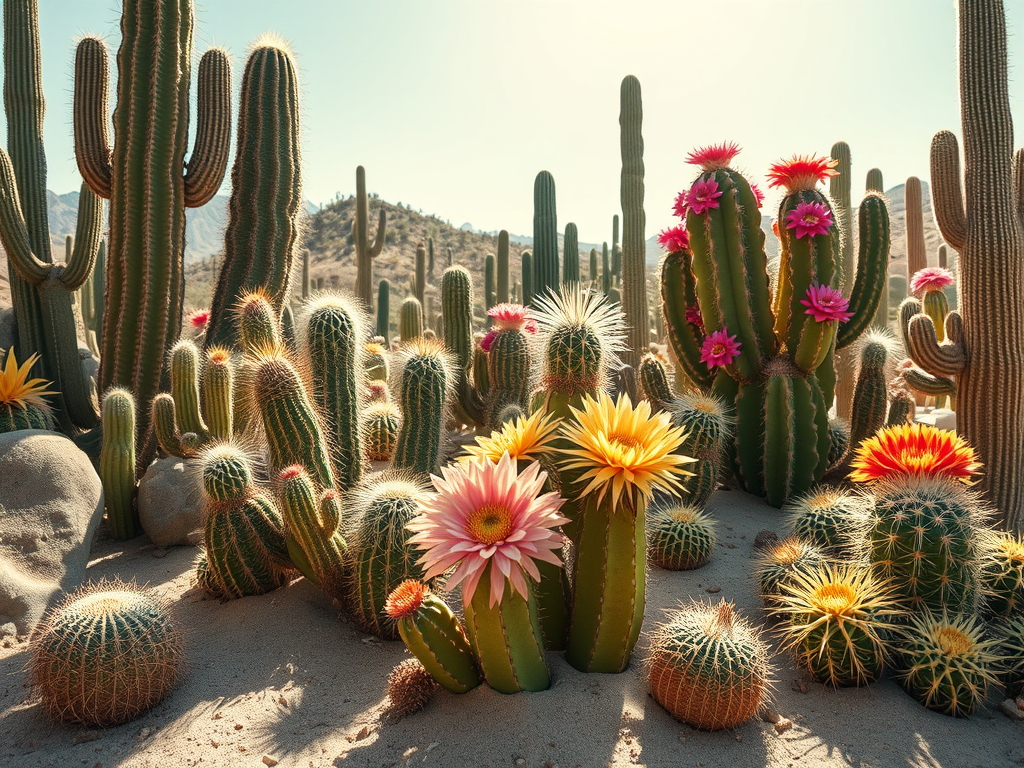
Cacti! Just saying the word probably makes you picture a hot, sandy desert with spiky green plants. And while many cacti do live in deserts, there’s so much more to these incredible plants than just spines and dry land! Cacti are some of the most unique and tough plants on Earth, having developed amazing superpowers to survive in places where most other plants can’t.
They come in all sorts of shapes and sizes, from tiny, pebble-like plants to towering giants that look like they’re straight out of a cartoon. Learning about cacti is like discovering a whole hidden world of survival tricks and surprising beauty. They have fascinating ways of finding, storing, and saving water, protecting themselves, and even blooming with spectacular flowers.
If you thought cacti were just prickly green things, get ready to be surprised! We’re going to dive into some interesting cactus facts that will show you just how special these plants are. Prepare to learn about their amazing adaptations, different kinds, and how they manage to thrive in some of the planet’s harshest environments. Let’s explore the wonderful world of cacti!
1. Cacti Are Water-Saving Superheroes
Perhaps the most famous thing about cacti is their incredible ability to survive with very little water. They are like living water tanks! Their stems are specially designed to swell up and store large amounts of water whenever it’s available, like during a rare desert rainstorm. The outer skin is often thick and waxy, which helps to prevent water from evaporating back into the dry air.
Think of a cactus stem like a sponge that can soak up water quickly when it rains, and then that waxy skin is like a sealed container that locks the moisture inside. This stored water is crucial for the cactus to survive long periods of drought when there’s no rain at all. This amazing adaptation is the main reason how cacti survive in the desert where water is scarce. It’s a prime example of how do cacti store water so efficiently, allowing them to stay alive and even grow in conditions that would kill most other plants. They are true masters of water conservation!
2. Those Poky Spines Are Actually Modified Leaves
The first thing you probably notice about a cactus are its spines. Ouch! You might think they are just there to poke you and keep animals away, and while protection is a big job they do, spines are much more interesting than that. Scientists have discovered that cactus spines aren’t just random sharp growths; they are actually modified leaves.
Millions of years ago, the ancestors of modern cacti had regular leaves like other plants. But over time, as they evolved in dry climates, having broad leaves that lose lots of water through evaporation became a problem. So, their leaves gradually changed, becoming smaller, harder, and sharper – transforming into the spines we see today. These spines help the cactus in several ways: they protect the plant from hungry animals looking for a juicy meal, they can help shade the plant’s surface from the intense sun, and some even help collect dew or rainwater by directing it down to the base of the plant. Understanding what are cactus spines reveals a key adaptation that makes cacti so successful and is one of the cool cactus plant facts.
3. They Are Masters of Desert Survival Through Clever Tricks
Living in a desert is incredibly tough. It’s usually scorching hot during the day, freezing cold at night, and there’s hardly any water. Yet, cacti thrive! They have a whole toolkit of adaptations to survive these extreme conditions, going way beyond just storing water.
Besides their water-storing stems and protective spines, cacti have shallow, widespread root systems that can quickly soak up any moisture from a light rainfall before it evaporates. They also have a special way of “breathing” (taking in carbon dioxide) that’s different from most plants. Instead of opening their pores (called stomata) during the hot day when they would lose too much water, they open them at night when it’s cooler. They store the carbon dioxide and then use it during the day for photosynthesis (making food from sunlight). This is called CAM photosynthesis and is a genius way how cacti survive in the desert. These clever tricks make cacti some of the most resilient plants on the planet and are fascinating interesting cactus facts.
4. Cacti Come in an Amazing Variety of Shapes and Sizes
When someone says “cactus,” you might instantly picture a tall, arm-waving Saguaro cactus like you see in cartoons. Saguaros are real and amazing, but the world of cacti is far more diverse! There are over 1,800 different species of cacti, and they come in a mind-boggling array of shapes, sizes, and appearances.
You can find tiny, round “pincushion” cacti that look like they’d fit in your hand, flat paddle-shaped Prickly Pears, ribbed barrel cacti that look like green, spiky balls, and even trailing or hanging varieties that look more like vines. Some cacti are smooth with almost invisible spines, while others are covered in thick, fuzzy hairs that help protect them. Exploring the types of cacti is like discovering a gallery of living sculptures! Each type has evolved unique shapes and structures suited to its specific environment, showing the incredible diversity within this single plant family and providing endless fun facts about cactus.
5. Many Cacti Bloom with Surprisingly Beautiful Flowers
Given how tough and spiky they look, you might not expect cacti to produce delicate and beautiful flowers. But many species do! And their flowers are often spectacular – vibrant, colorful, and sometimes very large compared to the plant itself. These flowers can be white, yellow, pink, red, orange, or purple.
Cactus flowers often bloom for only a short time, sometimes just a day or even a single night. Night-blooming cacti often have white or pale flowers that are fragrant to attract nocturnal pollinators like bats or moths. Day-blooming cacti are pollinated by insects or birds. These brief but stunning displays are essential for the cactus to reproduce and create seeds. Seeing a cactus in bloom is a special treat and highlights the hidden beauty of these desert survivors. It’s a wonderful addition to cactus plant facts and shows that even the prickliest plants can create something incredibly lovely.
6. Not All Cacti Live in Hot, Dry Deserts
While the image of a desert is strongly linked to cacti, it’s a surprising interesting cactus fact that some types of cacti don’t live in deserts at all! Some cacti are epiphytes, meaning they grow on other plants, like trees, typically in rainforests or tropical areas.
These cacti, such as the Christmas cactus or Easter cactus (popular houseplants!), don’t need to worry about storing water in the same way as desert cacti because they live in humid environments where water is more available. They often have flattened stems that look more like leaves and fewer, if any, sharp spines. They get moisture and nutrients from the air, rain, and debris that collects on the branches where they grow. This shows that the cactus family is more adaptable than you might think and includes types of cacti suited to very different environments than the classic sandy desert. It’s a reminder that nature is full of surprises!
7. They Have a Unique “Night-Time” Way of Eating
We mentioned that cacti have a special way of taking in carbon dioxide. This process is called Crassulacean Acid Metabolism, or CAM photosynthesis. It’s a complex name, but the idea is pretty simple and clever for saving water.
Most plants open tiny pores (stomata) on their leaves during the day to let in the carbon dioxide they need for photosynthesis (using sunlight to make food). But in hot, dry places, opening these pores during the day would cause them to lose too much precious water. Cacti evolved to do things differently. They open their stomata only at night when the air is cooler and more humid, taking in carbon dioxide and storing it in their tissues as an acid. During the day, they close their stomata to conserve water, and then use the stored carbon dioxide and sunlight to perform photosynthesis. This “night-time breathing” allows them to make food while minimizing water loss, a vital strategy for how do cacti survive in the desert. It’s a fascinating cactus plant fact about their internal workings!
8. Some Cacti Can Live for a Very, Very Long Time
Certain types of cacti are incredibly long-lived, surviving for many decades or even centuries. The giant Saguaro cactus, for example, is known for its impressive lifespan. While growth rates vary depending on conditions, Saguaros typically grow very slowly, especially in their early years. It can take a Saguaro cactus up to 70 years to grow its first “arm”!
These giant cacti can live for 150 to 200 years, or even longer in some cases. Imagine a plant that was alive when your great-great-grandparents were children! Their slow growth and ability to store water help them endure long periods of time in harsh conditions. Their longevity makes them important fixtures in the desert landscape, providing habitat and food for generations of desert animals. This remarkable lifespan is one of the truly interesting cactus facts and highlights the resilience and enduring nature of these incredible plants.
9. Some Cacti Have Edible Parts That People Eat
Despite the spines, some cacti have parts that are perfectly safe and even delicious to eat! The most commonly eaten part of a cactus is the fruit, often called “tunas” from certain Opuntia species (Prickly Pears). These fruits are often brightly colored (red, orange, or purple) and have a sweet, slightly watermelon-like flavor. You just have to be careful to remove the tiny spines on the outside!
The flat pads of certain Opuntia cacti, called “nopales,” are also eaten, particularly in Mexican cuisine. The spines are carefully removed, and the pads are cooked and can be used in salads, tacos, or stews. They have a slightly tart, green-bean-like flavor and a slightly slimy texture (which disappears when cooked). Using cacti as a food source is an ancient practice in areas where they are native, demonstrating how people have utilized these resilient plants for sustenance. It’s a tasty cactus fact for kids that shows these plants are not just for looking at!
10. Cacti Are Important Homes and Food for Desert Animals
Cacti play a vital role in the desert ecosystem, providing much-needed resources for the animals that live there. Their thick stems store water, which can be a lifesaver for thirsty animals. The fruits and flowers of cacti provide food for birds, insects, and mammals.
The structure of large cacti, like Saguaros, also provides shelter. Birds like woodpeckers can nest in holes they make in the cactus stem, and these holes are later used by other animals like owls and small mammals. Spines offer protection for animals that live amongst them, helping them hide from predators. Cacti are like oases in the desert, supporting a variety of life. Their presence is crucial for the survival of many desert creatures, making them much more than just spiky plants – they are key parts of the desert food web and habitat, adding to the fun facts about cactus and their importance.
Further Reading
Want to dig deeper into the amazing world of plants and deserts? Check out these books:
- Cactus Hotel by Brenda Z. Guiberson
- The Magic School Bus Gets Baked in a Cake: A Book About Photosynthesis by Joanna Cole (Focuses on plants in general, but good for understanding plant processes)
- Desert Animals by Jake Anderson (Explores the animals that rely on plants like cacti)
- DK Eyewitness Books: Plant by David Burnie
Cacti are truly extraordinary plants, perfectly adapted to survive and even thrive in some of the world’s most challenging environments. We’ve learned that their spines are modified leaves, they have incredible ways of storing water and making food, they come in countless shapes and sizes (and colors!), and some even live outside the desert. These interesting cactus facts show that these prickly plants are far more than just decorations; they are vital parts of their ecosystems, supporting life and showcasing nature’s incredible ability to adapt.
Here at Zentara.blog, our mission is to take those tricky subjects and unlock them, making knowledge exciting and easy to grasp for everyone. But the adventure doesn’t stop on this page! We’re constantly exploring new frontiers and sharing discoveries across the digital universe.
Want to dive deeper into more mind-bending Top 10s and keep expanding your world? Come join us on our other platforms – we’ve got unique experiences waiting for you on each one!
- Get inspired by visual wonders and bite-sized facts: See the world through Zentara’s eyes on Pinterest! Pin our fascinating facts and stunning visuals to your own boards. Explore Pins on Pinterest: https://uk.pinterest.com/zentarablog/
- Discover quick insights and behind-the-scenes peeks: Hop over to Tumblr for snippets, quotes, and unique content you won’t find anywhere else. It’s a different flavour of discovery! Follow the Fun on Tumblr: https://www.tumblr.com/zentarablog
- Ready for deep dives you can listen to or watch? We’re bringing our accessible approach to video and potentially audio! Subscribe to our YouTube channel and tune into future projects that make learning pop! Subscribe on YouTube: https://www.youtube.com/@ZentaraUK
- Seeking even more knowledge in one place? We’ve compiled some of our most popular topic deep dives into fantastic ebooks! Find them on Amazon and keep the learning journey going anytime, anywhere. Find Our Ebooks on Amazon: https://www.amazon.co.uk/s?k=Zentara+UK&ref=nb_sb_noss
- Connect with us and fellow knowledge seekers: Join the conversation on BlueSky! We’re sharing updates, thoughts, and maybe even asking you what wonders we should explore next. Chat with Us on BlueSky: https://bsky.app/profile/zentarablog.bsky.social
- Perfect for learning on the move! We post multiple 10-minute podcasts per day on Spotify. Pop on your headphones and fill your day with fascinating facts while you’re out and about! Listen on Spotify: https://open.spotify.com/show/3dmHbKeDufRx95xPYIqKhJ
Every click helps us keep bringing honest, accessible knowledge to everyone. Thanks for exploring with us today – see you out there in the world of discovery!




Leave a Reply