
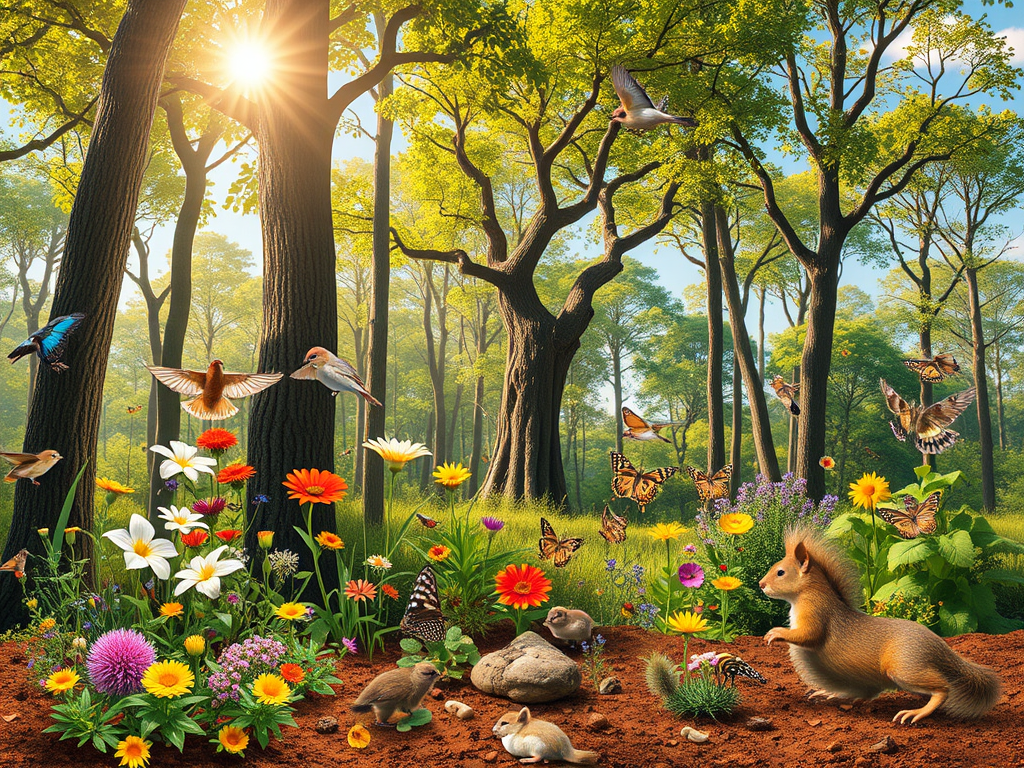
Have you ever walked through a forest, explored a pond, or even just looked closely at the plants and bugs in your own backyard? If you have, you’ve visited an ecosystem! Nature is like a giant, super-complicated puzzle, and every piece, no matter how big or small, fits together perfectly. Understanding what is an ecosystem is like getting the secret code to how all these pieces connect and work together. It’s all about the amazing relationships between plants, animals, and their environment. From the tiniest microbe in the soil to the tallest tree, everything plays a part in these incredible natural communities. This guide will help you explore some of nature’s connections explained in a simple way, showing you just how ecosystems work for kids and why they are so incredibly important for our planet. Get ready to discover the magic of nature’s networks!
Here are 10 key ideas to help you understand ecosystems and how nature connects:
1. Ecosystem Essentials: What Are They Anyway?
So, what is an ecosystem? Imagine it like a giant neighborhood where all sorts of living things and non-living things hang out and interact. The “living things” are called biotic factors. This includes all the plants, animals, fungi (like mushrooms), and tiny bacteria. Think of the trees, flowers, birds, fish, insects, and even you! Then there are the “non-living things,” called abiotic factors. These are things like sunlight, water, air, soil, rocks, and the climate (how hot or cold it usually is). An ecosystem can be huge, like an entire ocean, or as small as a puddle or a rotting log. What makes it an ecosystem is that all these living and nonliving things in nature are connected and depend on each other to survive and thrive. Understanding these basic parts of an ecosystem is the first step to seeing how beautifully nature is organized.
2. The Sun’s Super Power: Energy Flow Starts Here!
Where does all the energy in an ecosystem come from? Most of it starts with the sun! The sun is like the giant power station for almost all life on Earth. Plants are super special because they can capture the sun’s energy through a process called photosynthesis. They are known as producers because they “produce” their own food using sunlight, water, and a gas from the air called carbon dioxide. Think of them as the chefs of the ecosystem, making the energy-rich food that almost everything else relies on. This is a fundamental concept in understanding how ecosystems work for kids. The energy they create doesn’t just stay with them; it gets passed along when other creatures eat the plants. This flow of energy is one of the most important of nature’s connections explained and is vital for the survival of all the different parts of an ecosystem.
3. Munchers and Crunchers: Meet the Consumers
If plants are the producers, then who eats the food they make? Meet the consumers! Consumers are living things that can’t make their own food, so they need to eat other organisms to get energy. There are different types of consumers. Herbivores are plant-eaters, like rabbits munching on grass or caterpillars nibbling leaves. Carnivores are meat-eaters, like lions hunting zebras or eagles snatching fish. Then there are omnivores, who eat both plants and animals – like bears that eat berries and fish, or humans! Each of these consumers plays a specific role. This system of eating and being eaten is a key part of how ecosystems work for kids. It’s how energy moves from the producers up through the different levels of life, showing the direct importance of ecosystems in supporting a wide variety of creatures. These relationships are a big part of food chains and food webs for kids.
4. Nature’s Recyclers: The Decomposer Crew
What happens when plants and animals die, or when animals leave droppings? Do they just pile up forever? Nope! This is where another super important group comes in: the decomposers. Decomposers are like nature’s cleanup crew and recycling team. They are mostly tiny organisms like bacteria and fungi (mushrooms are a type of fungi!). Their job is to break down dead plants, dead animals, and waste products. As they do this, they release important nutrients (like vitamins and minerals for the soil) back into the environment. These nutrients then help new plants grow, starting the cycle all over again! This recycling process is crucial for keeping an ecosystem healthy and is a fantastic example of nature’s connections explained. Without decomposers, the parts of an ecosystem would quickly get out of balance, and the flow of nutrients that producers need would stop. They show the unseen but vital importance of ecosystems.
5. Linked In: Food Chains and Tangly Food Webs
We’ve talked about producers, consumers, and decomposers. How do they all link together? They form food chains and food webs for kids! A food chain is like a simple “who eats whom” list. For example: sunlight helps grass (producer) grow, a grasshopper (herbivore consumer) eats the grass, a frog (carnivore consumer) eats the grasshopper, and a hawk (another carnivore consumer) eats the frog. When the hawk eventually dies, decomposers will break it down. But in most examples of ecosystems, things are more complicated than a simple chain. Most animals eat more than one thing, and are eaten by more than one thing. This creates a food web, which is like many interconnected food chains, resembling a tangled spider’s web. This shows how deeply living and nonliving things in nature depend on each other. If one part of the food web is affected, it can impact many other parts.
6. Home Sweet Biome: Different Types of Ecosystems
Planet Earth is home to a huge variety of environments, and each has its own unique collection of plants, animals, and climate. These large-scale ecosystems are often called biomes. There are many examples of ecosystems or biomes. Think of a lush, green rainforest ecosystem with tall trees, colorful birds, and noisy monkeys. Or imagine a hot, dry desert ecosystem with cacti, lizards, and camels adapted to survive with little water. There are also vast ocean ecosystems full of fish, whales, and tiny plankton. Closer to home, you might find a freshwater ecosystem like a pond or a lake, with frogs, fish, and dragonflies. Even a small park or garden can be considered an ecosystem! Each of these places has specific parts of an ecosystem – the particular biotic (living) and abiotic (non-living) factors – that make it unique and demonstrate how ecosystems work for kids in different settings.
7. Water’s Wild Ride: The Amazing Water Cycle
Water is essential for all life and plays a massive role in connecting different parts of an ecosystem and even different ecosystems themselves! The journey water takes is called the water cycle. It’s one of the most important of nature’s connections explained. Here’s how it generally works: The sun’s heat causes water from oceans, lakes, and rivers to evaporate (turn into a gas called water vapor) and rise into the air. Plants also release water vapor through a process called transpiration. As this water vapor rises, it cools and condenses (turns back into tiny liquid water droplets or ice crystals), forming clouds. When these droplets get too heavy, they fall back to Earth as precipitation – rain, snow, sleet, or hail. This water then flows into rivers, soaks into the ground, or is used by plants and animals, and the cycle starts again. This continuous movement of water shows how living and nonliving things in nature are linked across the globe.
8. Living Together: How Species Interact
In any ecosystem, different species (types of plants or animals) don’t just live side-by-side; they interact in many fascinating ways. We’ve already talked about predator-prey relationships (like a fox hunting a rabbit) as part of food chains and food webs for kids. But there are other types of interactions too! Sometimes, species help each other out. This is called mutualism. For example, bees get nectar (food) from flowers, and in return, they help the flowers reproduce by carrying pollen. Sometimes, one species benefits, and the other isn’t really affected much – this is called commensalism. An example is a bird building a nest in a tree; the bird gets a home, and the tree usually isn’t harmed or helped. Understanding these relationships is key to understanding how ecosystems work for kids and the complex web of life. These interactions demonstrate the intricate importance of ecosystems.
9. Balance is Key: Why Every Part Matters
One of the most amazing things about an ecosystem is its natural balance. Every single one of the parts of an ecosystem, from the tiniest bacteria to the largest animal, has a role to play. Sometimes, one species can have an especially big impact on its environment – these are called keystone species. For example, sea otters are keystone species in kelp forest ecosystems because they eat sea urchins. If sea otters disappear, sea urchin populations can explode and eat all the kelp, destroying the habitat for many other creatures. This shows how interconnected everything is. Biodiversity, which means the variety of different living things in an ecosystem, is also super important for keeping an ecosystem healthy and resilient (able to bounce back from problems). The greater the biodiversity, the stronger and more stable the ecosystem tends to be, highlighting nature’s connections explained through variety and interdependence.
10. Our Part of the Puzzle: Humans and Ecosystems
Humans are a very powerful part of almost every ecosystem on Earth. Our actions can have huge impacts, both good and bad. When we pollute, cut down too many forests, or overfish, we can damage ecosystems and upset their delicate balance. This can harm the living and nonliving things in nature that depend on those habitats. But the good news is, we can also make positive changes! By understanding what is an ecosystem and the importance of ecosystems, we can learn to protect them. Simple actions like recycling, saving water and energy, planting trees, and not littering can make a big difference. Learning about how ecosystems work for kids helps us become better caretakers of our planet, ensuring these amazing natural worlds stay healthy for everyone and everything in the future. It’s our responsibility to help maintain nature’s connections.
Understanding ecosystems is like unlocking a secret world all around us. It shows how every plant, animal, and even non-living element like water and sunlight, are part of a vast, interconnected network. By appreciating these connections, we can better understand the world and our place within it.
Further Reading
If you’re excited to learn more about ecosystems and how nature works, check out these fantastic books:
- “The Wondrous Workings of Planet Earth: Understanding Our World and Its Ecosystems” by Rachel Ignotofsky – A beautifully illustrated and informative book that makes complex ecological concepts easy to understand.
- “Many Biomes, One Earth” by Sneed B. Collard III – Explores the different types of biomes around the world and the unique life they support.
- “DK Eyewitness Books: Ecology” by Brian Cosgrove – A visually rich book that delves into the principles of ecology, with stunning photographs and clear explanations.
- “The Magic School Bus Hops Home: A Book About Animal Habitats” by Patricia Relf (or similar from the series by Joanna Cole) – A fun and engaging way to learn about different habitats, which are key parts of ecosystems.




Leave a Reply