
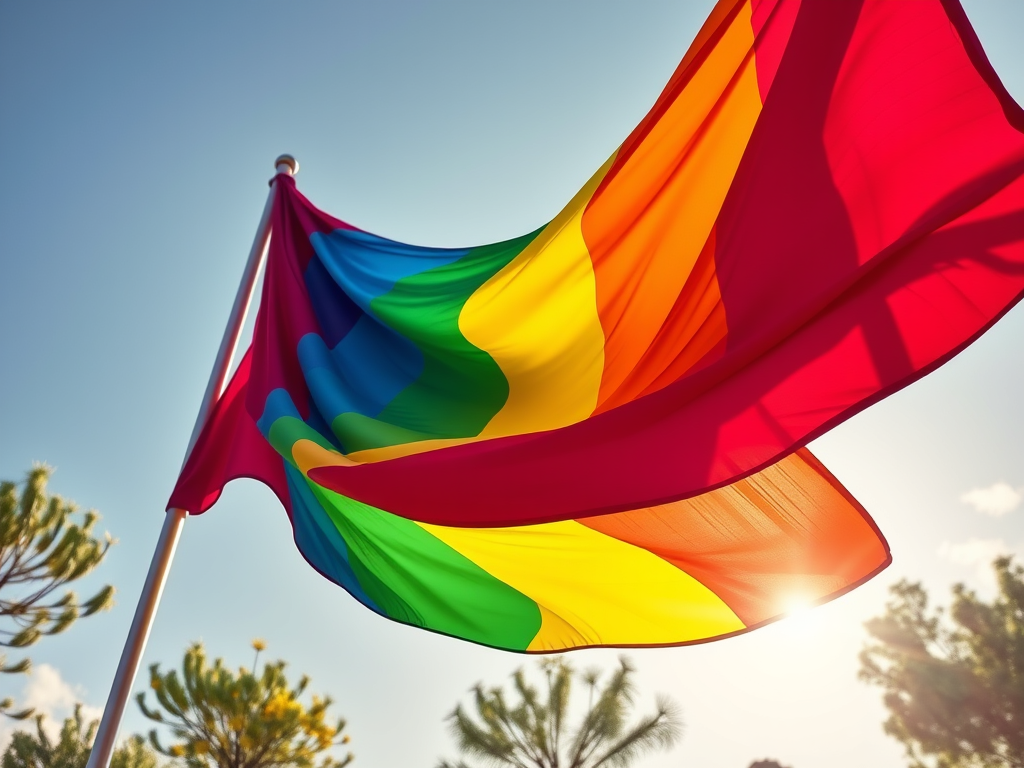
Imagine a world where everyone felt free to be themselves, to love who they love, and to express their identity without fear. While we’re still working towards that perfect world, there’s a powerful symbol that brings hope, unity, and a splash of vibrant color to the journey: the LGBTQ+ Pride Flag. It’s more than just a pretty design; it’s a global emblem of diversity, acceptance, and the ongoing fight for equality.
The Pride Flag, with its striking rainbow colors, has become instantly recognizable worldwide, fluttering proudly at parades, on buildings, and in communities big and small. But do you know the incredible story behind its creation and the deep meaning woven into every stripe? It’s a tale of art, activism, and the powerful idea that every single person deserves to be seen, celebrated, and respected.
Let’s unfurl the history and symbolism of this iconic banner with 10 amazing facts about the LGBTQ+ Pride Flag.
1. Born from a Vision: Gilbert Baker’s Artistic Spark
The original Rainbow Pride Flag was created by Gilbert Baker, an American artist, designer, and openly gay man. In 1978, Harvey Milk, a groundbreaking openly gay politician in San Francisco, challenged Baker to come up with a symbol for the gay community. Milk wanted something that could represent the diversity and vibrancy of the community in a positive way, something that wasn’t borrowed from other movements or symbols. Baker, inspired by the idea of a rainbow, which represents natural beauty and diversity, set out to create a unique emblem. He believed the flag should be handmade by the community, for the community, a true grassroots effort.
2. A Symbol of Liberation: The Flag’s First Unfurling
The very first version of the Rainbow Pride Flag made its grand debut on June 25, 1978, at the San Francisco Gay Freedom Day Parade. It wasn’t just a single flag; Baker and a team of volunteers hand-stitched two enormous flags, each with eight stripes, which were flown during the parade. This moment was historic, marking the first time a unique and visually powerful symbol was used to represent the growing LGBTQ+ movement. The sight of these vibrant flags soaring overhead immediately resonated with the community, symbolizing a new era of visibility and collective pride. It was a clear declaration: “We are here, we are proud, and we are united.”
3. The Original Eight: More Than Just Colors
Gilbert Baker’s original 1978 Pride Flag featured eight distinct stripes, each with a specific and profound meaning. He carefully chose these colors to represent different aspects of the LGBTQ+ experience and human existence. The original colors and their meanings were:
- Hot Pink: Sex
- Red: Life
- Orange: Healing
- Yellow: Sunlight
- Green: Nature
- Turquoise: Magic/Art
- Indigo: Serenity/Harmony
- Violet: Spirit
These meanings show how much thought went into creating a symbol that was both beautiful and deeply significant, representing the wholeness of life and identity within the community.
4. The Flag Shrinks: Why Hot Pink Disappeared
Soon after its debut, the hot pink stripe was removed from the Pride Flag. This wasn’t because of a change in meaning, but for practical reasons. The hot pink fabric was very difficult and expensive to produce in large quantities, especially for flags that needed to be mass-produced for wider use. When the flags started being manufactured, the need for efficiency led to the removal of this color. While the symbolism of “sex” remains important to the overall message of liberation, the practicalities of flag production led to this early modification, simplifying the flag to seven stripes.
5. The Streetlight Incident: Losing Another Stripe
Another change to the flag happened shortly after Harvey Milk’s assassination in November 1978. As demand for the flag soared in the wake of this tragedy, particularly for the 1979 Gay Freedom Day Parade, a challenge arose. To hang flags vertically from lampposts along the parade route, a banner with an even number of stripes was needed to ensure the colors appeared the same on both sides when split down the middle. The seven-stripe flag didn’t work for this purpose. To solve this, the turquoise stripe was dropped, resulting in the six-stripe version of the flag that is most commonly recognized today. This practical decision further simplified the flag’s design.
6. The Standard Six: A Global Icon Takes Shape
The most widely recognized and used Pride Flag today has six horizontal stripes: red, orange, yellow, green, blue (a darker indigo/royal blue, often replacing the original indigo), and violet. Each of these colors continues to hold symbolic meaning, representing the diverse aspects of the LGBTQ+ community and its journey. This six-stripe version became the unofficial standard for decades, unfurling at countless parades, protests, and celebrations around the world. Its simplicity and vibrant appeal helped it become a powerful emblem of unity and visibility, instantly conveying a message of pride and belonging wherever it’s flown.
7. Beyond the Rainbow: New Stripes, New Meanings
While the classic six-stripe Rainbow Flag remains iconic, the Pride Flag has continued to evolve to represent even more specific facets of the diverse LGBTQ+ community. In recent years, new stripes have been added to create the Progress Pride Flag. This flag, designed by Daniel Quasar in 2018, includes a chevron on the hoist (left) side with black and brown stripes to represent LGBTQ+ people of color, and light blue, pink, and white stripes from the Transgender Pride Flag to represent transgender individuals. This addition highlights the importance of intersectionality and ensures that all members of the community feel seen and represented in the symbol of pride. It’s a reminder that the movement continues to grow and adapt.
8. A Beacon of Hope: Uniting a Diverse Community
The Pride Flag serves as a powerful unifying symbol for the incredibly diverse LGBTQ+ community. From gay men and lesbian women to bisexual individuals, transgender people, queer, intersex, asexual, and countless other identities, the rainbow design embraces everyone under its broad banner. It represents the idea that despite unique experiences and challenges, there is a shared bond of pride, resilience, and the pursuit of equality. When people see the Pride Flag, it can instill a sense of belonging, safety, and collective strength, reminding them that they are not alone and that there is a vibrant community ready to support them.
9. A Global Symbol: Spreading Across Continents
What started as a symbol in San Francisco has blossomed into a global emblem of LGBTQ+ pride and human rights. The Rainbow Flag is now recognized and flown in countries all over the world, from major capital cities to small towns. Its presence signifies support for LGBTQ+ rights, a commitment to diversity, and a stand against discrimination. It’s used by activists, governments, businesses, and individuals to express solidarity and advocate for change. The widespread adoption of the Pride Flag demonstrates the universal desire for acceptance and the growing global movement towards equality for all people.
10. More Than Just Fabric: An Emblem of Values
Ultimately, the Pride Flag is far more than just a piece of fabric with colorful stripes. It is a living, evolving emblem of values. It represents:
- Diversity: Celebrating the spectrum of human identity and expression.
- Inclusion: Ensuring everyone has a place and feels valued.
- Acceptance: Promoting understanding and respect for all.
- Hope: A belief in a brighter, more equitable future.
- Pride: The affirmation of self and community, despite adversity.
- Activism: A reminder of the ongoing fight for rights and justice.
Every time the Pride Flag waves, it tells a story of struggle, resilience, and triumph, inspiring generations to continue the journey towards a world where love and acceptance truly triumph over prejudice.
The LGBTQ+ Pride Flag stands as a testament to the power of art, activism, and the human spirit. It is a constant reminder of how far the community has come, and a vibrant beacon guiding the way towards a future where everyone can live with dignity and an abundance of hope.
Further Reading
- Pride: The Story of Harvey Milk and the Rainbow Flag by Rob Sanders
- This Is Our Rainbow: 16 Stories of Her, Him, Them, and Us edited by Katherine Locke and Nicole Melleby
- The GayBCs by M.L. Webb
- Queer: The Ultimate LGBTQ Guide for Teens by Kathy Belge and Marke Bieschke
- Stonewall: Breaking Out in the Fight for Gay Rights by Ann Bausum
Here at Zentara.blog, our mission is to take those tricky subjects and unlock them, making knowledge exciting and easy to grasp for everyone. But the adventure doesn’t stop on this page! We’re constantly exploring new frontiers and sharing discoveries across the digital universe.
Want to dive deeper into more mind-bending Top 10s and keep expanding your world? Come join us on our other platforms – we’ve got unique experiences waiting for you on each one!
- Get inspired by visual wonders and bite-sized facts: See the world through Zentara’s eyes on Pinterest! Pin our fascinating facts and stunning visuals to your own boards. Explore Pins on Pinterest: https://uk.pinterest.com/zentarablog/
- Discover quick insights and behind-the-scenes peeks: Hop over to Tumblr for snippets, quotes, and unique content you won’t find anywhere else. It’s a different flavour of discovery! Follow the Fun on Tumblr: https://www.tumblr.com/zentarablog
- Ready for deep dives you can listen to or watch? We’re bringing our accessible approach to video and potentially audio! Subscribe to our YouTube channel and tune into future projects that make learning pop! Subscribe on YouTube: https://www.youtube.com/@ZentaraUK
- Seeking even more knowledge in one place? We’ve compiled some of our most popular topic deep dives into fantastic ebooks! Find them on Amazon and keep the learning journey going anytime, anywhere. Find Our Ebooks on Amazon: https://www.amazon.co.uk/s?k=Zentara+UK&ref=nb_sb_noss
- Connect with us and fellow knowledge seekers: Join the conversation on BlueSky! We’re sharing updates, thoughts, and maybe even asking you what wonders we should explore next. Chat with Us on BlueSky: https://bsky.app/profile/zentarablog.bsky.social
- Perfect for learning on the move! We post multiple 10-minute podcasts per day on Spotify. Pop on your headphones and fill your day with fascinating facts while you’re out and about! Listen on Spotify: https://open.spotify.com/show/3dmHbKeDufRx95xPYIqKhJ
Every click helps us keep bringing honest, accessible knowledge to everyone. Thanks for exploring with us today – see you out there in the world of discovery!




Leave a Reply