
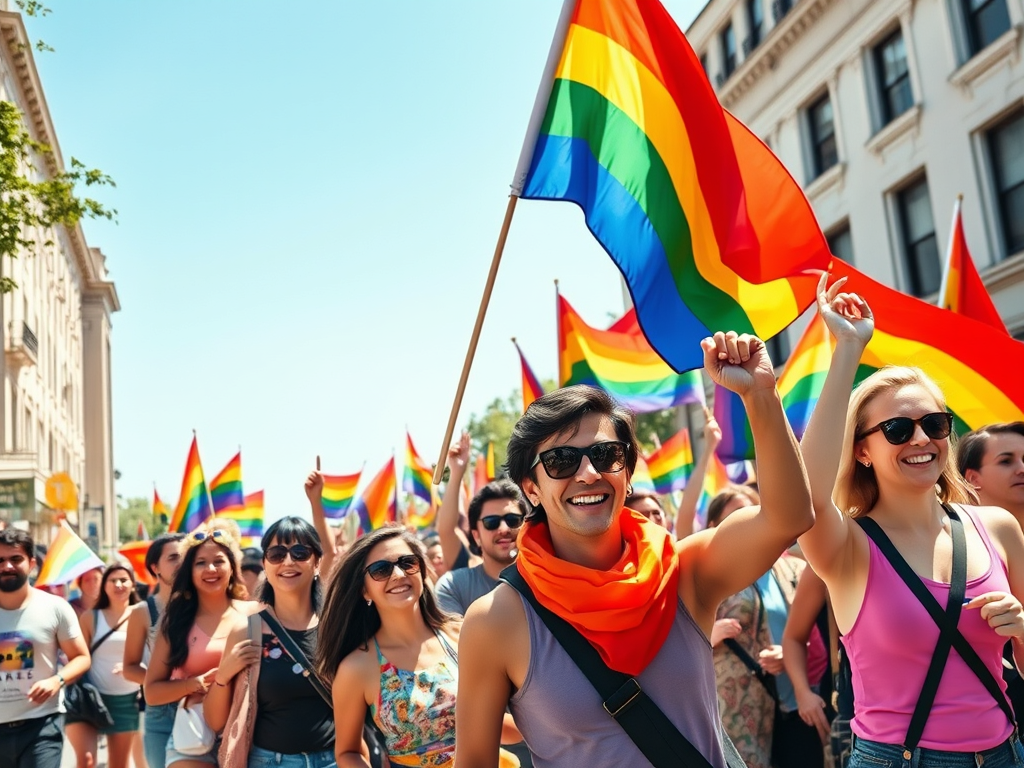
Have you ever wondered where the vibrant, joyful, and incredibly important Pride parades we see today came from? It might surprise you to learn that these parades weren’t always big celebrations. In fact, they started as powerful protests, born from a moment of defiance that changed history.
Imagine a time when being yourself, if you were part of the LGBTQ+ (lesbian, gay, bisexual, transgender, queer, and others) community, was often met with unfair laws, discrimination, and even danger. Police raids on gay bars were common, and people lived in fear of losing their jobs, homes, or even their freedom just for being who they were. This was the reality for many in the 1960s.
Then, one hot summer night in June 1969, something truly extraordinary happened. At a gay bar in New York City called the Stonewall Inn, the LGBTQ+ community decided they had had enough. When police raided the bar, as they often did, the patrons fought back. This wasn’t a planned riot, but a spontaneous eruption of frustration and a powerful demand for dignity and respect. The Stonewall Uprising lasted for several days and became a turning point in the gay rights movement.
The year after Stonewall, something new and brave emerged: the very first Pride parades. These weren’t just parties; they were marches for freedom, where people walked together, loud and proud, demanding their rights and showing the world they wouldn’t be silenced. They laid the groundwork for the global Pride celebrations we know and love today. Let’s dive into 10 fascinating facts about these incredible pioneering events!
1. Born from Rebellion: The Spirit of Stonewall
The Stonewall Uprising in June 1969 was the spark that ignited the first Pride parades. Before Stonewall, there were smaller, quieter protests for LGBTQ+ rights, but the events of those nights at the Stonewall Inn were different. They were a raw, powerful burst of resistance against police harassment and discrimination. Imagine a feeling of “enough is enough!” spreading through a crowd. When the community fought back, it sent a clear message: we deserve to be treated with respect, just like everyone else. The sheer courage and solidarity shown during the uprising directly inspired the idea of a public march to demand rights and visibility, setting the stage for what would become Pride protest origins. These early marchers carried that defiant spirit, stepping out of the shadows and onto the streets, knowing they were doing something revolutionary.
2. A Day for Liberation: Christopher Street Liberation Day
The very first “Pride” march in New York City wasn’t actually called a “Pride parade” at first. It was named Christopher Street Liberation Day. Christopher Street was important because the Stonewall Inn, where the uprising happened, was on that street. The name “Liberation Day” truly reflects the feeling of the time. People weren’t just looking for acceptance; they were demanding freedom from oppression, from unfair laws, and from the constant fear of being themselves. This name highlighted that the event was a serious political action, a call for widespread societal change, and a way to remember the brave stand taken at Stonewall. It was about freeing themselves from unfair rules and living openly.
3. Simultaneous Steps for Equality Across America
While New York City’s Christopher Street Liberation Day often gets the most attention, it’s important to remember that similar groundbreaking marches happened in other major U.S. cities on the same day, June 28, 1970. In Los Angeles, the LGBTQ+ history was also being made with a march down Hollywood Boulevard. Chicago saw its own march for LGBTQ+ equality. And in San Francisco, a significant gathering also took place. These simultaneous events showed that the desire for freedom and equality wasn’t just in one place; it was a widespread feeling. It demonstrated a growing, connected gay rights movement across the country, showing strength in numbers and a shared vision for a better future. These events cemented the idea that a united front was powerful.
4. More Than a Parade: A Powerful Protest March
It’s easy to think of Pride parades today as joyful celebrations with music and dancing, but the first Pride parades were primarily protest marches. Imagine a large group of people walking together, holding signs, and chanting slogans. Their goal wasn’t just to have fun, but to make a loud, clear statement to society and to the government. They were demanding an end to discrimination, asking for equal rights, and calling for police protection instead of harassment. These early marches were brave acts of defiance, showing the world that LGBTQ+ people existed, they were proud, and they demanded justice. The atmosphere was serious and determined, filled with the energy of a community fighting for its very right to exist freely.
5. Facing Fear and Harassment Head-On
Even though these were marches for freedom, the participants in the first Pride parades faced significant challenges and risks. This wasn’t a time when society openly welcomed LGBTQ+ people. Marchers sometimes encountered angry onlookers, police presence that could be hostile, and the constant threat of violence or arrest. Think about the courage it took to step out onto the street, knowing you might be ridiculed, assaulted, or worse. Yet, they did it. They marched with determination, knowing that every step they took was an act of bravery that chipped away at the fear and secrecy that had defined their lives for so long. Their unwavering commitment helped to pave the way for future generations.
6. The Long Road to Acceptance: Police and Permits
Getting permission for these early marches was often a huge hurdle. Organizers had to negotiate with city officials, who were sometimes unwilling or even hostile to the idea of an LGBTQ+ equality march. There were fears of public backlash or disorder. Even when permits were granted, police attendance could be unpredictable. Sometimes, officers were there to protect the marchers, but at other times, their presence felt more like a threat. This struggle for official recognition and protection highlights how new and radical these events were. It underscores that the right to peacefully assemble and protest, which we often take for granted, was something the early gay liberation activists had to fight for tooth and nail.
7. We Are Everywhere: Building Community and Visibility
One of the most powerful outcomes of the first Pride parades was the sheer visibility they created. Before these marches, many LGBTQ+ people felt isolated and alone, believing they were the only ones. When they saw thousands of others marching alongside them, it created an incredible sense of community and solidarity. Imagine the feeling of realizing you’re not alone, that there are countless others who share your experiences and hopes. This public display shattered the myth that LGBTQ+ people were hidden or few in number. It was a powerful declaration: “We are here, we are many, and we are not going away.” This newfound visibility was a crucial step in strengthening the LGBTQ+ community.
8. Pioneers of the Movement: Unsung Heroes
Many brave individuals played crucial roles in organizing and leading the first Pride parades, often at great personal risk. These were everyday people who decided to take a stand. Some were activists who had been fighting for gay rights for years, while others were ordinary individuals who felt compelled to participate after the Stonewall Uprising. Figures like Brenda Howard, often called the “Mother of Pride,” were instrumental in coordinating the first march in New York. While some names are remembered, countless others marched anonymously, their faces filled with hope and determination. They are the unsung heroes whose courage paved the way for the freedoms and acceptance many enjoy today.
9. Setting the Stage for Global Pride
The impact of the first Pride parades was felt far beyond the cities where they took place. News of these brave marches spread, inspiring LGBTQ+ communities in other parts of the United States and eventually around the world. These initial demonstrations provided a blueprint and a powerful example for how to organize and demand rights. They showed that public display and collective action could make a difference. What started as small, risky protests grew into a global movement, with millions participating in Pride celebrations worldwide. Every Pride parade today, from the largest in São Paulo to the smallest community gatherings, owes its existence to the courage of those who marched in the early gay liberation events.
10. A Legacy of Pride, Protest, and Progress
The first Pride parades were not just historical events; they created a lasting legacy. They taught the LGBTQ+ community the power of visibility, solidarity, and persistent activism. They transformed a moment of rebellion into an annual tradition that serves as both a celebration of identity and a continued call for justice. Even today, while many rights have been won, Pride parades remind us that the fight for full equality and acceptance is ongoing. They are a powerful reminder of how far the LGBTQ+ rights movement has come and how much work still needs to be done. They continue to be spaces for education, remembrance, and the joyful assertion of self, building on the foundations laid by those brave pioneers.
Further Reading
- Stonewall: The Riots That Sparked the Gay Revolution by David Carter
- Pride: The Story of the LGBTQ Equality Movement by Matthew Todd
- Queer, There, and Everywhere: 23 People Who Changed the World by Sarah Prager
- The Gay Liberation Front: A History by Lisa Power
- This Book Is Gay by James Dawson


Leave a Reply