
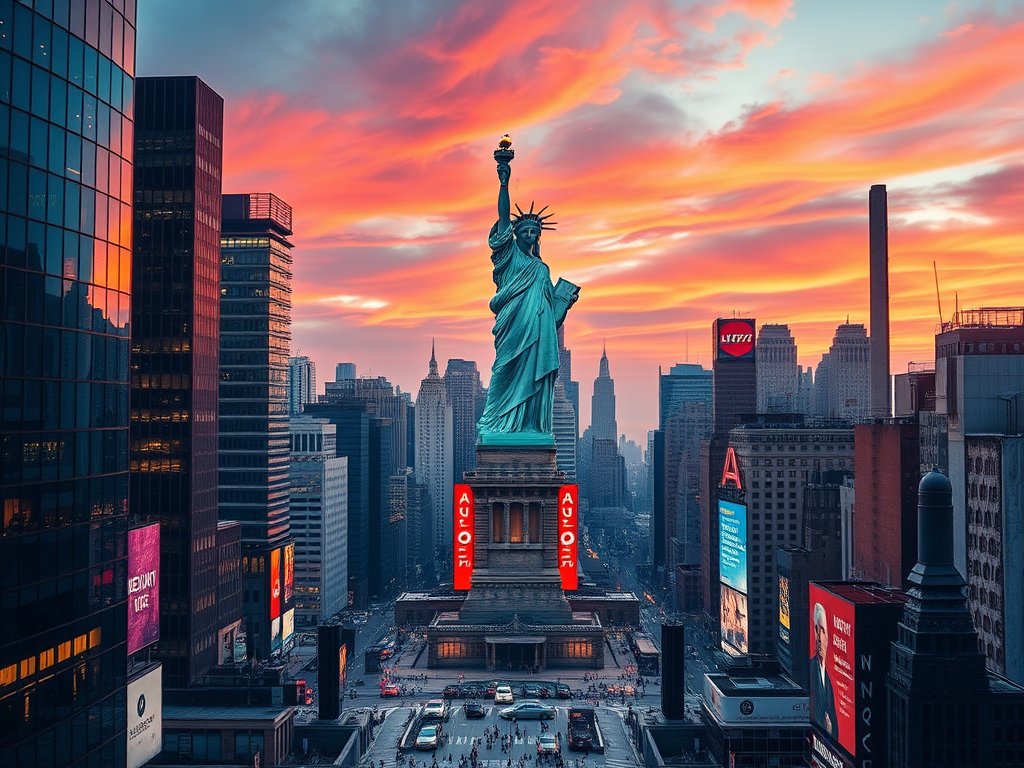
When you picture New York City, what comes to mind? Maybe the bright lights of Times Square, the towering Statue of Liberty, or those incredible skyscrapers that seem to touch the clouds? NYC, often called “The Big Apple,” is one of the most famous cities in the world, a bustling hub of energy, dreams, and incredible stories.
But did you know that beneath its famous skyline and busy streets lie some truly mind-boggling secrets and astonishing facts? From how it got its famous nickname to the hidden tales behind its iconic buildings and the incredible mix of people who call it home, New York City’s history is packed with surprises. It’s a city that’s constantly changing, but its past is filled with moments that shaped not just America, but the world.
So, get ready to have your mind blown as we uncover the top 10 mind-boggling facts about New York City’s history and skyline, revealing the untold stories and amazing quirks of this legendary metropolis!
1. The “Big Apple” Mystery: How NYC Got Its Famous Nickname
You’ve probably heard New York City called “The Big Apple,” but have you ever wondered why? It’s a catchy nickname, but its origin isn’t quite what you might expect! The most popular and widely accepted story links back to horse racing in the 1920s. A sports writer named John J. Fitz Gerald heard stablehands in New Orleans refer to New York City’s race tracks as “the Big Apple,” meaning the biggest and best prize in horse racing. Think of it like the biggest, juiciest apple in a barrel – the most desirable reward.
Fitz Gerald started using the term in his newspaper columns about horse racing in New York, and it slowly caught on. Jazz musicians in the 1930s picked up the term too, using it to describe New York City as the ultimate place to perform and find success – “There are many apples on the tree, but only one Big Apple.” It wasn’t officially adopted by the city until a tourism campaign in the 1970s made it hugely popular worldwide. So, the next time you hear “The Big Apple,” remember its roots in speedy horses and soulful jazz, a truly unique piece of New York City’s history.
2. Manhattan’s Million-Dollar Island: A Tiny Purchase, A Giant City
Imagine buying one of the most valuable pieces of land on Earth for a tiny amount of money. That’s essentially what happened with Manhattan Island! In 1626, a Dutch explorer named Peter Minuit, representing the Dutch West India Company, supposedly “bought” Manhattan Island from the Lenape Native Americans. The famous (and often debated) price? Goods worth about 60 Dutch guilders. In today’s money, that’s often estimated to be around $24 to $30.
Now, it’s important to remember that Native Americans didn’t view land ownership the same way Europeans did, so the “purchase” itself is complicated. However, this tiny transaction laid the foundation for what would become New Amsterdam, and later, the powerhouse that is New York City. From that small, low-cost beginning, Manhattan grew into an island bursting with towering skyscrapers and home to millions, becoming one of the most expensive and desirable pieces of real estate in the world. It’s a mind-boggling contrast between its humble beginnings and its current incredible value, a true New York City fact that continues to surprise people.
3. The Vertical City: Birth of the Skyscraper and the Iconic Skyline
When you look at the New York City skyline today, it’s a forest of towering skyscrapers, each one seemingly trying to reach higher than the last. But why did New York become the home of these giant buildings? It wasn’t just about dreaming big; it was also about being smart about limited space. Manhattan is an island, so there’s not a lot of room to spread out. The only way to grow was up!
The real breakthrough came with the invention of the steel-frame building in the late 1800s. Before steel, buildings had to have incredibly thick walls at the bottom to support their weight. Steel skeletons, however, meant buildings could be built much taller and lighter, almost like building with giant LEGOs. The invention of the safety elevator also played a huge role – no one wants to walk up 50 flights of stairs! This combination of limited land, clever engineering, and growing businesses all wanting a piece of the valuable island created the unique, soaring NYC skyline we know today, making New York the birthplace of many iconic buildings.
4. The Empire State Building’s Speedy Rise: A Skyscraper Built in a Flash
The Empire State Building is one of the most famous skyscrapers in the world, a true icon of the NYC skyline. What’s truly mind-boggling about it isn’t just its height (which was a record for many years!), but how incredibly fast it was built. Construction began in 1930, right in the middle of the Great Depression, when many people were out of work. This meant there was plenty of labor available.
The builders worked at an astonishing pace, sometimes adding more than four and a half stories per week! The entire building, from start to finish, took only one year and 45 days to complete. That’s faster than many much smaller buildings today! Imagine thousands of workers, called “sky boys,” fearlessly working high above the city, riveting steel beams into place. This incredible speed was a testament to the ingenuity and determination of the workers and engineers, and it truly cemented the Empire State Building’s place as a symbol of human ambition and a marvel of New York City’s architectural history.
5. The Statue of Liberty’s Secret: A Beacon of Freedom with Hidden Engineering
The Statue of Liberty stands tall in New York Harbor, a powerful symbol of freedom and democracy for millions around the world. What’s truly mind-boggling about this famous landmark isn’t just its size, but the incredible international teamwork and clever engineering that brought it to life. The statue was a gift from the people of France to the United States. It was designed by French sculptor Frédéric Auguste Bartholdi, but the internal structure, which allows it to stand so tall and resist the wind, was designed by none other than Gustave Eiffel, the same engineer who designed the Eiffel Tower in Paris!
The statue was built in pieces in France, packed into over 200 crates, and shipped across the Atlantic. Then, it had to be assembled like a giant, very complex puzzle on its pedestal in New York. The pedestal itself was built through fundraising efforts by Americans, including many small donations from everyday people. So, the Statue of Liberty is not just a beautiful monument; it’s a testament to French-American friendship, incredible logistical planning, and brilliant hidden engineering that allows it to stand as a lasting beacon in New York City’s history.
6. Brooklyn Bridge’s Brave Builders: A Bridge Built with Grit and Guts
The Brooklyn Bridge is an engineering marvel, connecting Manhattan and Brooklyn with its iconic Gothic arches and elegant cables. But building it was a truly mind-boggling and dangerous undertaking that pushed the limits of technology and human endurance in the late 1800s. To build the massive towers, workers had to descend into huge wooden boxes called “caissons” deep below the riverbed. Inside, compressed air kept the water out, but working in these conditions was incredibly risky.
Many workers suffered from a mysterious illness called “caisson disease” or “the bends” (which we now know is caused by rapid changes in air pressure). The chief engineer, John A. Roebling, died in an accident early in the project, and his son, Washington Roebling, took over but became too ill to visit the site. His wife, Emily Warren Roebling, famously stepped in, becoming a vital link between her sick husband and the engineers on site, helping to oversee the project’s completion. The Brooklyn Bridge stands as a monument not just to brilliant engineering, but to the incredible courage and sacrifice of its builders, making it a cornerstone of NYC’s iconic landmarks history.
7. A City of Tongues: New York’s Amazing Language Diversity
New York City isn’t just known for its tall buildings; it’s famous for its incredible mix of people from all over the world. This means the city is a truly mind-boggling melting pot of cultures and, especially, languages. While English is the main language, you can hear an astonishing number of other languages being spoken on its streets, in its shops, and in its neighborhoods.
Experts estimate that over 800 languages are spoken in New York City, making it one of the most linguistically diverse cities on Earth! This means that almost every language spoken globally can probably be heard somewhere in NYC. This amazing diversity is a result of centuries of immigration, with people coming from every corner of the globe to seek new opportunities and a better life. This incredible variety of languages is not just a fascinating fact; it’s a vibrant part of the city’s identity, influencing its food, music, art, and overall atmosphere. It truly highlights the diversity of cultures in NYC.
8. Grand Central Terminal’s Whispering Walls and Secret Platform
Grand Central Terminal isn’t just a train station; it’s a magnificent building filled with secrets and mind-boggling design features. One of its most famous quirks is the Whispering Gallery in front of the Oyster Bar. If you stand in one corner of the archway and whisper into the wall, a person standing in the opposite diagonal corner, many feet away, can hear you clearly! This is due to the perfect acoustics of the arched ceiling, which carries sound waves along its curved surface.
Another fascinating, lesser-known secret is Track 61, a hidden, abandoned platform directly underneath the Waldorf Astoria Hotel, which used to be connected to the terminal. It was built for President Franklin D. Roosevelt, allowing him to travel secretly and directly to the hotel in his private rail car, especially useful because his polio made it difficult for him to walk publicly. This secret track was used by other VIPs and even for a famous party. Grand Central Terminal is full of incredible stories and clever engineering that make it one of the most fascinating NYC landmarks.
9. Central Park’s Hidden Wilderness: A Man-Made Masterpiece
When you visit Central Park, it feels like a sprawling, natural oasis in the middle of a bustling city. You might see rocky outcrops, winding paths, serene lakes, and rolling hills, all seemingly untouched by human hands. What’s truly mind-boggling is that almost every single tree, every pond, every hill, and every rock formation in Central Park was entirely designed and built by humans! It is a completely man-made landscape.
In the mid-1800s, the area that became Central Park was a rocky, swampy, and mostly barren landscape. Architects Frederick Law Olmsted and Calvert Vaux won a competition to design the park, envisioning a peaceful, beautiful green space for city dwellers to enjoy. They moved millions of tons of earth, planted millions of trees and shrubs, blasted rock, and created artificial lakes and streams. It was one of the largest landscaping projects in history, turning a harsh patch of land into the beloved “green lung” of New York City and a true masterpiece of urban planning and a key piece of New York City’s historical development.
10. New York’s Underground City: A Labyrinth of Subways and Secrets
While the New York City skyline reaches for the heavens, there’s a whole other, mind-boggling world hidden beneath its streets: an incredibly vast underground city. The most famous part of this is the New York City Subway system, which is one of the oldest and largest in the world. It operates 24 hours a day, seven days a week, moving millions of people daily through a complex labyrinth of tunnels.
But the underground city is more than just subways. There are also miles of old abandoned subway tunnels, forgotten stations, hidden water pipes, gas lines, electrical cables, and even secret passageways. There are old freight tunnels, old pneumatic mail tubes (where mail was sent by air pressure!), and underground vaults. This intricate network of tunnels and infrastructure keeps the city above ground functioning. It’s a testament to the immense engineering efforts required to support such a huge metropolis, proving that some of the most fascinating parts of New York City lie completely hidden from view.
The Big Apple: A City of Endless Wonders
New York City is truly a place where history, innovation, and diverse cultures come together to create something spectacular. From its quirky nickname to its towering giants and hidden underground worlds, the city is a constant source of wonder. These mind-boggling facts are just a glimpse into the endless stories that make “The Big Apple” one of the most fascinating places on Earth!
Further Reading
Want to explore more of New York City’s incredible history and its amazing structures? Check out these fantastic books:
- “New York City: Then and Now” by Marcia Scott (Great for visual comparisons of old and new)
- “The Story of the Statue of Liberty” by L. K. Peterson (Focuses specifically on the iconic monument)
- “How the Empire State Building Was Built” by Gail Gibbons (Simple and informative about its construction)
- “Hidden History of New York City” by Michelle Young (Explores lesser-known facts and secrets)
- “National Geographic Kids: New York City” (A fun, fact-filled guide for young readers)
Here at Zentara.blog, our mission is to take those tricky subjects and unlock them, making knowledge exciting and easy to grasp for everyone. But the adventure doesn’t stop on this page! We’re constantly exploring new frontiers and sharing discoveries across the digital universe.
Want to dive deeper into more mind-bending Top 10s and keep expanding your world? Come join us on our other platforms – we’ve got unique experiences waiting for you on each one!
- Get inspired by visual wonders and bite-sized facts: See the world through Zentara’s eyes on Pinterest! Pin our fascinating facts and stunning visuals to your own boards. Explore Pins on Pinterest: https://uk.pinterest.com/zentarablog/
- Discover quick insights and behind-the-scenes peeks: Hop over to Tumblr for snippets, quotes, and unique content you won’t find anywhere else. It’s a different flavour of discovery! Follow the Fun on Tumblr: https://www.tumblr.com/zentarablog
- Ready for deep dives you can listen to or watch? We’re bringing our accessible approach to video and potentially audio! Subscribe to our YouTube channel and tune into future projects that make learning pop! Subscribe on YouTube: https://www.youtube.com/@ZentaraUK
- Seeking even more knowledge in one place? We’ve compiled some of our most popular topic deep dives into fantastic ebooks! Find them on Amazon and keep the learning journey going anytime, anywhere. Find Our Ebooks on Amazon: https://www.amazon.co.uk/s?k=Zentara+UK&ref=nb_sb_noss
- Connect with us and fellow knowledge seekers: Join the conversation on BlueSky! We’re sharing updates, thoughts, and maybe even asking you what wonders we should explore next. Chat with Us on BlueSky: https://bsky.app/profile/zentarablog.bsky.social
- Perfect for learning on the move! We post multiple 10-minute podcasts per day on Spotify. Pop on your headphones and fill your day with fascinating facts while you’re out and about! Listen on Spotify: https://open.spotify.com/show/3dmHbKeDufRx95xPYIqKhJ
Every click helps us keep bringing honest, accessible knowledge to everyone. Thanks for exploring with us today – see you out there in the world of discovery!




Leave a Reply