
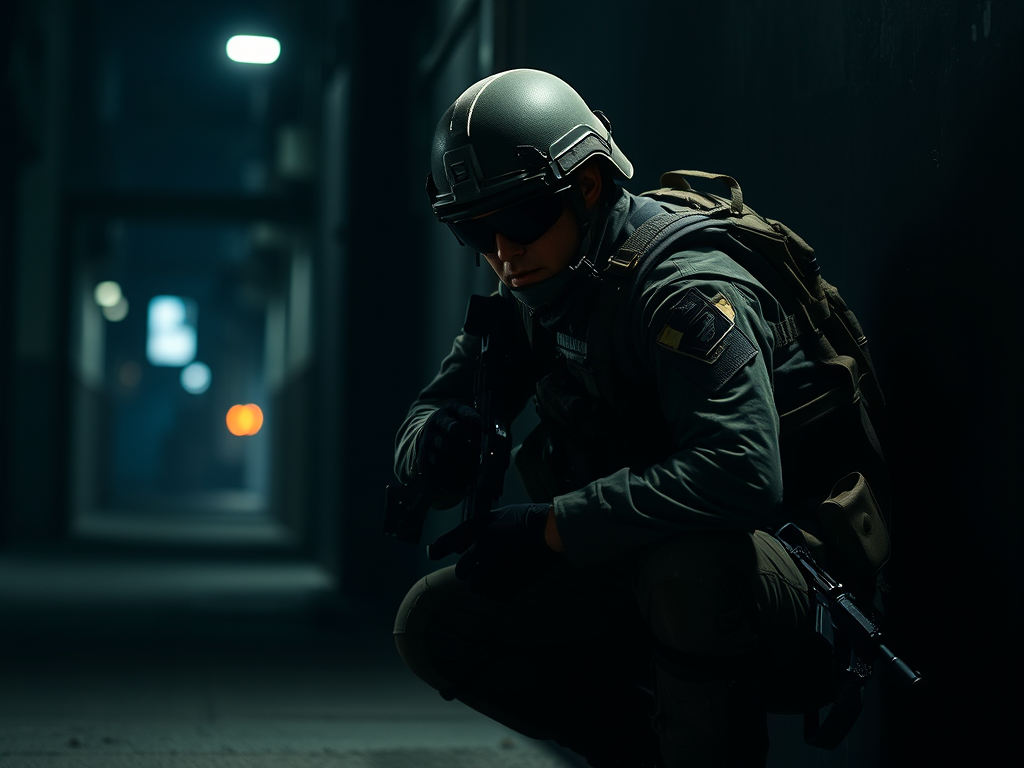
Crouched in the shadows, operating far beyond the glare of public scrutiny, lies a unit shrouded in secrecy and steeped in legend: the U.S. Army’s 1st Special Forces Operational Detachment-Delta (Airborne), more commonly known as Delta Force. Established in the late 1970s as America’s premier counter-terrorism force, Delta Force is a highly specialized and intensely secretive unit designed to respond to the most dangerous and complex threats facing the nation. Its very existence was long officially denied, and details of its operations remain classified to this day.
Unlike conventional military units, Delta Force operates with unparalleled autonomy and flexibility, tackling missions that range from hostage rescue and direct action to intelligence gathering and special reconnaissance in some of the world’s most volatile regions. Its operators are drawn from the most elite ranks of the U.S. Army and undergo an excruciating selection and training process that pushes the boundaries of human endurance and mental fortitude. This deep dive into the elusive world of Delta Force aims to pull back the curtain, as much as possible, on this extraordinary unit. We’ll explore ten fascinating facts that shed light on its origins, its unique operational philosophy, the rigorous demands placed upon its members, and some of the rare glimpses into its critical role in national security. From its formation to its silent presence on the front lines of global conflict, these insights reveal why Delta Force truly represents the pinnacle of special operations capabilities.
1. The Genesis of Delta: Lessons from Global Terrorism
The formation of Delta Force was a direct response to a stark realization within the U.S. military and government that existing special operations units were not adequately prepared to handle the emerging threat of international terrorism. In the 1970s, a wave of high-profile terrorist incidents, such as the 1972 Munich Olympic massacre and numerous aircraft hijackings by groups like Black September, highlighted a critical gap in America’s ability to conduct rapid, surgical counter-terrorism operations.
Colonel Charles Beckwith, a decorated U.S. Army Special Forces officer who had previously served an exchange tour with the British Special Air Service (SAS)—widely considered the blueprint for modern special operations—became a vocal proponent for creating a dedicated American unit. Beckwith tirelessly championed the idea for an elite, highly trained, and flexible force capable of responding to these new, unconventional threats. His persistent advocacy, combined with the escalating global terrorist landscape, ultimately led to the official formation of Delta Force in 1977. Its creation marked a fundamental shift in U.S. military strategy, acknowledging that the nature of warfare was evolving and requiring a specialized, clandestine response.
2. Unconventional Selection: Beyond Physical Endurance
Joining Delta Force is not merely about physical prowess; it demands an extraordinary blend of mental fortitude, adaptability, and psychological resilience. The selection process, known simply as “Selection,” is legendary for its grueling nature and is designed to break down candidates to their absolute limits, exposing any weaknesses in character or resolve. It is far more rigorous and unconventional than typical military Special Operations Forces (SOF) assessments.
Candidates, typically drawn from the Army’s Special Forces (Green Berets) and the 75th Ranger Regiment, undergo weeks of physically demanding tests, often conducted under extreme deprivation of sleep and food. However, the unique aspect of Delta’s selection is its emphasis on psychological and navigational challenges. Candidates are subjected to long, solitary land navigation courses in mountainous terrain, carrying heavy loads, with no set routes and tight time limits. This tests their ability to perform under intense stress, make independent decisions, and maintain composure when isolated. The final phase often involves a “long walk,” a punishing solo trek designed to push individuals beyond their perceived physical and mental breaking points. The cadre conducting the selection observe not just physical performance but also problem-solving skills, ingenuity, and a candidate’s will to continue despite overwhelming odds. This rigorous process ensures that only the most resilient and intellectually capable individuals are considered for the unit.
3. “The Unit”: Operating Under Deep Secrecy
Delta Force is often referred to simply as “The Unit” within the special operations community, a testament to its highly secretive nature. Unlike other military branches or even other special forces groups, Delta Force maintains an almost unparalleled level of secrecy regarding its operations, personnel, and even its precise organizational structure. This deep secrecy is not merely for show; it is a fundamental operational requirement.
The clandestine nature of Delta Force allows its operators to execute sensitive missions without public scrutiny or political interference. Their identities are protected to safeguard them and their families, and to ensure they can operate effectively in hostile environments without being compromised. Details of their missions are rarely, if ever, declassified, and public acknowledgement of their involvement in specific operations is extremely rare. This strict adherence to secrecy allows the unit to maintain its tactical advantage, ensures operational security, and fosters a culture of quiet professionalism. While frustrating for those seeking information, this veil of secrecy is crucial for a unit that often operates in the shadows, dealing with the most dangerous and politically sensitive national security challenges.
4. Fort Bragg’s Hidden Gem: The Unit’s Home Base
While its operations span the globe, Delta Force’s primary base of operations is Fort Bragg, North Carolina. However, unlike other units on the sprawling military installation, Delta’s facilities are deliberately understated and strategically camouflaged, maintaining its clandestine identity even at home. The exact location of its compounds within Fort Bragg is not publicly disclosed, and its training areas are often mistaken for regular military installations.
The facilities at Fort Bragg are state-of-the-art, designed to replicate a wide range of operational environments and allow for highly realistic training scenarios. This includes specialized shooting ranges, mock-up aircraft for hostage rescue drills, urban warfare training villages, and facilities for specialized vehicle and close-quarters combat training. The close proximity to other elite units like the 82nd Airborne Division and the U.S. Army Special Operations Command (USASOC) facilitates interoperability and resource sharing when necessary. This secluded yet sophisticated home base allows Delta Force to conduct continuous, advanced training, ensuring its operators remain at the peak of readiness for any contingency, all while maintaining the utmost discretion.
5. Operation Eagle Claw: The Early, Tragic Test
Delta Force’s first major operational deployment, Operation Eagle Claw in April 1980, was a tragic failure but profoundly influenced the future of U.S. special operations. The mission aimed to rescue 53 American hostages held at the U.S. embassy in Tehran, Iran, following the Iranian Revolution. It was an ambitious and complex multi-part operation involving elements from various branches of the military, including Delta Force as the primary rescue component.
However, the mission was plagued by a series of unforeseen mechanical failures and adverse weather conditions. Crucially, a critical number of helicopters failed to reach the forward staging area in the Iranian desert, known as “Desert One.” The mission was ultimately aborted, and during the withdrawal, a helicopter collided with a C-130 transport aircraft, resulting in the deaths of eight service members. Operation Eagle Claw was a devastating blow, but it served as a painful yet invaluable lesson. The failures exposed significant interoperability issues between different military branches and highlighted the need for improved joint special operations command and control. This led directly to the creation of the Joint Special Operations Command (JSOC) and U.S. Special Operations Command (SOCOM), transforming how America conducts its most sensitive and complex missions.
6. The “Hostage Rescue” Experts: A Core Capability
Hostage rescue remains one of the fundamental and most challenging core capabilities of Delta Force, a task for which they are specifically trained to execute with surgical precision. Their expertise in this domain is unparalleled within the U.S. military. These missions often involve highly volatile situations, confined spaces, and the critical need to neutralize threats with minimal collateral damage and maximum speed to ensure the safety of the hostages.
Delta operators train extensively in Close Quarters Battle (CQB), mastering techniques for clearing rooms, engaging targets rapidly, and discriminating between threats and non-threats in chaotic environments. They routinely rehearse scenarios involving hijacked aircraft, barricaded buildings, and urban environments, utilizing live ammunition to instill the necessary precision and aggression. Their training emphasizes meticulous planning, rapid decision-making under extreme stress, and flawless execution. While details of specific hostage rescue operations are rarely public, it is known that Delta Force has been deployed to countless situations globally where American lives were at risk. Their quiet successes in these high-stakes scenarios underscore their critical role in national security and their unwavering commitment to protecting American citizens abroad.
7. Beyond Counter-Terrorism: Expanding Mission Sets
While its origins are firmly rooted in counter-terrorism, Delta Force’s mission sets have significantly expanded over the decades, reflecting the evolving nature of global threats. Today, “The Unit” is a versatile, multi-faceted special operations force capable of conducting a wide array of highly sensitive and dangerous missions beyond direct counter-terrorism actions.
These expanded roles include:
- Direct Action (DA): Short-duration strikes and other small-scale offensive actions to seize, capture, recover, or destroy enemy materiel, or recover personnel.
- Special Reconnaissance (SR): Covert intelligence gathering in hostile or denied areas.
- Unconventional Warfare (UW): Supporting resistance movements or insurgencies against hostile powers.
- Counter-proliferation (CP): Operations to prevent the spread of weapons of mass destruction.
- Hostage Rescue (HR): Remaining a primary focus. This expanded portfolio means Delta operators must be masters of diverse skill sets, from precision marksmanship and explosives handling to advanced intelligence analysis, infiltration techniques, and foreign language proficiency. Their adaptability and ability to operate across various operational spectra make them a critical tool for national security challenges that require a discreet, high-impact solution.
8. The SEAL Team Six Connection: A Parallel Path
Often confused or compared with the U.S. Navy’s SEAL Team Six (officially DEVGRU or Naval Special Warfare Development Group), Delta Force operates in a parallel yet distinct sphere within U.S. special operations. While both are Tier 1 (the highest level of special operations forces) counter-terrorism and direct action units under the Joint Special Operations Command (JSOC), their origins, primary service affiliations, and training methodologies differ.
Delta Force draws its personnel predominantly from the U.S. Army, focusing on a broad range of land-based and direct action counter-terrorism missions, with an emphasis on close-quarters battle, precision demolitions, and intelligence gathering. SEAL Team Six, being a naval unit, primarily recruits from the Navy SEAL community and specializes in maritime special operations, including ship boarding, underwater demolitions, and coastal infiltration, though their roles have increasingly overlapped in modern counter-terrorism. Both units undergo extremely rigorous selection and training, and both are deployed globally to conduct the most sensitive missions. The public often conflates them due to their similar top-tier status and the secrecy surrounding their operations, but they maintain distinct identities and specialized skill sets that complement each other under the umbrella of JSOC.
9. The Role of Intelligence: Beyond the Battlefield
For Delta Force, intelligence is not merely a supporting function; it is an integral and ongoing part of every operation, from planning to execution. Unlike conventional forces that might receive pre-packaged intelligence, Delta Force operators are deeply involved in intelligence gathering, analysis, and validation, blurring the lines between operator and intelligence collector.
This involves highly specialized reconnaissance missions, human intelligence (HUMINT) gathering, and sophisticated technical collection. Operators are trained to collect crucial data on targets, enemy movements, and environmental factors, often operating covertly behind enemy lines for extended periods. This real-time, ground-level intelligence is then fed back to command and integrated into mission planning, allowing for dynamic adjustments and more effective execution. Furthermore, Delta Force works closely with national intelligence agencies like the CIA, often deploying alongside them in joint operations where tactical expertise and intelligence collection are intertwined. This deep integration of intelligence capabilities allows Delta Force to approach complex problems with a comprehensive understanding, minimizing risk and maximizing success in some of the world’s most intelligence-sensitive environments.
10. The Enduring Legacy: Guardians in the Shadows
Since its formation, Delta Force has been at the forefront of America’s fight against terrorism and other high-stakes threats, often operating silently and without public recognition. Its enduring legacy is one of unwavering dedication, unparalleled skill, and an uncompromising commitment to national security, all conducted in the deepest shadows. The unit’s adaptability, born from its original mandate to address evolving global dangers, has ensured its continued relevance in an increasingly complex world.
From the deserts of Iraq and Afghanistan to the urban landscapes of global cities, Delta Force operators are the quiet guardians, undertaking missions that require the utmost discretion and precision. Their work often involves preventing attacks, rescuing citizens, or neutralizing dangerous adversaries before they can inflict harm. While the public may rarely hear details of their operations, their impact is undeniable. They represent the ultimate capability in special operations, a testament to the idea that some of the most crucial battles are fought not on conventional front lines, but in the clandestine realm, by a select few who operate with extraordinary courage, skill, and an unshakeable sense of duty, ensuring the safety and security of the United States and its allies.
Further Reading
- Inside Delta Force: The Story of America’s Elite Counterterrorist Unit by Eric L. Haney
- Black Hawk Down: A Story of Modern War by Mark Bowden
- Kill Bin Laden: A Delta Force Commander’s Account of the Hunt for the World’s Most Wanted Man by Dalton Fury
- Relentless Strike: The Secret History of the Joint Special Operations Command by Sean Naylor
- Not a Good Day to Die: The Untold Story of Operation Anaconda by Sean Naylor
Here at Zentara.blog, our mission is to take those tricky subjects and unlock them, making knowledge exciting and easy to grasp for everyone. But the adventure doesn’t stop on this page! We’re constantly exploring new frontiers and sharing discoveries across the digital universe. Want to dive deeper into more mind-bending Top 10s and keep expanding your world? Come join us on our other platforms – we’ve got unique experiences waiting for you on each one!
Get inspired by visual wonders and bite-sized facts: See the world through Zentara’s eyes on Pinterest!
Pin our fascinating facts and stunning visuals to your own boards. Explore Pins on Pinterest: https://uk.pinterest.com/zentarablog/
Discover quick insights and behind-the-scenes peeks: Hop over to Tumblr for snippets, quotes, and unique content you won’t find anywhere else. It’s a different flavour of discovery! Follow the Fun on Tumblr: https://www.tumblr.com/zentarablog
Ready for deep dives you can listen to or watch? We’re bringing our accessible approach to video and potentially audio! Subscribe to our YouTube channel and tune into future projects that make learning pop! Subscribe on YouTube: https://www.youtube.com/@ZentaraUK
Seeking even more knowledge in one place? We’ve compiled some of our most popular topic deep dives into fantastic ebooks! Find them on Amazon and keep the learning journey going anytime, anywhere. Find Our Ebooks on Amazon: https://www.amazon.co.uk/s?k=Zentara+UK&ref=nb_sb_noss
Connect with us and fellow knowledge seekers: Join the conversation on BlueSky! We’re sharing updates, thoughts, and maybe even asking you what wonders we should explore next. Chat with Us on BlueSky: https://bsky.app/profile/zentarablog.bsky.social
Perfect for learning on the move! We post multiple 10-minute podcasts per day on Spotify. Pop on your headphones and fill your day with fascinating facts while you’re out and about! Listen on Spotify: https://open.spotify.com/show/3dmHbKeDufRx95xPYIqKhJ
Follow us on Instagram for bytesize knowledge! We post multiple posts per day on our official Instagram account. https://www.instagram.com/zentarablog/ Every click helps us keep bringing honest, accessible knowledge to everyone. Thanks for exploring with us today – see you out there in the world of discovery!

Leave a Reply