
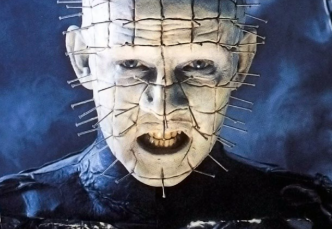
In the landscape of 1980s horror, while Freddy Krueger was cracking jokes and Jason Voorhees was stalking campers, a new kind of terror emerged from the shadows of London. The 1987 release of Hellraiser introduced audiences to a world of “super-butchers”—the Cenobites—who explored the furthest reaches of experience, where pain and pleasure are indistinguishable. Based on the novella The Hellbound Heart by Clive Barker, the franchise carved out a unique niche in gothic horror cinema, focusing on desire, obsession, and the dark price of curiosity. Over the course of ten sequels and a 2022 reimagining, the series has evolved from a small-scale domestic nightmare into a sprawling mythology of trans-dimensional suffering. Here are 10 facts you likely didn’t know about the Order of the Gash and the puzzle boxes that summon them.
1. Clive Barker’s Directorial Debut was a DIY Masterclass
Before he was a celebrated film director, Clive Barker was primarily known as a visionary horror novelist and playwright. When he decided to adapt his own novella, The Hellbound Heart, he did so because he was frustrated with how other directors had handled his work. With a modest budget of roughly $1 million, Barker had to rely on extreme creativity and practical makeup effects to bring his “theology of the flesh” to life.
The production was famously “guerilla-style.” Much of the film was shot in a real, dilapidated house in North London, which added an authentic layer of grime and decay that a studio set could never replicate. Barker, despite being a novice filmmaker, had a clear aesthetic vision inspired by his time in the underground London S&M scene and the works of Jean Cocteau. This DIY spirit is what gave the original Hellraiser its visceral, claustrophobic energy, proving that high-concept supernatural horror doesn’t need a blockbuster budget if it has a singular, uncompromising vision. It remains a testament to Barker’s “hands-on” approach to cinematic storytelling.
2. Pinhead was Never Meant to be the Star
It is a massive irony in the Hellraiser franchise history that its most iconic figure was originally just a supporting character. In the first film, Doug Bradley’s character was simply credited as “Lead Cenobite.” The real “villains” of the movie were Julia and Frank Cotton, whose sordid affair and gruesome resurrection drove the plot. The Cenobites were intended to be neutral “arbiters of experience” who only appeared at the beginning and end to collect their due.
However, audiences were so transfixed by the character’s design and Bradley’s articulate, chilling performance that the marketing for the sequels shifted the focus entirely onto him. It was the studio (New World Pictures) that eventually coined the name “Pinhead,” a moniker that Clive Barker famously disliked because he felt it lacked the dignity and poetic gravity of the character. This accidental creation of a horror icon changed the trajectory of the series, turning a story about human depravity into a franchise centered on the lore of a demonic bureaucracy.
3. The S&M Influence and “Extreme” Aesthetics
The visual identity of Hellraiser—specifically the leather-clad, pierced appearance of the Cenobites—was directly influenced by Clive Barker’s interest in subculture aesthetics, specifically the 1980s S&M and punk scenes in London and Amsterdam. Barker wanted to move away from the “tattered rags” look of traditional ghosts and monsters, opting instead for a look that suggested a high degree of ritualistic discipline and “glamorous” suffering.
The design of the Cenobites was meant to evoke a sense of “religious surgery.” For example, the “Chatterer” Cenobite’s pulled-back skin and exposed teeth were inspired by medical textbooks on facial reconstruction and Victorian surgical tools. This fusion of the erotic and the repulsive—often called “Body Horror”—became the franchise’s calling card. By using practical special effects to simulate leather fused with skin, the film tapped into a deep-seated cultural anxiety about the limits of the body, making the Cenobites feel like sophisticated explorers of the flesh rather than mindless monsters.
4. Doug Bradley and the 6-Hour Transformation
To become the “Hell Priest,” actor Doug Bradley had to undergo a grueling makeup process that initially took over six hours to apply. The design consisted of a grid of shallow incisions across his face and head, with a metal nail driven into every intersection. Unlike many modern masks, this was a multi-piece prosthetic that allowed Bradley’s actual facial expressions to shine through the latex.
Because the process was so taxing, Bradley would often stay in the makeup for the entire day, even during lunch breaks. He noted that people on set would naturally avoid him because he looked so genuinely disturbing. Interestingly, the “nails” in the first film were actually made of wood and painted to look like iron to save on weight, but in later films, they were replaced with real steel to give them that distinct, sharp glint under the lights. This commitment to practical prosthetic makeup is a primary reason why the original Pinhead remains so much more effective and haunting than the digital versions seen in later horror movie sequels.
5. The Mystery of the Lament Configuration
The iconic puzzle box, known as the Lament Configuration, is the “inciting incident” for almost every entry in the franchise. Designed by Simon Sayce for the original film, the box was inspired by real-world Chinese puzzle boxes and the intricate mechanisms of 18th-century clockwork. Barker wanted the object to feel “ancient and heavy,” despite it being a relatively small prop.
In the Hellraiser lore, the box was created by a toy maker named Lemarchand (introduced in Hellbound: Hellraiser II and explored deeply in Hellraiser: Bloodline). The lore suggests that the box isn’t just a lock; it’s a map to a dimension of infinite sensation. The geometric patterns on the box are etched with gold foil and supposedly reflect the architecture of the Cenobites’ home, “The Labyrinth.” This attention to world-building turned a simple movie prop into a legendary piece of horror iconography, comparable to the Necronomicon in Evil Dead or the One Ring in Lord of the Rings.
6. The Censorship Battle: The “Hammer” and the “Hooks”
Like many 80s horror films, Hellraiser faced significant scrutiny from the MPAA and the British Board of Film Classification (BBFC). The original cut featured a much more prolonged and graphic “birthing” sequence for Frank Cotton, where his body is reconstructed from blood and bone. Barker had to trim several seconds of the famous “hooks” scene—where Frank is torn apart—to avoid an X rating.
The most contentious scene, however, was a “hammer murder” that was deemed too realistic and brutal for the time. Even with the cuts, the film was considered groundbreaking for its “wet” look—the constant presence of blood, slime, and glistening flesh. Barker’s background in the theater meant he understood the “theatricality of gore,” using it to punctuate emotional moments rather than just for shock value. This struggle with film censorship helped cultivate the movie’s reputation as a “forbidden” experience, which only increased its status as a cult classic among horror fans.
7. A Sequel Set in a Literal Hell
While the first film was a “chamber piece” set in a single house, Hellbound: Hellraiser II blew the doors off the franchise by taking the audience into the Cenobites’ home dimension. This depiction of Hell—as a vast, gray, cold labyrinth ruled by a massive, geometric deity named Leviathan—remains one of the most unique portrayals of the afterlife in cinema.
Instead of fire and brimstone, Barker and director Tony Randel chose a psychological, architectural Hell. The production designers used matte paintings and large-scale miniatures to create the endless corridors and “Escher-like” stairs of the Labyrinth. This ambitious world-building shifted the franchise from a domestic thriller into a high-fantasy horror epic. For many fans, the second film is the peak of the franchise because it answered the question of where the Cenobites come from while maintaining the surreal, dream-like logic that makes the series so unsettling.
8. The “Lost” Hellraiser: The Friday the 13th Connection
In the mid-2000s, there were serious discussions and even a script written for a crossover film titled Hellraiser vs. Halloween or Pinhead vs. Michael Myers. Following the success of Freddy vs. Jason, Dimension Films (who then owned the rights) was eager to mash up their horror icons.
Clive Barker reportedly liked the idea of a showdown between the articulate, supernatural Pinhead and the silent, grounded Michael Myers. However, the project was ultimately scrapped because the producers of Halloween weren’t interested in the supernatural elements required to make Pinhead work. This remains one of the great “what ifs” of horror franchise crossovers. Instead, the series continued with direct-to-video sequels, which many fans feel diluted the brand, though they occasionally introduced interesting new Cenobites like the “Camerahead” or the “Wirewalker,” expanding the Yautja-like hierarchy of the hellish order.
9. Pinhead’s Gender Fluidity and the 2022 Reboot
One of the most discussed facts about the 2022 Hellraiser reimagining (directed by David Bruckner) was the casting of actress Jamie Clayton as the Hell Priest. While some vocal corners of the internet were surprised, die-hard fans of the Clive Barker books pointed out that this was actually more faithful to the original source material.
In The Hellbound Heart, the Lead Cenobite is described as having a voice like “shattered glass” and possessing features that are neither clearly male nor female. Barker’s original vision for the Cenobites was one of gender-transcendence—their transformations in Hell removed the biological markers of humanity. Jamie Clayton’s performance was widely praised for returning the character to its “theological” roots—elegant, cold, and profoundly alien. This move helped revitalize the Hellraiser franchise for a modern audience, focusing on the sophisticated horror of the original rather than the slasher-esque tropes of the later sequels.
10. The Enduring Legacy of “Pain and Pleasure”
The Hellraiser franchise survives because it asks a fundamentally different question than most horror movies. It doesn’t ask “How do I escape the monster?” but rather “What happens if I get exactly what I wished for?” The series explores the concept of hedonism taken to its extreme, where the pursuit of new sensations leads to a place where humans can no longer survive.
This philosophical core is why the franchise remains a staple of Gothic and Cyberpunk horror. It bridges the gap between the classical ghost stories of the past and the “body modification” anxieties of the future. As of June 12, 2025, with new projects rumored to be in the works at Hulu and other platforms, the legacy of the box remains as sharp as ever. The franchise serves as a dark mirror, reflecting our own obsessions with desire, control, and the “exquisite” agony of being alive.
Further Reading
- The Hellbound Heart by Clive Barker – The original novella that started it all; a must-read for the pure prose.
- The Hellraiser Films and Their Legacy by Paul Kane – An exhaustive history of the production of the first three films.
- Clive Barker’s Dark Imaginer edited by Sorcha Ní Fhlainn – A collection of academic but readable essays on the themes of Barker’s work.
- The Art of Horror Movies by Stephen Jones – Provides great context for where Hellraiser fits in the 1980s landscape.
Keep the Discovery Going!
Here at Zentara, our mission is to take tricky subjects and unlock them, making knowledge exciting and easy to grasp. But the adventure doesn’t stop at the bottom of this page. We are constantly creating new ways for you to learn, watch, and listen every single day.
📺 Watch & Learn on YouTube
Visual learner? We publish 4 new videos every day, plus breaking news shorts to keep you smarter than the headlines. From deep dives to quick facts, our channel is your daily visual dose of wonder.
Click here to Subscribe to Zentara on YouTube
🎧 Listen on the Go on Spotify
Prefer to learn while you move? Tune into the Zentara Podcast! We drop a new episode daily, perfect for your commute, workout, or coffee break. Pop on your headphones and fill your day with fascinating facts.
Click here to Listen on Spotify
Every click, view, and listen helps us keep bringing honest knowledge to everyone. Thanks for exploring with us today—see you out there in the world of discovery!




Leave a Reply