
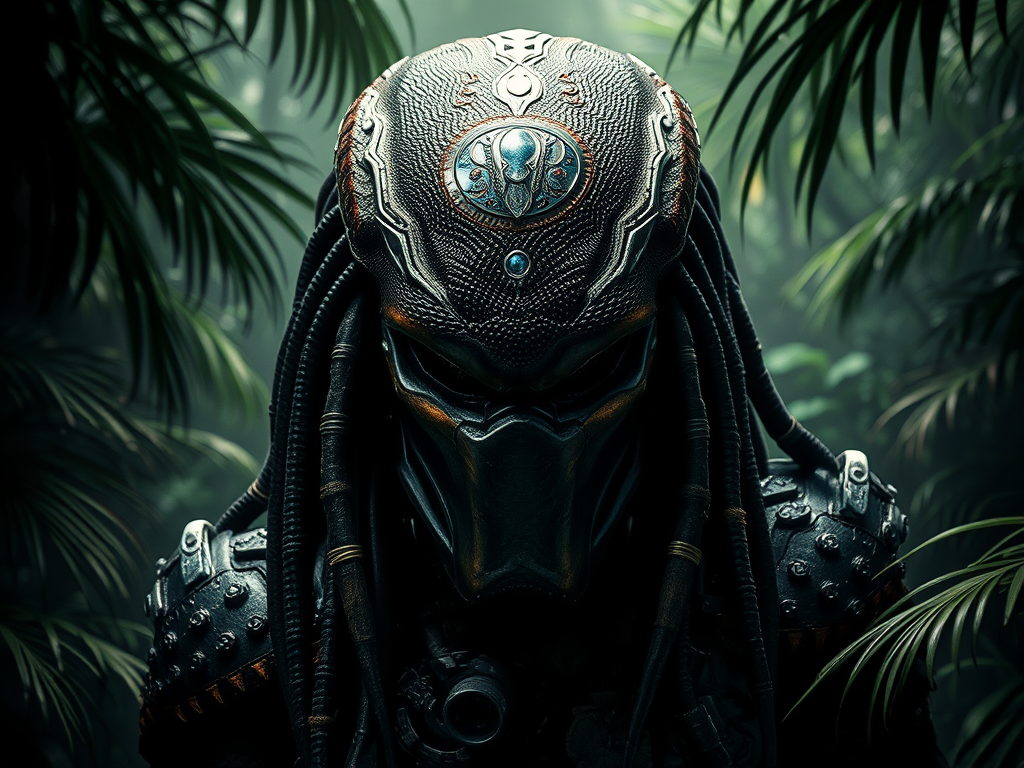
The 1987 release of Predator was a turning point for the action and science fiction genres. At a time when muscular heroes like Arnold Schwarzenegger were seemingly invincible, this film introduced a terrifyingly capable antagonist that turned the ultimate hunters into the hunted. Over the decades, the Predator franchise has expanded into sequels, crossovers, and prequels, establishing a deep well of Yautja lore that fans continue to dissect. While the silhouette of the creature with its dreadlocks and thermal vision is globally recognized, the story behind its creation—and the evolution of the franchise—is filled with strange coincidences, near-disasters, and brilliant strokes of creative genius.
1. The “Rocky Balboa vs. An Alien” Origin Story
It sounds like an urban legend, but the Predator movie history actually began as a Hollywood joke. Following the release of Rocky IV, a quip circulated throughout Los Angeles that since Rocky Balboa had run out of earthly opponents to fight, he would have to battle an alien in the next installment. Screenwriters Jim and John Thomas took this ridiculous premise and treated it with absolute sincerity. They penned a script titled Hunter, which focused on a group of elite soldiers being stalked by a technologically superior extraterrestrial in a tropical setting.
This “Rocky in space” seed eventually germinated into the gritty, hyper-masculine masterpiece we know today. The shift from a boxing ring to the dense jungles of Central Mexico allowed the filmmakers to explore the concept of a “fair fight” on a much more primal level. It stripped away the sports drama and replaced it with a slasher-film tension, effectively creating a new sub-genre: the military-horror-action hybrid. This enduring foundation is why the original film remains a sci-fi action classic—it wasn’t just built on tropes; it was built on the subversion of the ultimate human warrior.
2. The Jean-Claude Van Damme “Red Suit” Disaster
One of the most infamous behind-the-scenes facts involves the “Muscles from Brussels” himself. Before the iconic creature design we know today was finalized, the Predator looked like a lanky, bug-eyed lizard. A young, then-unknown Jean-Claude Van Damme was hired to play the creature, primarily for his martial arts agility. However, the original suit was a logistical nightmare. It was bulky, difficult to move in, and, for the purposes of the “cloaking” effects, it was colored bright, fluorescent red.
Van Damme reportedly hated the suit, complaining that he looked like a “red lobster” and that the costume was too hot and restrictive for his kickboxing style. After a few days of disastrous test footage where the creature looked more comical than menacing, the production was halted. Van Damme was eventually let go (or quit, depending on who you ask), and the entire creature was redesigned from scratch. This near-catastrophe led to the hiring of legendary effects artist Stan Winston, which ultimately saved the Predator franchise from becoming a forgotten B-movie.
3. James Cameron’s Million-Dollar Mandible Suggestion
When Stan Winston took over the creature design, he was under immense pressure to create something truly terrifying on a tight schedule. While on a flight to Japan with director James Cameron, Winston was sketching ideas for the new creature. Cameron, who had recently finished Aliens, looked over at the sketches and mentioned, “I’ve always wanted to see something with mandibles.”
Winston took that small suggestion and ran with it, incorporating the four insect-like pincers around the creature’s mouth. This detail became the Predator’s most defining and terrifying physical trait. It transformed the alien from a mere man-in-a-suit into a truly “alien” lifeform. This collaboration between two titans of practical effects in horror and sci-fi proves how a single casual comment can alter the trajectory of cinematic history. Without those mandibles, the Predator might have lacked the visceral, frightening quality that makes its unmasking scene in the 1987 film so unforgettable.
4. The Grueling Reality of “Jungle Fever” on Set
The making of the first film was far from a Hollywood vacation. Filming in the jungles of Palenque, Mexico, presented the cast and crew with legitimate survival challenges. Director John McTiernan lost 25 pounds during the shoot because he refused to eat the local food, fearing illness. Most of the cast, however, did get sick with traveler’s diarrhea due to the water, leading to a production that was often interrupted by “emergency” bathroom breaks.
Furthermore, the jungle floor was uneven and treacherous. Arnold Schwarzenegger had to swim in freezing water and spend weeks covered in cold, wet medicinal clay for the film’s climax, leading to bouts of hypothermia. The sweat you see on the actors isn’t movie magic; it’s genuine physical exhaustion. This raw, uncomfortable environment translated perfectly onto the screen, lending the film an authenticity that modern CGI-heavy productions often lack. It reinforces the theme of man against nature—both the extraterrestrial nature and the literal jungle.
5. The Secret Voice Behind the Iconic “Clicking” Sound
The Predator’s signature sound—the eerie, rhythmic clicking and croaking—is one of the most recognizable audio cues in cinema. Interestingly, this sound wasn’t created by a synthesizer or a foley artist with a bowl of macaroni. It was provided by Peter Cullen, the legendary voice actor best known as the voice of Optimus Prime from Transformers.
Cullen was initially hesitant to take the job because he had strained his voice playing King Kong and didn’t want to do any more “monster screams.” However, after seeing a picture of the unmasked Predator, he thought it looked like a “horseshoe crab” and was reminded of a sound a dying crab makes. He demonstrated a dry, back-of-the-throat clicking noise, and the producers loved it. This organic, unsettling sound added a layer of Yautja lore that suggested a complex, non-human biology, proving that sound design is just as important as visual effects in building a legendary monster.
6. Sonny Landham’s Mandatory Bodyguard
Sonny Landham, who played the stoic tracker Billy, was a formidable presence on and off-camera. Before his acting career, Landham had a reputation for being volatile and difficult to work with. To satisfy the film’s insurance bondholders, the studio was required to hire a bodyguard specifically for Landham.
The twist? The bodyguard wasn’t there to protect Landham from others—he was there to protect the rest of the cast and the public from Landham. Despite this intimidating requirement, Landham’s performance as Billy remains a fan favorite, particularly the scene where he decides to face the Predator with nothing but a machete. This real-life tension behind the scenes contributed to the high-testosterone, edge-of-your-seat atmosphere that defines the 80s action movie era. It’s a classic example of “art imitating life” in the most intense way possible.
7. The Alien Skull that Launched a Crossover
In the final act of Predator 2 (1990), Danny Glover’s character, Lieutenant Mike Harrigan, stumbles into the Predator’s trophy room. Hanging on the wall among various skulls is the unmistakable head of a Xenomorph from the Alien franchise. At the time, this was meant to be a simple “Easter egg” for eagle-eyed fans, a nod to the fact that both properties were owned by 20th Century Fox.
However, that single prop ignited a firestorm of fan speculation and demand. It directly led to the Alien vs. Predator comic book series, several video games, and eventually the Predator vs Alien history on the big screen. This moment is one of the most significant instances of “shared universe” building in cinema, occurring long before the Marvel Cinematic Universe made it a standard practice. It expanded the scope of the Predator from a lone hunter to a galactic traveler with a history of hunting the universe’s most dangerous prey.
8. Why the Blood is “Neon Green”
One of the most distinct visual elements of the Predator is its luminescent, neon-green blood. In the original script, the blood was intended to be an orange, amber color. However, when they tested the orange liquid on the jungle foliage, it looked like mud and didn’t stand out on camera.
The effects team needed something that would pop against the deep greens and browns of the forest. They decided to mix the liquid from inside green glow sticks with a KY Jelly lubricant to give it a thick, viscous, and glowing appearance. This accidental brilliance created a striking visual shorthand for the creature’s alien nature. When Mac (Bill Duke) says, “If it bleeds, we can kill it,” the sight of that glowing green ichor provides the first tangible proof that the monster is a biological entity, not a ghost or a spirit.
9. The Competitive “Gym Culture” of the Cast
The cast of the 1987 film featured some of the most physically imposing men in Hollywood, including Arnold Schwarzenegger, Carl Weathers, and Jesse Ventura. This led to an incredibly competitive environment on set. The actors would wake up as early as 3:00 AM to hit the gym before filming started, each trying to outdo the other in terms of muscle mass and definition.
Jesse Ventura famously discovered that his biceps were slightly larger than Schwarzenegger’s and bet Arnold a bottle of champagne that he was “bigger.” Arnold agreed, but when they measured, it turned out Arnold had intentionally told the costume department to tell Ventura his arms were smaller so he could win the bet. This intense cast camaraderie and competitiveness translated into the “macho” energy of the film, particularly in the famous “epic handshake” between Dutch and Dillon, which has since become one of the most shared memes on the internet.
10. The Franchise’s 2020s Renaissance with “Prey”
After several sequels that received mixed reviews, the franchise saw a massive critical resurgence with the 2022 film Prey. Directed by Dan Trachtenberg, the film served as a prequel set in the 1700s, featuring a Comanche warrior named Naru. By stripping away the heavy artillery and modern technology, Prey returned to the franchise’s roots: the hunt.
The success of Prey proved that the Predator franchise doesn’t need bigger explosions or more predators to be successful; it needs a compelling, grounded story about survival. This shift in perspective has revitalized interest in the IP, leading to the development of Predator: Badlands and other upcoming projects. As of June 2025, the franchise is arguably at its strongest point in decades, proving that the Yautja remains one of the most versatile and enduring monsters in the history of sci-fi cinema.
Further Reading
- The Predator: The Art and Making of the Film by James Thomas – A comprehensive look at the design and production of the series.
- Beautiful Monsters: The Unofficial and Unauthorized Guide to the Alien and Predator Movies by David McIntee – An analytical look at the lore and history.
- Predator: The Official Movie Novelization by Paul Monette – For those who want to see the internal thoughts of Dutch and the Hunter.
- The Making of Predator by Michael Doyle – A detailed retrospective on the 1987 classic’s chaotic production.
Keep the Discovery Going!
Here at Zentara, our mission is to take tricky subjects and unlock them, making knowledge exciting and easy to grasp. But the adventure doesn’t stop at the bottom of this page. We are constantly creating new ways for you to learn, watch, and listen every single day.
📺 Watch & Learn on YouTube
Visual learner? We publish 4 new videos every day, plus breaking news shorts to keep you smarter than the headlines. From deep dives to quick facts, our channel is your daily visual dose of wonder.
Click here to Subscribe to Zentara on YouTube
🎧 Listen on the Go on Spotify
Prefer to learn while you move? Tune into the Zentara Podcast! We drop a new episode daily, perfect for your commute, workout, or coffee break. Pop on your headphones and fill your day with fascinating facts.
Click here to Listen on Spotify
Every click, view, and listen helps us keep bringing honest knowledge to everyone. Thanks for exploring with us today—see you out there in the world of discovery!




Leave a Reply