
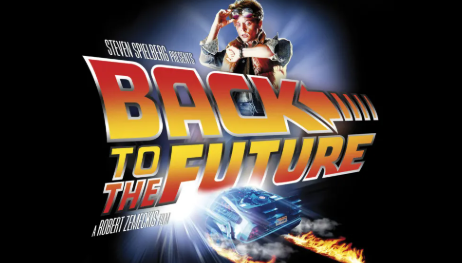
Great Scott! Is there any movie that captures the pure, electrifying fun of cinema quite like Back to the Future? For decades, this masterpiece has been a cornerstone of pop culture, a film that feels both perfectly of its time and absolutely timeless. We’ve all dreamed of hitting 88 miles per hour in a DeLorean, worried about our parents meeting at the Enchantment Under the Sea dance, and felt the sheer triumph of Marty McFly shredding “Johnny B. Goode.” It’s a perfect blend of science fiction, comedy, adventure, and heart that has captured the imaginations of generations.
But even if you’ve seen the movie a hundred times, are you sure you know all its secrets? The journey of getting this film from a wild idea to a cinematic landmark was just as thrilling as Marty’s trip to 1955. Behind the iconic moments and quotable lines are stories of last-minute changes, incredible luck, and creative genius that make the film even more special. Here at Zentara.blog, we’ve revved up our own flux capacitor to bring you 10 mind-blowing, behind-the-scenes facts that will give you a whole new appreciation for the adventure of a lifetime. So buckle up—where we’re going, we don’t need roads!
1. The Original Marty McFly Was a Completely Different Actor
This is perhaps the most famous “what if?” in modern movie history. While it’s impossible to imagine anyone but Michael J. Fox as the cool, charismatic Marty McFly, he wasn’t the first choice. In fact, another actor, Eric Stoltz, was cast in the role and filmed for five entire weeks. Director Robert Zemeckis and writer Bob Gale had wanted Fox from the very beginning, but he was busy with his hit TV show, Family Ties, whose producers wouldn’t release him. They settled on Stoltz, a respected dramatic actor.
However, as filming went on, Zemeckis and the producers, including Steven Spielberg, felt something was off. Stoltz was giving a very intense, serious performance. He saw the film as a tragedy about a man trapped in the past, missing the lighthearted, comedic energy the creators envisioned. The difficult decision was made to recast the lead role. This was a huge risk. It cost the production an extra $3 million (a significant sum in 1985) and meant they had to reshoot every single scene featuring Marty. Miraculously, they were able to renegotiate with the Family Ties producers. For the rest of the production, Michael J. Fox worked on the TV show during the day and filmed Back to the Future all night, often sleeping for only a few hours in the car between sets. The result was pure movie magic, as Fox’s perfect comedic timing and boyish charm created the iconic hero we know and love.
2. The Time Machine Was Almost a Refrigerator
Can you imagine Marty McFly traveling through time in a household appliance? It almost happened! In the earliest drafts of the script, Bob Gale and Robert Zemeckis had Doc Brown’s invention housed not in a sleek, gull-winged sports car, but in a refrigerator. The final jolt of energy required for time travel was supposed to come from Marty climbing inside the lead-lined fridge and surviving a nuclear bomb blast at a test site in Nevada.
Thankfully, producer Steven Spielberg raised a crucial concern. He worried that young, impressionable kids might see the movie and try to replicate the scene by climbing into refrigerators or freezers at home, leading to a potential tragedy. The idea was immediately scrapped. The creative team went back to the drawing board, deciding the time machine needed to be mobile. What could be cooler than a car? They chose the DeLorean DMC-12 specifically for its futuristic, spaceship-like appearance and its iconic gull-wing doors. This design made the joke of the Peabody family thinking it was a UFO much more believable. It was a change born from safety concerns that ultimately gave the world one of the most famous cars in history.
3. The Script Was Rejected Over 40 Times
Today, it seems unbelievable that any studio would pass on a script as brilliant as Back to the Future, but its road to the big screen was incredibly difficult. Bob Gale and Robert Zemeckis pitched their idea to every major studio in Hollywood and were rejected more than 40 times. The executives just didn’t get it. Most studios felt it was too “sweet” and “tame” compared to the raunchy teen comedies that were popular in the early 1980s, like Porky’s and Fast Times at Ridgemont High.
One of the most infamous rejections came from Disney. The executives there were horrified by the central plot point of Marty’s mother, Lorraine, developing a romantic interest in him back in 1955. The idea of this near-incestuous relationship, even played for laughs, was far too edgy for the family-friendly studio. They were completely turned off. It wasn’t until Zemeckis directed the hit film Romancing the Stone that he finally had the clout to get his passion project made. His friend and mentor, Steven Spielberg, stepped in as a producer, and Universal Pictures finally gave them the green light. It’s a powerful lesson in perseverance, proving that a great idea can eventually find its way, even after dozens of rejections.
4. Biff Tannen Was Based on a Real-Life Bully
Every great hero needs a great villain, and Biff Tannen is one of cinema’s most memorable bullies. From his constant threats to his ridiculous catchphrases (“Make like a tree and get out of here!”), he’s the perfect antagonist for George McFly. But the character wasn’t just pulled from thin air. According to writer Bob Gale, Biff’s personality was based on a real person who had once bullied him and Robert Zemeckis.
Years before Back to the Future, the writing duo had a script called I Wanna Hold Your Hand. During a meeting about the movie, a particularly aggressive and unpleasant studio executive threw their script on the table and accused them of writing an “anti-semitic” movie, which it absolutely was not. The executive was loud, arrogant, and belittling to the young writers. The experience stuck with them. When it came time to create the ultimate bully for their time-travel story, they channeled the memory of this executive into Biff Tannen. It was their small way of getting creative revenge, and in doing so, they created a universally recognizable character who represents every arrogant bully we’ve ever known.
5. The Meaning of “1.21 Gigawatts”
“One point twenty-one gigawatts!” Doc Brown’s frantic, wide-eyed exclamation is one of the most quoted lines from the movie. The sheer power required for time travel sounds incredibly specific and scientific, but the origin of the number is much more casual. When writing the script, Bob Gale and Robert Zemeckis needed a number that sounded impressively large. They consulted with a physicist who was working on the film as an advisor.
During a discussion, the physicist mentioned the term “gigawatt,” a unit of power equal to one billion watts. However, he mispronounced it as “jigowatt,” with a soft ‘g’ sound. The writers thought this pronunciation sounded funnier and more eccentric, perfectly fitting the character of Doc Brown. So, they wrote it into the script exactly as they heard it: “one point twenty-one jigowatts.” Christopher Lloyd, as Doc, delivered the line with that unique pronunciation, and it stuck. Over the years, the correct pronunciation (“gigawatt”) has become more common, but for fans of the film, Doc Brown’s “jigowatts” will always be the official unit of power for time travel.
6. The “To Be Continued…” Ending Was Originally a Joke
The film’s thrilling final moments, where Doc Brown returns from the future in a flying, garbage-fueled DeLorean and whisks Marty and Jennifer away, is the perfect cliffhanger. The words “To Be Continued…” appearing on the screen sent audiences into a frenzy, eagerly anticipating the next chapter. But here’s the secret: the filmmakers never actually planned on making a sequel.
Robert Zemeckis and Bob Gale added that ending simply because they thought it was a fun, optimistic, and adventurous way to close the story. It was a final joke, suggesting that the adventures for these characters would never end. They had no story for a sequel and no plans to write one. However, the film was such a massive, runaway success that the demand for a sequel was overwhelming. The “To Be Continued…” tag, which was added for the home video release, only amplified this. They had essentially backed themselves into a corner. Of course, they rose to the challenge, creating two more beloved films, but the iconic cliffhanger was born not out of a grand plan, but out of a simple sense of fun.
7. The Iconic Clock Tower Scene Almost Didn’t Happen
The climax of Back to the Future is one of the most brilliantly executed sequences in movie history. The race against time, the storm, the lightning strike, the cable snapping—it’s pure cinematic tension and release. But this entire sequence was a last-minute replacement for a much bigger, and much more expensive, original ending.
As mentioned earlier, the first draft of the script involved Marty getting the necessary 1.21 gigawatts from a nuclear bomb test in the Nevada desert. Doc would have driven him to the test site, and Marty would have to time his return to the future at the exact moment of the atomic detonation. The producers quickly realized that building a full-scale atomic test site set would be astronomically expensive and logistically impossible. Faced with this budget crisis, Zemeckis and Gale had to think of a cheaper, more contained way to generate that much power. They cleverly went back to the beginning of their own script, remembering that Doc Brown got the idea for the flux capacitor when he fell and hit his head. They decided to use another unpredictable, powerful event: a lightning strike. This led them to invent the “Save the Clock Tower” subplot, which not only solved their budget problem but also created a far more personal, dramatic, and iconic finale for the film.
8. Eddie Van Halen’s Secret Sound Cameo
One of the funniest scenes in the movie is when Marty, disguised as “Darth Vader from the planet Vulcan,” tortures his teenage father, George, with loud rock music to convince him to ask Lorraine to the dance. The cassette tape Marty puts in George’s Walkman is clearly labeled “Edward Van Halen.” It turns out, that wasn’t just a random name-drop. The legendary guitarist Eddie Van Halen himself performed the wild, screeching guitar sounds heard in the scene.
The producers had approached the band Van Halen for permission to use their music, but the band members couldn’t all agree. However, Eddie Van Halen was happy to contribute something himself as a favor. He took a guitar and a practice amp into a room and improvised the chaotic, otherworldly noises you hear in the film. He did it for free and asked not to be credited, making it a hidden Easter egg for eagle-eared rock fans. It’s a fantastic little detail that adds another layer of 80s authenticity and cool to an already awesome movie.
9. The Famous Town Square Is a Hollywood Legend
The charming Hill Valley town square, with its iconic courthouse and clock tower, feels like a real, living place. In reality, it’s one of the most famous and historic backlots in Hollywood: Courthouse Square at Universal Studios. If the set looks familiar, it’s because you’ve seen it in dozens of other movies and TV shows over the years.
Before Marty McFly ever skateboarded through it, that same town square was the setting for Atticus Finch’s dramatic trial in the 1962 classic To Kill a Mockingbird. It was also famously overrun by mischievous creatures in the 1984 film Gremlins. It has appeared in everything from Bruce Almighty to episodes of The Twilight Zone and Knight Rider. The set has a dramatic history of its own, having been damaged by major fires multiple times, most recently in 2008. Each time, Universal Studios has painstakingly rebuilt it, recognizing its importance not just to Back to the Future fans, but to film history itself. When you watch the movie, you’re not just visiting Hill Valley; you’re visiting a true piece of Hollywood legacy.
10. Marty’s “Johnny B. Goode” Performance Was Movie Magic
Marty McFly’s performance of “Johnny B. Goode” at the Enchantment Under the Sea dance is an all-time great movie moment. It’s the scene that perfectly ties the past and future together, leaving the 1955 crowd utterly bewildered and giving rock and roll a little push. Michael J. Fox looks like a genuine rock star on that stage, but the performance was a clever combination of multiple talents.
While Fox learned to mime the guitar playing convincingly, the actual blistering guitar solos were performed by a professional musician named Paul Hanson. But that’s not all. The voice you hear singing isn’t Fox’s either. The lead vocals were provided by a singer named Mark Campbell, who was hired specifically to capture the song’s energy. Fox worked closely with both musicians and a choreographer to sync his movements perfectly with the pre-recorded tracks. The result is a seamless and electrifying performance that convinced an entire generation that Michael J. Fox was a secret rock god. It’s a perfect example of how filmmaking is a collaborative art, with many talented people working behind the scenes to create a single, unforgettable moment.
Conclusion
Looking back at the incredible stories behind Back to the Future, it’s clear that the film’s creation was a journey filled with as much luck, challenge, and ingenuity as Marty’s own adventure. From a last-minute casting change that defined a hero, to a budget problem that led to a more brilliant climax, the film is a testament to the power of creative problem-solving and sticking with a great idea when no one else believes in it. These behind-the-scenes tales don’t diminish the magic; they enhance it, showing us the human effort and passion that went into crafting this timeless classic.
Back to the Future endures because its themes are universal. It’s about the desire to connect with our parents, the fear that we might be making the wrong choices, and the hope that we have the power to shape our own destiny. It reminds us that every person’s life is an epic story, and that the future is whatever we make it. So the next time you watch it, you’ll not only see a perfect movie, but also the fingerprints of the many artists who, against all odds, captured lightning in a bottle.
Now we turn it over to you. If you could take the DeLorean to any point in time, past or future, where would you go first and why? Let us know in the comments below!
Dive Deeper
Want to learn even more about the incredible story behind this cinematic classic? Check out these amazing books that take you deeper into the world of Hill Valley and the making of the trilogy.
- We Don’t Need Roads: The Making of the Back to the Future Trilogy by Caseen Gaines: This is the definitive, comprehensive oral history of the entire franchise, packed with interviews and incredible stories from the cast and crew.
- Back to the Future: The Ultimate Visual History by Michael Klastorin: A gorgeous, oversized coffee table book filled with rare concept art, storyboards, and never-before-seen photos from the set. A must-have for any true fan.
- Lucky Man: A Memoir by Michael J. Fox: The actor’s own inspiring story of his life and career, including his experiences working all night on Back to the Future while simultaneously starring in a hit sitcom during the day.




Leave a Reply