
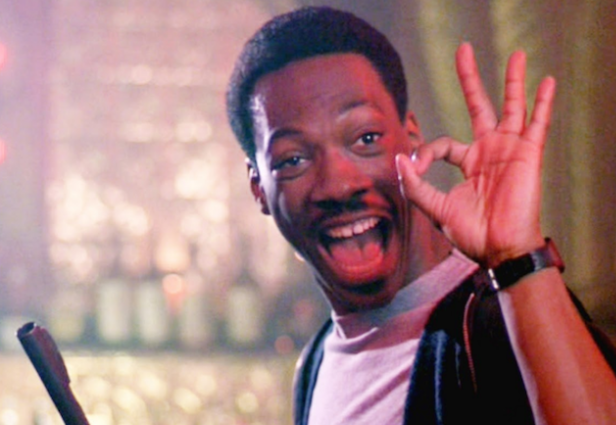
From Stallone to Stardom: 10 Wild Secrets Behind the Making of Beverly Hills Cop
In the early 1980s, the action genre was dominated by stoic, muscular men who spoke with their fists more than their wits. Then came a fast-talking detective from Detroit with a distinctive laugh and a beat-up Chevy Nova, and the “action-comedy” was changed forever. Beverly Hills Cop is more than just a movie; it is a cultural touchstone that transformed Eddie Murphy from a television standout into a global cinematic icon.
The film’s premise—a “fish out of water” story about a street-smart cop navigating the polished, palm-tree-lined streets of 90210—sounds simple today because this movie essentially wrote the blueprint for that very trope. To understand why Axel Foley remains one of the most beloved characters in film history, one must look into the chaotic, creative, and often accidental production that brought the movie to life. Behind the high-speed chases and the infectious synth-pop score lies a story of casting “what-ifs,” improvised genius, and a production that was being rewritten practically until the cameras started rolling.
1. The “Cobra” That Almost Was: Sylvester Stallone’s Gritty Vision
It is nearly impossible to imagine Beverly Hills Cop without Eddie Murphy’s signature smirk, but the film was originally developed as a hard-edged, traditional action flick for Sylvester Stallone. In this early iteration, the character of Axel Foley was a much more intense, “Rambo-esque” figure. Stallone, known for his hands-on approach to filmmaking, actually rewrote the script to suit his specific brand of heroism. His version removed almost all of the humor, replacing it with high-octane violence and a massive, expensive finale involving a game of “chicken” between a Lamborghini and a freight train.
Ultimately, the studio balked at the ballooning budget and the departure from the original comedic concept. Just weeks before production began, Stallone exited the project, taking many of his dark action ideas with him to create the film Cobra. This left the producers in a scramble, leading them to reach out to a young Eddie Murphy. This pivot didn’t just save the budget; it saved the movie’s soul. By choosing a comedian over a traditional action star, the production shifted its focus from firepower to firepower of the mind, allowing the “action-comedy” genre to truly find its feet.
2. The Art of the “Banana in the Tailpipe” Improvisation
One of the most famous scenes in cinema history involves Axel Foley outsmarting two surveillance officers by stuffing a banana into the exhaust pipe of their car. While the scene is iconic today, much of the dialogue and the specific comedic timing were born out of Eddie Murphy’s pure improvisational instinct. Murphy had a unique ability to take a basic script outline and “riff” until he found comedic gold. The director, Martin Brest, encouraged this, often letting the cameras roll as Murphy explored different ways to humiliate his adversaries with a smile on his face.
The production was famously plagued (in the best way possible) by “ruined” takes because the crew and fellow actors couldn’t stop laughing. During the “supercop” monologue or the “banana” sequence, the actors playing Taggart and Rosewood often had to pinch themselves or look away from the camera to avoid breaking character. This improvisational energy gave the film a spontaneous, electric feel that felt vastly different from the rehearsed, stiff dialogue of other 80s blockbusters. It made Axel Foley feel like the smartest person in any room, not because he was the strongest, but because he could out-talk anyone before they even realized they were in a conversation.
3. The “Axel F” Theme: A Synth-Pop Revolution
It is rare for a film’s instrumental theme to become a global chart-topping hit, but Harold Faltermeyer’s “Axel F” did exactly that. The track is a masterpiece of 1980s electronic music, utilizing a Roland Jupiter-8 and a Moog synthesizer to create a hook that is instantly recognizable. Interestingly, Faltermeyer initially struggled to find the right “vibe” for the character. He wanted something that captured Axel’s Detroit grit but also the “plastic” sheen of Beverly Hills. The result was a playful, bouncy, yet cool melody that perfectly mirrored the protagonist’s personality.
The success of the theme song signaled a shift in how movies were marketed. “Axel F” wasn’t just background music; it was a character in itself. It provided a rhythmic backbone to the film’s editing, giving the movie a music-video-like energy that appealed to a younger, MTV-focused generation. The track remains a staple of pop culture, frequently covered and sampled, proving that a catchy synth hook can be just as enduring as a great screenplay. It perfectly encapsulated the “cool” factor of the mid-80s, blending technology with a catchy, accessible melody.
4. The Magical Chemistry of Taggart and Rosewood
While the movie is undoubtedly a vehicle for Eddie Murphy, it would not work without the “straight man” duo of Detective Billy Rosewood (Judge Reinhold) and Sergeant John Taggart (John Ashton). The producers initially struggled to cast these roles, but during a chemistry read, Reinhold and Ashton began to bicker like an old married couple. This dynamic was so natural and hilarious that they were hired on the spot. The “odd couple” energy they brought—Rosewood’s naive enthusiasm and Taggart’s grumpy cynicism—provided the perfect foil for Axel’s chaotic energy.
Throughout the film, we see Axel slowly corrupting these two by-the-book officers, drawing them into his world of rule-bending and street justice. This transformation is the emotional heart of the movie. The actors spent so much time together on and off-set that their rapport became genuinely fraternal. Their “stakeout” banter, much of which was also improvised, added a layer of depth to the police procedural elements of the film. They weren’t just supporting characters; they represented the audience’s own journey of being won over by Axel’s infectious charm.
5. Real-Life Inspiration: The Man Behind Inspector Todd
The character of Axel’s shouting, short-tempered boss, Inspector Douglas Todd, was played by Gilbert R. Hill. In a fascinating twist, Hill was not a professional actor at the time; he was a real-life Detroit police detective. Director Martin Brest wanted a sense of authenticity for the Detroit scenes and felt that professional actors were being too “theatrical” with their portrayals of police captains. When he met Hill, he knew he had found the perfect man to put Axel Foley in his place.
Hill’s performance was so convincing because he wasn’t “acting” like a cop—he was one. His naturally commanding presence and genuine Detroit “edge” provided a stark contrast to the more theatrical villains and officers found in Beverly Hills later in the film. Hill eventually went on to have a significant career in Detroit politics, but his contribution to Beverly Hills Cop remains a legendary example of how non-traditional casting can ground a film in reality. His interaction with Murphy feels like a real conversation between a frustrated mentor and a talented but reckless protégé.
6. The Scramble of a Constantly Evolving Script
The production of Beverly Hills Cop was famously chaotic. Because of the last-minute casting change from Stallone to Murphy, the script was being overhauled while the crew was already on location. Writers and producers were often handing Murphy new pages of dialogue just minutes before a scene was filmed. In many cases, the script simply had placeholders that said, “Axel does his thing” or “Axel riffs here,” trusting in Murphy’s comedic genius to fill the gaps.
This “fly-by-the-seat-of-your-pants” approach actually worked in the film’s favor. It created a sense of urgency and unpredictability that mirrored the protagonist’s own journey. The crew had to be incredibly flexible, and the director had to trust his lead actor implicitly. This lack of a rigid structure allowed for creative accidents—like the “Supercop” routine—to happen naturally. It’s a testament to the talent involved that a film with such a fractured development process could emerge as a cohesive, tightly paced masterpiece of storytelling.
7. The “Beverly Hills” That Was Actually Pasadena
While the film is a love letter to the geography and culture of Beverly Hills, eagle-eyed locals often notice that many of the iconic locations were filmed elsewhere. For example, the famous Beverly Hills Police Department building is actually the Pasadena City Hall. The production chose it because it had a more “grand” and cinematic look than the actual police station at the time. Similarly, many of the residential streets used for chases and stakeouts were located in Pasadena and other parts of Los Angeles that offered more filming-friendly environments.
This “Hollywood magic” is a standard part of filmmaking, but in Beverly Hills Cop, it helps create a heightened version of the city. By blending real Beverly Hills landmarks (like Rodeo Drive) with the beautiful architecture of Pasadena, the filmmakers created a world that felt aspirational and almost impossibly clean—the perfect contrast to the gritty, industrial aesthetic of Axel’s Detroit. This visual storytelling reinforces the “fish out of water” theme, making Axel’s beat-up car look even more out of place among the pristine mansions and manicured lawns.
8. The Iconic Detroit Lions Jacket
Axel Foley’s wardrobe is as iconic as his laugh, specifically his grey and blue Detroit Lions varsity jacket. This wasn’t just a random costume choice; it was a deliberate way to keep Axel’s roots present in every scene. In an era when most movie heroes wore leather jackets or tactical gear, Axel’s casual, athletic wear made him feel approachable and relatable. He was a guy from the neighborhood who just happened to be a world-class investigator.
The jacket became so popular that it sparked a massive surge in sales for Detroit Lions apparel. It served as a visual shorthand for Axel’s loyalty to his home city. Even while surrounded by the wealth and fashion of Beverly Hills, Axel refuses to change who he is. He doesn’t put on a suit to fit in; he makes the world adapt to him. This subtle costume choice reinforced the film’s message of authenticity, suggesting that being yourself is the ultimate power move, even in a place as obsessed with image as Beverly Hills.
9. Defining the Action-Comedy Blueprint
Before 1984, “action” and “comedy” were often treated as separate entities. You had slapstick movies with some stunts, or gritty action movies with a few quips. Beverly Hills Cop was one of the first films to perfectly balance high-stakes danger with genuine, character-driven humor. The stakes are real—Axel’s best friend is murdered, and he is investigating a dangerous international smuggling ring—but the tension is constantly broken by Axel’s wit.
This balance became the blueprint for dozens of franchises that followed. Without Axel Foley, we likely wouldn’t have the “buddy cop” dynamics of Lethal Weapon or the fast-talking energy of Rush Hour. The film proved that audiences wanted to be thrilled and entertained simultaneously. It showed that a hero didn’t have to be an invincible machine; he could be a guy who survives on his wits and his ability to make his enemies look ridiculous. This genre-defining success cemented the film’s place in history as a revolutionary piece of cinema.
10. The Legacy of the “Ordinary” Hero
One of the reasons the film has remained evergreen is the characterization of Axel Foley as a man of the people. Unlike many action stars of the decade, Axel gets hurt, he gets tired, and he makes mistakes. His greatest weapon isn’t a gun; it’s his ability to read people and manipulate social situations to his advantage. Whether he’s talking his way into a high-end hotel or convincing a group of thugs he’s a federal agent, his “superpower” is his intelligence and charisma.
This focus on an “ordinary” hero—a man who uses his brain to solve problems—is what makes the film so satisfying. It celebrates the underdog and the outsider. By the time the final credits roll, Axel hasn’t just solved a crime; he has won over an entire city by simply being himself. The film’s lasting appeal lies in that universal fantasy: the idea that a regular person, armed with nothing but confidence and a sense of humor, can take on a corrupt system and win.
Further Reading
- The 80s Movie Book: Behind the Scenes of the Decade’s Biggest Hits by James King
- Eddie Murphy: The Life and Times of a Comedy Legend by Frank Sanello
- Wild and Crazy Guys: How the Comedy Mavericks of the ’80s Changed Hollywood Forever by Nick de Semlyen
- Podcast Episode: Classic Films And Horror Icons
- 10 The Exorcist III (1990) Movie Facts You Didn’t Know
- 10 Scream (1996) Movie Facts That Changed Horror
- 10 Twin Peaks TV SHOW Facts That Still Puzzle Fans
- 10 Poltergeist (1982) Movie Facts That Are Still Creepy
- 10 The Lion King (1994) Facts That Made It Iconic – Classic Movie
- 10 Forrest Gump (1994) Facts That Make It Timeless – Classic Movie
- 10 Fight Club (1999) Facts That Still Surprise Fans – Classic Movie
- 10 Hostel (2005) Movie Facts That Shocked Viewers
- 10 Avatar (2009) Facts That Changed Cinema – Classic Movie



