
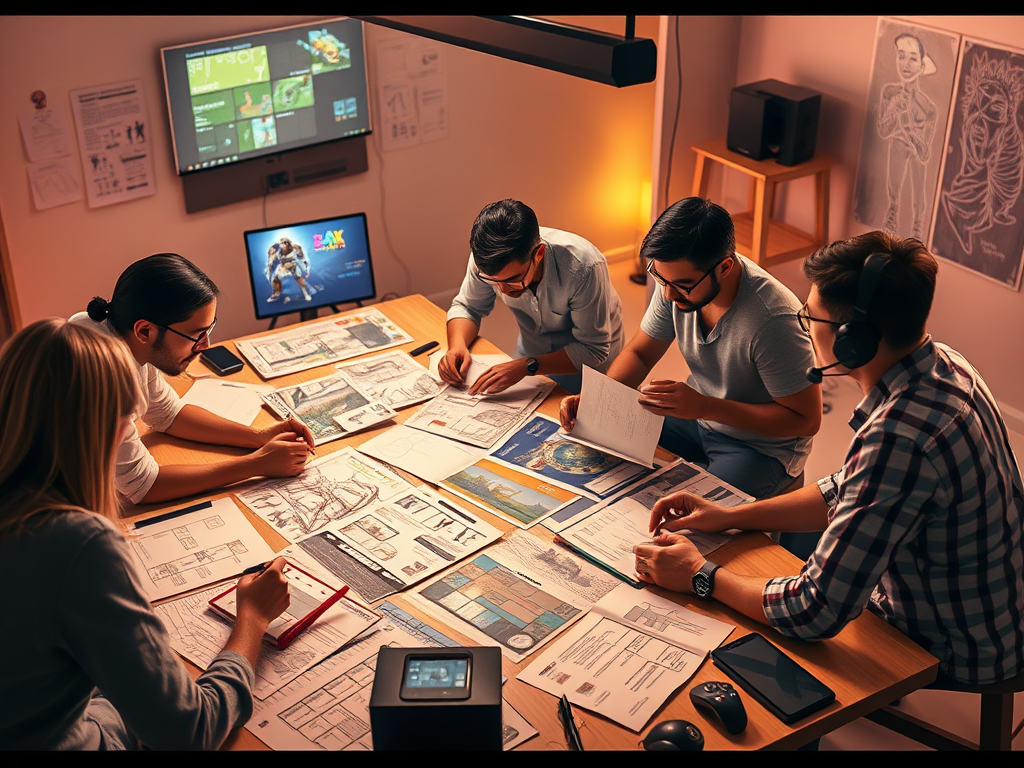
Video games, from simple mobile apps to sprawling open-world epics, are a ubiquitous part of modern entertainment. What might seem like magic to the casual player is, in reality, the result of a complex, multi-faceted process involving diverse teams of highly specialized professionals. Creating a video game is a monumental undertaking, blending artistic vision with cutting-edge technology, meticulous planning with iterative development. It’s a journey that can span months or even years, requiring a delicate balance of creativity, technical expertise, and business acumen. Understanding the basic steps involved offers a fascinating glimpse into the intricate world of game development, revealing the dedication and collaborative effort behind every virtual adventure.
This article breaks down the process of how video games are made into ten fundamental steps. From the initial spark of an idea to the moment a player finally gets their hands on the finished product, we’ll explore the core stages that bring digital worlds to life, providing a simplified yet comprehensive overview of game development.
1. Concept and Pre-Production: The Idea’s Genesis
Every video game begins with an idea, but Concept and Pre-Production is where that idea is truly born and fleshed out. This initial phase involves brainstorming, defining the core game mechanics, target audience, genre, art style, and overall narrative. Game designers create a “game design document” (GDD), which acts as a blueprint, outlining everything from character abilities to level progression and monetization strategies. Artists develop concept art to establish the visual identity, while programmers research necessary technologies. This stage is highly collaborative, often involving small, dedicated teams who explore different prototypes to test the feasibility and fun factor of the core concept. Think of it like an architect drafting detailed plans before laying a single brick; it’s about defining the vision and ensuring it’s achievable.
2. Prototyping: Bringing the Core Idea to Life (Roughly)
Once the core concept is solidified in the game design document, the Prototyping phase begins. This is where developers create a basic, playable version of the game’s most fundamental mechanics. The goal isn’t to create a polished product, but rather to quickly test whether the core gameplay loop is fun, engaging, and technically feasible. For example, for a fighting game, a prototype might just involve two characters with basic movement and a few attacks; for a puzzle game, it might be a single puzzle with placeholder graphics. This iterative process allows developers to rapidly identify what works and what doesn’t, gather early feedback, and make necessary adjustments before investing significant resources into full-scale development. It’s about proving the “fun” before committing to the full vision.
3. Game Design and Documentation: The Blueprint Deepens
Building on the initial concept and successful prototypes, the Game Design and Documentation phase becomes much more detailed. The Game Design Document (GDD) is continuously refined and expanded, becoming an exhaustive guide for the entire development team. This document covers every aspect of the game: character abilities, enemy AI, level layouts, narrative arcs, user interface (UI) design, sound effects, music, and progression systems. It defines the player’s experience down to the smallest detail. This stage also involves creating flowcharts, diagrams, and storyboards to visualize gameplay sequences and user interactions. It’s a living document that evolves throughout development, ensuring everyone on the team is working towards a shared, clear vision, minimizing miscommunication and costly reworks later on.
4. Art and Asset Creation: Visualizing the World
With the design firmly in place, the Art and Asset Creation team brings the game’s world to life visually. This involves a diverse group of artists:
- Concept Artists: Who create initial visual ideas for characters, environments, and objects.
- 3D Modelers: Who build the characters, props, and environments in 3D software.
- Texture Artists: Who paint the surfaces of these 3D models.
- Animators: Who bring characters and objects to life with movement.
- UI/UX Designers: Who create the in-game menus, icons, and heads-up displays.
- Technical Artists: Who bridge the gap between art and programming, ensuring assets work efficiently within the game engine. This team works to translate the GDD’s descriptions into tangible visual elements, ensuring consistency with the chosen art style and technical specifications, creating everything the player sees and interacts with.
5. Programming and Engine Integration: Building the Core Logic
The Programming and Engine Integration phase is where the game truly comes alive digitally. Programmers write the vast majority of the game’s code, implementing all the mechanics outlined in the GDD. This includes character movement, combat systems, artificial intelligence (AI) for enemies and non-player characters (NPCs), physics simulations, save systems, network code for multiplayer, and rendering graphics. They often work within a game engine (like Unity or Unreal Engine), which provides a framework for development, but significant custom coding is always required. This stage is about translating design ideas into functional code, ensuring that all the art assets, sounds, and design rules interact correctly to create a cohesive and playable experience. It’s the technical backbone of the game.
6. Audio Design and Implementation: Giving the Game a Voice
Sound is a crucial, yet often underestimated, element of immersion in video games. The Audio Design and Implementation team is responsible for creating and integrating all the sound elements. This includes:
- Sound Designers: Who create or source sound effects for everything from footsteps and gunshots to environmental ambience and menu clicks.
- Composers: Who create the game’s original musical score, setting the emotional tone.
- Voice Actors: Who record dialogue for characters.
- Audio Programmers: Who integrate these sounds into the game engine, ensuring they play at the right time, in the right place, and respond dynamically to gameplay events. Effective audio design enhances immersion, provides crucial feedback to the player, and contributes significantly to the overall atmosphere and emotional impact of the game, making the virtual world feel more vibrant and alive.
7. Level Design and World Building: Crafting the Play Space
With core mechanics and assets in progress, Level Design and World Building focuses on creating the playable environments where the game’s action takes place. Level designers craft individual levels, maps, or open-world regions, ensuring they are fun, challenging, and visually appealing. This involves:
- Layout: Arranging paths, obstacles, and objectives.
- Pacing: Controlling the flow of gameplay and narrative.
- Visual Storytelling: Using the environment to convey lore and guide players.
- Optimization: Ensuring levels run smoothly on target hardware. This process often involves iterative testing and refinement, balancing player progression with exploration and discovery. For open-world games, it’s about creating a cohesive and believable world that players want to spend hours exploring, ensuring every area offers something unique and engaging.
8. Quality Assurance (QA) and Testing: The Bug Hunt
Before a game can be released, it undergoes rigorous Quality Assurance (QA) and Testing. QA testers play the game repeatedly, meticulously searching for bugs, glitches, crashes, and design flaws. They identify issues with gameplay mechanics, graphics, audio, user interface, performance, and compatibility across different hardware. Bugs are logged, prioritized, and sent back to the development team for fixes. This iterative process of testing, reporting, fixing, and re-testing is crucial for delivering a stable, enjoyable, and polished product. Effective QA is essential to prevent a game from launching with critical errors that could ruin the player experience and damage the developer’s reputation. It’s the final gauntlet ensuring playability.
9. Marketing and Publishing: Getting the Game to Players
Once a game is nearing completion and has passed most of its QA checks, the Marketing and Publishing phase kicks into high gear. Publishers (or self-publishing developers) create strategies to promote the game to its target audience. This includes developing trailers, screenshots, press kits, and promotional materials. They manage public relations, engaging with gaming journalists, influencers, and the community. Publishers also handle distribution, whether physical copies for retail stores or digital distribution through online platforms (like Steam, PlayStation Store, Xbox Marketplace, Nintendo eShop). This phase is about generating hype, building anticipation, and ensuring the game reaches as many potential players as possible upon release, turning months or years of development into a successful launch.
10. Post-Launch Support and Updates: The Ongoing Journey
A game’s release is rarely the final step. Post-Launch Support and Updates are increasingly vital in the modern gaming landscape. This involves releasing “day one patches” to fix any critical bugs missed during QA, and subsequent updates to address further issues, balance gameplay, or add new content (e.g., new characters, maps, story expansions, seasonal events). Developers also monitor player feedback through forums, social media, and analytics, using this information to continuously improve the game. For online multiplayer games, ongoing support is crucial for maintaining a healthy player base and a competitive meta. This commitment to post-launch support ensures the game remains relevant, enjoyable, and stable, fostering a long-term relationship with its community.
The creation of a video game is a testament to the power of collaborative creativity and technological prowess. From the flicker of an initial concept to the ongoing evolution after launch, each step is a vital component in bringing immersive digital worlds to life, proving that some of the most captivating experiences are built one meticulous block at a time.
Further Reading
- Game Design: A Practical Guide for the Aspiring Game Designer by Bob Bates
- The Art of Game Design: A Book of Lenses by Jesse Schell
- Blood, Sweat, and Pixels: The Triumphant, Turbulent Stories Behind How Video Games Are Made by Jason Schreier
- Unity Game Development Cookbook by Paris Buttfield-Addison, Jon Manning, and Tim Nugent (for a more technical look at a popular engine)
- Level Up! The Guide to Great Video Game Design by Scott Rogers
Here at Zentara.blog, our mission is to take those tricky subjects and unlock them, making knowledge exciting and easy to grasp for everyone. But the adventure doesn’t stop on this page! We’re constantly exploring new frontiers and sharing discoveries across the digital universe. Want to dive deeper into more mind-bending Top 10s and keep expanding your world? Come join us on our other platforms – we’ve got unique experiences waiting for you on each one!
Get inspired by visual wonders and bite-sized facts: See the world through Zentara’s eyes on Pinterest!
Pin our fascinating facts and stunning visuals to your own boards. Explore Pins on Pinterest: https://uk.pinterest.com/zentarablog/
Discover quick insights and behind-the-scenes peeks: Hop over to Tumblr for snippets, quotes, and unique content you won’t find anywhere else. It’s a different flavour of discovery! Follow the Fun on Tumblr: https://www.tumblr.com/zentarablog
Ready for deep dives you can listen to or watch? We’re bringing our accessible approach to video and potentially audio! Subscribe to our YouTube channel and tune into future projects that make learning pop! Subscribe on YouTube: https://www.youtube.com/@ZentaraUK
Seeking even more knowledge in one place? We’ve compiled some of our most popular topic deep dives into fantastic ebooks! Find them on Amazon and keep the learning journey going anytime, anywhere. Find Our Ebooks on Amazon: https://www.amazon.co.uk/s?k=Zentara+UK&ref=nb_sb_noss
Connect with us and fellow knowledge seekers: Join the conversation on BlueSky! We’re sharing updates, thoughts, and maybe even asking you what wonders we should explore next. Chat with Us on BlueSky: https://bsky.app/profile/zentarablog.bsky.social
Perfect for learning on the move! We post multiple 10-minute podcasts per day on Spotify. Pop on your headphones and fill your day with fascinating facts while you’re out and about! Listen on Spotify: https://open.spotify.com/show/3dmHbKeDufRx95xPYIqKhJFollow us on Instagram for bytesize knowledge! We post multiple posts per day on our official Instagram account. https://www.instagram.com/zentarablog/ Every click helps us keep bringing honest, accessible knowledge to everyone. Thanks for exploring with us today – see you out there in the world of discovery!




Leave a Reply