
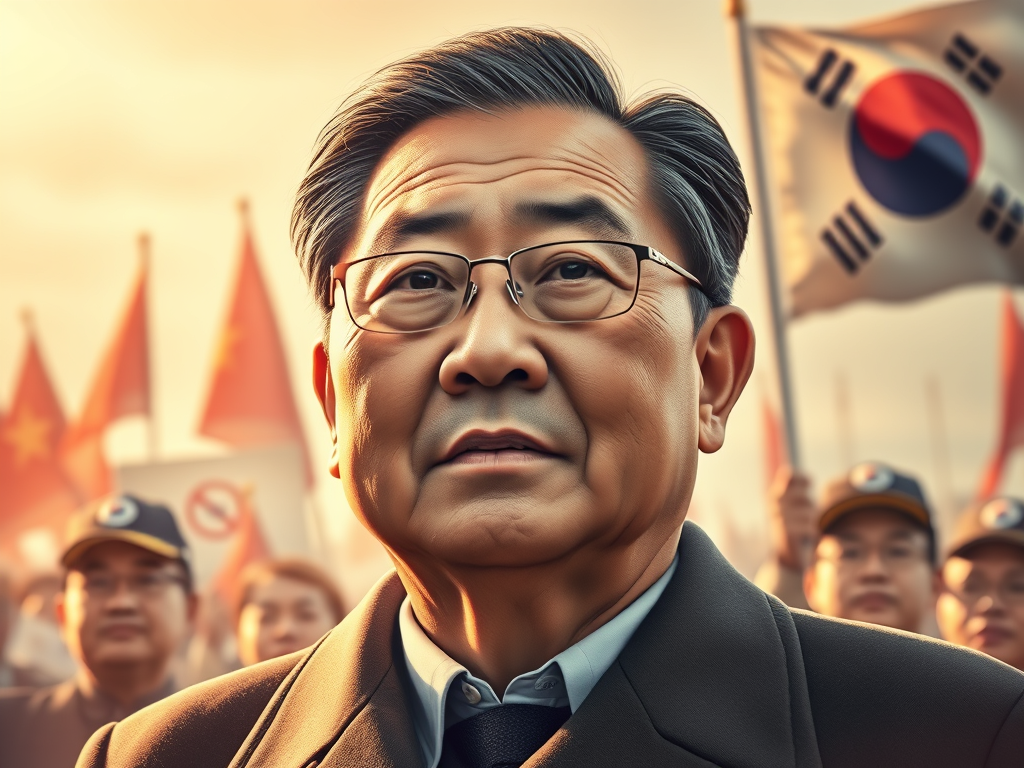
Kim Dae-jung, born in 1924 in a small village on South Korea’s southwestern coast, was a towering figure in his nation’s tumultuous journey from authoritarianism to democracy. A relentless champion of human rights and democracy, he endured decades of persecution, including imprisonment, house arrest, assassination attempts, and a death sentence, yet never wavered in his commitment to a more just and open society. His eventual election as President in 1997 marked a historic turning point, bringing the first opposition party to power in South Korea’s modern history. Beyond domestic reform, his pioneering “Sunshine Policy” aimed to bridge decades of division with North Korea, culminating in a historic inter-Korean summit and earning him the Nobel Peace Prize. This article delves into the ten most enduring aspects of Kim Dae-jung’s life and the profound legacy he left, exploring why he is remembered as a resilient democracy fighter, a visionary peacemaker, and a transformative leader.
1. Lifelong Struggle for Democracy: The “Nelson Mandela of Asia”
Kim Dae-jung’s defining characteristic was his unwavering, lifelong struggle for democracy in South Korea. For decades, he was the leading voice of opposition against a succession of authoritarian military regimes. He endured numerous arrests, five assassination attempts, imprisonment, and a death sentence, often at great personal risk. He was likened to Nelson Mandela for his resilience and commitment to democratic principles in the face of brutal repression. Imagine a persistent river carving its way through solid rock, never giving up its flow despite obstacles. His refusal to be silenced, even when facing torture and exile, became a beacon of hope for countless South Koreans yearning for freedom and human rights, laying the groundwork for the country’s eventual democratic transition.
2. First Opposition President: A Historic Power Shift
After three unsuccessful presidential bids, Kim Dae-jung finally achieved his goal in December 1997, winning the presidential election and becoming South Korea’s first president from the opposition party. This was an extraordinary moment in South Korean history, signifying the first peaceful transfer of power from a ruling party to the opposition. It marked the definitive end of military-backed authoritarian rule and the maturation of South Korean democracy. Think of it as a nation finally turning a new page after a long, difficult chapter, demonstrating that democratic processes could genuinely bring about change even in a country with a history of strongman rule. His victory validated the decades-long struggle of pro-democracy activists and cemented South Korea’s place among the world’s democracies.
3. The “Sunshine Policy”: Pioneering Engagement with North Korea
Kim Dae-jung’s signature foreign policy initiative was the “Sunshine Policy,” a bold and controversial approach aimed at fostering reconciliation and cooperation with North Korea. Based on principles of non-aggression, non-absorption, and active cooperation, it sought to ease tensions through dialogue, cultural exchanges, and economic aid, rather than confrontation. This was a radical departure from previous hardline stances, akin to extending an olive branch in a decades-long standoff. The policy facilitated family reunions, economic projects like the Mount Kumgang tourist region, and ultimately led to the historic inter-Korean summit. Despite criticism and challenges, it broadened the scope of inter-Korean relations and provided a framework for future engagement.
4. Historic Inter-Korean Summit (2000): A Moment of Hope
A crowning achievement of the Sunshine Policy was the historic inter-Korean summit in June 2000, where Kim Dae-jung met with North Korean leader Kim Jong-il in Pyongyang. This was the first-ever meeting between the leaders of the two Koreas since the division of the peninsula. The summit resulted in the June 15 Joint Declaration, which pledged efforts toward peaceful reunification, economic cooperation, and cultural exchanges. Imagine two estranged siblings, after decades of animosity, finally sitting down to talk. The images of the two Kims shaking hands and embracing sent a wave of optimism across the peninsula and the world, offering a tangible, if fleeting, hope for reduced tensions and a brighter future for all Koreans.
5. Nobel Peace Prize Laureate (2000): Global Recognition for Peace
In October 2000, Kim Dae-jung was awarded the Nobel Peace Prize for his work for democracy and human rights in South Korea and East Asia, and especially for his efforts towards peace and reconciliation with North Korea through the Sunshine Policy. This international recognition validated his lifelong commitment to human dignity and peaceful conflict resolution. The Nobel Committee specifically highlighted his courage in challenging authoritarian rule and his visionary approach to inter-Korean relations. It brought global attention to the Korean Peninsula’s unique challenges and underscored the importance of dialogue in resolving protracted conflicts, cementing his status as a global peacemaker.
6. Economic Reforms and IMF Bailout Recovery: Steering a Nation Through Crisis
Kim Dae-jung inherited a South Korea on the brink of economic collapse, reeling from the 1997 Asian financial crisis and requiring a massive bailout from the International Monetary Fund (IMF). Despite his populist image, he implemented courageous and often painful economic reforms, including corporate restructuring, financial sector reforms, and increased transparency. His administration’s swift actions and strong leadership pulled the country back from bankruptcy and laid the foundation for economic recovery and sustained growth. Think of a doctor performing emergency surgery to save a critically ill patient, making tough choices that ultimately lead to recovery. His economic stewardship demonstrated his pragmatism and ability to make difficult decisions for the nation’s long-term prosperity.
7. Advocate for Human Rights and Justice: A Moral Compass
Throughout his life, even before his presidency, Kim Dae-jung was a fervent advocate for human rights and justice, both within South Korea and globally. He consistently spoke out against political repression, torture, and the death penalty. His own experiences as a political prisoner deeply informed his commitment to protecting fundamental freedoms. He championed the rights of the marginalized and vulnerable, using his platform to promote universal human rights against attempts to limit their relevance in Asia. His moral steadfastness served as a powerful reminder that democracy is not just about elections, but about the inherent dignity and rights of every individual.
8. Reconciliation and National Unity: Healing Divided Wounds
Beyond political and economic reforms, Kim Dae-jung emphasized the importance of reconciliation and national unity within South Korea. After decades of political polarization and deep societal divisions stemming from authoritarian rule, he sought to foster a more inclusive society. His administration worked to address historical grievances and promote healing. This was like a nation seeking to mend deep internal fractures after years of conflict. He understood that true democracy required not just political freedom, but also social cohesion and mutual respect among citizens, laying the groundwork for a more harmonious and unified South Korea.
9. Impact on Asian Democratization: An Inspiring Example
Kim Dae-jung’s journey and achievements had a significant impact on democratization efforts across Asia. His successful transition from dissident to democratically elected president served as a powerful example and inspiration for pro-democracy movements in other countries. His advocacy for human rights and his steadfast resistance to authoritarianism resonated far beyond Korea’s borders, encouraging those fighting for freedom in their own nations. His life demonstrated that even in the face of formidable challenges, the pursuit of democracy could ultimately prevail, offering a blueprint for peaceful transitions and inspiring activists throughout the region.
10. Enduring Symbol of Perseverance and Hope: A Legacy for Future Generations
Kim Dae-jung’s life story is an enduring symbol of perseverance, hope, and the triumph of the human spirit against oppression. His relentless pursuit of democracy and peace, despite profound personal suffering, makes him an inspirational figure not just in Korea but worldwide. His legacy continues to motivate those who believe in the power of dialogue over division, human rights over repression, and democracy over dictatorship. His life serves as a constant reminder that even in the darkest of times, unwavering conviction and a commitment to principle can ultimately lead to profound and positive change, leaving an indelible mark on history and inspiring future generations.
Further Reading
- Mandela and Kim Dae Jung: The Long Road to Freedom and Reconciliation by Chung-in Moon
- Kim Dae-jung’s Three-Stage Unification Theory and the Future of the Korean Peninsula by Jae-kyu Park (Editor)
- Crisis and Reform: The Kim Dae-jung Administration and South Korea’s Economic Restructuring by J. J. S. Kim and David W. Lee (Editors)
- Kim Dae-jung: A Quest for Human Dignity by The Kim Dae-jung Presidential Library and Museum
- The Cold War on the Korean Peninsula: The Kim Dae-jung Government’s Sunshine Policy by Kim Dae-jung
Here at Zentara.blog, our mission is to take those tricky subjects and unlock them, making knowledge exciting and easy to grasp for everyone. But the adventure doesn’t stop on this page! We’re constantly exploring new frontiers and sharing discoveries across the digital universe. Want to dive deeper into more mind-bending Top 10s and keep expanding your world? Come join us on our other platforms – we’ve got unique experiences waiting for you on each one!
Get inspired by visual wonders and bite-sized facts: See the world through Zentara’s eyes on Pinterest!
Pin our fascinating facts and stunning visuals to your own boards. Explore Pins on Pinterest: https://uk.pinterest.com/zentarablog/
Discover quick insights and behind-the-scenes peeks: Hop over to Tumblr for snippets, quotes, and unique content you won’t find anywhere else. It’s a different flavour of discovery! Follow the Fun on Tumblr: https://www.tumblr.com/zentarablog
Ready for deep dives you can listen to or watch? We’re bringing our accessible approach to video and potentially audio! Subscribe to our YouTube channel and tune into future projects that make learning pop! Subscribe on YouTube: https://www.youtube.com/@ZentaraUK
Seeking even more knowledge in one place? We’ve compiled some of our most popular topic deep dives into fantastic ebooks! Find them on Amazon and keep the learning journey going anytime, anywhere. Find Our Ebooks on Amazon: https://www.amazon.co.uk/s?k=Zentara+UK&ref=nb_sb_noss
Connect with us and fellow knowledge seekers: Join the conversation on BlueSky! We’re sharing updates, thoughts, and maybe even asking you what wonders we should explore next. Chat with Us on BlueSky: https://bsky.app/profile/zentarablog.bsky.social
Perfect for learning on the move! We post multiple 10-minute podcasts per day on Spotify. Pop on your headphones and fill your day with fascinating facts while you’re out and about! Listen on Spotify: https://open.spotify.com/show/3dmHbKeDufRx95xPYIqKhJFollow us on Instagram for bytesize knowledge! We post multiple posts per day on our official Instagram account. https://www.instagram.com/zentarablog/ Every click helps us keep bringing honest, accessible knowledge to everyone. Thanks for exploring with us today – see you out there in the world of discovery!




Leave a Reply