
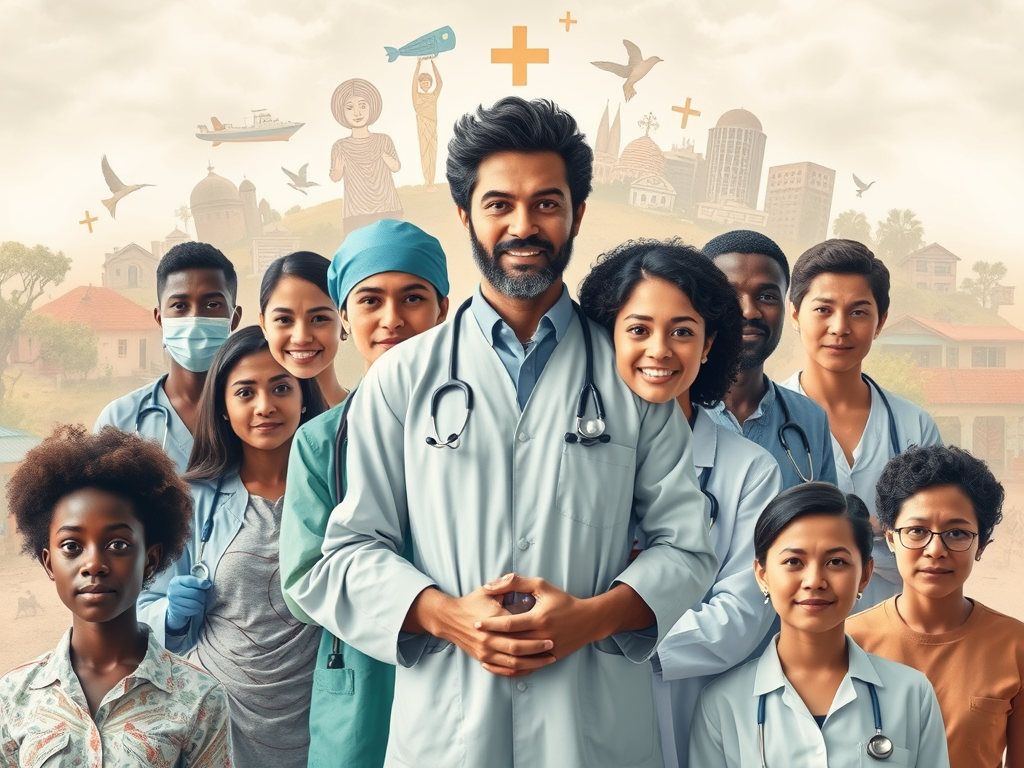
The idea that every human being has a right to healthcare is one of the most powerful and debated concepts of our time. It asserts that access to medical services is not a privilege for those who can afford it, but a fundamental human right. This principle is enshrined in numerous international treaties, including the 1948 Universal Declaration of Human Rights, which states that everyone has the right to a standard of living adequate for the health and well-being of themselves and their family. Yet, the gap between this ideal and the reality on the ground is vast and filled with complex challenges. Examining the right to healthcare requires a neutral, factual lens, acknowledging the incredible progress made in global health while honestly confronting the persistent struggles that leave billions behind. This exploration delves into ten key facts that define the current state of the right to healthcare, revealing a world of both inspiring successes and daunting global challenges.
1. Fact: The Right to Health is Legally Recognized by Most Nations
A foundational success in the movement for health as a human right is its widespread legal recognition. At least 115 countries have included the right to health in their national constitutions. This isn’t just symbolic; it creates a legal framework that citizens can use to hold their governments accountable. For instance, in countries like South Africa and Brazil, constitutional health rights have empowered citizens and civil society organisations to sue the government for access to essential medicines and healthcare services. This legal grounding is further reinforced by international law. The World Health Organization’s (WHO) constitution famously declares that “the enjoyment of the highest attainable standard of health is one of the fundamental rights of every human being.” This near-universal consensus provides a powerful tool for advocates and policymakers, shifting the conversation from whether healthcare is a right to how this right can be implemented and fulfilled for everyone, everywhere. It establishes a global standard of responsibility, even if the enforcement and practical application vary dramatically from one nation to another.
2. Challenge: At Least Half the World’s Population Lacks Access to Essential Health Services
Despite widespread legal recognition, the reality is starkly different for a huge portion of humanity. According to joint reporting by the World Health Organization and the World Bank, at least half of the global population—over 4 billion people—cannot obtain essential health services. This is perhaps the single greatest challenge to realizing the right to healthcare. This “access gap” covers a wide spectrum of needs, from preventative care like vaccinations and health screenings to treatment for common illnesses and access to emergency services. The barriers are numerous and interconnected: a lack of nearby clinics, particularly in rural areas; a severe shortage of trained health workers; and the unavailability of necessary medicines and diagnostic tools. This challenge highlights the immense operational and logistical hurdles that stand between a right on paper and a life-saving service in practice. It underscores that for billions, the right to healthcare remains an unfulfilled promise, with geography and circumstance dictating their ability to survive and thrive.
3. Fact: Global Life Expectancy Has Dramatically Increased
It’s crucial to acknowledge the monumental successes in global health over the past century. One of the clearest indicators of this progress is the dramatic increase in global life expectancy. In 1950, the average person could expect to live to around 46 years old. By 2024, that number has surged to over 73 years. This incredible achievement is not accidental; it is the direct result of concerted global efforts to improve public health. Widespread vaccination campaigns have tamed deadly diseases like smallpox and polio. Improved sanitation and access to clean water have drastically reduced deaths from diarrheal diseases. Advances in medicine, from antibiotics to treatments for heart disease, have allowed people to live longer, healthier lives. This success story proves that coordinated public health initiatives and investment in healthcare infrastructure work. It serves as a powerful reminder that progress is possible and provides a blueprint for tackling the challenges that remain, demonstrating the profound impact of applying medical science and public health principles on a global scale.
4. Challenge: Catastrophic Health Spending Plunges Millions into Poverty
For many, falling ill comes with a devastating secondary effect: financial ruin. The WHO estimates that each year, around 100 million people are pushed into extreme poverty because of out-of-pocket health expenditures. Another 930 million people spend at least 10% of their household budget on healthcare. This is what’s known as “catastrophic health spending.” In systems where individuals have to pay directly for consultations, medicines, and hospital stays, a single serious illness can wipe out a family’s life savings and force them into debt. This financial burden creates an impossible choice: do you pay for life-saving treatment or do you pay for food and shelter? This challenge directly undermines the right to health, as it makes access dependent on wealth. It’s a primary driver behind the global push for Universal Health Coverage (UHC), a model where all individuals can access the health services they need without suffering financial hardship. Tackling catastrophic health spending is as much about economic justice as it is about health outcomes.
5. Fact: Child Mortality Has Been Cut by More Than Half
The fight for children’s health represents one of the most significant public health victories of our time. Since 1990, the global under-5 mortality rate has dropped by over 60%. This means that millions of children who would have died from preventable causes are now surviving into adulthood. This success is the result of a multi-pronged approach. The expansion of routine immunisation programs for diseases like measles has been a game-changer. The promotion of simple, low-cost interventions like oral rehydration therapy for diarrhea and insecticide-treated bed nets to prevent malaria has saved countless lives. Furthermore, improved maternal health and nutrition have ensured more babies get a healthier start in life. While significant disparities still exist between wealthy and poor regions, this remarkable progress demonstrates the power of targeted, evidence-based global health programs. It shows that even complex problems like child mortality can be addressed effectively through sustained investment and international cooperation, affirming the principle that every child deserves the right to survive their infancy.
6. Challenge: A Severe Global Shortage of Health Workers
You cannot deliver healthcare without health workers. A critical and growing challenge is the global shortage of doctors, nurses, midwives, and other trained health professionals. The WHO projects a shortfall of 10 million health workers by 2030, mostly in low- and lower-middle-income countries. This deficit is the bottleneck that prevents health systems from functioning. The causes are complex, including insufficient investment in training and education, low wages, poor working conditions, and the “brain drain” of health workers migrating from poorer countries to wealthier ones in search of better opportunities. This shortage has a direct impact on health outcomes. Without enough staff, clinics are forced to close, waiting times become dangerously long, and the quality of care suffers. Addressing this workforce crisis is fundamental to achieving Universal Health Coverage. It requires a long-term commitment to training, retaining, and fairly compensating the people who are the backbone of every health system.
7. Fact: The Fight Against Major Epidemics Has Yielded Powerful Tools
Humanity’s ability to confront and control major infectious diseases has grown immensely. The global response to epidemics like HIV/AIDS, tuberculosis (TB), and malaria showcases this progress. For HIV, the development and rollout of antiretroviral therapy (ART) have transformed a death sentence into a manageable chronic condition for millions. For TB, advances in diagnostics and treatment regimens have improved cure rates. For malaria, the widespread distribution of bed nets and the development of new anti-malarial drugs and vaccines have drastically reduced its global burden. While these diseases are far from eradicated and continue to pose significant threats, the progress is undeniable. The global mechanisms established to fight them, such as The Global Fund to Fight AIDS, Tuberculosis and Malaria, have mobilised billions of dollars and fostered international partnerships. This success not only saves lives but also provides a framework for responding to new pandemic threats, as seen during the COVID-19 pandemic, demonstrating a growing capacity for global health security.
8. Challenge: Health Inequity Between and Within Countries Remains Profound
While global averages show progress, they often mask deep and persistent inequalities. Health inequity—the unfair and avoidable differences in health status—is a major global challenge. There is a staggering 18-year gap in life expectancy between the world’s richest and poorest countries. But inequality also thrives within countries. In nearly every nation, wealthier, more educated populations, and those in urban centres have better health outcomes than poorer, less educated, and rural populations. Indigenous communities and marginalised ethnic groups often face systemic discrimination that results in poorer health. These disparities are driven by what are known as the “social determinants of health”—the conditions in which people are born, grow, live, work, and age. Factors like income, education level, access to nutritious food, and exposure to environmental pollution have a greater impact on health than access to doctors alone. Truly honouring the right to health means tackling these root causes of inequity and creating the conditions for everyone to have a fair opportunity to be healthy.
9. Fact: The Concept of Universal Health Coverage (UHC) is Gaining Global Momentum
In response to the challenges of access and financial hardship, a powerful idea has gained global consensus: Universal Health Coverage (UHC). The goal of UHC is to ensure that all people have access to the full range of quality health services they need—from health promotion to prevention, treatment, rehabilitation, and palliative care—without suffering financial hardship. UHC is now a central target of the United Nations Sustainable Development Goals (SDG 3). This global commitment has spurred many countries to undertake ambitious health system reforms. Nations like Thailand, Costa Rica, and Rwanda have made remarkable strides towards UHC, each using different models to fit their specific context. UHC is not about “free” healthcare, but about creating systems—whether through social security, national health insurance, or tax-funded services—that pool risks and ensure financial protection. The growing momentum behind UHC represents a pragmatic and hopeful pathway towards making the right to healthcare a reality for all.
10. Challenge: Climate Change is the New Great Threat to Global Health
A looming challenge that threatens to undo decades of health progress is climate change. The World Health Organization has called climate change the single biggest health threat facing humanity. The impacts are multifaceted. Rising global temperatures are leading to more frequent and intense heatwaves, causing heatstroke and exacerbating cardiovascular and respiratory diseases. Changing weather patterns are expanding the geographic range of vector-borne diseases like malaria and dengue fever. Extreme weather events such as floods and hurricanes disrupt health services, damage hospitals, and create humanitarian crises. Furthermore, climate change impacts food and water security, leading to malnutrition and water-borne illnesses. Addressing this challenge requires a two-pronged approach: mitigation, by reducing greenhouse gas emissions, and adaptation, by building resilient health systems that can withstand and respond to the health impacts of a changing climate. The right to health is now inextricably linked to the right to a healthy planet.
Further Reading
For those who wish to explore the complexities of global health, human rights, and the ongoing challenges we face, these books offer valuable and in-depth perspectives:
- Mountains Beyond Mountains: The Quest of Dr. Paul Farmer, a Man Who Would Cure the World by Tracy Kidder
- The Health of Nations: Why Inequality is Harmful to Your Health by Ichiro Kawachi and Bruce P. Kennedy
- To Repair the World: Paul Farmer Speaks to the Next Generation by Paul Farmer
- Global Health: An Introduction to Current and Future Trends by Kevin McCracken and David R. Phillips
- Reimagining Global Health: An Introduction edited by Paul Farmer, Jim Yong Kim, Arthur Kleinman, and Matthew Basilico
Here at Zentara.blog, our mission is to take those tricky subjects and unlock them, making knowledge exciting and easy to grasp for everyone. But the adventure doesn’t stop on this page! We’re constantly exploring new frontiers and sharing discoveries across the digital universe. Want to dive deeper into more mind-bending Top 10s and keep expanding your world? Come join us on our other platforms – we’ve got unique experiences waiting for you on each one!
Get inspired by visual wonders and bite-sized facts: See the world through Zentara’s eyes on Pinterest!
Pin our fascinating facts and stunning visuals to your own boards. Explore Pins on Pinterest: https://uk.pinterest.com/zentarablog/
Discover quick insights and behind-the-scenes peeks: Hop over to Tumblr for snippets, quotes, and unique content you won’t find anywhere else. It’s a different flavour of discovery! Follow the Fun on Tumblr: https://www.tumblr.com/zentarablog
Ready for deep dives you can listen to or watch? We’re bringing our accessible approach to video and potentially audio! Subscribe to our YouTube channel and tune into future projects that make learning pop! Subscribe on YouTube: https://www.youtube.com/@ZentaraUK
Seeking even more knowledge in one place? We’ve compiled some of our most popular topic deep dives into fantastic ebooks! Find them on Amazon and keep the learning journey going anytime, anywhere. Find Our Ebooks on Amazon: https://www.amazon.co.uk/s?k=Zentara+UK&ref=nb_sb_noss
Connect with us and fellow knowledge seekers: Join the conversation on BlueSky! We’re sharing updates, thoughts, and maybe even asking you what wonders we should explore next. Chat with Us on BlueSky: https://bsky.app/profile/zentarablog.bsky.social
Perfect for learning on the move! We post multiple 10-minute podcasts per day on Spotify. Pop on your headphones and fill your day with fascinating facts while you’re out and about! Listen on Spotify: https://open.spotify.com/show/3dmHbKeDufRx95xPYIqKhJFollow us on Instagram for bytesize knowledge! We post multiple posts per day on our official Instagram account. https://www.instagram.com/zentarablog/ Every click helps us keep bringing honest, accessible knowledge to everyone. Thanks for exploring with us today – see you out there in the world of discovery!




Leave a Reply