
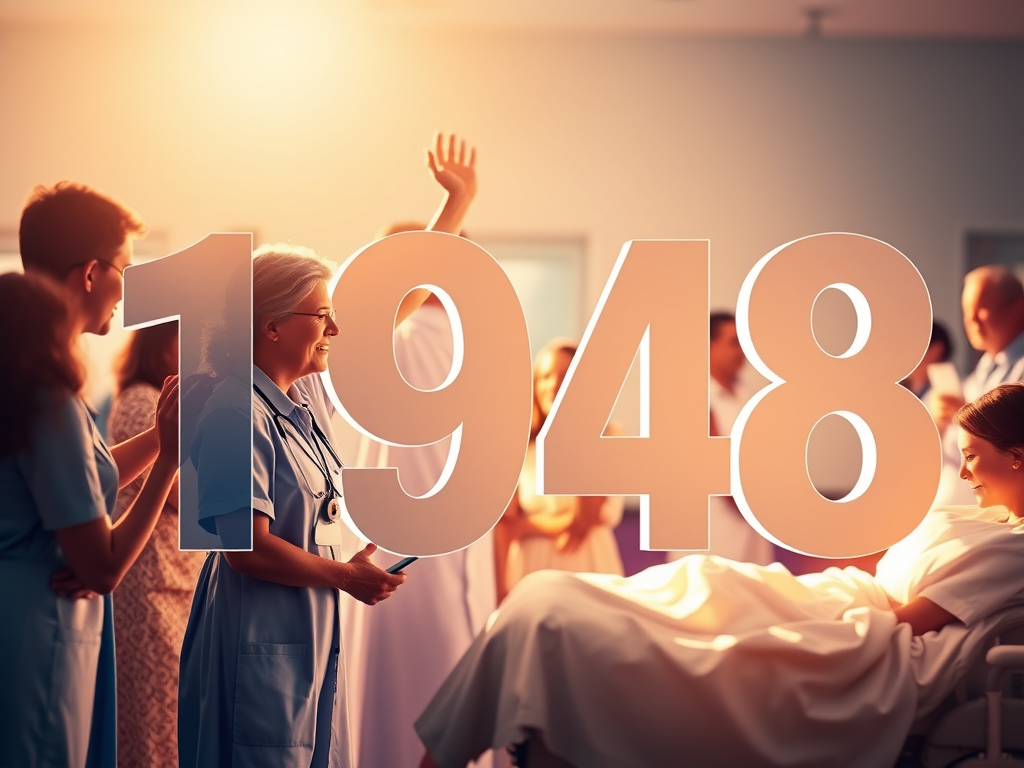
Imagine a time when going to the doctor or needing an operation cost a lot of money. If you didn’t have enough savings, getting the medical help you needed could be really difficult, sometimes impossible. That was the reality for many people in the United Kingdom not too long ago. Then, something amazing happened: the National Health Service, or NHS, was created. It completely changed healthcare in the UK, making it available to everyone, regardless of how much money they had. Learning about the history of the NHS is like learning about a superhero that looks after people’s health! Let’s discover some incredible facts about the NHS history and find out why was the NHS created and who started the NHS.
The NHS is one of the UK’s most loved institutions. It’s always there, ready to help when you’re sick or injured. But building something so big and important wasn’t easy. It took vision, hard work, and a belief that everyone deserves good healthcare. Looking at the history of the NHS shows us how much things have changed and the challenges it has faced and overcome along the way. From its very beginnings to the modern service it is today, the NHS has a fascinating story. Let’s dive into some key NHS milestones and explore how the NHS has changed over the years.
1. It Was Born Out of a Dream for a Better Future
The idea for the NHS really took shape during and after the Second World War. The war effort showed people in Britain that they could work together for a common goal. It also highlighted the inequalities in society, including healthcare. Many people believed that after fighting together, everyone deserved to live in a better, fairer country. A key report called the Beveridge Report, published in 1942, outlined a plan for a welfare state that would protect people from the “five giants”: Want (poverty), Disease (ill health), Ignorance (lack of education), Squalor (poor housing), and Idleness (unemployment). The creation of a national health service was a major part of tackling “Disease.”
So, why was the NHS created? The main reason was to make sure that healthcare was available to everyone, free at the point of use, funded by taxes. Before the NHS, healthcare was a bit of a postcode lottery, and your access to it often depended on how wealthy you were or what kind of insurance you had. The dream was for a service based on need, not the ability to pay. This fundamental idea is at the heart of the history of the NHS and remains its core principle today, a truly revolutionary concept for its time.
2. It Was Officially Born on a Specific Day
The National Health Service didn’t just appear overnight; it had a very specific birthday! The NHS officially came into being on 5th July 1948. On that day, hospitals, doctors’ surgeries, and other health services across England, Wales, and Scotland were brought together under one system. Northern Ireland followed shortly after. This date is a huge key NHS milestone and is celebrated every year as NHS Day.
On 5th July 1948, for the very first time, hospitals that were previously owned by charities or local councils, or were private, became part of the national system. Doctors, nurses, and other healthcare workers became part of the NHS family. This was a massive moment for the country. Imagine suddenly having access to a doctor or a hospital stay without having to worry about getting a bill at the end! It was a feeling of relief and hope for millions of people and a defining moment in the history of the NHS, marking when was the NHS founded.
3. Aneurin Bevan Is Known as its Architect
While the idea of a national health service had been discussed for years, the person most famously credited with making it happen is Aneurin ‘Nye’ Bevan. He was the Minister of Health in the Labour government after the Second World War. Bevan was passionate about social justice and believed strongly that healthcare should be a universal right. He had to work incredibly hard to get the NHS established.
Bevan faced significant opposition, particularly from doctors who were worried about becoming employees of the state. He had to negotiate and persuade many different groups to get them on board with his vision. His determination and political skill were crucial in overcoming these challenges and bringing the NHS into existence. Bevan’s famous quote about the NHS was that it would last “as long as there are folk left with the faith to fight for it.” He is remembered as the driving force and the answer to the question who started the NHS, making him a central figure in famous people in NHS history.
4. It Was Founded on Simple, Yet Powerful, Principles
The NHS was built on three core principles that still guide it today. Understanding these principles is key to understanding why was the NHS created and its enduring importance.
- That it meet the needs of everyone: This means healthcare is for everyone in the UK, regardless of their background, where they live, or what their health problem is.
- That it be free at the point of delivery: This is perhaps the most famous principle. It means you don’t pay to see a doctor, go to A&E, or have an operation when you need it. The service is paid for through general taxation.
- That it be based on clinical need, not ability to pay: This means that treatment decisions are made based on what is best for your health, not how much money you have in your bank account.
These NHS founding principles were radical for their time and represented a huge shift in how healthcare was provided. They aimed to remove the financial barrier to healthcare, ensuring that poverty wouldn’t prevent someone from getting well. While the NHS has faced challenges in NHS history and how the NHS has changed over time has led to debates about these principles, they remain the fundamental values that the service strives to uphold.
5. Doctors and Hospitals Weren’t All Excited At First
Even though the NHS was a great idea for patients, not everyone involved in healthcare was immediately happy about it. Many doctors, especially those working as GPs (General Practitioners), were worried about becoming state employees and losing their independence. Some felt they might lose income or that the government would interfere too much in how they treated patients.
Nye Bevan spent a lot of time negotiating with doctors’ representatives to gain their support. He made some concessions, like allowing GPs to remain independent contractors rather than becoming salaried employees, although they would be paid by the NHS based on the number of patients they had. Getting the doctors on board was one of the significant challenges in NHS history right at its beginning. Despite the initial reluctance from some, the vast majority of healthcare professionals ultimately joined the service, believing in its core mission to provide care for all. This period highlights the complexities involved in creating such a massive national service.
6. It Swallowed Up Thousands of Hospitals and Clinics
When the NHS was created on 5th July 1948 (when was the NHS founded), it brought together around 2,688 hospitals under single ownership. Before this, hospitals were run by a mix of local authorities, voluntary organisations (like charities), and private owners. There was no national plan, and the standard of care could vary greatly from place to place.
Bringing all these different hospitals and clinics into one national system was a massive task. It meant standardising practices, funding, and management across the country. This unification was a huge key NHS milestone and essential for providing a truly national service. It allowed for better planning of healthcare services, sharing of resources, and spreading best practices. This transformation of the hospital landscape is a crucial part of the history of the NHS and how it came to be the vast organisation it is today.
7. Demand Was Much Higher Than Expected
The creators of the NHS knew there would be a lot of demand for healthcare, but they underestimated just how much. Because healthcare had been difficult or expensive for many people to access, lots of them had health problems that hadn’t been treated. When the NHS launched, there was a huge rush of people seeking care they had previously gone without, especially for things like dental treatment and glasses, which initially had no charges.
This immediate high demand was one of the first big challenges in NHS history. It meant that the service was stretched from day one. Long waiting lists appeared for some treatments. This wasn’t necessarily a bad thing in itself – it showed that the NHS was successfully reaching people who needed help – but it highlighted the scale of the health needs that had been unmet before. Dealing with rising demand and managing waiting lists has been a constant factor in how the NHS has changed and developed over the decades.
8. Prescription Charges Were Introduced Early On
One of the NHS founding principles was that healthcare would be free at the point of use. However, the high initial demand and the cost of running the service led to difficult decisions relatively early in the history of the NHS. In 1952, just four years after the service began, charges were introduced for prescriptions, dental treatment, and glasses.
This decision caused significant political debate and even led to Nye Bevan resigning from the government because he felt it went against the core principle of free healthcare. The introduction of charges was one of the first major instances of how the NHS has changed from its original model due to financial pressures. While some charges exist today (with many exemptions, especially for children and the elderly), the principle of free healthcare at the point of need for the majority of NHS services remains. This early challenge showed that balancing the ideal of universal free healthcare with the practical costs of providing it would be an ongoing theme in facts about the NHS history.
9. Medical Breakthroughs Changed Healthcare Within the NHS
The history of the NHS isn’t just about how the service was organised; it’s also closely linked to amazing medical advancements. Since 1948, there have been incredible breakthroughs in medicine, like the development of new vaccines, antibiotics, organ transplants, and advanced scanning technology (like MRI). The NHS provided a framework for these treatments to be delivered to a large population.
Because the NHS is a single national system, it could potentially adopt and roll out new treatments and technologies on a large scale, benefiting millions. However, deciding which new (and often expensive) treatments to make available across the entire service has been another one of the challenges in NHS history. The NHS has been the setting for countless medical innovations and has employed many brilliant medical minds who could be considered famous people in NHS history for their contributions to science and patient care within the service.
10. It Continues to Adapt and Face Challenges
The NHS of today is very different from the service created in 1948. How the NHS has changed has been influenced by many factors: people living longer, medical science advancing rapidly, changes in society, and economic pressures. The service has had to constantly adapt, introducing new ways of working, specialising services, and embracing new technologies like digital patient records and online consultations.
Despite its celebrated history of the NHS and its NHS founding principles, the NHS faces ongoing challenges in NHS history. These include managing rising demand from an aging population, funding pressures, staffing shortages, and integrating new technologies. However, the core mission remains the same: to provide comprehensive healthcare to everyone in the UK, free at the point of need. Understanding its history helps us appreciate the scale of this achievement and the dedication of the millions of people who have worked for it over the decades, shaping the future of the NHS history.
The NHS is a remarkable institution with a rich and complex history of the NHS. It represents a powerful idea – that healthcare is a right, not a privilege.
Further Reading
If you want to learn more about the NHS and life in post-war Britain, here are some books you might find interesting:
- The Story of the NHS by Phil Whitaker (Often aimed at a general audience, look for simplified versions or sections)
- The Official History of the National Health Service (Note: These are academic and detailed, but some parts or summaries might be accessible)
- Coming to England by Floella Benjamin (A memoir about arriving in England in the 1960s, touching on life and services available)
- Goodnight Mister Tom by Michelle Magorian (Historical fiction set just after WWII, helps understand the era before the NHS existed)
Here at Zentara.blog, our mission is to take those tricky subjects and unlock them, making knowledge exciting and easy to grasp for everyone. But the adventure doesn’t stop on this page! We’re constantly exploring new frontiers and sharing discoveries across the digital universe.
Want to dive deeper into more mind-bending Top 10s and keep expanding your world? Come join us on our other platforms – we’ve got unique experiences waiting for you on each one!
- Get inspired by visual wonders and bite-sized facts: See the world through Zentara’s eyes on Pinterest! Pin our fascinating facts and stunning visuals to your own boards. Explore Pins on Pinterest: https://uk.pinterest.com/zentarablog/
- Discover quick insights and behind-the-scenes peeks: Hop over to Tumblr for snippets, quotes, and unique content you won’t find anywhere else. It’s a different flavour of discovery! Follow the Fun on Tumblr: https://www.tumblr.com/zentarablog
- Ready for deep dives you can listen to or watch? We’re bringing our accessible approach to video and potentially audio! Subscribe to our YouTube channel and tune into future projects that make learning pop! Subscribe on YouTube: https://www.youtube.com/@ZentaraUK
- Seeking even more knowledge in one place? We’ve compiled some of our most popular topic deep dives into fantastic ebooks! Find them on Amazon and keep the learning journey going anytime, anywhere. Find Our Ebooks on Amazon: https://www.amazon.co.uk/s?k=zentara+uk&crid=2273NA7RAJ1EU&sprefix=zentara+uk%2Caps%2C90&ref=nb_sb_noss
- Connect with us and fellow knowledge seekers: Join the conversation on BlueSky! We’re sharing updates, thoughts, and maybe even asking you what wonders we should explore next. Chat with Us on BlueSky: https://bsky.app/profile/zentarablog.bsky.social
- Perfect for learning on the move! We post multiple 10-minute podcasts per day on Spotify. Pop on your headphones and fill your day with fascinating facts while you’re out and about! Listen on Spotify: https://open.spotify.com/show/3dmHbKeDufRx95xPYIqKhJ
Every click helps us keep bringing honest, accessible knowledge to everyone. Thanks for exploring with us today – see you out there in the world of discovery!




Leave a Reply