
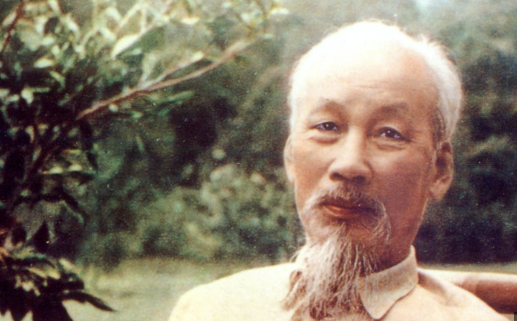
Ho Chi Minh, a name that resonates deeply in the history of the 20th century, was a man of many identities. He was a nationalist, a communist, a poet, and a world traveler, but above all, he was the driving force behind Vietnam’s decades-long struggle for independence. Known affectionately to his people as “Uncle Ho,” his life was a testament to unwavering determination in the face of immense colonial and imperial power. From his early days as a young man traveling the world, searching for a path to liberate his people, to his eventual role as the founding father and president of North Vietnam, Ho Chi Minh’s story is one of relentless pursuit of national sovereignty.
His political philosophy was a unique blend of Marxist-Leninism and Vietnamese nationalism, a combination that proved to be a potent force in mobilizing his people. He led his nation through two brutal wars against powerful adversaries—first the French and then the Americans—and his legacy continues to shape the political and cultural landscape of modern Vietnam. This article will explore ten key aspects of Ho Chi Minh’s life, from his humble origins to his enduring influence, providing a deeper understanding of the man who became a symbol of anti-colonial resistance across the globe.
1. A World Traveler in Search of a Revolution
Ho Chi Minh’s revolutionary path began not in Vietnam, but on the high seas. In 1911, under the name Nguyễn Tất Thành, he left his homeland on a French steamship, working as a kitchen hand. He spent the next three decades traveling the world, living in cities like Boston, London, and Paris. This period was crucial to his political awakening. He witnessed firsthand the plight of the working class and the effects of colonialism and racial discrimination, which solidified his anti-imperialist views. During his time in France, he became a founding member of the French Communist Party and, in Moscow, he was trained by the Comintern, an international organization of communist parties. This global journey, far from his homeland, provided him with the political education and connections he needed to eventually lead his country’s struggle for liberation.
2. The Indochinese Communist Party: A Strategic Foundation
After years of exile and political work abroad, Ho Chi Minh founded the Indochinese Communist Party (ICP) in 1930. This was a strategic and pivotal moment in Vietnam’s history. Recognizing the need for a unified and organized resistance movement, he brought together several rival communist factions into a single, cohesive political entity. The ICP’s ideology was a masterful fusion of Marxism-Leninism with Vietnam’s specific conditions and history, emphasizing the importance of both class struggle and national independence. The party’s formation laid the groundwork for a disciplined and effective revolutionary force that would eventually lead the fight against foreign occupation.
3. The Viet Minh: A National Liberation Movement
In 1941, after 30 years in exile, Ho Chi Minh returned to Vietnam. The timing was crucial, as Japan had occupied the country during World War II, though the French colonial administration remained. Ho and his lieutenants founded the Việt Nam Độc Lập Đồng Minh Hội, or the League for the Independence of Vietnam, better known as the Viet Minh. The Viet Minh was a broad, national front that welcomed all Vietnamese patriots, regardless of their political or social background, to join the fight against both the Japanese and the French. This movement was a clear articulation of Ho’s nationalist vision, placing the goal of national independence above all else. The Viet Minh became the engine of the Vietnamese revolution, gaining widespread popular support and laying the foundation for the eventual establishment of an independent state.
4. The Declaration of Independence: An American Echo
On September 2, 1945, in front of a massive crowd in Hanoi, Ho Chi Minh read Vietnam’s Declaration of Independence. The document was a powerful statement of national sovereignty, and its opening lines were famously and deliberately borrowed from the American Declaration of Independence: “All men are created equal; they are endowed by their Creator with certain unalienable Rights; among these are Life, Liberty, and the pursuit of Happiness.” This was a calculated move. Ho hoped to appeal to the United States to support Vietnam’s independence, drawing a parallel between their own struggle for freedom and his. However, the United States, wary of a communist-led government and prioritizing its alliance with France, did not support his cause, setting the stage for a new and far more brutal conflict.
5. The First Indochina War: The Defeat of a Colonial Power
The French, determined to reassert control over their former colony, refused to recognize Vietnam’s independence. This led to the First Indochina War, a nine-year conflict (1946-1954) that pitted Ho Chi Minh’s Viet Minh guerrillas against the technologically superior French army. The war was a masterclass in asymmetrical warfare, with the Viet Minh using guerrilla tactics, surprise attacks, and a deep knowledge of their own terrain to wear down the French forces. The conflict culminated in the stunning Viet Minh victory at the Battle of Điện Biên Phủ in 1954, a decisive battle that forced the French to withdraw from Vietnam. This victory was a landmark moment for Ho Chi Minh and a powerful symbol of hope for other anti-colonial movements across the world.
6. The Geneva Accords and the Division of Vietnam
Following the French defeat, the 1954 Geneva Accords were signed, which effectively ended the war but divided Vietnam into two temporary states at the 17th parallel. Ho Chi Minh became the president of the Democratic Republic of Vietnam (North Vietnam), a socialist state with its capital in Hanoi. The southern half of the country, with its capital in Saigon, was to be a non-communist state backed by the United States. The accords stipulated that a nationwide election would be held in 1956 to reunify the country, but this never happened. The United States and South Vietnam, fearing that Ho Chi Minh would win by a landslide, refused to participate, setting the stage for the Second Indochina War, what the West calls the Vietnam War.
7. “Uncle Ho”: A Symbol of Simplicity and National Unity
Ho Chi Minh cultivated a public image of simplicity, humility, and dedication that made him deeply revered by the Vietnamese people. Known as “Uncle Ho” (Bác Hồ), he was often seen wearing a simple khaki suit and rubber sandals, living a modest life that contrasted sharply with the luxury of the colonial rulers. He encouraged party members to live by his example, emphasizing the importance of hard work, thrift, and integrity. This public persona was not just a political tactic; it was a deeply ingrained part of his character. This image of “Uncle Ho” as a father figure for the nation became a powerful unifying symbol, inspiring millions to fight and sacrifice for his vision of a free and independent Vietnam.
8. The Ho Chi Minh Trail: A Logistical Lifeline
During the Vietnam War, the Ho Chi Minh Trail was a logistical network of routes that ran through Laos and Cambodia, bypassing the heavily fortified border between North and South Vietnam. This network of jungle paths, roads, and waterways became the lifeline of the North Vietnamese war effort. It allowed North Vietnam to transport troops, weapons, and supplies to the Viet Cong guerrillas fighting in the South. Despite being a constant target for American bombing campaigns, the trail remained operational throughout the war, a testament to the North Vietnamese’s ingenuity, perseverance, and determination. The trail was a critical factor in the war, demonstrating Ho Chi Minh’s strategic vision for sustaining a protracted conflict.
9. The Author, Poet, and Polyglot
Beyond his political and military leadership, Ho Chi Minh was also an accomplished writer, poet, and journalist. He used his writing to spread his political ideas, criticize French colonialism, and inspire a sense of national pride among the Vietnamese people. He also wrote poetry, with his famous collection, Prison Diary, composed while he was incarcerated in a Chinese prison in the 1940s. He was a polyglot, fluent in several languages including French, English, Russian, and Chinese, which allowed him to engage directly with international leaders and movements without an interpreter. This intellectual breadth was a key part of his revolutionary character, allowing him to be both a man of the people and a sophisticated political theorist.
10. A Legacy of National Liberation and Unification
Ho Chi Minh passed away in 1969, six years before the fall of Saigon and the reunification of Vietnam in 1975. However, his vision and leadership were the driving forces behind these events. His legacy is central to modern Vietnamese national identity. He is celebrated as the hero who secured independence for his people, and his ideology, “Ho Chi Minh Thought,” remains the official guiding principle of the Communist Party of Vietnam. His image is ubiquitous, appearing on currency, statues, and in the name of the largest city in Vietnam, Ho Chi Minh City (formerly Saigon). He is not just a historical figure in Vietnam, but a living symbol of national unity, self-determination, and the enduring struggle for freedom.
Further Reading
Ho Chi Minh: A Life by William J. Duiker
A Dragon Defiant: A History of Vietnam and its People by Tom Plate
The Vietnam Wars by Marilyn B. Young
The Mastermind: The Life and Times of Ho Chi Minh by Charles S. P. White
Ho Chi Minh: A Political Biography by Jean Lacouture
Here at Zentara.blog, our mission is to take those tricky subjects and unlock them, making knowledge exciting and easy to grasp for everyone. But the adventure doesn’t stop on this page! We’re constantly exploring new frontiers and sharing discoveries across the digital universe. Want to dive deeper into more mind-bending Top 10s and keep expanding your world? Come join us on our other platforms – we’ve got unique experiences waiting for you on each one!
Get inspired by visual wonders and bite-sized facts: See the world through Zentara’s eyes on Pinterest!
Pin our fascinating facts and stunning visuals to your own boards. Explore Pins on Pinterest: https://uk.pinterest.com/zentarablog/
Discover quick insights and behind-the-scenes peeks: Hop over to Tumblr for snippets, quotes, and unique content you won’t find anywhere else. It’s a different flavour of discovery! Follow the Fun on Tumblr: https://www.tumblr.com/zentarablog
Ready for deep dives you can listen to or watch? We’re bringing our accessible approach to video and potentially audio! Subscribe to our YouTube channel and tune into future projects that make learning pop! Subscribe on YouTube: https://www.youtube.com/@ZentaraUK
Seeking even more knowledge in one place? We’ve compiled some of our most popular topic deep dives into fantastic ebooks! Find them on Amazon and keep the learning journey going anytime, anywhere. Find Our Ebooks on Amazon: https://www.amazon.co.uk/s?k=Zentara+UK&ref=nb_sb_noss
Connect with us and fellow knowledge seekers: Join the conversation on BlueSky! We’re sharing updates, thoughts, and maybe even asking you what wonders we should explore next. Chat with Us on BlueSky: https://bsky.app/profile/zentarablog.bsky.social
Perfect for learning on the move! We post multiple 10-minute podcasts per day on Spotify. Pop on your headphones and fill your day with fascinating facts while you’re out and about! Listen on Spotify: https://open.spotify.com/show/3dmHbKeDufRx95xPYIqKhJ
Follow us on Instagram for bytesize knowledge! We post multiple posts per day on our official Instagram account. https://www.instagram.com/zentarablog/ Every click helps us keep bringing honest, accessible knowledge to everyone. Thanks for exploring with us today – see you out there in the world of discovery!




Leave a Reply