
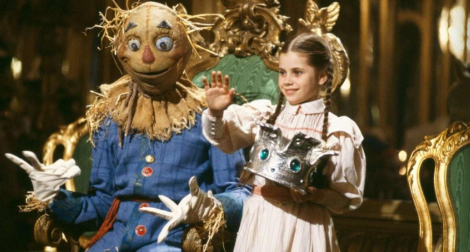
Prepare to journey back down the Yellow Brick Road, but not to the Oz you remember. Forget the lollipops and the singing Munchkins for a moment, and open your mind to a darker, more complex, and arguably more faithful vision of L. Frank Baum’s magical world. We’re talking about the 1985 cult classic, Return to Oz, a film that startled audiences and critics alike with its hauntingly beautiful and sometimes terrifying landscapes. While it may not have been the whimsical, musical follow-up to the 1939 Technicolor masterpiece that everyone expected, Return to Oz has since captivated a generation of viewers with its stunning practical effects, its surprisingly deep themes, and its unwavering commitment to the original spirit of Baum’s later Oz books. It’s a film that has been whispered about for decades, a cinematic curiosity that has grown in stature to become a beloved, if slightly notorious, fantasy adventure. So, grab your lunch pail tree, make sure your chicken is talking, and get ready to unlock the secrets of this extraordinary film. We are about to reveal 10 surprising, fascinating, and downright mind-blowing facts about Return to Oz that will give you a whole new appreciation for this audacious and unforgettable trip over the rainbow.
1. A Sequel to the Books, Not the 1939 Movie
One of the biggest sources of confusion and, at the time, criticism for Return to Oz was its starkly different tone and aesthetic compared to the beloved MGM musical. This was no accident. Director Walter Murch, a renowned film editor and sound designer making his directorial debut, made a conscious decision to distance his film from the 1939 classic and instead draw inspiration directly from L. Frank Baum’s second and third Oz books, The Marvelous Land of Oz and Ozma of Oz. This meant a less whimsical and more grounded portrayal of Dorothy’s adventures. The film’s darker, more Victorian feel was a deliberate choice to reflect the era in which the books were written. In fact, Murch and his co-writer Gill Dennis were so committed to this vision that they went to great lengths to avoid any accusations of trying to replicate the 1939 film. This is why you won’t find any of the iconic songs from the original, and why characters like the Scarecrow, Tin Man, and Cowardly Lion have significantly different appearances and smaller roles. The film was intended to be a continuation of Dorothy’s literary journey, not a cinematic one. This commitment to the source material is what gives Return to Oz its unique and enduring identity, even if it initially baffled audiences expecting another trip down a Technicolor memory lane.
2. The Director Was Fired (and Rehired) During Production
The journey to bring Return to Oz to the screen was as fraught with peril as Dorothy’s own quest. The production was a massive undertaking for Disney, and the film’s ballooning budget and slow shooting schedule caused considerable anxiety for the studio executives. This was compounded by a change in leadership at Disney, with the new regime being less enthusiastic about Walter Murch’s dark and unconventional vision for an Oz film. The pressure mounted to the point where, five weeks into shooting, Murch was unceremoniously fired from his own project. The studio felt the film was falling behind and that a more experienced director was needed to salvage it. However, Murch had some powerful allies in his corner. His friends and collaborators, who happened to be some of the most influential filmmakers in Hollywood, including George Lucas and Francis Ford Coppola, rallied to his defense. They flew to the set in England and passionately advocated for Murch’s unique vision, assuring the Disney executives that he was creating something special. Their intervention worked. Murch was reinstated just a few days later and was able to complete the film according to his original artistic intentions. This dramatic behind-the-scenes turmoil is a testament to the creative battles that can often rage behind the camera on ambitious and unconventional films.
3. The Ruby Slippers Came with a Hefty Price Tag
While Return to Oz deliberately distanced itself from the 1939 film, there was one iconic element that Disney felt was essential to include: the ruby slippers. However, there was a significant hurdle. The ruby slippers were a creation of MGM for their film; in Baum’s books, Dorothy’s magical footwear was silver. This meant that the ruby slippers were the intellectual property of MGM. To use them in Return to Oz, Disney had to pay a substantial licensing fee to their rival studio. This was a calculated decision, as the ruby slippers had become so ingrained in the public consciousness as a symbol of Oz that their inclusion was seen as a necessary bridge for audiences. It’s a fascinating example of how a single creative choice in one adaptation can have a lasting and legally binding impact on subsequent interpretations of the same source material. So, while you watch Dorothy click her heels, remember that those dazzling red shoes came with a significant price tag, a testament to the enduring power of movie magic and intellectual property law.
4. The Terrifying Wheelers Were a Feat of Human Performance
The Wheelers, with their shrieking laughter and unsettling, wheeled limbs, are one of the most memorable and nightmare-inducing creations in Return to Oz. Their jerky, unnatural movements were not the product of camera tricks or special effects in the way we think of them today. Instead, they were brought to life through incredible feats of physical performance. The actors playing the Wheelers, led by performance artist Pons Maar, had to contort their bodies into uncomfortable positions, essentially walking on all fours on specially designed wheeled contraptions attached to their hands and feet. This required immense strength, balance, and a unique style of movement that was developed through weeks of intense training. The result is a creature that feels genuinely and unsettlingly real. The palpable physical effort of the performers translates into a chaotic and menacing energy on screen, making the Wheelers a triumph of practical effects and a testament to the power of human performance in creating unforgettable movie monsters.
5. The Intricate Workings of Tik-Tok
Dorothy’s loyal and literal-minded companion, Tik-Tok, was another marvel of practical effects. The “Royal Army of Oz” was not a stop-motion puppet or a simple costume. Inside the elaborate, spherical body of Tik-Tok was a skilled and incredibly flexible performer named Michael Sundin. He had to contort his body into a cramped, upside-down position to operate the character’s legs and body movements. His arms controlled levers that manipulated Tik-Tok’s on-screen arms. To complete the illusion, Tik-Tok’s head, with its expressive, blinking eyes, was radio-controlled by a puppeteer off-screen. This complex combination of human performance and remote-controlled animatronics gave Tik-Tok a weight and presence that would have been impossible to achieve with other methods. It was a physically demanding and claustrophobic role for Sundin, but his efforts resulted in one of the film’s most endearing and believable characters.
6. The Multiple Heads of Princess Mombi
The vain and chillingly cruel Princess Mombi, with her collection of interchangeable heads, is a villain who has haunted the dreams of many a young viewer. The seamless effect of Mombi swapping her heads was achieved through a clever combination of techniques. The primary actress, Jean Marsh, would film her scenes as Mombi, and then a number of other actresses would be filmed wearing prosthetic makeup to match the various heads in her collection. These heads were then carefully composited onto a headless body double, or onto Jean Marsh’s own body in post-production. The scenes where Dorothy encounters the headless Mombi were particularly complex, requiring precise choreography and clever camera angles to create the illusion of a walking, headless figure. The result is a truly unsettling and memorable sequence that showcases the ingenuity and artistry of the film’s visual effects team. It’s a testament to their skill that the effect remains so effective and chilling even in today’s era of computer-generated imagery.
7. The Unsettling Stop-Motion of the Nome King
The film’s ultimate antagonist, the fearsome Nome King, was brought to life through a mesmerizing and often terrifying blend of live-action performance and stop-motion animation. In his initial, rock-like form, the Nome King’s face and spies were created using claymation, a painstaking process where clay models are moved and filmed one frame at a time. This gave his early appearances an uncanny and otherworldly quality. As he becomes more powerful and more human-like, he is portrayed by the talented actor Nicol Williamson. The seamless transitions between the stop-motion and live-action elements were a technical marvel for the time, creating a villain who felt both ancient and dangerously alive. The climactic scene where the Nome King grows to a monstrous size and attempts to devour Dorothy and her friends is a tour de force of stop-motion animation, a chaotic and thrilling sequence that stands as a highlight of the film and a showcase for the incredible artistry of the animators.
8. A Young Fairuza Balk’s Impressive Audition
Finding the right actress to step into the iconic role of Dorothy Gale was a monumental task. The filmmakers auditioned over a thousand young girls across North America before they found their perfect Dorothy in a nine-year-old Fairuza Balk. What made Balk stand out was her naturalism and her ability to convey a sense of quiet strength and maturity beyond her years. Director Walter Murch was looking for a Dorothy who was more in line with the character from the books – a thoughtful and resilient farm girl, rather than the more wide-eyed and innocent portrayal by Judy Garland. Balk’s audition, which included a screen test where she interacted with a puppet of Billina the chicken, convinced the filmmakers that she had the talent and the presence to carry the film. Her performance is central to the movie’s success, grounding the fantastical elements in a believable and relatable emotional reality.
9. The Music of Oz: A Tale of Two Worlds
The musical score for Return to Oz, composed by David Shire, plays a crucial role in establishing the film’s unique and often unsettling atmosphere. Shire made a deliberate choice to musically differentiate between Dorothy’s bleak, real-world existence in Kansas and the fantastical, if dangerous, world of Oz. The scenes in Kansas are scored with a more subdued and somber orchestral palette, reflecting Dorothy’s sense of loss and displacement. Once she arrives in Oz, the music becomes more vibrant and varied, with distinct themes for each of the new characters and locations. Shire’s score is a departure from the cheerful, song-filled soundtrack of the 1939 film, instead opting for a more classical and atmospheric approach that enhances the film’s darker and more dramatic tones. The music is a key element in creating the film’s unique and immersive world, a world that is both wondrous and fraught with peril.
10. A Cult Classic Rises from the Ashes
Upon its initial release in 1985, Return to Oz was not a commercial success. Its dark tone and startling imagery were a shock to audiences and critics who were expecting a lighthearted musical adventure in the vein of the 1939 classic. The film was largely dismissed and faded from the box office relatively quickly. However, in the years that followed, something remarkable happened. The film found a new life on home video, where a generation of viewers discovered its unique charms and artistic merits. Word of mouth grew, and the film began to garner a passionate and dedicated cult following. These fans appreciated the film’s faithfulness to Baum’s later books, its stunning practical effects, and its willingness to embrace the darker and more complex aspects of the Oz stories. Today, Return to Oz is widely regarded as a misunderstood masterpiece, a bold and imaginative film that was simply ahead of its time. Its journey from box office disappointment to beloved cult classic is a testament to the enduring power of a unique and uncompromising artistic vision.
Conclusion
Return to Oz is a film that dared to be different. It chose to honor the literary roots of its source material rather than chasing the Technicolor ghost of its cinematic predecessor. In doing so, it created a world that was both familiar and startlingly new, a world of crumbling emerald cities, shrieking Wheelers, and head-swapping princesses. The journey behind the scenes was as tumultuous as Dorothy’s own, a testament to the passion and perseverance of its creators. The result is a film that is rich in detail, artistry, and imagination, a film that continues to captivate and challenge audiences decades after its release. It reminds us that there is more to Oz than just a Yellow Brick Road, and that sometimes, the most rewarding journeys are the ones that take us to unexpected and even a little bit scary places. What is your most vivid memory of watching Return to Oz for the first time?
Dive Deeper
For those who wish to explore the magical and sometimes perilous world of Oz even further, here are a few recommended books that will enrich your understanding of this enduring fantasy classic:
- The Marvelous Land of Oz and Ozma of Oz by L. Frank Baum: Go back to the source and read the two books that form the primary basis for the film’s plot. You’ll discover even more about the characters and the intricate world that Baum created.
- The Making of Return to Oz by John Fricke and Jonathan Shirshekan: This comprehensive book offers a detailed look at the film’s production, filled with behind-the-scenes photographs, interviews with the cast and crew, and fascinating insights into the creation of the film’s incredible special effects.
- A Brief Guide to Oz: 75 Years of the Munchkin Lancers by Paul Bienvenue: While not solely focused on Return to Oz, this book provides a wonderful overview of the entire Oz phenomenon, from the books to the various film and stage adaptations, giving you a greater appreciation for the rich history of this beloved fantasy world.




Leave a Reply