
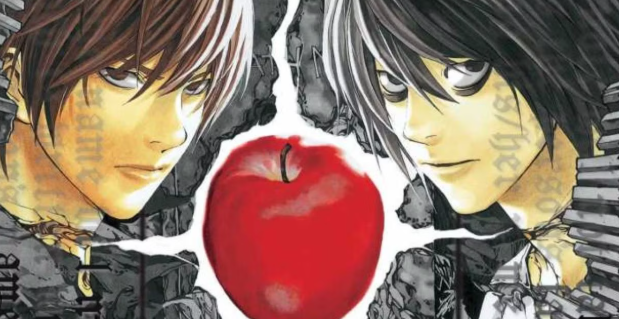
In the vast landscape of Japanese manga, few series have achieved the legendary status and thought-provoking depth of Death Note. Created by the enigmatic writer Tsugumi Ohba and the masterful artist Takeshi Obata, this psychological thriller redefined what a shonen manga could be, trading epic physical battles for a high-stakes war of intellect and morality. The story of Light Yagami, a brilliant high school student who discovers a supernatural notebook that allows him to kill anyone by simply writing their name, and the equally brilliant detective L, who is determined to stop him, became a global phenomenon. It is a dark, intricate, and morally complex narrative that forces readers to question the very nature of justice, power, and humanity. But behind this gripping cat-and-mouse game lies a fascinating history of creative secrets, abandoned concepts, and a mysterious author whose identity remains a puzzle. Open the notebook and prepare to look beyond the rules, as we uncover ten fascinating facts about the manga that started it all.
1. The Enigmatic Author: The Unsolved Mystery of Tsugumi Ohba
One of the most enduring mysteries surrounding Death Note has nothing to do with the plot, but with its creator. “Tsugumi Ohba” is a pen name, and the true identity of the writer has never been officially confirmed by Shueisha, the manga’s publisher. This anonymity has led to years of intense fan speculation, with one compelling theory rising above all others: that Tsugumi Ohba is actually Hiroshi Gamō, a manga artist known for a surreal 1990s gag manga called Tottemo! Luckyman. The evidence, while circumstantial, is intriguing. Gamō’s previous work contains plot points and character designs that bear a striking resemblance to elements in Death Note and Bakuman., the subsequent series by the Ohba/Obata duo. For instance, there are hidden visual cues in Tottemo! Luckyman that appear to reference Death Note, and the main character in Bakuman., who dreams of becoming a mangaka, has an uncle who was a one-hit-wonder gag manga artist, much like Gamō himself. Whether this theory is true or not, the author’s decision to remain a ghost in the machine adds a perfect layer of mystique to a series all about secrets and hidden identities.
2. A Different Beginning: The Pilot Chapter and the ‘Death Eraser’
Before Light Yagami ever picked up the notebook, a very different version of the story existed. Death Note began as a one-shot pilot chapter published in Weekly Shonen Jump in 2003. This pilot featured a 13-year-old protagonist named Taro Kagami who finds the Death Note. After being relentlessly bullied, he writes his tormentors’ names in the notebook out of frustration and is horrified when they die of sudden heart attacks. Haunted by their ghosts, Taro is traumatized by his actions. This version of the story also introduced a key item that was completely removed from the final series: the Death Eraser. This eraser had the power to bring back anyone whose name was written in the Death Note, provided their body was still intact. Ryuk eventually uses it to revive Taro’s victims. The decision to scrap the Death Eraser for the main series was a crucial one, as it established the irreversible and absolute power of the notebook, raising the moral stakes and making every decision Light Yagami makes a permanent, life-altering choice.
3. The Original L: An Older Man and Father Figure
The intense rivalry between the young geniuses Light and L is the central pillar of the series. However, L was initially conceived very differently. In the early planning stages, writer Tsugumi Ohba envisioned L as a much older, more experienced character. He was meant to be a wise, mentor-like figure, creating a dynamic where a seasoned veteran of justice was hunting a brilliant young upstart. This would have framed the conflict as a generational battle of ideals. However, Ohba’s editor made a suggestion that would fundamentally change the series: what if L was closer to Light’s age? This simple change transformed the narrative from a mentor-protégé conflict into a direct, high-stakes duel between two intellectual equals. It made their cat-and-mouse game a personal and immediate confrontation, a battle between the two greatest young minds on the planet, each believing they were the righteous one. This alteration is arguably one of the most important creative decisions in the manga’s development, defining the core tension that captivated millions of readers.
4. L’s Successors Were Originally His Sons
After L’s shocking and pivotal death midway through the series, the story required new antagonists to challenge Light’s reign as Kira. This led to the introduction of Near and Mello, two gifted young rivals raised in the same orphanage as L. However, this was not the original plan. Tsugumi Ohba’s first idea for L’s successors was far more direct and familial: Near and Mello were initially conceived as L’s twin sons. They would have stepped up to avenge their father’s death, carrying on his legacy by blood. Ultimately, Ohba and his editor decided against this idea, believing it would stretch the audience’s suspension of disbelief too far. Having the reclusive and socially awkward L secretly be a father felt out of character. They retooled the concept, creating Wammy’s House, an orphanage for gifted children, and making Near and Mello L’s spiritual successors rather than his biological ones. This maintained their powerful connection to L while creating a more plausible and intriguing backstory for the second half of the series.
5. The Rules Were Created On the Fly
The world of Death Note is governed by a complex and intricate set of rules that dictate how the notebook can be used. These rules are often exploited by Light in brilliant and unexpected ways, making it seem as though they were meticulously planned from the very beginning. The reality, however, is that Tsugumi Ohba created many of the rules as the story progressed. He has stated in interviews that he would often write Light into what seemed like an impossible corner, and then he would create a new, specific rule that would provide a clever, logical loophole for Light to exploit. This organic approach to world-building is what gives the plot its constant sense of tension and discovery. For example, the infamous “13-day rule”—which states that if a Death Note user does not write another name within 13 days, they will die—was introduced specifically for the Yotsuba arc as a major plot device to help L prove Light’s innocence temporarily. This “plot-first, rules-later” method is a testament to Ohba’s genius for strategic storytelling.
6. A Strict Division of Labor: Ohba’s Words, Obata’s Worlds
The partnership between a manga writer and artist is often a deeply collaborative one, but the creation of Death Note was famously compartmentalized. Writer Tsugumi Ohba would create the story, scripts, and rough character descriptions and pass them on to the artist, Takeshi Obata. From there, Obata had almost complete creative freedom over the visual design of the world and its inhabitants, with no direct input on the plot. He designed the characters based on very vague notes from Ohba. For L, the description was simply “an un-Japanese looking character with a poor posture.” For Ryuk the Shinigami, Obata initially designed a more attractive, human-like figure resembling a rock star, but felt this would make him too similar to Light. He then redesigned him into the monstrous, punk-inspired creature we know today, believing the god of death should look terrifying. This strict separation of roles allowed each creator to focus entirely on their craft, resulting in a perfectly balanced fusion of brilliant storytelling and breathtaking art.
7. The Method to L’s Madness: The Science of Sitting
L’s eccentricities are as famous as his intellect, and none are more visually striking than his bizarre sitting posture. He is almost always seen crouching on chairs with his knees tucked up to his chest. This isn’t just a random character quirk; L provides his own in-universe justification for it. He claims that if he were to sit normally, his deductive reasoning abilities would drop by 40. While there is absolutely no scientific basis for this claim, it is a perfect piece of characterisation. It demonstrates his absolute, almost obsessive, dedication to maintaining his peak mental state at all times. It also serves as a powerful visual metaphor for how he operates—he is a character who refuses to relax, constantly coiled and ready to spring into action intellectually. This strange habit instantly communicates his unique, unconventional way of thinking and makes him one of the most memorable and visually distinct characters in manga history.
8. A Controversial Legacy: Real-Life Bans and Copycat Crimes
The dark and compelling premise of Death Note has made it a global phenomenon, but its subject matter has also made it a source of significant controversy. The idea of a notebook that can be used to kill anyone has led to the manga being banned in several school districts in the United States and even officially banned for a time in parts of China, where authorities feared it was corrupting the youth. More troublingly, the series has inspired numerous real-life copycat incidents around the world. There have been multiple documented cases where students were arrested or expelled for creating their own “death notes” and writing the names of classmates, teachers, or public figures inside. While the creators intended the story as a moral fable about the dangers of absolute power, its core concept has proven to be a powerful and, for some, dangerously appealing fantasy, highlighting the profound and sometimes unsettling impact fiction can have on the real world.
9. The Return of the Death Eraser (In a Gag Manga)
The “Death Eraser,” the powerful tool from the pilot chapter that could resurrect the notebook’s victims, was completely absent from the main Death Note series, a deliberate choice to ensure every death had weight and finality. However, this forgotten item did make one surprise reappearance in a very unexpected place. In 2005, Ohba and Obata collaborated with mangaka Yoshio Sawai for a special crossover chapter that mashed up the worlds of Death Note and the surreal gag manga Bobobo-bo Bo-bobo. In this bizarre and hilarious parody, the main characters of Bobobo-bo Bo-bobo find both the Death Note and the Death Eraser and proceed to use them for completely absurd and comedic purposes. This one-off crossover is a deep cut for dedicated fans, a fun, meta-textual nod to the series’ origins, and a glimpse into a world where the power of life and death is treated as the ultimate punchline.
10. The Creators’ Verdict: Light Yagami Was Evil
One of the most enduring debates among Death Note fans is the moral alignment of its protagonist, Light Yagami. Was he a twisted hero, a well-intentioned anti-hero, or a pure villain? While the debate rages on, the creators themselves have a definitive answer. Both Tsugumi Ohba and Takeshi Obata have stated in interviews that they unequivocally view Light as an evil character. Ohba has said that he believes a core theme of the series is that “no human being has the right to act as a god and pass judgment on others.” He sees Light’s journey as a corruption arc, where a young man’s noble ideals are twisted by the absolute power he wields. Takeshi Obata has echoed this sentiment, stating that for the final chapter of the manga, he made a conscious effort to draw Light in his last moments not as a cool, tragic anti-hero, but as a desperate, pathetic figure, to visually underscore his ultimate downfall and the evil nature of his actions.
Further Reading
For those who wish to delve deeper into the intricate world of Shinigami and strategy, these books are essential reading:
- Death Note: Black Edition (An omnibus collection of the entire manga series)
- Death Note 13: How to Read (The official encyclopedia, filled with character profiles, timelines, and extensive interviews with the creators)
- Takeshi Obata Illustrations: Blanc et Noir (A beautiful art book showcasing Obata’s stunning work on Death Note and other series)
- Bakuman. (The subsequent manga series by Tsugumi Ohba and Takeshi Obata, which offers a fictionalized but insightful look into the life of manga creators and their creative process)
Here at Zentara.blog, our mission is to take those tricky subjects and unlock them, making knowledge exciting and easy to grasp for everyone. But the adventure doesn’t stop on this page! We’re constantly exploring new frontiers and sharing discoveries across the digital universe. Want to dive deeper into more mind-bending Top 10s and keep expanding your world? Come join us on our other platforms – we’ve got unique experiences waiting for you on each one!
Get inspired by visual wonders and bite-sized facts: See the world through Zentara’s eyes on Pinterest!
Pin our fascinating facts and stunning visuals to your own boards. Explore Pins on Pinterest: https://uk.pinterest.com/zentarablog/
Discover quick insights and behind-the-scenes peeks: Hop over to Tumblr for snippets, quotes, and unique content you won’t find anywhere else. It’s a different flavour of discovery! Follow the Fun on Tumblr: https://www.tumblr.com/zentarablog
Ready for deep dives you can listen to or watch? We’re bringing our accessible approach to video and potentially audio! Subscribe to our YouTube channel and tune into future projects that make learning pop! Subscribe on YouTube: https://www.youtube.com/@ZentaraUK
Seeking even more knowledge in one place? We’ve compiled some of our most popular topic deep dives into fantastic ebooks! Find them on Amazon and keep the learning journey going anytime, anywhere. Find Our Ebooks on Amazon: https://www.amazon.co.uk/s?k=Zentara+UK&ref=nb_sb_noss
Connect with us and fellow knowledge seekers: Join the conversation on BlueSky! We’re sharing updates, thoughts, and maybe even asking you what wonders we should explore next. Chat with Us on BlueSky: https://bsky.app/profile/zentarablog.bsky.social
Perfect for learning on the move! We post multiple 10-minute podcasts per day on Spotify. Pop on your headphones and fill your day with fascinating facts while you’re out and about! Listen on Spotify: https://open.spotify.com/show/3dmHbKeDufRx95xPYIqKhJFollow us on Instagram for bytesize knowledge! We post multiple posts per day on our official Instagram account. https://www.instagram.com/zentarablog/ Every click helps us keep bringing honest, accessible knowledge to everyone. Thanks for exploring with us today – see you out there in the world of discovery!




Leave a Reply