
“You move like a pregnant yak.” Welcome, fellow adventurers and fans of high-flying, 80s action! Today, we’re dodging bullets and learning the sun, the moon, and the stars of a film that was poised to be the next great American franchise, a movie with the promise of more to come baked right into its title: 1985’s Remo Williams: The Adventure Begins. Based on the wildly popular “The Destroyer” series of pulp novels, this film introduced audiences to Sam Makin, a tough New York cop who is officially “killed” and reborn as Remo Williams, an unwilling super-assassin for a secret U.S. government organization. Under the tutelage of the ancient and hilarious Korean martial arts master, Chiun, Remo learns the mystical art of Sinanju, the mother of all martial arts. What followed was a unique and thrilling blend of spy action, buddy comedy, and mystical fantasy. With its incredible stunts and the unforgettable dynamic between its two leads, the film stood out from the muscle-bound action flicks of the era. But the story behind its ambitious creation and its ultimately unfulfilled promise is just as fascinating as the adventure itself. So, let’s find our centre, focus our energy, and uncover 10 surprising, little-known facts about the making of Remo Williams: The Adventure Begins.
1. The Film Was Intended to Launch an “American James Bond” Franchise
Remo Williams wasn’t just supposed to be a one-off action movie; it was Orion Pictures’ ambitious attempt to create a homegrown American spy franchise to rival the biggest in the world: James Bond. The film was based on “The Destroyer,” a massively popular and long-running series of men’s adventure novels created by Warren Murphy and Richard Sapir. With hundreds of books in the series, there was a virtually endless supply of source material for potential sequels. The producers’ intention was to make a film that felt like a Bond movie but with a distinctly American flavour—a blue-collar hero instead of a suave British gentleman. The subtitle, “The Adventure Begins,” was a bold and confident declaration of this intent, promising audiences that this was just the first of many adventures to come.
2. It Was Directed by a James Bond Veteran
To ensure their “American Bond” had the right pedigree, the producers hired a director who knew the 007 formula inside and out: Guy Hamilton. Hamilton was a legend in the world of spy films, having directed four of the most iconic James Bond movies ever made: Goldfinger (1964), Diamonds Are Forever (1971), Live and Let Die (1973), and The Man with the Golden Gun (1974). His involvement lent the project a huge amount of prestige and expertise. Hamilton brought his signature style to the film, blending large-scale action set-pieces, exotic locations, and a tongue-in-cheek sense of humour. His experience was crucial in staging the film’s most ambitious sequences and giving it the slick, globetrotting feel that the producers were aiming for.
3. Joel Grey’s Transformation into Chiun Earned an Oscar Nomination
One of the most remarkable aspects of the film is the incredible transformation of Broadway and film legend Joel Grey into the 80-year-old Korean martial arts master, Chiun. Grey, a white, Jewish actor, underwent a gruelling makeup process every single day that took between three and five hours to apply. The groundbreaking prosthetic makeup, created by artist Carl Fullerton, was so convincing and masterfully done that it earned the film its only Academy Award nomination, for Best Makeup. But Grey’s performance went far beyond the prosthetics. He spent months studying the movements of elderly men and worked with a voice coach to develop Chiun’s unique, raspy cadence. His portrayal was so nuanced and beloved that it transcended the potential controversy of the casting, creating one of the most memorable and cherished “wise master” characters in cinema history.
4. The Jaw-Dropping Statue of Liberty Scene Was Real
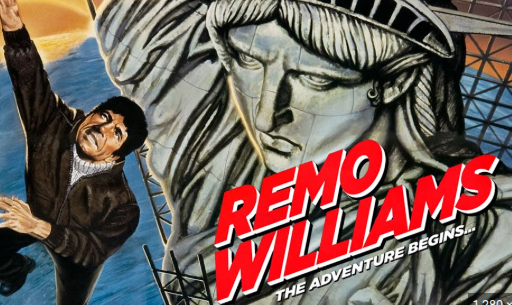
The film’s most iconic and breathtaking action sequence sees Remo Williams dodging assassins on the scaffolding surrounding a real-life restoration of the Statue of Liberty. In an era long before CGI, this incredible scene was performed practically on location. While a special, large-scale replica of the statue’s arm and torch was constructed at a studio in Mexico for the close-up fight choreography, the wide shots of Remo and the assassin dangling precariously from the monument were filmed on the actual scaffolding of the Statue of Liberty in New York Harbor. The stunt work, performed by Fred Ward’s stunt double, was incredibly dangerous, requiring immense courage and precision. The sequence remains a stunning achievement in practical filmmaking and a powerful symbol of the film’s high-flying ambition.
5. Fred Ward Performed Many of His Own Stunts
While stunt doubles were used for the most perilous sequences, star Fred Ward was known for his rugged, hands-on approach to filmmaking and insisted on performing many of his own stunts. Throughout the film, Ward can be seen running on moving logs, hanging from vehicles, and engaging in intense fight choreography. He underwent a demanding physical training regimen to prepare for the role, working to get into peak physical condition to believably portray a man being molded into a human weapon. His commitment to the physicality of the role gives Remo a grounded, blue-collar authenticity that makes his extraordinary abilities all the more impressive. It’s Ward’s everyman quality, combined with his willingness to get his hands dirty, that makes the character so appealing.
6. Sinanju, the “Mother of All Martial Arts,” Is Completely Fictional
In the film, Remo is trained in the mystical art of Sinanju, described by Chiun as the “sun, moon, and stars” from which all other martial arts are derived. This superhuman fighting style, which allows its practitioners to dodge bullets, run on water, and kill with a single touch, is not a real martial art. It was invented by authors Warren Murphy and Richard Sapir for “The Destroyer” novels. For the film, veteran stunt coordinator Glenn Randall was tasked with translating the fantastic abilities described in the books into a visual fighting style. Randall created a unique form of movement for Remo that was less about traditional kicks and punches and more about fluid, almost dance-like evasions and effortless takedowns, perfectly capturing the idea that a true master of Sinanju barely needs to touch his opponent.
7. The Search for Remo Williams Was Extensive
Finding the right actor to play Remo Williams was a long and challenging process. The producers were looking for a specific type: someone who could be believable as a tough, blue-collar cop but also had the charm and physical presence of a potential franchise star. Before landing on Fred Ward, who was known for his acclaimed roles in films like The Right Stuff and Silkwood, the studio considered a host of other actors. Action stars like Clint Eastwood and Jeff Bridges were reportedly in the running at various points. The decision to cast Ward was a bold one, as he wasn’t a traditional, muscle-bound action hero. The filmmakers hoped his everyman quality would make him more relatable to audiences than the super-heroic figures played by Stallone or Schwarzenegger.
8. The Score Was Composed by a Synthesizer Pioneer
Remo Williams‘s memorable and unique musical score was composed by Craig Safan. Instead of a traditional, sweeping orchestral score, Safan created a soundtrack that leaned heavily into the electronic sounds of the mid-80s, blending synthesizers and drum machines with orchestral elements. The main theme is one of the most iconic and beloved of the decade, a driving, heroic, and instantly hummable piece of music that perfectly captures the film’s adventurous spirit. The score was a departure from the typical James Bond sound that one might have expected, giving Remo Williams its own distinct sonic identity that was both modern and timeless.
9. A TV Pilot Was Made After the Film Underperformed
Despite high hopes, Remo Williams: The Adventure Begins was a disappointment at the box office. It failed to connect with a wide audience and grossed only $14.4 million, putting an end to the plans for a big-screen franchise. However, the character wasn’t quite finished. In 1988, a television pilot titled Remo Williams: The Prophecy was produced. The pilot starred Jeffrey Meek as Remo and legendary actor Roddy McDowall (taking over from Joel Grey) as Chiun. Unfortunately, the pilot also failed to find an audience and was not picked up for a full series, marking the definitive end of the live-action adventures of Remo Williams.
10. The Film Became a Massive Cult Classic
Like many ambitious films that failed to find their audience in theatres, Remo Williams: The Adventure Begins was given a second life on home video and cable television. Throughout the late 80s and 90s, the film became a staple on platforms like HBO and was a popular rental at video stores. A new audience discovered its unique blend of action, comedy, and incredible stunt work, and it slowly but surely built a passionate and dedicated cult following. Today, it is remembered fondly as a bold and original action film that dared to be different. Its unfulfilled promise of a franchise only adds to its mystique, leaving fans to wonder about the adventures that might have been.
Conclusion
Remo Williams: The Adventure Begins stands as a fascinating and beloved monument to cinematic ambition. It was a film that reached for the stars, aiming to create an American icon on par with the greatest spies in movie history. While it may not have launched the franchise it so confidently promised, it succeeded in creating something arguably more special: a truly unique and enduring cult classic. With its incredible practical stunts, its Oscar-nominated makeup, and the unforgettable master-student relationship between Fred Ward’s Remo and Joel Grey’s Chiun, the film is a joyous and thrilling adventure that captures the very best of 80s action. It’s a reminder that even if the adventure doesn’t continue, the beginning can be a whole lot of fun. What is your favourite Chiun quote? Let us know in the comments below!
Dive Deeper
- The Destroyer (Book Series) by Warren Murphy and Richard Sapir: To truly understand the world of Remo and Chiun, go back to the source. With hundreds of novels published since 1971, this long-running book series is a treasure trove of action, satire, and adventure that will keep you busy for years. Start with the first book, “Created, The Destroyer.”
- Goldfinger (1964 film): To see the work of director Guy Hamilton at the peak of his powers, watch what many consider to be the definitive James Bond film. You can see the DNA of Goldfinger‘s grand scale, inventive action, and tongue-in-cheek humour all over Remo Williams.
The Right Stuff(1983 film): To appreciate the incredible talent of Fred Ward, watch his powerful performance as astronaut Gus Grissom in this critically acclaimed film. It showcases the dramatic chops and rugged charisma that made him the perfect choice to play the blue-collar hero, Remo Williams.




Leave a Reply