
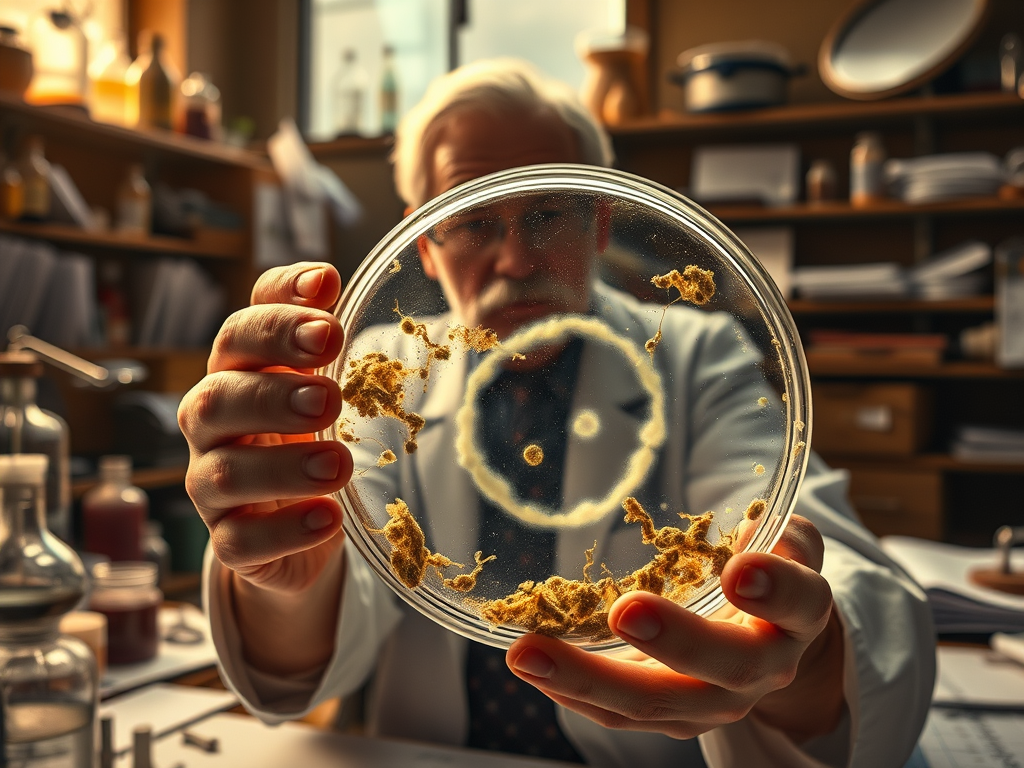
The history of science is filled with tales of brilliant minds, meticulous experiments, and years of dedicated research leading to a monumental breakthrough. We often imagine the scientist as a lone genius, methodically solving a puzzle piece by piece until a grand design is revealed. But the reality is often far messier, more chaotic, and infinitely more surprising. Some of the most transformative discoveries in human history weren’t the result of a direct line of inquiry; they were happy accidents, fortunate mistakes, and incredible moments of serendipity.
These accidental breakthroughs don’t diminish the genius of the scientists involved. Rather, they highlight a different kind of brilliance: the wisdom to recognize the significance of the unexpected. As the great scientist Louis Pasteur once said, “Chance favours only the prepared mind.” The discoveries on this list happened because a researcher was observant enough to notice something out of place, curious enough to ask “Why?”, and prepared enough to understand the profound implications of a fortunate mistake. From a mouldy petri dish to a melted candy bar, these stories reveal that sometimes the greatest leaps forward happen when we stumble.
1. Penicillin: The Mould that Changed Medicine
The discovery of the world’s first antibiotic is the quintessential story of a fortunate accident. In 1928, Scottish bacteriologist Alexander Fleming was known for his brilliant but notoriously untidy laboratory at St. Mary’s Hospital in London. Before leaving for a two-week holiday, he had stacked several petri dishes containing staphylococci bacteria on a bench in a corner of his lab. Upon his return, he began sorting through the dishes, and one, in particular, caught his eye. It was contaminated with a fungus, a common nuisance for any bacteriologist. But instead of simply discarding it, Fleming noticed something extraordinary.
In the area immediately surrounding the mould, the bacteria had been completely wiped out, creating a clear, germ-free ring. Fleming correctly hypothesised that the mould was producing a substance that was lethal to the bacteria. He identified the mould as a member of the Penicillium genus and named the active substance penicillin. While Fleming wasn’t able to purify the substance in large quantities, his accidental observation laid the groundwork for Howard Florey and Ernst Chain to develop it into a mass-produced, life-saving drug years later. That single moment of observation, born from a messy workbench, revolutionised medicine, saved countless millions of lives, and ushered in the age of antibiotics.
2. The Microwave Oven: A Melted Chocolate Bar and a Radar Test
During World War II, the development of radar technology was a top priority. Percy Spencer, a self-taught engineer working for the Raytheon Manufacturing Company, was a key figure in this effort, helping to build the magnetrons that generated the microwave radio signals for radar systems. One day in 1945, while testing a new high-powered magnetron, he noticed something strange. A peanut cluster bar he had in his pocket had turned into a gooey mess. While others might have just been annoyed by the sticky laundry bill, Spencer was intrigued. His scientific curiosity piqued, he decided to experiment.
He aimed the magnetron tube at some popcorn kernels, which quickly began to pop all over the lab floor. For his next experiment, he placed an egg under the tube. The egg cooked so rapidly that it exploded in the face of a curious colleague. Spencer realised that the low-density microwave energy was heating the food rapidly from the inside out. He had discovered a revolutionary new way to cook. Raytheon patented the technology, and the first commercial microwave oven, the “Radarange,” was born. It was a bulky, expensive beast at first, but Spencer’s observation of a melted candy bar ultimately transformed kitchens around the world.
3. X-Rays: The Invisible Light that Revealed the Unseen
In the late 19th century, scientists were fascinated by the properties of cathode rays, streams of electrons generated within vacuum tubes. In 1895, German physicist Wilhelm Röntgen was working in his laboratory in Würzburg, experimenting with a cathode-ray tube that he had covered with heavy black cardboard. Despite the opaque covering, he noticed that a nearby screen coated with barium platinocyanide began to glow faintly. He was mystified. Some unknown, invisible type of ray must be passing through the cardboard to illuminate the screen.
Röntgen began to investigate these mysterious rays. He discovered they could pass through most substances but left shadows of solid objects. In a moment that would change medical history, he placed his wife Anna’s hand in the path of the rays, with a photographic plate on the other side. When he developed the plate, he saw a ghostly image of her hand, showing the bones within, along with the ring on her finger. It was the world’s first X-ray image. Because he didn’t know what these rays were, he called them “X-rays,” with “X” signifying the unknown. His accidental discovery gave humanity a new superpower: the ability to see inside the human body without surgery.
4. Radioactivity: A Discovery Made on a Cloudy Day
Inspired by Wilhelm Röntgen’s groundbreaking discovery of X-rays, French physicist Henri Becquerel wondered if naturally fluorescent minerals could also emit similar rays after being exposed to sunlight. He hypothesised that the sun’s energy was being absorbed by the minerals and re-emitted as X-rays. To test this, he took some uranium salts, placed them on top of a photographic plate that was securely wrapped in black paper (to block the sunlight), and left the setup on a windowsill. As he expected, when he developed the plate, it showed the silhouette of the uranium crystals, seemingly proving his hypothesis.
However, the experiment took an accidental turn. Becquerel planned to repeat it, but the Parisian weather turned overcast. Frustrated, he put his entire experiment—the uranium salts still resting on the wrapped photographic plate—into a dark drawer to await a sunny day. A few days later, for reasons he couldn’t quite explain, he decided to develop the plate anyway, expecting to see a very faint image at best. To his utter astonishment, the image was incredibly strong and clear. The uranium salts had emitted their powerful rays without any exposure to sunlight at all. He had accidentally discovered radioactivity, proving that certain elements emitted energy spontaneously, a discovery that would lay the groundwork for nuclear physics.
5. Teflon: The Non-Stick Pan from a Failed Experiment
In 1938, Roy Plunkett, a chemist working for DuPont, was on a mission to create a new, non-toxic, and non-flammable refrigerant, part of the Freon family of products. His experiment involved a compressed, frozen canister of tetrafluoroethylene (TFE) gas. On the day of the experiment, Plunkett and his assistant opened the valve on the canister, but no gas came out. This was baffling, as the canister’s weight indicated it was still full. Was it a faulty valve? Instead of giving up, their curiosity led them to saw the canister open.
Inside, they didn’t find the gas they expected. Instead, the canister was coated with a strange, waxy, and incredibly slippery white powder. The TFE gas inside had undergone spontaneous polymerization, creating a new substance: polytetrafluoroethylene (PTFE). Plunkett soon realised this new material had remarkable properties. It was extremely inert (meaning it didn’t react with other chemicals) and had the lowest coefficient of friction of any solid yet discovered—making it incredibly slippery. Initially used for military applications, this accidental polymer was eventually branded as Teflon and went on to coat everything from frying pans to spacecraft.
6. The Pacemaker: The Wrong Part Created a Perfect Rhythm
Sometimes, a simple mistake can lead to a world-changing invention. In 1958, Wilson Greatbatch, an electrical engineer, was working at the University of Buffalo, building a device to record the fast-beating sounds of an animal’s heart. The design required a specific electronic component: a 10,000-ohm resistor. As he worked on the circuit, he reached into a box for the part but accidentally pulled out a 1-megaohm resistor—a component 100 times more powerful than what he needed.
When he installed the wrong resistor and turned the device on, he didn’t get the sound he was expecting. Instead of simply recording, the circuit began to emit a steady, rhythmic electrical pulse. Greatbatch immediately recognised the significance of what he was hearing. The distinct, rhythmic pulse was identical to a human heartbeat. He realised that this small, self-contained circuit could be used to override a faulty heartbeat and maintain a steady rhythm. Within two years, he had refined his accidental discovery into the world’s first successful implantable cardiac pacemaker, a device that has since extended and improved the lives of millions of people worldwide.
7. Post-it Notes: The Failed Glue That Became an Office Staple
In the world of invention, one person’s failure is often another’s solution. In 1968, Dr. Spencer Silver, a scientist at the mega-company 3M, was working to create a super-strong adhesive for the aerospace industry. His experiment failed spectacularly. Instead of a powerful bonding agent, he created the exact opposite: an incredibly weak, pressure-sensitive adhesive. It was just sticky enough to cling to surfaces but could be easily peeled off without leaving a residue. It was a peculiar invention with no obvious application, a solution without a problem. Silver championed his “low-tack” adhesive within 3M for years, but no one could figure out what to do with it.
Years later, Art Fry, another 3M scientist, was singing in his church choir. He was growing increasingly frustrated because the small slips of paper he used to mark the hymns in his hymnal kept falling out. He needed a bookmark that was sticky enough to stay put but wouldn’t damage the delicate pages. Suddenly, he remembered his colleague Spencer Silver’s “useless” adhesive. He applied a small amount of the glue to a piece of paper, and the perfect bookmark was born. The idea quickly expanded beyond bookmarks, and the iconic Post-it Note went on to become one of the most essential office products ever created.
8. Viagra: The Side Effect More Interesting Than the Cure
In the early 1990s, pharmaceutical giant Pfizer was conducting clinical trials in Wales for a new drug called Sildenafil. The drug was intended to treat angina, a form of cardiovascular disease where the arteries supplying the heart with blood become constricted. The hope was that Sildenafil would dilate these blood vessels, easing the chest pain associated with the condition. The initial trials, however, were disappointing. The drug showed very little effect on angina and had some annoying side effects, like headaches and flushing. It was on the verge of being declared a failure.
But then, the trial nurses began to notice a strange and consistent pattern when they spoke to the male participants. The men were reporting an unusual and very specific side effect: the drug was inducing significant and prolonged erections. The participants were reportedly embarrassed but also quite pleased. The Pfizer executives, sensing an opportunity far greater than they had imagined, quickly pivoted their research. They abandoned the heart disease angle and began testing Sildenafil not as a treatment for angina, but for erectile dysfunction. Rebranded as Viagra, the drug became one of the most profitable and famous pharmaceuticals in history, all thanks to an unexpected side effect.
9. Vulcanized Rubber: An Invention from a Hot Stove
In the 19th century, natural rubber was seen as a miracle material, but it had a fatal flaw. It was unstable, becoming a sticky, gooey mess in the summer heat and a hard, brittle solid in the cold. Inventor Charles Goodyear became obsessed with solving this problem, dedicating years of his life and sinking his family into poverty in his relentless quest to make rubber durable. He tried everything—mixing it with salt, pepper, and even nitric acid—but nothing worked. His breakthrough, like so many others, came from a moment of pure clumsiness.
In 1839, after years of failed experiments, Goodyear was in a general store, showing off his latest rubber mixture, this one containing sulfur. In a gush of excitement, he accidentally dropped a piece of the mixture onto a red-hot pot-bellied stove. Instead of melting into a gooey puddle as he expected, the rubber charred like leather. When he peeled it off, he found that it had transformed. It was firm, strong, and permanently elastic. The intense heat had cross-linked the polymers in the rubber, a process he later called vulcanization. Though he died in debt, Goodyear’s accidental discovery transformed rubber into the stable, durable material that is essential to our modern world, used in everything from tyres to shoe soles.
10. Bakelite: The First Synthetic Plastic from a Quest for Shellac
In the early 20th century, the electrical industry was booming, but it desperately needed a good insulator. The best available material was shellac, a natural resin made from the secretions of the lac bug. It was expensive and its supply was limited. Belgian-born chemist Leo Baekeland saw a massive opportunity: find a synthetic substitute for shellac, and you’ll make a fortune. He began experimenting in his home laboratory with two common waste products of the time: phenol and formaldehyde.
His goal was to create a solvent, but he kept producing a hard, gooey sludge that would stick to and ruin his glassware. Most chemists would have considered this a frustrating failure, but Baekeland was intrigued by this seemingly useless material. Instead of trying to avoid creating the sludge, he decided to control it. He built a special heated pressure vessel, which he called a “Bakelizer,” to precisely control the reaction. The result was a hard, mouldable, and heat-resistant material that was a perfect electrical insulator. He had accidentally created the world’s first fully synthetic plastic, which he named Bakelite. Dubbed “The Material of a Thousand Uses,” it was a cornerstone of the modern material world.
Further Reading
For those fascinated by the stories behind the great inventions and discoveries, these books offer a wonderful place to start:
- The Idea Factory: Bell Labs and the Great Age of American Innovation by Jon Gertner
- Serendipity: Accidental Discoveries in Science by Royston M. Roberts
- A Short History of Nearly Everything by Bill Bryson
- Napoleon’s Buttons: How 17 Molecules Changed History by Penny Le Couteur and Jay Burreson
Here at Zentara.blog, our mission is to take those tricky subjects and unlock them, making knowledge exciting and easy to grasp for everyone. But the adventure doesn’t stop on this page! We’re constantly exploring new frontiers and sharing discoveries across the digital universe. Want to dive deeper into more mind-bending Top 10s and keep expanding your world? Come join us on our other platforms – we’ve got unique experiences waiting for you on each one!
Get inspired by visual wonders and bite-sized facts: See the world through Zentara’s eyes on Pinterest!
Pin our fascinating facts and stunning visuals to your own boards. Explore Pins on Pinterest: https://uk.pinterest.com/zentarablog/
Discover quick insights and behind-the-scenes peeks: Hop over to Tumblr for snippets, quotes, and unique content you won’t find anywhere else. It’s a different flavour of discovery! Follow the Fun on Tumblr: https://www.tumblr.com/zentarablog
Ready for deep dives you can listen to or watch? We’re bringing our accessible approach to video and potentially audio! Subscribe to our YouTube channel and tune into future projects that make learning pop! Subscribe on YouTube: https://www.youtube.com/@ZentaraUK
Seeking even more knowledge in one place? We’ve compiled some of our most popular topic deep dives into fantastic ebooks! Find them on Amazon and keep the learning journey going anytime, anywhere. Find Our Ebooks on Amazon: https://www.amazon.co.uk/s?k=Zentara+UK&ref=nb_sb_noss
Connect with us and fellow knowledge seekers: Join the conversation on BlueSky! We’re sharing updates, thoughts, and maybe even asking you what wonders we should explore next. Chat with Us on BlueSky: https://bsky.app/profile/zentarablog.bsky.social
Perfect for learning on the move! We post multiple 10-minute podcasts per day on Spotify. Pop on your headphones and fill your day with fascinating facts while you’re out and about! Listen on Spotify: https://open.spotify.com/show/3dmHbKeDufRx95xPYIqKhJFollow us on Instagram for bytesize knowledge! We post multiple posts per day on our official Instagram account. https://www.instagram.com/zentarablog/ Every click helps us keep bringing honest, accessible knowledge to everyone. Thanks for exploring with us today – see you out there in the world of discovery!

Leave a Reply