
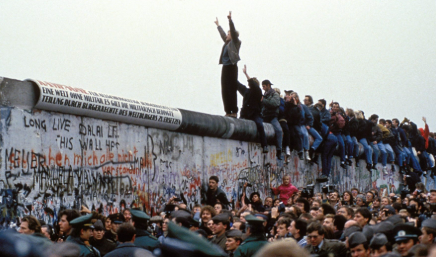
On Christmas Day 1991, the familiar red flag with its golden hammer and sickle was lowered from the Kremlin for the last time. In its place rose the white, blue, and red tricolour of the Russian Federation. This single, symbolic act marked the end of the Soviet Union, a superpower that had defined the 20th century. For the nearly 300 million people living under its rule, this was not just a geopolitical event; it was a seismic upheaval that shattered the very foundations of their daily existence. Overnight, the world they knew—a world of guaranteed employment, chronic shortages, state-enforced ideology, and closed borders—vanished. It was replaced by a chaotic, uncertain, and often terrifying new reality of capitalism, democracy, and openness. The transition was a whirlwind, a bewildering mix of exhilarating freedom and profound insecurity. It redefined what it meant to work, to shop, to speak, and even to believe.
Here, we explore the top 10 ways the fall of the USSR fundamentally and irrevocably changed the fabric of daily life for a generation caught between two worlds.
1. The Economic Earthquake: From Guaranteed Jobs to Market Mayhem
In the Soviet Union, your life path was, to a large extent, set. You were guaranteed a job, a modest salary, and a pension. Unemployment, officially, did not exist. The collapse of the USSR triggered an economic “shock therapy” that was as jarring as its name suggests. State-owned factories and industries, unable to compete in a global market, closed down en masse, leaving millions jobless practically overnight. The concept of unemployment, once a capitalist evil derided in propaganda, became a harsh personal reality. Hyperinflation ravaged the economy, with prices for basic goods sometimes doubling in a single day. People’s life savings, held in state banks, were wiped out, becoming worthless paper. This economic chaos gave rise to a new class of ultra-wealthy “oligarchs” who snapped up state assets for a fraction of their value, creating a level of inequality that was unimaginable just a few years prior. For the average citizen, it was like being taught to swim by being thrown into a stormy sea—a terrifying and disorienting struggle for survival in a new world of dog-eat-dog capitalism.
2. The Supermarket Shock: When Empty Shelves Met an Avalanche of Choice
A defining feature of daily life in the late USSR was the queue. People spent countless hours lining up for everything from bread and sausage to shoes and toilet paper. Store shelves were often bare, a testament to the inefficiencies of the centrally planned economy. The fall of the USSR and the opening of markets changed this almost instantly. A flood of imported consumer goods—brightly packaged, endlessly varied, and previously unseen—poured into the former Soviet republics. For the first time, people saw supermarkets stocked with dozens of types of cheese, colourful sodas, Western blue jeans, and foreign cars. This sudden abundance was a profound psychological shock. It was a tangible, edible, and wearable symbol of the world that had been hidden behind the Iron Curtain. While many could not afford these new luxuries, their very presence on store shelves was a powerful daily reminder of how drastically the world had changed. The drudgery of the queue was replaced by the dizzying, and often overwhelming, experience of consumer choice.
3. Unlocking the Globe: The Newfound Freedom to Travel
Under Soviet rule, foreign travel was a privilege reserved for a trusted few and was heavily restricted. For the vast majority, the world beyond the borders of the socialist bloc was a forbidden, almost mythical place. The collapse of the USSR dismantled these barriers. The Iron Curtain, once a terrifying symbol of division, evaporated, and citizens were suddenly free to travel, work, or emigrate. This was a revolutionary change. It allowed families divided by the Cold War to reunite. It gave millions the chance to see the world they had only read about in censored books or heard about on jammed radio broadcasts. Entrepreneurs could now forge international business connections, and students could study at foreign universities. This new mobility not only broadened individual horizons but also accelerated the cultural transformation of the post-Soviet states, as returning travellers brought back new ideas, fashions, and perspectives.
4. An Explosion of Voices: From State Propaganda to Political Chaos
In the USSR, there was one party, one ideology, and one source of truth: the state. Media was tightly controlled, censorship was absolute, and political dissent was brutally suppressed. The end of Soviet power unleashed an explosion of political and informational freedom. Independent newspapers, radio stations, and television channels emerged, presenting a cacophony of different viewpoints. Previously banned books, from Orwell to Solzhenitsyn, were published and devoured. People could openly criticise the government, form political parties, and protest in the streets without fear of being sent to a labour camp. This transition to democracy was often messy and tumultuous, but the ability to speak one’s mind and have access to diverse sources of information was a liberating experience. It was a shift from a world of black-and-white certainties dictated by the state to a complex, multi-coloured world of debate, argument, and individual opinion.
5. The Fraying of the Social Safety Net: A Crisis in Healthcare and Welfare
While the Soviet system was oppressive and inefficient, it provided a comprehensive social safety net. Healthcare, education, and childcare were free and universally accessible. Pensions, though modest, were guaranteed. When the state collapsed, so did the funding for these institutions. The once-vaunted healthcare system began to crumble, with hospitals facing severe shortages of medicine and modern equipment. Doctors and teachers saw their state salaries become practically worthless, forcing many to leave their professions. Elderly citizens who had worked their whole lives found their pensions wiped out by hyperinflation, reducing many to poverty. This breakdown of the welfare state was one of the most painful aspects of the transition. It created deep insecurity and a sense of abandonment, particularly among the elderly and vulnerable who had relied on the state for their basic well-being.
6. The Return of Faith: From Enforced Atheism to Spiritual Revival
The Soviet Union was officially an atheist state. Religion was seen as an “opiate of the masses” and was actively suppressed. Churches were destroyed or converted into warehouses and museums, and religious practice was driven underground. The fall of the USSR ushered in a dramatic spiritual revival. Across the former empire, churches, mosques, and synagogues were reopened and restored, often with public support. Religious holidays like Christmas and Easter were openly celebrated for the first time in generations. People flocked to religious services, seeking the spiritual comfort and moral guidance that had been denied to them for so long. For many, this return to faith was a way of reconnecting with their pre-Soviet national and cultural identities, which were often deeply intertwined with religion. The iconic onion domes of Orthodox cathedrals, once symbols of a forbidden past, rose again to dominate the skyline and the public consciousness.
7. The Wild East: The Rise of Organized Crime and Lawlessness
The collapse of the powerful Soviet state and its security apparatus, including the KGB, created a massive power vacuum. Into this void stepped organised crime. The 1990s in Russia and other former Soviet republics became a period of rampant lawlessness, often dubbed the “Wild East.” Mafia groups engaged in turf wars on city streets, extorting protection money from new private businesses and gaining control of lucrative industries. The lines between business, crime, and politics became dangerously blurred. For ordinary citizens, this meant a frightening decline in public safety. Kidnappings, carjackings, and violent crime became commonplace. The old certainty of state control, however oppressive, was replaced by the terrifying uncertainty of a world where the rule of law seemed to have disappeared entirely.
8. A Cultural Reckoning: Finding National Identity After Empire
The Soviet Union worked to suppress individual national identities in favour of creating a single “Soviet person.” Local languages were often discouraged, and history was rewritten to fit the communist narrative. When the union dissolved, the 15 republics that comprised it embarked on a complex and sometimes painful journey to rediscover their unique cultural and national identities. This meant reviving national languages, re-examining their history, and celebrating traditions that had been suppressed for decades. It also unleashed long-simmering ethnic tensions that had been kept in check by the iron fist of the Soviet state, leading to tragic conflicts in places like Chechnya, Georgia, and Nagorno-Karabakh. Daily life was suddenly filled with new flags, new national anthems, and a new sense of national pride, but also with new and dangerous divisions.
9. The Information Age Arrives: From Censorship to the Internet
Life in the USSR was a life inside an information bubble, carefully curated and controlled by the state. The end of this control coincided with the dawn of the global information age. Western music, movies, and television shows, previously available only on smuggled cassettes, became ubiquitous. But the biggest change was the gradual arrival of the internet. While not immediately widespread, it represented the ultimate tool for breaking down information barriers. It provided a direct, unfiltered connection to the outside world, making state censorship obsolete. For the younger generation, in particular, this access to global culture and information was transformative, shaping their aspirations, values, and worldview in ways that were profoundly different from those of their parents.
10. A Generational Chasm: The Divide Between “Soviet Man” and the New Generation
The changes after 1991 created a profound psychological chasm between generations. The older generation, who had spent most of their lives in the Soviet system, often felt adrift. They had lost not only their economic security but also their sense of purpose and belief in the system they had been taught was superior. Many felt nostalgia for the perceived stability and order of the past. In stark contrast, the younger generation, who came of age in the 1990s, embraced the new opportunities with gusto. They were more adaptable, individualistic, and open to Western culture. They learned the new rules of capitalism, started businesses, and travelled the world. This created a deep divide in families and society, a fundamental difference in how two generations, living side-by-side, viewed the world, the past, and the future.
Further Reading
For those who wish to explore this fascinating and complex period of history in greater detail, these books offer powerful and accessible insights into the human experience of the Soviet collapse:
- “Secondhand Time: The Last of the Soviets” by Svetlana Alexievich – A masterpiece of oral history, this Nobel Prize-winner’s book captures the voices of ordinary people as they grapple with the loss of the Soviet world and the birth of a new Russia.
- “Lenin’s Tomb: The Last Days of the Soviet Empire” by David Remnick – A Pulitzer Prize-winning account by a journalist who was on the ground in Moscow, this book vividly chronicles the political and social disintegration of the USSR.
- “The Future Is History: How Totalitarianism Reclaimed Russia” by Masha Gessen – An essential read that follows the lives of several Russians born in the 1980s to explain how the hopes of the 1990s gave way to the resurgence of authoritarianism.
Here at Zentara.blog, our mission is to take those tricky subjects and unlock them, making knowledge exciting and easy to grasp for everyone. But the adventure doesn’t stop on this page! We’re constantly exploring new frontiers and sharing discoveries across the digital universe. Want to dive deeper into more mind-bending Top 10s and keep expanding your world? Come join us on our other platforms – we’ve got unique experiences waiting for you on each one!
Get inspired by visual wonders and bite-sized facts: See the world through Zentara’s eyes on Pinterest!
Pin our fascinating facts and stunning visuals to your own boards. Explore Pins on Pinterest: https://uk.pinterest.com/zentarablog/
Discover quick insights and behind-the-scenes peeks: Hop over to Tumblr for snippets, quotes, and unique content you won’t find anywhere else. It’s a different flavour of discovery! Follow the Fun on Tumblr: https://www.tumblr.com/zentarablog
Ready for deep dives you can listen to or watch? We’re bringing our accessible approach to video and potentially audio! Subscribe to our YouTube channel and tune into future projects that make learning pop! Subscribe on YouTube: https://www.youtube.com/@ZentaraUK
Seeking even more knowledge in one place? We’ve compiled some of our most popular topic deep dives into fantastic ebooks! Find them on Amazon and keep the learning journey going anytime, anywhere. Find Our Ebooks on Amazon: https://www.amazon.co.uk/s?k=Zentara+UK&ref=nb_sb_noss
Connect with us and fellow knowledge seekers: Join the conversation on BlueSky! We’re sharing updates, thoughts, and maybe even asking you what wonders we should explore next. Chat with Us on BlueSky: https://bsky.app/profile/zentarablog.bsky.social
Perfect for learning on the move! We post multiple 10-minute podcasts per day on Spotify. Pop on your headphones and fill your day with fascinating facts while you’re out and about! Listen on Spotify: https://open.spotify.com/show/3dmHbKeDufRx95xPYIqKhJFollow us on Instagram for bytesize knowledge! We post multiple posts per day on our official Instagram account. https://www.instagram.com/zentarablog/ Every click helps us keep bringing honest, accessible knowledge to everyone. Thanks for exploring with us today – see you out there in the world of discovery!




Leave a Reply