
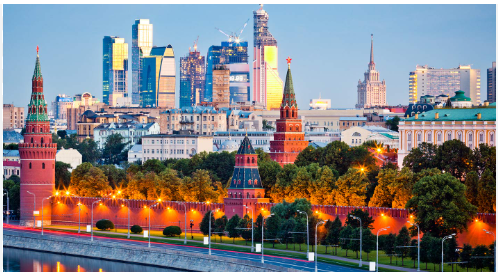
In December 1991, the Soviet Union—a superpower that had defined the 20th century—ceased to exist. For the West, it was the triumphant end of the Cold War. For the millions of people living within its borders, it was a political earthquake that shattered their world. But the collapse of a 70-year-old empire is never a clean break. The legacy of the USSR did not simply vanish with the lowering of the red flag over the Kremlin; instead, it seeped into the foundations of the new Russia. Like a ghost in the machine, the Soviet past continues to haunt the country’s politics, shape its cityscapes, inform its foreign policy, and echo in the collective mindset of its people. To understand modern Russia—its strengths, its anxieties, and its ambitions—one must first understand the deep and often contradictory legacies left behind by the union of Soviet socialist republics.
Here are the top ten lasting legacies of the Soviet Union that continue to define Russia today.
1. The Supremacy of the Centralized State
The core principle of the Soviet system was the absolute authority of the state, as executed by the Communist Party. This top-down structure controlled everything from the economy to the arts. While communism as an ideology is gone, this tradition of a powerful, centralized state has endured. In modern Russia, the Kremlin remains the undisputed centre of power, with a “power vertical” that concentrates authority in the hands of the president. This system fosters a public expectation that the state is the primary problem-solver and provider, a paternalistic relationship that was a hallmark of Soviet life. It also helps explain the relative weakness of civil society and independent political institutions, as the Soviet model left little room for grassroots organization or political opposition, a pattern that persists today.
2. A “Superpower” Identity on the World Stage
The Soviet Union was one of two global superpowers, locked in a decades-long ideological and military struggle with the United States. This deeply ingrained sense of being a major global power did not disappear in 1991. Modern Russia inherited the USSR’s nuclear arsenal and its permanent seat on the UN Security Council, and with them, a “superpower mentality.” This legacy drives much of Russia’s foreign policy, which is characterized by a desire to project strength, maintain a sphere of influence over former Soviet republics (the “near abroad”), and act as a geopolitical counterweight to the United States. This inherited identity helps explain Russia’s assertive and often confrontational stance on the world stage, as it seeks to reclaim the global status it feels it lost after the Soviet collapse.
3. The Physical Landscape: Soviet-Era Cities and Infrastructure
To walk through almost any Russian city is to walk through a Soviet museum. The urban landscape is dominated by the architectural legacy of the USSR. Most prominent are the vast housing estates of identical, prefabricated concrete apartment blocks, known as Khrushchyovkas and Brezhnevkas, which still house millions of Russians. Beyond housing, the Soviets built entire cities from scratch, often around a single factory or industrial plant. These “monotowns” (monogoroda), designed to serve the command economy, now face immense social and economic challenges, as they are often geographically isolated and wholly dependent on industries that are no longer competitive. This physical infrastructure is one of the most visible and enduring reminders of the Soviet past, shaping the daily lives of a majority of the population.
4. An Influential Security and Intelligence Apparatus
In the USSR, the KGB was famously known as the “sword and shield of the Party,” a powerful and feared institution that ensured state security and political loyalty. While the KGB was officially dissolved, its main successor, the Federal Security Service (FSB), has retained a similar level of influence and power within the modern Russian state. This legacy is most clearly seen in the rise of the siloviki—a term for officials who came from the security or military services. The fact that Russia’s post-Soviet leadership, including President Vladimir Putin himself, is heavily populated by former intelligence officers demonstrates a direct continuation of the Soviet power structure, where the security apparatus is not just a government agency, but a core component of the ruling elite.
5. The Demographic Echoes of a Traumatic Century
The Soviet 20th century was marked by a series of devastating demographic catastrophes: World War I, the Russian Civil War, famines, Stalin’s purges, and the immense losses of World War II. These events left deep scars on Russia’s population structure. This was compounded by a severe demographic crisis in the 1990s, when the economic chaos following the Soviet collapse led to a plummeting birth rate and a skyrocketing male death rate. The result is a series of “demographic echoes”—where a smaller generation from a past crisis reaches child-bearing age, leading to another dip in births. This lasting legacy of population decline and imbalance remains one of the most serious long-term challenges facing the Russian government today.
6. The “Soviet Mentality” and Social Attitudes
Seventy years of Soviet rule forged a unique set of social attitudes and psychological traits, often referred to as the “Soviet mentality” or homo sovieticus. This mindset is characterized by a blend of paternalistic reliance on the state, a deep-seated cynicism and distrust towards official information (a holdover from a time when everyone had to read between the lines of state propaganda), and a weaker tradition of individual initiative and civic engagement compared to many Western societies. While this is changing with younger generations, these inherited attitudes still influence social interactions, political behaviour, and the relationship between the individual and the state in modern Russia.
7. A Vast and Potent Military-Industrial Complex
The Cold War was, above all, an arms race. To compete with the West, the Soviet Union built a colossal and technologically sophisticated military-industrial complex. Modern Russia is the direct heir to this massive enterprise. It inherited the USSR’s sprawling network of weapons design bureaus, factories, and research institutions. Most importantly, it inherited the vast Soviet nuclear arsenal, which remains the ultimate guarantor of Russia’s sovereignty and its primary claim to global power status. This military legacy continues to be a cornerstone of the Russian economy and national identity, and the advanced weaponry it produces, from fighter jets to submarines, is a key tool of its foreign policy.
8. Widespread Nostalgia for a Bygone Era
For many Russians, particularly those who lived through it, the collapse of the Soviet Union was not a moment of liberation, but the beginning of a decade of chaos, poverty, and national humiliation. The 1990s were marked by economic collapse, rampant crime, and a loss of national standing. As a result, many look back on the late Soviet period with a sense of nostalgia—not necessarily for communism, but for the perceived stability, order, and social safety net that the state provided. This Soviet nostalgia is a powerful social and political force in modern Russia, often harnessed to legitimize the current government’s emphasis on stability and state control by contrasting it with the “wild capitalism” of the Yeltsin years.
9. A Standardized, Science-Focused Education System
The Soviet Union prided itself on its education system, which was highly centralized, standardized, and geared towards producing world-class scientists and engineers to compete in the space and arms races. This system emphasized rote memorization, discipline, and a deep respect for the sciences, mathematics, and a single, state-approved version of history. The basic structure of this system, with its uniform national curriculum and focus on technical disciplines, largely persists in Russian schools today. While reforms have been introduced, the Soviet legacy of a top-down, one-size-fits-all approach to education continues to shape the knowledge and worldview of millions of young Russians.
10. The Complexities of a Multi-Ethnic Federation
The USSR was, in name, a union of ethnically defined republics. The modern Russian Federation is its direct successor, a vast and diverse country comprising over 190 ethnic groups and dozens of republics, some with their own official languages and constitutions. This inherited multi-ethnic structure is a complex legacy. On one hand, it has created a unique, multicultural society. On the other, it presents ongoing challenges for the central government in Moscow, which must manage ethnic tensions, regional identities, and separatist sentiments, particularly in areas like the North Caucasus. Balancing the power of the central state with the rights of its diverse ethnic republics is a political puzzle that has its roots deep in the Soviet system of national territories.
Further Reading
For those interested in exploring the deep and complex transition from the Soviet Union to modern Russia, these books offer profound insights:
- Secondhand Time: The Last of the Soviets by Svetlana Alexievich – A Nobel Prize-winning masterpiece of oral history that captures the voices of ordinary people grappling with the collapse of the Soviet dream and the bewildering new world that replaced it.
- The Future Is History: How Totalitarianism Reclaimed Russia by Masha Gessen – A powerful and insightful analysis of how the hopes of the 1990s gave way to the resurgence of an autocratic state, told through the lives of a generation of Russians who came of age as the USSR fell.
- Putin’s People: How the KGB Took Back Russia and Then Took on the West by Catherine Belton – A deeply researched and compelling account of how former KGB officers, led by Vladimir Putin, seized control of the Russian economy and state, demonstrating the direct lineage of power from the Soviet security services to today’s Kremlin.
Here at Zentara.blog, our mission is to take those tricky subjects and unlock them, making knowledge exciting and easy to grasp for everyone. But the adventure doesn’t stop on this page! I’m constantly exploring new frontiers and sharing discoveries across the digital universe. Want to dive deeper into more mind-bending Top 10s and keep expanding your world? Come join us on my other platforms – I’ve got unique experiences waiting for you on each one!
Get inspired by visual wonders and bite-sized facts: See the world through Zentara’s eyes on Pinterest!
Pin our fascinating facts and stunning visuals to your own boards. Explore Pins on Pinterest: https://uk.pinterest.com/zentarablog/
Discover quick insights and behind-the-scenes peeks: Hop over to Tumblr for snippets, quotes, and unique content you won’t find anywhere else. It’s a different flavour of discovery! Follow the Fun on Tumblr: https://www.tumblr.com/zentarablog
Ready for deep dives you can listen to or watch? I’m bringing my accessible approach to video and potentially audio! Subscribe to my YouTube channel and tune into future projects that make learning pop! Subscribe on YouTube: https://www.youtube.com/@ZentaraUK
Seeking even more knowledge in one place? I’ve compiled some of my most popular topic deep dives into fantastic ebooks! Find them on Amazon and keep the learning journey going anytime, anywhere. Find Our Ebooks on Amazon: https://www.amazon.co.uk/s?k=Zentara+UK&ref=nb_sb_noss
Connect with us and fellow knowledge seekers: Join the conversation on BlueSky! I’m sharing updates, thoughts, and maybe even asking you what wonders I should explore next. Chat with Us on BlueSky: https://bsky.app/profile/zentarablog.bsky.social
Perfect for learning on the move! I post multiple 10-minute podcasts per day on Spotify. Pop on your headphones and fill your day with fascinating facts while you’re out and about! Listen on Spotify: https://open.spotify.com/show/3dmHbKeDufRx95xPYIqKhJFollow us on Instagram for bytesize knowledge! I post multiple posts per day on my official Instagram account. https://www.instagram.com/zentarablog/ Every click helps us keep bringing honest, accessible knowledge to everyone. Thanks for exploring with us today – see you out there in the world of discovery!




Leave a Reply