
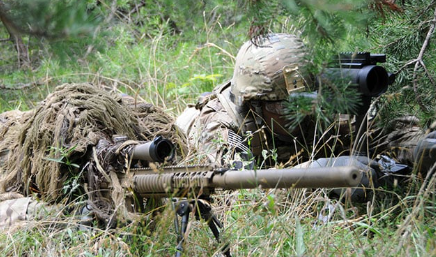
In the grand and often brutal theatre of modern warfare, the script doesn’t always follow the expected narrative of powerful armies clashing on open fields. Sometimes, the most decisive and conflict-defining moments are written in the shadows, by agile, elusive forces that turn the very landscape into a weapon. This was the story of the conflicts in both Vietnam and Iraq, where conventional military superiority was met with the unconventional, persistent, and ultimately transformative power of guerrilla warfare. This approach, favouring surprise, intimate knowledge of the terrain, and a deep connection with the local populace, didn’t just challenge the technologically advanced armies they faced; it fundamentally shaped the nature, duration, and outcome of these wars. From the dense, triple-canopy jungles of Southeast Asia to the labyrinthine urban alleyways of the Middle East, the tactics of the guerrilla fighter proved to be a great equalizer, leaving an indelible mark on military strategy and the course of modern history.
Here, we’ll explore the top 10 ways in which guerrilla warfare was not just a tactic, but the central, defining element of the conflicts in Vietnam and Iraq, demonstrating how a seemingly weaker force can dictate the terms of engagement and redefine the very meaning of victory and defeat.
1. The Battlefield Without Borders: Erasing Front Lines
In traditional warfare, armies meet along clearly defined fronts. But in Vietnam and Iraq, guerrilla forces completely dissolved this concept. The Viet Cong and, decades later, Iraqi insurgents, operated on the principle that the battlefield was everywhere. A peaceful village by day could become a hostile staging ground by night. A bustling urban market could, in an instant, turn into the site of a deadly ambush. This created a pervasive sense of unease and constant threat for conventional forces. There was no “safe” rear area to which soldiers could retreat. Every patrol, every supply convoy, every interaction with the local population was fraught with potential danger. This tactic of a borderless battlefield was psychologically exhausting and forced a fundamental shift in military doctrine, moving from a focus on capturing territory to a much more complex and challenging mission of population security. It turned every soldier into a frontline combatant, regardless of their official role, and stretched resources to their breaking point.
2. The Power of Patience: A War of Attrition and Will
Conventional armies are often built for swift, decisive victories. Guerrilla forces, on the other hand, operate on a much longer timeline. In both Vietnam and Iraq, the insurgents understood that they could not defeat a superpower in a head-to-head battle. Their strategy was one of attrition, not of annihilation. The goal was to inflict a steady stream of casualties, disrupt operations, and, most importantly, erode the political will of the occupying force and its domestic support. Each ambush, each improvised explosive device (IED), was a small act in a much larger play, designed to raise the cost of the war in blood and treasure to a point that it became unsustainable. This war of a thousand cuts was brutally effective. In Vietnam, it wore down American public support over years, leading to immense political pressure to withdraw. Similarly, in Iraq, the relentless insurgency transformed a mission initially billed as a short-term liberation into a long, bloody, and deeply divisive occupation.
3. Blending with the Population: The People as the Sea
Mao Zedong, a master of guerrilla theory, famously said that “the guerrilla must move amongst the people as a fish swims in the sea.” This was a core principle for both the Viet Cong and Iraqi insurgents. By dressing as civilians, living in local communities, and often being part of those communities, fighters became nearly impossible to distinguish from the general population. This created an agonizing dilemma for conventional forces. How do you target an enemy you cannot see? Aggressive tactics risked alienating the very people whose support was crucial, leading to civilian casualties that would then be used as a powerful recruiting tool for the insurgency. This “people’s war” approach not only provided cover and concealment but also a vital network for intelligence, supplies, and new recruits. It turned the local population into the central battleground of the conflict, a struggle for “hearts and minds” that proved far more complex than any purely military engagement.
4. The Terrain as a Weapon: From Jungle Trails to Urban Jungles
Guerrilla fighters are masters of their environment, turning the natural and man-made landscape into a formidable ally. In Vietnam, the Viet Cong utilized the dense jungles, extensive tunnel systems like those at Cu Chi, and the Ho Chi Minh Trail to move troops and supplies with near invisibility. The jungle canopy that hindered American air power was a sanctuary for the Viet Cong. Decades later, in Iraq, insurgents adapted these principles to an urban environment. The tightly packed streets of cities like Fallujah and Ramadi became modern-day jungles, with rooftops for sniper nests, alleyways for ambushes, and a civilian population that could melt into in an instant. Improvised explosive devices (IEDs), the signature weapon of the Iraq War, were a brutally effective use of the man-made terrain, turning every roadside, every bridge, and every underpass into a potential death trap. In both conflicts, the guerrilla’s intimate knowledge of the terrain gave them a home-field advantage that technology and superior firepower could not easily overcome.
5. Psychological Warfare: The Battle for Perception
Guerrilla warfare is as much a battle of minds as it is of bullets. Insurgents in both Vietnam and Iraq proved exceptionally adept at propaganda and psychological operations. They sought to portray themselves as nationalist heroes fighting a foreign invader, a narrative that resonated with many in the local population and even with some anti-war movements internationally. They used attacks not just to inflict physical damage, but to send a message: that the occupying force was vulnerable, that the local government was powerless, and that resistance was not only possible but also noble. The Tet Offensive in Vietnam, while a military failure for the Viet Cong in many respects, was a stunning psychological victory. It shattered the illusion of American progress and control. In Iraq, coordinated attacks and the use of media, both traditional and online, were used to create a constant sense of chaos and to undermine the legitimacy of the new Iraqi government and the coalition forces supporting it. This battle for perception was crucial in shaping public opinion both within the conflict zone and back home.
6. Decentralized Command: The Hydra-Headed Enemy
Conventional armies are typically hierarchical, with a clear chain of command. Taking out the leadership can cripple the entire force. Guerrilla movements, by contrast, are often decentralized and operate in small, autonomous cells. This structure makes them incredibly resilient. Capturing or killing one cell leader has little effect on the overall insurgency. In Vietnam, the Viet Cong operated with a high degree of local autonomy, allowing them to adapt quickly to changing circumstances without waiting for orders from a central command. The insurgency in Iraq was even more fragmented, comprised of a complex mix of Sunni and Shia militias, former Ba’athists, and foreign fighters, each with their own leadership and objectives. This “hydra-headed” nature meant that even as one group was degraded, another could rise to take its place. For conventional forces, it was like fighting a shadow; there was no single centre of gravity to target, making a decisive military victory an elusive, if not impossible, goal.
7. Asymmetrical Technology: The Power of the Improvised
While facing the most technologically advanced military in the world, guerrilla fighters in both Vietnam and Iraq excelled at asymmetrical warfare, using low-cost, readily available materials to counter high-tech weaponry. In Vietnam, this meant simple but deadly booby traps, like sharpened bamboo punji sticks, and the adaptation of unexploded American ordnance into their own explosive devices. In Iraq, this principle was perfected with the improvised explosive device (IED). Made from common materials like artillery shells, fertilizer, and mobile phones for detonation, the IED became the single most effective weapon against coalition forces. It was a cheap, easily produced, and devastatingly effective tool that could neutralize the advantages of armoured vehicles and superior training. This ability to innovate with simple technology demonstrated a key tenet of guerrilla warfare: it’s not about matching the enemy’s technology, but about finding creative and unexpected ways to circumvent it.
8. The Protracted War Strategy: Outlasting the Opponent
One of the most fundamental differences between guerrilla and conventional forces is their perception of time. For the occupying power, time is an enemy. The longer a conflict drags on, the more public support wanes, the higher the costs become, and the greater the political pressure to withdraw. For the guerrilla, time is an ally. Their strategy is inherently long-term, based on the belief that they can simply outlast their opponent. They are fighting on their own soil, for a cause they believe in, and often have nowhere else to go. This “protracted war” model was explicitly articulated by figures like Ho Chi Minh in Vietnam and was implicitly understood by insurgents in Iraq. They didn’t need to win every battle; they just needed to not lose, to continue to exist and to fight, until their technologically superior but less patient adversary finally gave up and went home. This strategic patience proved to be one of the most powerful weapons in their arsenal.
9. The Political Objective: Warfare as an Extension of Politics
Perhaps the most crucial way guerrilla warfare defined these conflicts was its unwavering focus on a political goal. For the Viet Cong, the objective was the reunification of Vietnam under a communist government and the expulsion of foreign powers. For many Iraqi insurgents, it was the removal of coalition forces and the establishment of a government more aligned with their own sectarian or political interests. Every military action, from a small-scale ambush to a major offensive, was designed to serve this ultimate political objective. This is a lesson that conventional military powers have often struggled with. In both Vietnam and Iraq, the United States achieved overwhelming military dominance, winning virtually every major battle. However, this military success did not translate into political success. By failing to win the political struggle for the loyalty of the population, and by facing an enemy for whom the political goal was paramount, conventional military victory became a hollow concept.
10. The Legacy of Insurgency: Redefining Global Military Doctrine
The experiences in Vietnam and Iraq have had a profound and lasting impact on global military thinking. The success of guerrilla tactics in bogging down a superpower forced a major re-evaluation of military doctrine. The term “counter-insurgency” (COIN) moved from a niche concept to a central focus of military training and strategy. The wars highlighted the critical importance of non-military factors, such as understanding local culture, building relationships with the population, and engaging in effective governance and economic development. The conflicts demonstrated that future wars would likely not be fought on the open plains of Europe, but in the complex human and physical terrain of “asymmetric” conflicts. The guerrilla fighters of Vietnam and Iraq, in their own brutal and effective way, became the teachers of a new generation of military leaders, leaving a legacy that continues to shape how modern armies prepare for and engage in conflict around the world.
Further Reading
For those interested in delving deeper into the complexities of guerrilla warfare and the conflicts it has defined, here are a few highly recommended books that offer accessible yet profound insights:
- “Street Without Joy: The French Debacle in Indochina” by Bernard B. Fall – A classic and sobering account of the French experience in Vietnam, which laid the groundwork for the later American involvement and is a masterclass in understanding the nature of insurgency.
- “The Accidental Guerrilla: Fighting Small Wars in the Midst of a Big One” by David Kilcullen – Drawing on his experiences as a senior advisor in Iraq and Afghanistan, Kilcullen provides a brilliant analysis of modern insurgency and the complex dynamics that drive it.
- “War Comes to Long An: Revolutionary Conflict in a Vietnamese Province” by Jeffrey Race – A detailed and compelling study of how the Viet Cong were able to gain popular support at the local level, offering a ground-up perspective on the success of a guerrilla movement.
- “Fiasco: The American Military Adventure in Iraq” by Thomas E. Ricks – A comprehensive and critically acclaimed history of the Iraq War, which details the missteps and misunderstandings that allowed the insurgency to flourish.
Here at Zentara.blog, our mission is to take those tricky subjects and unlock them, making knowledge exciting and easy to grasp for everyone. But the adventure doesn’t stop on this page! We’re constantly exploring new frontiers and sharing discoveries across the digital universe. Want to dive deeper into more mind-bending Top 10s and keep expanding your world? Come join us on our other platforms – we’ve got unique experiences waiting for you on each one!
Get inspired by visual wonders and bite-sized facts: See the world through Zentara’s eyes on Pinterest!
Pin our fascinating facts and stunning visuals to your own boards. Explore Pins on Pinterest: https://uk.pinterest.com/zentarablog/
Discover quick insights and behind-the-scenes peeks: Hop over to Tumblr for snippets, quotes, and unique content you won’t find anywhere else. It’s a different flavour of discovery! Follow the Fun on Tumblr: https://www.tumblr.com/zentarablog
Ready for deep dives you can listen to or watch? We’re bringing our accessible approach to video and potentially audio! Subscribe to our YouTube channel and tune into future projects that make learning pop! Subscribe on YouTube: https://www.youtube.com/@ZentaraUK
Seeking even more knowledge in one place? We’ve compiled some of our most popular topic deep dives into fantastic ebooks! Find them on Amazon and keep the learning journey going anytime, anywhere. Find Our Ebooks on Amazon: https://www.amazon.co.uk/s?k=Zentara+UK&ref=nb_sb_noss
Connect with us and fellow knowledge seekers: Join the conversation on BlueSky! We’re sharing updates, thoughts, and maybe even asking you what wonders we should explore next. Chat with Us on BlueSky: https://bsky.app/profile/zentarablog.bsky.social
Perfect for learning on the move! We post multiple 10-minute podcasts per day on Spotify. Pop on your headphones and fill your day with fascinating facts while you’re out and about! Listen on Spotify: https://open.spotify.com/show/3dmHbKeDufRx95xPYIqKhJFollow us on Instagram for bytesize knowledge! We post multiple posts per day on our official Instagram account. https://www.instagram.com/zentarablog/ Every click helps us keep bringing honest, accessible knowledge to everyone. Thanks for exploring with us today – see you out there in the world of discovery!




Leave a Reply