
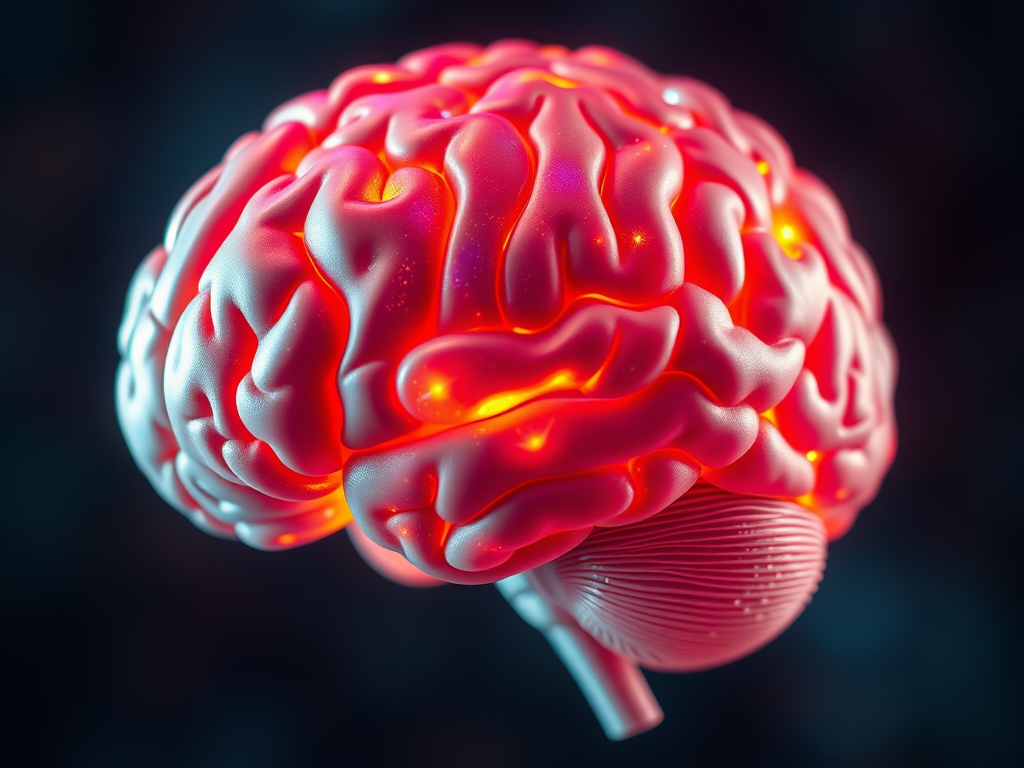
Your brain is the most complex object in the known universe. Weighing about three pounds, this squishy, wrinkled organ is your personal command center, responsible for absolutely everything you think, feel, and do. It’s the source of your personality, your memories, your movements, and even the subconscious processes like breathing and heartbeat that keep you alive. 🧠
Trying to understand the brain can feel like trying to untangle a bowl of spaghetti in the dark. But at its core, the brain manages a set of key functions that allow us to navigate the world and experience life. Scientists are still uncovering its deepest secrets, but we have a pretty good handle on the main jobs this incredible organ performs.
Think of your brain like the CEO, IT department, library, and power plant of your body, all rolled into one. Here are the top 10 functions your amazing brain carries out every single second.
1. The Captain of Movement: Controlling Your Body
Every time you walk, wave, blink, or even just stand still without falling over, you have your brain to thank. Specifically, the cerebrum, the largest part of your brain, initiates voluntary movements. Within the cerebrum, a specialized strip called the motor cortex sends signals down through your spinal cord and out to your muscles, telling them when and how to contract.
But it’s not just about starting the movement. Your cerebellum, tucked away at the back, acts like a sophisticated co-pilot. It fine-tunes these signals, coordinating muscle groups so your movements are smooth, precise, and balanced. Think of trying to touch your finger to your nose. The cerebrum says, “Move the arm,” but the cerebellum calculates the exact trajectory, speed, and muscle adjustments needed to hit the target perfectly. It’s also the cerebellum that learns and automates complex movements, like riding a bike or playing a musical instrument, turning conscious effort into unconscious habit. 🚴♀️
2. The Interpretation Center: Making Sense of Your Senses
Your brain is constantly bombarded with information from the outside world through your five main senses: sight, sound, smell, taste, and touch. But this raw data is meaningless until your brain interprets it. Different parts of your cerebral cortex (the wrinkly outer layer of the cerebrum) specialize in processing different sensory inputs.
The occipital lobe at the back of your brain is dedicated almost entirely to processing visual information from your eyes. The temporal lobes on the sides handle auditory information from your ears, allowing you to understand language and recognize sounds. The parietal lobe, located near the top and back, processes touch, temperature, pressure, and pain signals from your skin. It also helps you understand where your body is in space (proprioception). Even smell and taste have dedicated areas, primarily linked to the frontal and temporal lobes. Your brain acts like a translator, turning light waves, sound waves, chemicals, and pressure into the rich, meaningful perceptions that make up your reality. 👁️👂👃👅✋
3. The Executive Suite: Thinking, Planning, and Problem-Solving
This is where the magic of human cognition happens. The front-most part of your brain, the frontal lobe (specifically the prefrontal cortex), acts as your personal CEO. This area is responsible for higher-level “executive functions.” What does that mean? It’s where you:
- Plan and organize: Thinking ahead, setting goals, making to-do lists.
- Make decisions: Weighing options, considering consequences.
- Solve problems: Analyzing situations, finding solutions.
- Regulate behavior: Controlling impulses, filtering out distractions, acting appropriately in social situations.
- Engage in abstract thought: Thinking about concepts like justice, love, or the future.
This part of the brain is the last to fully develop (often not until your mid-twenties!), which is why teenagers are sometimes known for making impulsive decisions. It’s the seat of your personality, your judgment, and your ability to navigate complex social interactions. 🤔
4. The Living Library: Memory and Learning
Your ability to learn new things and remember past experiences is one of the brain’s most crucial functions. Learning physically changes your brain by creating and strengthening connections (synapses) between brain cells (neurons). The more you practice or review something, the stronger these pathways become.
A key structure buried deep within the temporal lobe, called the hippocampus, plays a vital role in forming new declarative memories—the “what, where, and when” of your life (facts and events). Think of the hippocampus as the brain’s “save button” for new experiences. Once encoded, these memories are stored more permanently across different areas of the cerebral cortex.
Other types of memory, like procedural memory (how to do things, like riding that bike), involve structures like the cerebellum and basal ganglia. Memory isn’t stored in one single spot, but rather as a distributed network across the brain, constantly being updated and reconstructed. 📚
5. The Emotional Core: Generating Feelings
Your emotions—joy, fear, anger, sadness, love—are generated and processed by a collection of structures deep within the brain known as the limbic system. This isn’t one single “emotion center,” but a network including parts like the amygdala, hippocampus, hypothalamus, and parts of the thalamus.
The amygdala, an almond-shaped structure, is particularly important for processing fear and threat, triggering the “fight or flight” response. It also helps tag memories with emotional significance, making you remember scary or exciting events more vividly. The hypothalamus connects your emotions to physical responses, like a racing heart when you’re scared or butterflies in your stomach when you’re nervous.
While the limbic system generates raw emotions, your prefrontal cortex (the thinking part) interacts with it, allowing you to regulate your feelings, understand their context, and make decisions based on them. It’s a constant dialogue between your primal feelings and your rational thought. 😊😨😠😢❤️
6. The Communication Hub: Language Processing
Our ability to understand and produce language is a uniquely human skill, primarily managed by specific areas in the left hemisphere of the cerebrum for most people.
- Wernicke’s area, located in the temporal lobe, is crucial for understanding spoken and written language. Damage here can lead to someone being able to speak fluently, but their words might not make sense, and they struggle to comprehend others.
- Broca’s area, found in the frontal lobe, is responsible for producing speech. It controls the muscle movements needed for articulation. Damage to Broca’s area can result in difficulty forming words or speaking fluently, even though comprehension might remain intact.
These two areas work together, connected by a bundle of nerve fibers, allowing you to listen, understand, formulate a response, and then speak or write it. Reading, writing, and even understanding sign language involve intricate coordination across these and other brain regions. 🗣️✍️
7. The Autopilot System: Regulating Automatic Functions
While you’re busy thinking, feeling, and moving, a crucial part of your brain is working tirelessly behind the scenes to keep you alive. The brainstem, connecting the cerebrum and cerebellum to the spinal cord, acts as the body’s autopilot. It controls essential, involuntary functions that you rarely think about.
The brainstem includes the medulla oblongata, pons, and midbrain. These structures regulate:
- Breathing: Controlling your respiratory rate.
- Heart rate and blood pressure: Keeping your circulation steady.
- Swallowing and digestion: Managing the complex muscle movements involved.
- Consciousness and alertness: Regulating sleep-wake cycles.
- Basic reflexes: Like blinking, coughing, and sneezing.
Damage to the brainstem is often catastrophic because it controls the very functions necessary for life. It’s the oldest, most fundamental part of your brain, ensuring your body’s basic machinery keeps running smoothly. ❤️💨
8. The Balance Master: Coordination and Posture
We already mentioned the cerebellum‘s role in smoothing out movements, but its job in maintaining balance and posture deserves its own spotlight. Your cerebellum constantly receives sensory information from your inner ears (which detect head movement and gravity), your eyes, and receptors in your muscles and joints (proprioception).
It integrates all this data in real-time to make tiny, continuous adjustments to your muscle tone and posture, allowing you to stand upright, walk without stumbling, and maintain your balance even on uneven surfaces. Think about walking on ice – your cerebellum is working overtime, analyzing feedback and sending rapid-fire correction signals to your muscles to prevent a fall. It’s the unsung hero that keeps you steady on your feet.🤸♀️
9. The Timekeeper: Managing Sleep and Wake Cycles
Your brain dictates your daily rhythm of sleep and wakefulness through an internal “master clock” located in the hypothalamus called the suprachiasmatic nucleus (SCN). This tiny cluster of cells receives information about light levels directly from your eyes.
When it gets dark, the SCN signals another brain structure, the pineal gland, to release the hormone melatonin, which makes you feel sleepy. When light levels increase in the morning, melatonin production stops, and other brain systems (including parts of the brainstem and hypothalamus) release stimulating chemicals like cortisol and orexin to wake you up.
This intricate circadian rhythm doesn’t just control sleep; it influences hormone release, body temperature, metabolism, and alertness throughout the day. It’s why jet lag feels so disruptive – your internal clock is out of sync with the external light cycle. 😴☀️
10. The Visionary: Processing Visual Information
While interpreting all senses is crucial, vision is arguably our most dominant sense, and a huge amount of brainpower is dedicated to it. Light entering your eyes hits the retina, which converts it into electrical signals. These signals travel along the optic nerve to the thalamus (a relay station deep in the brain) and then primarily to the occipital lobe at the very back of your brain.
But processing vision isn’t just about seeing shapes and colors. The occipital lobe works closely with other areas:
- The parietal lobe helps determine where an object is in space and how to interact with it (like reaching for it).
- The temporal lobe helps identify what the object is, linking it to your memories and knowledge (recognizing a face or a familiar tool).
Your brain constructs your visual world, filling in blind spots, interpreting movement, recognizing patterns, and making sense of the complex stream of photons hitting your eyes. It truly creates the world you see. 🎬
Further Reading
- The Brain: The Story of You by David Eagleman
- A highly engaging and visually stunning companion to the PBS series, Eagleman makes complex neuroscience accessible and fascinating for a general audience.
- Incognito: The Secret Lives of the Brain by David Eagleman
- Explores the vast amount of processing happening below conscious awareness, revealing how much of “you” is driven by the hidden workings of your brain.
- The Man Who Mistook His Wife for a Hat and Other Clinical Tales by Oliver Sacks
- A classic collection of compassionate and beautifully written case studies of patients with bizarre neurological disorders, offering profound insights into the connection between brain, mind, and self.
- Phantoms in the Brain: Probing the Mysteries of the Human Mind by V.S. Ramachandran and Sandra Blakeslee
- Explores intriguing neurological phenomena like phantom limbs, synesthesia, and anosognosia through clever experiments and compelling patient stories.
- Why We Sleep: Unlocking the Power of Sleep and Dreams by Matthew Walker
- While focused on sleep, this book brilliantly explains the vital role sleep plays in nearly every brain function, from memory consolidation to emotional regulation.
Here at Zentara.blog, our mission is to take those tricky subjects and unlock them, making knowledge exciting and easy to grasp for everyone. But the adventure doesn’t stop on this page! We’re constantly exploring new frontiers and sharing discoveries across the digital universe. Want to dive deeper into more mind-bending Top 10s and keep expanding your world? Come join us on our other platforms – we’ve got unique experiences waiting for you on each one!
Get inspired by visual wonders and bite-sized facts: See the world through Zentara’s eyes on Pinterest!
Pin our fascinating facts and stunning visuals to your own boards. Explore Pins on Pinterest: https://uk.pinterest.com/zentarablog/
Discover quick insights and behind-the-scenes peeks: Hop over to Tumblr for snippets, quotes, and unique content you won’t find anywhere else. It’s a different flavour of discovery! Follow the Fun on Tumblr: https://www.tumblr.com/zentarablog
Ready for deep dives you can listen to or watch? We’re bringing our accessible approach to video and potentially audio! Subscribe to our YouTube channel and tune into future projects that make learning pop! Subscribe on YouTube: https://www.youtube.com/@ZentaraUK
Seeking even more knowledge in one place? We’ve compiled some of our most popular topic deep dives into fantastic ebooks! Find them on Amazon and keep the learning journey going anytime, anywhere. Find Our Ebooks on Amazon: https://www.amazon.co.uk/s?k=Zentara+UK&ref=nb_sb_noss
Connect with us and fellow knowledge seekers: Join the conversation on BlueSky! We’re sharing updates, thoughts, and maybe even asking you what wonders we should explore next. Chat with Us on BlueSky: https://bsky.app/profile/zentarablog.bsky.social
Perfect for learning on the move! We post multiple 10-minute podcasts per day on Spotify. Pop on your headphones and fill your day with fascinating facts while you’re out and about! Listen on Spotify: https://open.spotify.com/show/3dmHbKeDufRx95xPYIqKhJFollow us on Instagram for bytesize knowledge! We post multiple posts per day on our official Instagram account. https://www.instagram.com/zentarablog/ Every click helps us keep bringing honest, accessible knowledge to everyone. Thanks for exploring with us today – see you out there in the world of discovery!




Leave a Reply