
Table of Contents
We often imagine “ancient history” as a finished book, a story set in stone. But history is not a static text; it’s an active, ongoing investigation. Every year, new technologies and dedicated archaeologists unearth discoveries that force us to tear out old pages and rewrite entire chapters.
Recent digs and discoveries in 2024 and 2025, from the fields of France to the depths of Lake Titicaca, have been particularly revolutionary. We are learning that our ancestors were older, smarter, and far more interconnected than we ever believed possible. Forget the dusty, settled version of the past—history is being rewritten right now.
Here are 10 of the most incredible recent discoveries that are changing what we thought we knew about our ancient world.
1. Europe’s “Real” Oldest Stone Monuments (France)
For decades, we’ve associated the first great stone monuments—or megaliths—with famous sites like Stonehenge or the tombs of Ireland, dating them to the Neolithic period around 4,000-3,000 BCE. A stunning discovery in France has just shattered that timeline.
Archaeologists have been re-examining megalithic sites, including dolmens (portal tombs), and recent dating suggests some of these structures are up to 7,000 years old. This pushes their origins back to the very dawn of the Neolithic in Western Europe, making them the oldest known stone monuments on the continent. This discovery rewrites a fundamental story. It suggests the impulse to build massive, permanent structures for the dead or for ritual is not a late Neolithic development but one of the first things our ancestors did as they began to settle down.
2. A 43,000-Year-Old Neanderthal “Fingerprint” (Spain)
We often think of art as a uniquely Homo sapiens invention. But a discovery in a Spanish cave is challenging this core belief. Researchers have found what they believe to be an intentional “fingerprint” left by a Neanderthal in a pigment-covered stalagmite, dating back an astonishing 43,000 years.
This isn’t just a random smudge. The print appears to be a deliberate part of a larger composition of pigments on the cave wall, suggesting a level of symbolic thought, self-awareness, and artistry previously reserved only for our own species. This tiny, personal mark is a ghostly handshake from another kind of human. It suggests the “spark” of creativity we hold so dear may not be ours alone, but a shared inheritance from a common ancestor.
3. The Lost Frescoes of Dionysus (Pompeii)
Even after centuries of excavation, Pompeii continues to offer breathtaking surprises. In a new dig in Regio IX, archaeologists have uncovered a spectacular, large-scale hall adorned with stunning frescoes depicting the enigmatic rituals of Dionysus, the Greek god of wine, madness, and ecstasy.
These vibrant “megalography” paintings show ecstatic bacchantes (female followers), mischievous satyrs, and complex initiation scenes. This find is being compared to the murals in the famed “Villa of the Mysteries.” It provides an intimate, colorful glimpse into the private religious lives of Pompeii’s elite. It shows that these mystery cults, which promised personal salvation and a connection to the divine, were a vibrant and central part of Roman life right up until the moment Vesuvius erupted.
4. A Hidden Underwater Temple (Lake Titicaca, Bolivia)
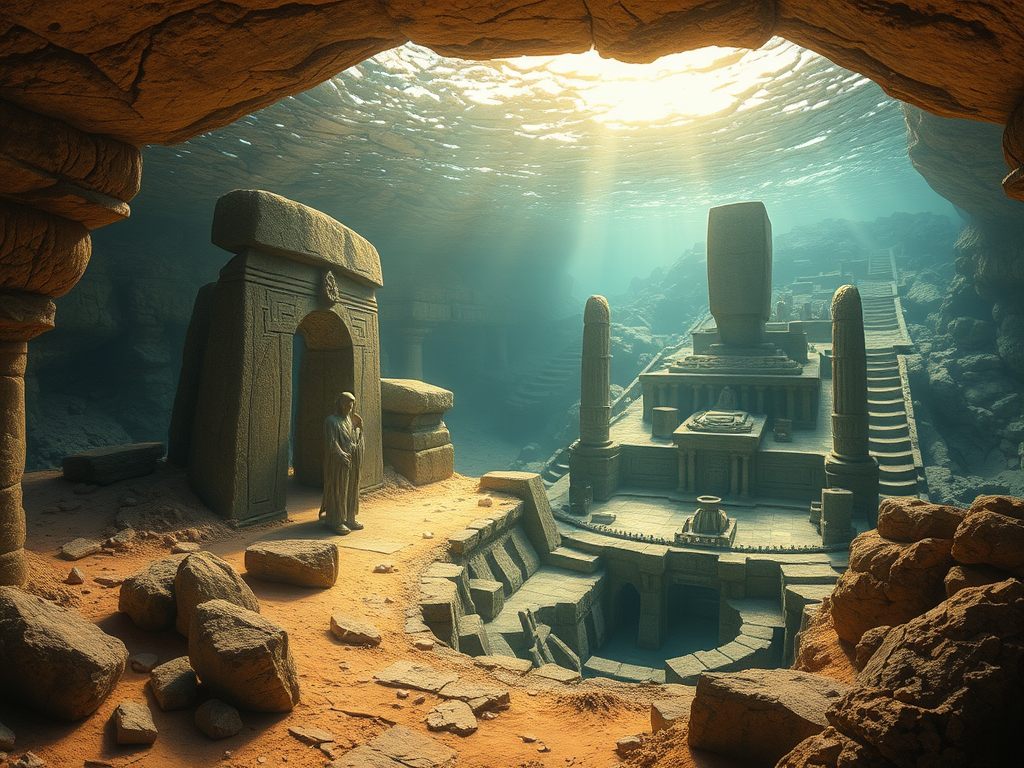
Lake Titicaca, the highest navigable lake in the world, has long been the sacred heart of Andean civilization. Now, using advanced underwater sonar and 3D modeling, archaeologists have discovered what they believe to be the ruins of a massive, hidden temple complex submerged just off the coast.
The scans reveal walls, terraces, and ceremonial structures consistent with the Tiwanaku civilization, which predated the Inca by centuries. This underwater discovery suggests a few incredible possibilities: either the lake’s water level was once much lower, or these structures were intentionally built as underwater offerings. It opens a new, submerged frontier for understanding this powerful and sophisticated Andean empire.
5. Solving the Mystery of the “Bromeswell Bucket” (UK)
In 2024, archaeologists at Sutton Hoo—the famous Anglo-Saxon royal burial site—were excavating a nearby grave when they unearthed a 1,500-year-old, intricately decorated wooden vessel known as the Bromeswell Bucket. The mystery was what it was used for.
After a meticulous micro-excavation, scientists have announced their findings. The bucket was not for water or wine; it was a cremation burial vessel. Inside, they found the calcined bones of both a human and an animal, likely a high-status individual buried with a companion. They also found a beautifully preserved, double-sided comb. This solves the bucket’s puzzle, painting a vivid, personal picture of Anglo-Saxon burial rites and their beliefs about what one needed for the journey to the afterlife.
6. Finding an Egyptian “Wizard Doctor’s” Tomb (Saqqara)
The necropolis of Saqqara in Egypt continues to be a source of unbelievable discoveries. Recently, an archaeological team uncovered the tomb of a man who held a unique and fascinating title: “Chief Palace Physician” during the reign of King Teti.
This wasn’t just any doctor. His tomb is filled with texts and offerings that blend medicine with magic, suggesting his role was as much “wizard” as it was “physician.” In the ancient world, medicine, ritual, and magic were inseparable. This doctor would have been a master of all three, using spells and incantations alongside practical medical treatments to heal the pharaoh. His tomb is a treasure trove for understanding the true nature of Egyptian science.
7. Ancient Farming Networks Found with Lasers (Michigan)
We are now discovering vast, ancient cities hidden in plain sight, thanks to Lidar—a laser-scanning technology that can “see” through dense forest canopies. In a stunning 2025 study, archaeologists using Lidar have mapped massive, 1,000-year-old Native American farming networks in the Upper Peninsula of Michigan.
The scans revealed extensive, quilt-like patterns of “raised agricultural beds” covering huge areas. This wasn’t simple, small-scale gardening. This was an intensive, highly organized, and engineered agricultural system, built by ancestral Menominee communities to grow crops like corn at the very northern limit of where it could be cultivated. This discovery rewrites the history of the region, proving that pre-Colonial Native American societies were practicing large-scale, sophisticated agriculture long before European contact.
8. The Brutal Truth of Egyptian Gold Mines
History isn’t just about kings and temples; it’s also about the lives of ordinary people. New archaeological analyses of remote, ancient Egyptian gold mines in the Eastern Desert are painting a grim picture of the human cost of pharaonic wealth.
Researchers have found widespread evidence of forced labor under brutal conditions. Skeletons of miners show signs of extreme physical distress, malnutrition, and trauma. Inscriptions and tools reveal a highly organized, state-run operation designed to extract the maximum amount of gold with ruthless efficiency. This discovery forces a more complex understanding of ancient Egypt: a civilization of breathtaking artistic achievement built on the backs of a brutally exploited and enslaved workforce.
9. The Oldest Roman Pot Found in Ireland
The connection between Roman Britain and ancient Ireland has often been debated. How much did they trade? Did Romans ever settle there? A recent, game-changing discovery is helping to answer that question. Archaeologists have identified a fragment of a Roman pot found in Ireland that is the oldest such artifact ever found on the island.
This small piece of pottery is a huge deal. It provides concrete proof of contact and trade between Ireland and the Roman world at a much earlier date than previously thought. It’s a tangible link suggesting that the Irish Sea was not a barrier, but a busy highway for goods, people, and ideas, long before the history books officially “start.”
10. A More Complex, Connected, and Creative Past
What do all these separate discoveries tell us? They all point in the same direction. The 2025 finds are collectively rewriting our “pop-up” version of history, which often assumes that art, agriculture, and engineering suddenly appeared.
These discoveries prove that our ancestors were more creative (the Neanderthal “fingerprint”), more ambitious (the 7,000-year-old French monuments), and more sophisticated (the Michigan Lidar farms) at a much earlier date than we ever gave them credit for. They show us a world that was far more interconnected, with trade routes spanning from Ireland to Rome and submerged temples in the Andes. They are replacing the simple, linear timeline with a much more complex, and frankly, more interesting story of our shared human journey.
Further Reading
For those who want to dig deeper into these new historical narratives and the science of archaeology, these books are a great place to start.
- The Dawn of Everything: A New History of Humanity by David Graeber and David Wengrow
- Kindred: Neanderthal Life, Love, Death and Art by Rebecca Wragg Sykes
- Pompeii: The Life of a Roman Town by Mary Beard
- The Horse, the Wheel, and Language: How Bronze-Age Riders from the Eurasian Steppes Shaped the Modern World by David W. Anthony
Here at Zentara.blog, our mission is to take those tricky subjects and unlock them, making knowledge exciting and easy to grasp for everyone. But the adventure doesn’t stop on this page! We’re constantly exploring new frontiers and sharing discoveries across the digital universe. Want to dive deeper into more mind-bending Top 10s and keep expanding your world? Come join us on our other platforms – we’ve got unique experiences waiting for you on each one!
Get inspired by visual wonders and bite-sized facts: See the world through Zentara’s eyes on Pinterest!
Pin our fascinating facts and stunning visuals to your own boards. Explore Pins on Pinterest: https://uk.pinterest.com/zentarablog/
Discover quick insights and behind-the-scenes peeks: Hop over to Tumblr for snippets, quotes, and unique content you won’t find anywhere else. It’s a different flavour of discovery! Follow the Fun on Tumblr: https://www.tumblr.com/zentarablog
Ready for deep dives you can listen to or watch? We’re bringing our accessible approach to video and potentially audio! Subscribe to our YouTube channel and tune into future projects that make learning pop! Subscribe on YouTube: https://www.youtube.com/@ZentaraUK
Seeking even more knowledge in one place? We’ve compiled some of our most popular topic deep dives into fantastic ebooks! Find them on Amazon and keep the learning journey going anytime, anywhere. Find Our Ebooks on Amazon: https://www.amazon.co.uk/s?k=Zentara+UK&ref=nb_sb_noss
Connect with us and fellow knowledge seekers: Join the conversation on BlueSky! We’re sharing updates, thoughts, and maybe even asking you what wonders we should explore next. Chat with Us on BlueSky: https://bsky.app/profile/zentarablog.bsky.social
Perfect for learning on the move! We post multiple 10-minute podcasts per day on Spotify. Pop on your headphones and fill your day with fascinating facts while you’re out and about! Listen on Spotify: https://open.spotify.com/show/3dmHbKeDufRx95xPYIqKhJFollow us on Instagram for bytesize knowledge! We post multiple posts per day on our official Instagram account. https://www.instagram.com/zentarablog/ Every click helps us keep bringing honest, accessible knowledge to everyone. Thanks for exploring with us today – see you out there in the world of discovery!




Leave a Reply