
Table of Contents
Flip a switch. In a fraction of a second, you have flooded a room with bright, clear, reliable light, banishing the shadows to the furthest corners. It’s an act so simple we do it without a flicker of thought.
But for 99.9% of human history, that act was pure magic.
For millennia, the day was dictated by the sun. Life, work, and safety were chained to daylight. The setting of the sun triggered an ancient, primal anxiety. The night was a cold, dark, and dangerous void. The entire story of human innovation, in many ways, has been a desperate, flickering battle to “chase the night away.” This struggle for illumination wasn’t just about seeing in the dark; it was about extending the day, enabling late-night reading, industry, and culture, and providing a sense of safety.
What did people use for light before the miracle of the lightbulb? The answer is a 40,000-year journey of fire, fat, and fantastic invention. From the humblest burning reed to complex networks of gas pipes, let’s illuminate the top 10 ways people lit their homes before electricity.
1. The Primal Glow: Firelight from the Central Hearth
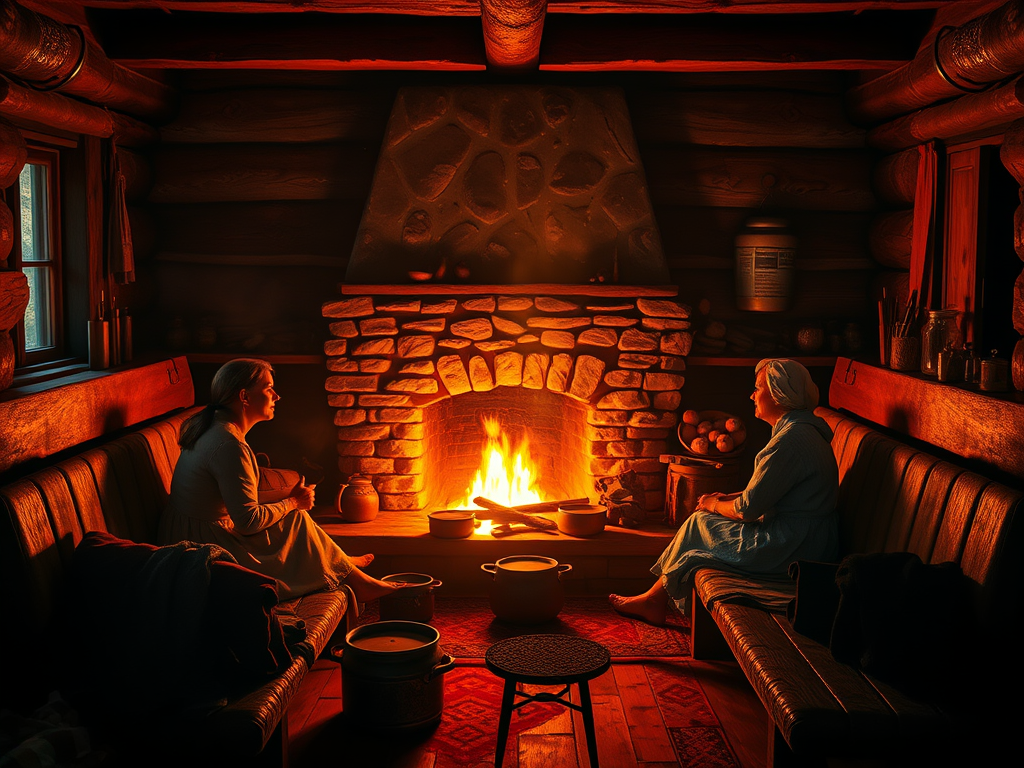
The first and most enduring source of artificial light wasn’t a “light” at all; it was a fire. For tens of thousands of years, the central hearth was the single most important piece of technology in any human dwelling. It was the source of heat for survival, the stove for cooking food, and the first “light fixture.”
This firelight was the “Paleolithic television,” the social and emotional center of the home. Families gathered around its reddish, flickering glow to eat, tell stories, and find safety from the predators prowling in the dark. However, as a primary light source, it was terribly inefficient. Most of its energy was heat, not light. Before the invention of the chimney, the smoke from an open fire filled the dwelling, stinging the eyes and blackening the walls. The light was dim, unsteady, and tethered to one spot. But it was a massive leap from total darkness. It was the original “on” switch.
2. The First Lamp: Stone Bowls of Burning Animal Fat
How do you make fire portable? That was the next great question. The answer, found in archaeological sites dating back over 40,000 years, was the primitive stone lamp. This was the first true “lamp.”
The technology was brilliantly simple: take a hollowed-out, non-flammable object (like a rock or a large shell), fill it with a flammable fuel, and add a wick. The fuel was the easiest thing to find: rendered animal fat, or tallow. The wick was whatever absorbent plant fiber was nearby, like a twist of moss or dried grass. This “prehistoric butter candle” was a profound innovation. For the first time, light could be moved. You could carry this small, smoky, and likely terrible-smelling lamp to a different corner of the cave or hut, allowing for work, such as creating cave paintings or tool-making, to happen away from the main fire.
3. The Explorer’s Light: The Pine-Resin Torch
While the stone lamp provided ambient light, it wasn’t good for walking around in the dark. For that, you needed the torch. The classic image of a medieval castle or an ancient cave, the torch was the go-to mobile light for millennia.
A torch was simply a stick wrapped on one end with an absorbent material, like linen rags, bundled fibers, or moss. This bundle was then soaked in a long-burning, sticky substance—most often pine resin (pitch) or animal fat. A well-made torch could burn for an hour or more, casting a wide, bright, and wildly unstable light. It was, in effect, a “flaming stopwatch,” a tool designed for a specific duration. But it was also dangerous, smoky, and messy. It dripped burning pitch and belched soot. You wouldn’t use one to light your living room, but it was the only way to navigate a dark forest or a castle rampart.
4. The ‘Poor Man’s Candle’: The Humble Rushlight
For the average peasant in medieval or colonial times, beeswax candles were an unthinkable luxury, and tallow candles were still expensive. The most common source of light for the common person was the humble, and largely forgotten, rushlight.
A rushlight was a “do-it-yourself” light source made from the cheapest materials imaginable: common field rushes and leftover cooking grease. The process was simple: harvest the tall, reedy rushes, peel the outer bark to expose the soft inner pith (leaving one thin strip of bark to act as a spine), and then dip this long, fragile wick into any spare kitchen fat, like bacon grease. The cooled, fat-soaked reed was then held by a special metal clip over a dish. It provided a dim, smoky, and very weak light—often just enough to see the person sitting opposite you. It burned for only 15-30 minutes, smelled like rancid fat, and required constant replacement, but it was, quite literally, almost free.
5. The Great Divide: Tallow Candles vs. Luxury Beeswax
For thousands of years, candles were the dominant form of lighting. But not all candles were created equal. There was a stark class divide written in wax.
For the vast majority, there were tallow candles. These were made from rendered animal fat (beef or mutton). They were the standard, but they were awful. They guttered and sputtered, and their wicks (which didn’t self-consume) had to be constantly “snuffed” or trimmed with scissors to stop them from producing a cloud of black, sooty smoke. Worst of all, they smelled terrible, both when lit (like burning meat) and when extinguished.
Then there was the luxury option: beeswax candles. Reserved for the Church and the very wealthy, beeswax was the “premium fuel” of the candle world. It burned with a bright, clean, and steady flame. It didn’t produce the acrid smoke of tallow, and it released a faint, sweet, honey-like aroma. A beeswax candle was a clear, unambiguous symbol of wealth and status.
6. The Classical Glow: Olive Oil Lamps of Rome and Greece
While northern Europe was dominated by animal-fat candles, the Mediterranean world ran on olive oil. The simple stone lamp evolved into the iconic terracotta (clay) and bronze oil lamps of ancient Greece and Rome.
These lamps were a staple of life, mass-produced in the tens of thousands. The design was simple and effective: a covered reservoir for the olive oil and one or more spouts for a linen wick. Olive oil was a far superior fuel to animal fat; it burned cleaner, brighter, and with less smell. An entire industry was built around producing these lamps, which lit the villas of senators, the desks of poets, and the markets of Pompeii. They were so common that they are one of the most frequent finds in Roman archaeological sites. This small, steady flame was the light that illuminated the classical world.
7. The Industrial Hunt: The Bright, Controversial Whale Oil Lamp
For centuries, the brightness of an oil lamp was limited by the fuel. This changed dramatically in the 18th and 19th centuries with the rise of the whaling industry. It was discovered that spermaceti, a waxy oil from the head of a sperm whale, burned with a “standard of light” so bright and consistent that it was used as the official measure of “candlepower.”
Whale oil lamps became the light of choice for those who could afford them. The oil was thinner than vegetable oils, burned with a much whiter, less-smoky flame, and gave off less odor than tallow. This demand for a brighter-burning home fueled a massive, global, and incredibly dangerous industry. This new, brighter light allowed people to read and work with ease after dark, but it came at a terrible cost, both in human lives and the decimation of the world’s whale populations.
8. The Scientific Revolution: The ‘Smokeless’ Argand Lamp
In the 1780s, a Swiss inventor named Aimé Argand created a lamp that was a true scientific breakthrough. It was the first revolutionary change in lighting in 20,000 years, producing a flame 6 to 10 times brighter than a candle and consuming its own smoke.
The Argand lamp’s genius was twofold. First, it used a hollow, circular wick, which allowed a column of air to be drawn up inside the flame, not just around the outside. This provided much more oxygen to the fuel. Second, Argand added a tall, thin glass chimney. This chimney shielded the flame from drafts, but more importantly, it created a strong convection current—a “flue”—that pulled air through the wick at high speed. This “supercharged” flame was so hot that it burned away the soot particles that normally create smoke, converting them into brilliant, white light. It was the “incandescent bulb” of the oil lamp world, and its design principles are still used in kerosene lamps today.
9. The People’s Light: The Kerosene (Paraffin) Lamp
The Argand lamp was brilliant but expensive. The whale oil lamp was bright but unsustainable. The light that truly democratized the night and ushered in the modern era was the kerosene lamp.
In the mid-19th century, scientists discovered how to distill “coal oil,” or kerosene (called paraffin in the UK), from abundant petroleum. This new fuel was a game-changer. It was cheap to produce, safe to transport and store, and burned brighter and cleaner than almost anything before it. When combined with the Argand lamp’s chimney design, the “hurricane lamp” or “parlor lamp” became the standard light source for the entire world. For the first time, a bright, reliable, and affordable light was available to the average farmer in rural America or a middle-class family in London. It allowed for education, socializing, and work to continue long after sunset, fundamentally changing the rhythm of daily life.
10. The Urban Network: The Hissing Mantle of Gas Lighting
The final step before electricity wasn’t a better lamp; it was a new system. Gas lighting brought illumination into the home as a utility, just like water. Starting in the early 19th century as public street lights, “town gas” (produced by burning coal) began to be piped directly into the homes of wealthy city-dwellers.
This was a new kind of magic. A homeowner could simply turn a small tap on the wall and, with a match, light a “gasolier” (a gas chandelier) that bathed the room in a bright, steady light. However, early gas jets were problematic. They were smelly, left sooty stains on the ceilings, and posed a constant risk of leaks, noxious fumes, and explosions. The light was also a rather unappealing, weak yellow flame. It wasn’t until the 1885 invention of the Welsbach mantle—a small, chemical-coated mesh bag that glowed with a brilliant white light when heated by the gas flame—that gas lighting became truly practical. It was this hissing, glowing mantle that went head-to-head with Edison’s first lightbulbs.
Conclusion: From Flickering Fat to a World on a Wire
From the smoky fire of a central hearth to the intricate network of gas pipes hissing in a Victorian wall, the quest for light has been a constant human endeavor. Each step—the portable lamp, the cheap rushlight, the clean beeswax, the brilliant Argand chimney, the democratic kerosene—was more than just a new tool. It was a cultural revolution.
These innovations expanded the usable day, allowing for literacy to flourish, economies to grow, and social lives to deepen. The next time you walk into a dark room and flip that effortless switch, take a moment to remember the thousands of years of smoky, smelly, and dangerous experiments it took for humanity to finally, and brilliantly, banish the night.
Further Reading
Want to learn more about this bright and smoky history? Here are a few accessible books to light the way:
- Brilliant: The Evolution of Artificial Light by Jane Brox
- Home Life in Colonial Days by Alice Morse Earle (Provides excellent detail on the domestic realities of candle and rushlight-making)
- The Age of Wonder: How the Romantic Generation Discovered the Beauty and Terror of Science by Richard Holmes (Covers the scientific boom in the late 18th century, including breakthroughs in light and gas)
Here at Zentara.blog, our mission is to take those tricky subjects and unlock them, making knowledge exciting and easy to grasp for everyone. But the adventure doesn’t stop on this page! We’re constantly exploring new frontiers and sharing discoveries across the digital universe. Want to dive deeper into more mind-bending Top 10s and keep expanding your world? Come join us on our other platforms – we’ve got unique experiences waiting for you on each one!
Get inspired by visual wonders and bite-sized facts: See the world through Zentara’s eyes on Pinterest!
Pin our fascinating facts and stunning visuals to your own boards. Explore Pins on Pinterest: https://uk.pinterest.com/zentarablog/
Discover quick insights and behind-the-scenes peeks: Hop over to Tumblr for snippets, quotes, and unique content you won’t find anywhere else. It’s a different flavour of discovery! Follow the Fun on Tumblr: https://www.tumblr.com/zentarablog
Ready for deep dives you can listen to or watch? We’re bringing our accessible approach to video and potentially audio! Subscribe to our YouTube channel and tune into future projects that make learning pop! Subscribe on YouTube: https://www.youtube.com/@ZentaraUK
Seeking even more knowledge in one place? We’ve compiled some of our most popular topic deep dives into fantastic ebooks! Find them on Amazon and keep the learning journey going anytime, anywhere. Find Our Ebooks on Amazon: https://www.amazon.co.uk/s?k=Zentara+UK&ref=nb_sb_noss
Connect with us and fellow knowledge seekers: Join the conversation on BlueSky! We’re sharing updates, thoughts, and maybe even asking you what wonders we should explore next. Chat with Us on BlueSky: https://bsky.app/profile/zentarablog.bsky.social
Perfect for learning on the move! We post multiple 10-minute podcasts per day on Spotify. Pop on your headphones and fill your day with fascinating facts while you’re out and about! Listen on Spotify: https://open.spotify.com/show/3dmHbKeDufRx95xPYIqKhJFollow us on Instagram for bytesize knowledge! We post multiple posts per day on our official Instagram account. https://www.instagram.com/zentarablog/ Every click helps us keep bringing honest, accessible knowledge to everyone. Thanks for exploring with us today – see you out there in theworld of discovery!



Leave a Reply