
Table of Contents
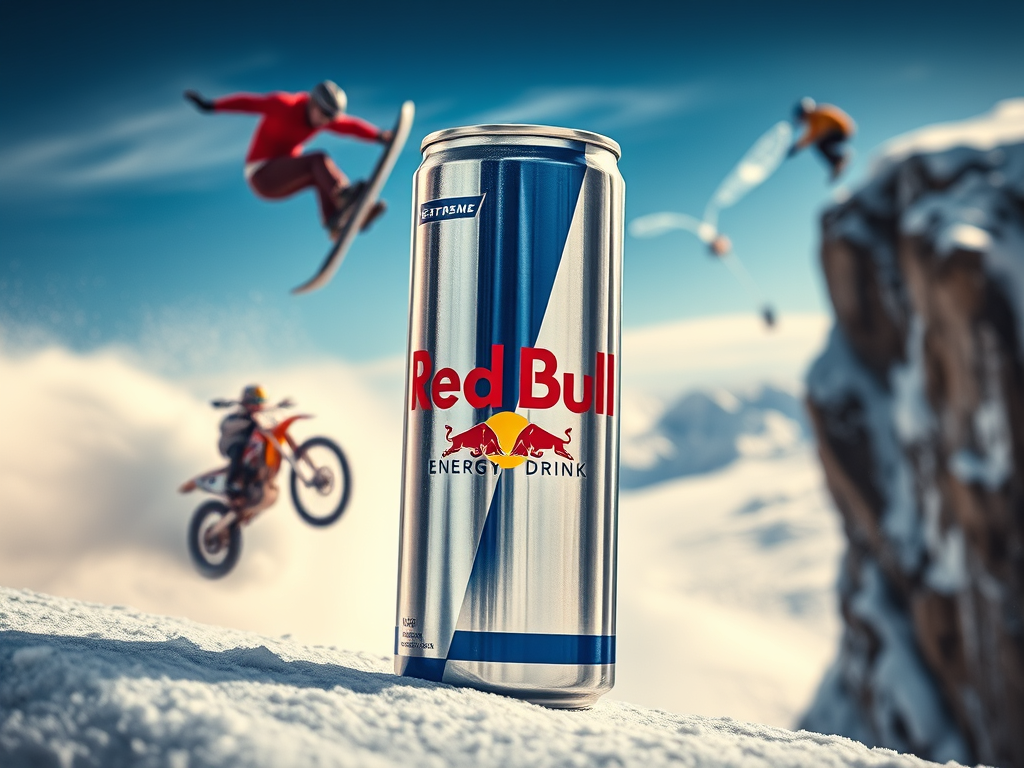
Red Bull is not just a beverage; it is a marketing masterclass in a slim silver can. With its ubiquitous presence at extreme sports events, music festivals, and Formula 1 podiums, the brand has convinced the world that it doesn’t just sell caffeine—it sells adrenaline. But behind the “Wings” slogan lies a fascinating corporate entity that operates unlike any other major food and beverage company. It is a private Austrian empire that started in a Thai pharmacy, built its reputation on rumors, and now essentially functions as a media house that happens to sell soda to fund its content.
Founded in the mid-1980s by an Austrian toothpaste salesman and a Thai pharmaceutical tycoon, Red Bull created the modern “energy drink” category from scratch. It defied market research that said the taste was “disgusting” and the logo was “too aggressive,” eventually becoming a multi-billion dollar giant that sells enough cans annually to provide one for nearly every person on Earth.
In this article, we will bypass the hype to uncover the fundamental and enduring facts about Red Bull GmbH. We will explore how empty trash cans were used to trick London clubbers, why the company technically funded a space mission, and the surprising truth about the “bull” ingredients. Here are 10 facts you didn’t know about Red Bull, optimized to give you the true story behind the energy.
1. It Was Originally a Thai Trucker’s Drink
While Red Bull is headquartered in the serene Austrian village of Fuschl am See, its DNA is entirely Southeast Asian. The drink was originally invented in 1976 by Chaleo Yoovidhya, a Thai businessman who owned a pharmaceutical company. He called it Krating Daeng, which translates literally to “Red Gaur” (a type of large, wild bison native to South Asia).
In Thailand, Krating Daeng was not a trendy club beverage; it was a cheap, uncarbonated tonic marketed to blue-collar workers, truck drivers, and farmers who needed to stay awake during long shifts. The story changed in 1982 when Austrian businessman Dietrich Mateschitz traveled to Thailand and found that the drink cured his jet lag. Seeing a massive opportunity, Mateschitz partnered with Yoovidhya to bring the concept to the West.
They tweaked the formula to suit Western palates—adding carbonation and reducing the sweetness—and launched Red Bull in Austria in 1987. However, to this day, the two drinks remain distinct. If you visit Thailand, you can still buy Krating Daeng in small, gold glass bottles. It tastes syrupy and flat compared to its fizzy Austrian cousin, but it is the true ancestor of the global phenomenon.
2. They Faked Their Popularity with Trash
When Red Bull first launched in London in the late 1980s, they faced a massive problem: they had no money for traditional advertising, and retailers were skeptical of this strange, expensive “energy” product. To manufacture “buzz,” the company employed one of the most brilliant examples of guerilla marketing in history.
Red Bull hired students to go to popular nightclubs and parties and fill the trash cans and sidewalks with empty Red Bull cans. When club-goers arrived, they saw the bins overflowing with crushed silver cans and assumed the drink was the hottest new trend in town. This created a psychological phenomenon known as “social proof”—people wanted it simply because they thought everyone else was already drinking it.
This strategy extended to their “Musketeers”—brand ambassadors who would drive around in Mini Coopers with a giant Red Bull can strapped to the roof, handing out free chilled cans to anyone who looked tired. They didn’t wait for customers to come to them; they aggressively inserted the product into the hands of their target demographic, effectively building a billion-dollar empire on free samples and well-placed litter.
3. The “Bull Sperm” Rumor is a Persistent Myth
For decades, a grotesque urban legend has circulated on playgrounds and internet forums claiming that the taurine in Red Bull is derived from bull testicles or semen. This myth likely stems from the word’s etymology—”taurus” is Latin for bull—and the fact that taurine was indeed first isolated from ox bile in 1827.
However, the reality is far more sterile. The taurine found in Red Bull (and almost all other energy drinks) is 100% synthetic, produced in pharmaceutical laboratories. No animals are involved in the process. Biologically, taurine is an amino acid that occurs naturally in the human body and in common foods like scallops, fish, and poultry.
The rumor actually helped the brand in a strange way. It added a layer of “forbidden” mystique and hyper-masculinity to the product that appealed to its teenage demographic. Red Bull has largely let the rumor slide over the years, likely realizing that even a gross myth keeps people talking about the brand, but rest assured: the only thing in the can is chemistry, not biology.
4. Red Bull is a Media Company That Sells Juice
Most companies use content to sell their product (think of a Nike commercial selling shoes). Red Bull flips this model on its head: they sell a drink to fund their content. The company operates Red Bull Media House, a massive production empire that creates high-quality documentaries, music, magazines, and live broadcasts.
They own a record label (Red Bull Records) which launched bands like AWOLNATION. They ran the Red Bull Music Academy (RBMA), a world-traveling series of workshops that became a cultural institution for underground music before closing in 2019. They produce “The Red Bulletin,” a lifestyle magazine with a circulation rivaling major national publications.
This strategy allows Red Bull to own the entire ecosystem of “cool.” Instead of paying ESPN to show their logo during a commercial break, they create the sport, film the event, and broadcast it on their own Red Bull TV channel. By owning the media rights, they ensure their brand is the hero of the story, not just a sponsor on the sidelines.
5. They Sent a Man to Break the Sound Barrier
In 2012, Red Bull executed what is arguably the greatest marketing stunt of all time: Red Bull Stratos. The project involved sending Austrian skydiver Felix Baumgartner to the edge of space in a helium balloon and having him jump back to Earth.
This wasn’t just a commercial; it was a legitimate scientific mission that took years of planning and millions of dollars. Baumgartner jumped from 128,100 feet (about 24 miles up), becoming the first human to break the sound barrier in freefall without engine power. The event was livestreamed on YouTube and broke viewing records with over 8 million concurrent viewers.
While the mission gathered valuable data for future space suit development, for Red Bull, it was the ultimate embodiment of their slogan “Red Bull Gives You Wings.” It cemented the brand’s association not just with sports, but with pushing the absolute limits of human potential. It proved that a soda company could command the same global attention as a NASA launch.
6. Red Bull Cola Was Banned for Cocaine Traces
In 2009, Red Bull faced a bizarre legal controversy in Germany regarding their “Red Bull Cola” product (a separate natural cola line). Health officials in the state of North Rhine-Westphalia tested the drink and found minute traces of cocaine.
The discovery caused a media firestorm and led to a temporary ban of the product in several German states. Red Bull defended itself, explaining that they used de-cocainized coca leaf extract as a natural flavoring agent—a common practice in the cola industry (even Coca-Cola uses it). The decocainization process is usually thorough, but in this batch, microscopic amounts of the alkaloid remained.
The levels were incredibly low—experts estimated you would have to drink 12,000 liters of the cola to feel any effect—and the ban was eventually lifted. However, the headline “Cocaine Found in Red Bull” remains a part of the company’s rebellious lore, proving once again that even bad press fits their “edgy” brand identity perfectly.
7. You Can Travel Europe Using Cans as Currency
Every few years, Red Bull hosts a unique competition called “Red Bull Can You Make It?”. The premise is simple but terrifying: teams of three university students are dropped off at a starting point in Europe and have seven days to reach a finish line in a major city (like Berlin or Amsterdam).
The catch? They have to hand over their cash, credit cards, and smartphones at the start line. Their only currency is a supply of Red Bull cans. They must barter these cans for everything they need: food, a place to sleep, and train tickets.
Remarkably, it works. Teams have successfully traded cans for five-star hotel rooms, plane tickets, and gourmet meals. The challenge highlights the immense “brand equity” of Red Bull; the can itself has a perceived value that transcends its retail price. It is a brilliant way to engage the student demographic and create thousands of hours of user-generated content as teams vlog their struggles and successes.
8. They Own Two Formula 1 Teams
In the high-stakes world of Formula 1 racing, most car manufacturers (like Ferrari or Mercedes) struggle to afford one team. Red Bull is so financially powerful that it owns two. They purchased the Jaguar Racing team in 2004 and rebranded it as Red Bull Racing, which became a dominant force, winning multiple World Championships with drivers like Sebastian Vettel and Max Verstappen.
Not content with just one, they also bought the Minardi team in 2005 and rebranded it as Scuderia Toro Rosso (Italian for “Red Bull”). This second team, now known as Visa Cash App RB, functions as a “junior” team to train young drivers. If a driver performs well there, they get promoted to the main Red Bull Racing team.
This unique two-team structure gives Red Bull a massive advantage. They can test twice as many drivers and gather twice as much data as their rivals. It turned a beverage company into one of the most respected and feared engineering giants in motorsport history.
9. They Fund Spinal Cord Research
While they are famous for funding people jumping off cliffs, Red Bull is also the primary financier of a serious medical charity called Wings for Life. The foundation was set up by Dietrich Mateschitz and motocross legend Heinz Kinigadner, whose son was paralyzed in an accident.
The foundation’s sole mission is to find a cure for spinal cord injury. To fund this, they organize the Wings for Life World Run, a unique global race where everyone runs at the exact same time, regardless of their time zone. There is no finish line; instead, a “Catcher Car” drives behind the runners, and your race ends when the car passes you.
Remarkably, 100% of the entry fees from this massive global event go directly to research. Red Bull covers all the administrative costs of the charity and the cost of the event itself. It is a softer, more philanthropic side to a company usually defined by aggression and speed.
10. They Host the World Paper Plane Championship
Red Bull doesn’t just sponsor multi-million dollar jets; they also sponsor A4 paper. Red Bull Paper Wings is the official world championship for paper airplane flying. Held in Red Bull’s iconic Hangar-7 in Salzburg (a museum housing their collection of real airplanes), the contest attracts qualifiers from over 60 countries.
The competition is surprisingly serious, with categories for Distance, Airtime, and Aerobatics. The “pilots” are usually university students who have won national qualifiers. The current records are impressive, with paper planes flying over 50 meters or staying aloft for over 14 seconds.
This event encapsulates the Red Bull genius: they take something mundane (folding paper) and give it high production value, treating it with the same seriousness as a Formula 1 race. It reinforces the idea that “Red Bull gives wings” to everyone, whether you are an astronaut, a race car driver, or just a bored student in a lecture hall.
Further Reading
To dive deeper into the marketing genius and history of the energy drink world, check out these books:
- “The Red Bull Story: How the World’s Most Famous Energy Drink Was Launched” by Wolfgang Fürweger – A detailed biography of Dietrich Mateschitz and the brand’s rise.
- “Buzz: The Science and Lore of Alcohol and Caffeine” by Stephen Braun – A look at the chemical compounds that power drinks like Red Bull.
- “Killing Giants: 10 Strategies to Topple the Goliath in Your Industry” by Stephen Denny – Features a great case study on how Red Bull entered the market against Coke and Pepsi.
- “A History of the World in 6 Glasses” by Tom Standage – While not exclusively about Red Bull, this provides essential context on how beverages (from beer to soda) have shaped human history.
Keep the Discovery Going!
Here at Zentara, our mission is to take tricky subjects and unlock them, making knowledge exciting and easy to grasp. But the adventure doesn’t stop at the bottom of this page. We are constantly creating new ways for you to learn, watch, and listen every single day.
Watch & Learn on YouTube
Visual learner? We publish 4 new videos every day, plus breaking news shorts to keep you smarter than the headlines. From deep dives to quick facts, our channel is your daily visual dose of wonder. Click here to Subscribe to Zentara on YouTube
Listen on the Go on Spotify
Prefer to learn while you move? Tune into the Zentara Podcast! We drop a new episode daily, perfect for your commute, workout, or coffee break. Pop on your headphones and fill your day with fascinating facts. Click here to Listen on Spotify
Every click, view, and listen helps us keep bringing honest knowledge to everyone. Thanks for exploring with us today—see you out there in the world of discovery!




Leave a Reply