
Table of Contents
The Six Million Dollar Man Who Is Worth Every Penny
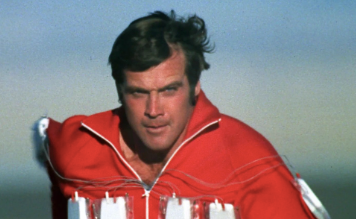
To an entire generation of television viewers, Lee Majors is more than just an actor; he is the ultimate action hero. He is the man who made slow-motion running cool, the stuntman who could survive any fall, and the rugged cowboy who could hold his own against Barbara Stanwyck. With a career spanning over six decades, Majors has cemented himself as a pop culture icon, largely thanks to his trio of massive hits: The Big Valley, The Six Million Dollar Man, and The Fall Guy.
But behind the bionic implants and the GMC pickup truck lies a story of resilience, tragedy, and Hollywood hustle that few fans truly know. Lee Majors wasn’t born into stardom; he fought for it. His journey involves overcoming a devastating childhood, a career-ending sports injury, and navigating one of the most famous celebrity marriages in history. He is a man who has reinvented himself from a college football prospect to a western star, to a sci-fi legend, and finally to a beloved elder statesman of action television.
Whether you grew up imitating the “bionic sound” in your backyard or are just discovering his work through recent cameos, there is a depth to his life story that rivals any script he ever filmed. Here are 10 fascinating facts about the life, career, and secrets of Lee Majors.
1. His Life Began with Unimaginable Tragedy
Before he was the indestructible Steve Austin, Lee Majors was Harvey Lee Yeary, a boy born into a world of sudden and profound loss. His life story began with a series of tragedies that would have broken many others. He was born in Wyandotte, Michigan, in 1939, but he never met his father. Carl Yeary was a steelworker who was killed in a horrific industrial accident just five months before Lee was born.
The tragedy did not end there. When Lee was just 16 months old, his mother, Alice, was killed in a car accident while waiting to cross the street to go to her job as a cleaning woman. She was struck by a drunk driver. Before he was even two years old, Lee was an orphan.
He was subsequently adopted by his aunt and uncle, Mildred and Harvey Yeary, who brought him to Middlesboro, Kentucky. They raised him as their own son, and Lee actually grew up believing they were his biological parents. He didn’t discover the heartbreaking truth about his adoption and the fate of his biological parents until he was a teenager, stumbling upon a collection of old newspaper clippings in the family attic. This revelation gave him a fierce sense of independence and resilience that would later define his on-screen personas.
2. A Paralyzing Injury Ruined His Football Dreams
Long before he was running at 60 miles per hour on television, Lee Majors was a genuine athlete with dreams of playing professional football. In high school, he was a star track and football athlete, earning a scholarship to Indiana University. He later transferred to Eastern Kentucky University, where he was poised to make a name for himself on the gridiron.
However, during his very first game with Eastern Kentucky in 1960, disaster struck. He suffered a severe spinal injury that left him paralyzed from the waist down for two weeks. The doctors told him his football career was over. It was a crushing blow for a young man whose identity was wrapped up in athletics.
During his recovery, faced with the reality that he would never play for the NFL, he turned his attention to the theater. He began acting in plays at the Pioneer Playhouse in Danville, Kentucky. That back injury, while devastating at the time, became the catalyst that pushed him toward Hollywood. It is a cruel irony that the man who became famous for playing a “rebuilt” superhuman started his acting journey because his own body had been broken.
3. He Beat Out Burt Reynolds for His Breakout Role
In the mid-1960s, the television landscape was dominated by Westerns, and The Big Valley was one of the most anticipated new shows. The role of Heath Barkley—the illegitimate, rough-around-the-edges son of the wealthy Barkley family—was highly coveted. The casting call attracted over 400 young actors, all desperate for their big break.
Among the finalists was a young, charismatic actor named Burt Reynolds. At the time, Reynolds was also an up-and-comer, known for his rugged good looks and charm. The competition was fierce, but the producers ultimately saw something special in Lee Majors. They felt he possessed a brooding intensity and a “James Dean” quality that fit the character of the outcast brother perfectly.
Majors won the role, launching him into stardom alongside screen legend Barbara Stanwyck. While Burt Reynolds obviously went on to have a legendary career of his own, it is fascinating to imagine an alternate history where the Bandit played Heath Barkley. Majors credits Stanwyck with teaching him the discipline of acting, often citing her as his greatest mentor. She took him under her wing, helping the young “football player turned actor” hold his own against veteran performers.
4. He Was the “Blond Elvis” and a Close Friend of the King
In his early Hollywood years, Lee Majors was frequently described by the press as a “blond Elvis Presley.” The resemblance was undeniable—the same jawline, the same sneer, and the same Southern charm. But the connection went deeper than just physical appearance; the two men were actually good friends.
Elvis was a massive fan of The Big Valley and reportedly admired Majors’ work. They met and hit it off, bonding over their shared Southern roots and love for football. There are famous photographs of the two hanging out on the set of Elvis’s movie Clambake in 1967.
They were close enough that they would play touch football together on the weekends. Majors has shared stories of how Elvis would sometimes call him late at night just to talk or hang out. This friendship solidified Majors’ status as a heartthrob. Being the “blond Elvis” wasn’t just a marketing tag; it was a badge of honor endorsed by the King of Rock and Roll himself. It was this specific look and charisma that helped him transition from Westerns to leading man status in the 1970s.
5. He Accidentally Inspired “Midnight Train to Georgia”
One of the greatest soul songs of all time, “Midnight Train to Georgia” by Gladys Knight & the Pips, owes its existence to Lee Majors and his relationship with Farrah Fawcett. The song was written by Jim Weatherly, a songwriter and friend of Majors from their flag football league days.
One evening, Weatherly called Majors’ house, but Lee wasn’t home. Farrah Fawcett, who was dating Lee at the time, answered the phone. During the conversation, she mentioned to Weatherly that she was packing her bags because she was taking “the midnight plane to Houston” to visit her parents.
The phrase stuck in Weatherly’s head. He originally wrote the song as “Midnight Plane to Houston” and recorded a country demo. Later, when the song was sent to Cissy Houston (Whitney Houston’s mother), she asked to change the lyrics to “Midnight Train to Georgia” because her family took trains, not planes, back to Georgia. Gladys Knight later recorded the definitive version. So, every time you hear that iconic chorus, you are technically hearing a song about Farrah Fawcett leaving Lee Majors’ house to visit her folks in Texas.
6. The “Slow Motion” Bionic Running Was Low-Tech Movie Magic
When The Six Million Dollar Man premiered, it introduced a visual language for “super speed” that became a pop culture standard: slow motion. Whenever Steve Austin ran 60 miles per hour, the on-screen action would slow down to a crawl, accompanied by that strange, grinding electronic sound effect (ch-ch-ch-ch-ch).
Ironically, this was done because “fast motion” effects (like those used in silent comedies) looked ridiculous and comical. The producers realized that speeding up the film made Lee Majors look like he was in a Benny Hill sketch. To convey power and grace, they decided to go the opposite direction: slow motion.
Majors didn’t just run; he had to act the run. He developed a specific gait—arms pumping hard, face grimacing with effort—to sell the idea that he was moving at incredible speeds. The famous “bionic sound” was never played on set; Majors was just running in silence, looking intense, while the crew filmed him at a high frame rate. It was a brilliant, low-budget solution that somehow convinced millions of viewers that slow meant fast.
7. He Passed on Midnight Cowboy to Stay on TV
In 1969, Lee Majors was offered the role of a lifetime: Joe Buck, the naive Texan hustler in the gritty drama Midnight Cowboy. The film would go on to win the Academy Award for Best Picture, the only X-rated film to ever do so, and it launched the career of Jon Voight, who took the role instead.
Majors wanted the part. It was a serious, dramatic role that would have established him as a heavyweight film actor, moving him away from his TV western image. However, he was still under contract for The Big Valley.
The series had been renewed for another season, and the network refused to release him from his contract to shoot the movie. Majors was forced to decline the role. The Big Valley was then canceled shortly after, leaving Majors with neither the show nor the movie. While missing out on an Oscar-caliber role stings, it arguably set him on the path to becoming a television icon. If he had become a serious film star in 1969, he likely never would have signed on for a sci-fi TV movie called The Six Million Dollar Man four years later.
8. He Sang the Number One Hit Theme Song for The Fall Guy
In the 1980s, it wasn’t uncommon for TV stars to sing, but few had a genuine radio hit. For The Fall Guy, Lee Majors didn’t just play the lead character Colt Seavers; he sang the show’s infectious theme song, “The Unknown Stuntman.”
The song is a tongue-in-cheek country ballad about the life of a Hollywood stuntman who makes the big stars look good but gets none of the glory. The lyrics famously name-drop major stars of the era, including Robert Redford, Clint Eastwood, and Majors’ then-wife, Farrah Fawcett (“I’ve been seen with Farrah…”).
The song was surprisingly successful. It captured the self-deprecating charm of the show and Majors’ own vocal ability, which was decent enough to carry the tune. It remains one of the few TV theme songs performed by the lead actor that stands alone as a memorable piece of 80s pop culture. It perfectly encapsulated the meta-humor of the show, where Majors was playing a stuntman in a show about Hollywood, singing about how nobody knows who he is.
9. He Voiced a Character in Grand Theft Auto: Vice City
For a younger generation of gamers who may never have seen an episode of The Big Valley, Lee Majors is known as the voice of “Big” Mitch Baker in the legendary video game Grand Theft Auto: Vice City. Released in 2002, the game is a love letter to the 1980s, and casting Majors was a stroke of genius by Rockstar Games.
Mitch Baker is a Vietnam veteran and a biker gang leader who is obsessed with loyalty and American iron. Majors brought his signature gravelly voice and tough-guy persona to the role, perfectly fitting the game’s satirical yet gritty tone.
It wasn’t just a cameo; it was a substantial role where players had to earn Baker’s respect to get security for a concert. Majors’ involvement helped bridge the gap between 80s nostalgia and modern gaming culture, proving that his “tough guy” voice works just as well in a digital Vice City as it does in a physical one.
10. He Fought to Bring the “Bionic Woman” Back to Life
The saga of the Bionic Woman is one of the most interesting chapters in Majors’ career. Originally, the character of Jaime Sommers (played by Lindsay Wagner) was introduced as a love interest for Steve Austin. In a tragic arc, her body rejects her bionic implants, and she dies on the operating table.
The audience reaction was explosive. Fans were heartbroken and furious that Steve Austin’s true love had been killed off. But it wasn’t just the fans who were upset; Lee Majors himself reportedly pleaded with the producers and the network to find a way to bring her back.
He recognized the chemistry he had with Wagner and the potential for the character. Bowing to public pressure (and Majors’ influence), the writers retconned her death, revealing she was in a coma and had been cryogenically frozen. She was revived, but with amnesia—she had forgotten her love for Steve. This tragic twist allowed her to spin off into her own show, The Bionic Woman. Majors’ push to save the character not only created another TV icon but also launched a successful franchise that rivaled his own show in popularity.
Further Reading
To dive deeper into the bionic history and the golden age of television action heroes, check out these books:
- “Cyborg” by Martin Caidin – The original 1972 novel that started it all. It is darker and grittier than the TV show, offering a fascinating look at the source material for Steve Austin.
- “The Six Million Dollar Man: The Cybernetic Adventures of Steve Austin” by Herbie J. Pilato – A comprehensive guide to the series, featuring episode guides, behind-the-scenes stories, and interviews with the cast and crew.
- “Lee Majors: A Biography” (Various unauthorized editions exist, but look for magazine archives from the 70s/80s for the best primary sources) – While a definitive autobiography is elusive, searching for his extensive interviews in publications like TV Guide from the era offers the most authentic voice.
Keep the Discovery Going!
Here at Zentara, our mission is to take tricky subjects and unlock them, making knowledge exciting and easy to grasp. But the adventure doesn’t stop at the bottom of this page. We are constantly creating new ways for you to learn, watch, and listen every single day.
📺 Watch & Learn on YouTube
Visual learner? We publish 4 new videos every day, plus breaking news shorts to keep you smarter than the headlines. From deep dives to quick facts, our channel is your daily visual dose of wonder.
Click here to Subscribe to Zentara on YouTube
🎧 Listen on the Go on Spotify
Prefer to learn while you move? Tune into the Zentara Podcast! We drop a new episode daily, perfect for your commute, workout, or coffee break. Pop on your headphones and fill your day with fascinating facts.
Click here to Listen on Spotify
Every click, view, and listen helps us keep bringing honest knowledge to everyone. Thanks for exploring with us today—see you out there in the world of discovery!


Leave a Reply