
Table of Contents
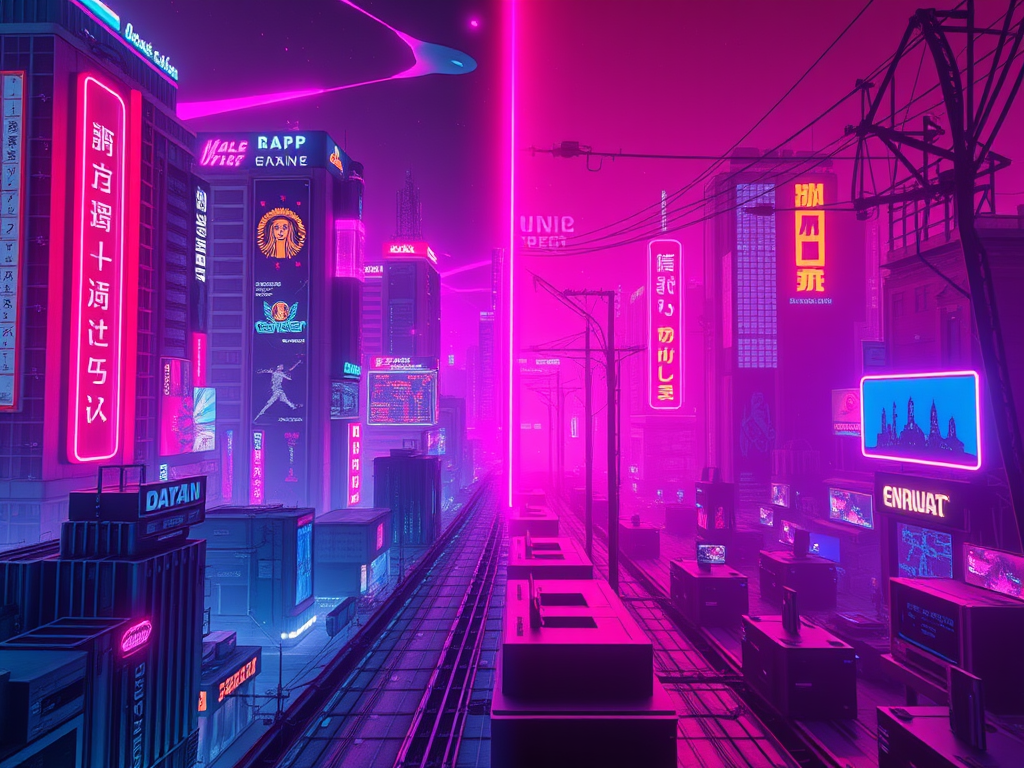
When we fire up a modern console and step into the neon-soaked streets of a cyberpunk city or the lush foliage of a fantasy jungle, we often marvel at the “realism.” We see light bouncing off puddles, the texture of skin, and the sway of trees in the wind. We praise the graphics card, the teraflops, and the raw power of the machine.
However, video game graphics are rarely about simulating reality perfectly—that would require more computing power than exists on Earth. Instead, graphics are the art of computational deception. They are a series of clever shortcuts, optical illusions, and mathematical hacks designed to trick the human eye into seeing a world that isn’t really there.
From the pixelated charm of the 1980s to the AI-driven imagery of today, the evolution of graphics is less about “power” and more about “ingenuity.” It is the story of engineers and artists fighting against the limitations of silicon to create magic. Here are 10 things you didn’t know about the invisible machinery behind your favorite digital worlds.
1. Everything is Made of Triangles (And For a Good Reason)
If you stripped the “skin” (textures) off almost any 3D character—whether it’s Mario or Master Chief—you would find they are made of a wireframe mesh composed almost entirely of triangles. You might wonder: why triangles? Why not squares, which seem easier to stack?
The answer lies in geometry and stability. A triangle is the only polygon that is always planar. This means that no matter where you move the three corners (vertices) of a triangle in 3D space, they will always form a perfectly flat surface.
If you have a square (four points) and you move one corner, the shape bends and becomes warped; it’s no longer flat, which makes calculating light and physics a mathematical nightmare for the computer. A triangle cannot bend. It is the atomic unit of 3D graphics because it provides a mathematically fail-safe foundation. The “poly-count” wars of the 90s and 00s were essentially a contest of how many millions of microscopic triangles a console could draw per second to create the illusion of smooth curves.
2. Old Games Look “Worse” on New TVs (The CRT Effect)
Retrogamers often plug their old Nintendo or Sega consoles into a modern 4K OLED TV and are shocked by how jagged and ugly the graphics look. They assume their memory is failing them, but the issue is actually the technology.
Classic pixel art was never designed to be seen as sharp, perfect squares. It was designed specifically for Cathode Ray Tube (CRT) televisions. CRTs projected images using electron beams that naturally “bled” across scanlines. This technological flaw acted as a natural filter, blending adjacent pixels together.
Artists in the 80s and 90s relied on this bleed. They used a technique called half-pixel offset to create transparency or new colors. For example, a checkerboard pattern of red and blue pixels on a CRT would blur into a solid purple. On a modern sharp screen, you just see a jagged red and blue checkerboard. The “bad” graphics of the past were actually impressionist paintings that required the fuzzy canvas of an old TV to be seen correctly.
3. Normal Maps: Faking Detail with “Invisible” Colors
In modern games, you might look at a brick wall and see the rough texture of the mortar, the cracks in the stone, and the way the light catches every bump. It looks like complex geometry, but if you looked at the wireframe, the wall is likely perfectly flat. This illusion is achieved using Normal Mapping.
A normal map is a special texture that you usually never see. It looks like a bizarre blue and purple version of the image. This texture doesn’t tell the computer what color the wall is; it tells the lighting engine which direction each pixel is “facing.”
By reading this map, the game engine calculates how light should bounce off that flat surface as if it were bumpy. It creates shadows and highlights on a 2D plane that trick your brain into perceiving depth. It is essentially digital makeup—contouring for 3D models—allowing developers to simulate millions of polygons of detail on a low-poly object without crashing the system.
4. “Ray Tracing” is actually 1960s Tech
Ray Tracing is the current buzzword in gaming, marketed as a revolutionary new feature of the PS5 and high-end PC cards. It creates hyper-realistic reflections and lighting by simulating individual paths of light (rays) as they bounce around a scene.
However, the algorithm for ray tracing isn’t new; it was developed in 1968 by Arthur Appel. The movie industry has been using it for decades—Toy Story and Avatar used ray tracing. The difference is that a single frame of a movie could take 30 hours to render on a render farm.
The “revolution” today isn’t the technique, but the speed. We finally have hardware fast enough to calculate these billions of light bounces in real-time (1/60th of a second). We are using a 50-year-old math equation that we finally have the muscle to solve quickly.
5. The “Fog” Was a Curtain, Not Weather
If you played games on the Nintendo 64 or original PlayStation (like Turok: Dinosaur Hunter or Silent Hill), you remember the dense, claustrophobic fog that covered everything a few meters ahead of the player.
While often praised for creating “atmosphere” (especially in horror games), this fog was a technical necessity called distance fog or “culling.” The consoles simply didn’t have the RAM or processing power to draw the entire world at once. If the game tried to render the mountains in the distance, the frame rate would drop to zero.
To hide the fact that the world literally ended ten feet in front of you, developers blanketed the edge of the draw distance in fog. It masked the “pop-in”—the jarring effect of objects suddenly appearing out of thin air. In Silent Hill, the developers leaned into this limitation so hard that it became the franchise’s signature aesthetic, turning a hardware weakness into a narrative masterpiece.
6. Occlusion Culling: The “Truman Show” Reality
Video games operate on a “need-to-know” basis to save power. The most important optimization technique in 3D graphics is Occlusion Culling (or Frustum Culling).
At any given moment, the game engine is desperately trying to figure out what you cannot see so it can stop drawing it. If you are staring at a wall in a first-person shooter, the game engine instantly deletes the entire world behind that wall. The enemies, buildings, and landscape on the other side effectively cease to exist graphically until you turn the corner.
This is similar to the set in the movie The Truman Show; the world is being built in real-time just milliseconds before your eyes land on it. Sometimes, if you turn your camera too fast for the computer to keep up, you might see the void or “blue hell” for a split second before the world loads in. This glitch is the curtain falling down, revealing that the world only exists where you look.
7. Dithering: Mixing Colors That Don’t Exist
Before we had 16 million colors (24-bit color) standard on every screen, hardware was strictly limited. The Sega Genesis, for example, had a limited color palette. To get around this, artists used a technique called dithering.
Dithering involves placing pixels of two different colors in a checkerboard pattern. When viewed from a distance, the human eye blends these two colors to create a third color that the hardware technically cannot display.
A famous example is the waterfalls in Sonic the Hedgehog. The console couldn’t display a translucent blue. So, artists drew vertical lines of blue pixels with gaps in between. When the water moved quickly, the persistence of vision in the human eye blended the lines together, creating the illusion of transparent water. It was a biological hack, exploiting the slowness of the human eye to overcome the limitations of the machine.
8. Motion Blur Hides Low Frame Rates
Gamers often have a love-hate relationship with motion blur—the streaking effect applied to the screen when you turn the camera quickly. In competitive shooters, players turn it off instantly to see clearly. However, in console gaming, it serves a vital purpose.
Movies run at 24 frames per second (fps), which is technically very choppy. However, because a film camera captures light over a period of time, fast movement naturally blurs on the film. This blur connects the frames, making the motion look smooth.
Video games render perfect, sharp still images. At 30fps without blur, a game looks like a strobe light or a slideshow; it feels “judder-y.” Developers add artificial motion blur to smear the frames together, tricking the brain into perceiving fluid motion even at lower frame rates. It bridges the gap between the static nature of a rendered frame and the continuous flow of real vision.
9. Z-Fighting: The War for the Foreground
Have you ever played a game and seen two textures flickering wildly, rapidly switching between a rock and the snow on top of it? This glitch is known as Z-Fighting.
To draw a 3D image on a 2D screen, the computer uses a Z-Buffer (Z-axis) to track the depth of every pixel. It calculates exactly how far away an object is to determine if it should be hidden behind another object.
Z-Fighting occurs when two surfaces are placed so close together—mathematically almost identical in depth—that the computer literally cannot decide which one is in front. Due to rounding errors in the floating-point math, the computer guesses differently on every single frame. Frame 1: Rock is in front. Frame 2: Snow is in front. The resulting strobe effect is the computer having a mathematical panic attack over two objects occupying the same space.
10. AI is Now “Guessing” the Graphics (DLSS)
The future of graphics is no longer about raw rendering power; it’s about prediction. The most cutting-edge technology today is Deep Learning Super Sampling (DLSS) by NVIDIA (and FSR by AMD).
Rendering a game at 4K resolution requires calculating over 8 million pixels 60 times a second—a massive workload. DLSS cheats. It renders the game at a much lower, easier resolution (like 1080p) and then uses an Artificial Intelligence to upscale the image to 4K.
The AI has been trained on thousands of hours of “perfect” high-resolution footage. It looks at the blurry low-res game and “hallucinates” the missing details, filling in the gaps with incredible accuracy. This means that in modern high-end gaming, a significant portion of what you see on screen was never actually rendered by the graphics card’s geometry engine—it was dreamed up by an AI guessing what the image should look like.
Further Reading
To delve deeper into the fascinating intersection of art, mathematics, and computer science, check out these books:
- “Masters of Doom: How Two Guys Created an Empire and Transformed Pop Culture” by David Kushner.
- Why read it: While a biography of the creators of Doom, it offers an incredible look at the birth of 3D engines and the technical wizardry of John Carmack.
- “I Am Error: The Nintendo Family Computer / Entertainment System Platform” by Nathan Altice.
- Why read it: A technical deep dive that explains exactly how the NES worked, breaking down the limitations of sprites, tiles, and memory in accessible language.
- “Real-Time Rendering” by Tomas Akenine-Möller, Eric Haines, and Naty Hoffman.
- Why read it: This is the “bible” of the industry. It is a denser, textbook-style read, but if you want to understand the actual math behind ray tracing and polygons, this is the source.
- “Blood, Sweat, and Pixels: The Triumphant, Turbulent Stories Behind How Video Games Are Made” by Jason Schreier.
- Why read it: Provides context on the human cost of graphics, explaining the “crunch” and development hurdles studios face to reach visual perfection.
Keep the Discovery Going!
Here at Zentara, our mission is to take tricky subjects and unlock them, making knowledge exciting and easy to grasp. But the adventure doesn’t stop at the bottom of this page. We are constantly creating new ways for you to learn, watch, and listen every single day.
📺 Watch & Learn on YouTube
Visual learner? We publish 4 new videos every day, plus breaking news shorts to keep you smarter than the headlines. From deep dives to quick facts, our channel is your daily visual dose of wonder.
Click here to Subscribe to Zentara on YouTube
🎧 Listen on the Go on Spotify
Prefer to learn while you move? Tune into the Zentara Podcast! We drop a new episode daily, perfect for your commute, workout, or coffee break. Pop on your headphones and fill your day with fascinating facts.
Click here to Listen on Spotify
Every click, view, and listen helps us keep bringing honest knowledge to everyone. Thanks for exploring with us today—see you out there in the world of discovery!




Leave a Reply