
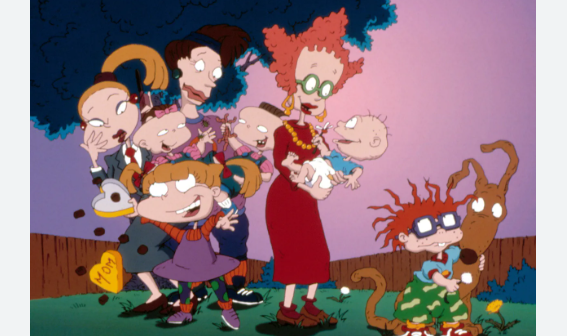
The Secret Life of Toddlers: 10 Surprising Facts About the Rugrats Revolution
Before a certain yellow sponge took over the undersea world, the undisputed kings of the playground were a group of toddlers in sagging diapers. This series didn’t just capture the imagination of a generation; it fundamentally changed how networks approached children’s programming. By shifting the camera lens down to the height of a crawling infant, the creators invited viewers into a world where a vacuum cleaner was a fire-breathing dragon and the “potty” was a mysterious throne of doom.
The genius of this show lay in its dual-layered writing. To a child, it was a high-stakes adventure about friendship and bravery. To an adult, it was a razor-sharp satire of modern parenting, suburban neuroses, and the hilarious gap between how we see the world and how it actually functions. It was a show that treated the internal lives of children with profound respect, acknowledging their fears, their logic, and their incredible capacity for wonder.
As we peel back the history of this animation giant, we discover a production fueled by domestic inspiration, artistic risks, and a commitment to representation that was years ahead of its time. Whether you were a “Tommy,” a “Chuckie,” or secretly an “Angelica,” these facts reveal the mechanical and creative heart of the toddlers who conquered the world.
1. A Diaper-Clad Revolution Born in a Nursery
The genesis of this legendary series didn’t happen in a corporate boardroom, but in the chaotic reality of new parenthood. The creators—a powerhouse husband-and-wife duo—were navigating the world of raising their own children when the spark of inspiration struck. One of the founders famously asked, “If babies could talk, what would they say?” This simple question became the foundation for a billion-dollar franchise.
They noticed that infants seemed to be in their own secret society, observing the absurdities of the adult world with a mix of confusion and curiosity. By combining this “infant’s eye view” with a distinct, scratchy art style that moved away from the polished look of traditional animation, they created something that felt visceral and real. This was the first of the original three “Nicktoons” to be greenlit, proving that creator-driven, quirky content could successfully compete with the polished, toy-driven cartoons that had dominated the airwaves for years.
2. The Artistic Philosophy of the “Ugly-Cute”
The visual identity of the series was a radical departure from the “Disney-fied” perfection of the era. The animation studio, known for its edgy and avant-garde aesthetic, intentionally leaned into a style that some critics initially called “unattractive.” Characters had lumpy heads, mismatched eyes, and visible skin textures. However, this “ugly-cute” philosophy was a calculated move to make the show feel more human and less like a commercial product.
This design choice allowed for incredible emotional range. Because the characters weren’t bound by rigid “pretty” models, their faces could contort into expressions of pure terror, joy, or malice. This fluidity gave the show a kinetic energy that mirrored the unpredictable nature of toddlers themselves. The backgrounds were equally important, often drawn with skewed perspectives to reinforce the idea that the world is a big, intimidating, and slightly distorted place when you are only two feet tall.
3. Breaking Ground with Cultural and Religious Representation
Long before diversity was a common buzzword in television development, this series was making history by portraying a multi-dimensional Jewish family. Through the Pickles family, the show introduced millions of children to Jewish traditions, holidays, and history. Episodes centered around Passover and Hanukkah are still cited today as some of the most important moments in children’s television history.
These stories weren’t just “educational specials”; they were deeply integrated into the characters’ lives. The show didn’t shy away from complex themes, using Grandpa Boris to tell stories of the “Old Country” that felt both mythical and grounded. This commitment to specific cultural storytelling gave the series a soul that many generic cartoons lacked. It proved that the more specific a story is, the more universal its appeal becomes, as audiences of all backgrounds could relate to the warmth, bickering, and traditions of a loving family.
4. The Surprising Gender Dynamics of Voice Acting
In one of the most fascinating aspects of the show’s production, almost the entire main cast of toddlers—both male and female—was voiced by women. This is a common practice in animation because adult female voices can more easily replicate the high pitch of a child while maintaining the stamina required for a long recording session. However, the cast of this show was particularly legendary, featuring some of the most talented voice actors in the industry.
The voice of the brave leader, Tommy, was provided by a woman who brought a sense of raspy, earnest determination to the role. Meanwhile, the voice of the anxious and stuttering Chuckie became one of the most recognizable sounds in television history. These actors didn’t just “do voices”; they delivered nuanced performances that allowed the characters to grow and evolve over hundreds of episodes. The ability to convey deep fear or profound “baby wisdom” through a microphone is what made these characters feel like real people to the millions of children watching at home.
5. Angelica Pickles: The Complex Anatomy of a Villain
Every great story needs a foil, and in the world of the playpen, that role belonged to Angelica Pickles. As the older cousin who could bridge the gap between the babies and the “grown-ups,” Angelica was a master manipulator. However, the writers were careful never to make her a one-dimensional bully. Her character was a brilliant satire of the “spoiled” child, but she also displayed moments of vulnerability and a desperate need for attention.
Her relationship with her parents—a high-powered, work-obsessed mother and a softer, often overwhelmed father—provided a subtle commentary on corporate parenting. Angelica’s “reign of terror” was often a way to exert control in a world where she felt ignored by the adults. This complexity is why she remains one of the most iconic characters in animation. She wasn’t just a hurdle for the babies to overcome; she was a fully realized person with her own insecurities, usually manifested through her legendary obsession with her doll, Cynthia.
6. Dealing with the “Chuckie’s Mom” Mystery
For several seasons, the show maintained a conspicuous silence regarding the whereabouts of Chuckie Finster’s mother. While the other babies had two active parents, Chuckie was raised by his equally anxious father, Chas. This absence was eventually addressed in a way that remains one of the most emotionally resonant arcs in children’s media. Rather than ignoring the reality of loss, the creators chose to tackle the subject of death and grief with incredible grace.
In a landmark episode, it is revealed through a poem and a hidden photograph that Chuckie’s mother had passed away. This moment was handled with a level of maturity that was unprecedented for a preschool-oriented show. It validated the feelings of children who had experienced similar losses and provided a beautiful moment of bonding between a father and son. By refusing to “talk down” to its audience, the show proved that even the youngest viewers could handle—and benefit from—stories that dealt with the bittersweet realities of life.
7. Mark Mothersbaugh and the Sound of Childhood
The auditory landscape of the series was just as unique as its visual style. The theme song and much of the background music were composed by Mark Mothersbaugh, the lead singer of the legendary New Wave band Devo. Mothersbaugh brought a quirky, synthesizer-heavy, and slightly dissonant sound to the show that perfectly complemented its “babies’ eye view.”
The music utilized unconventional “instruments,” including squeaky toys, human beatboxing, and percussive sounds that felt like they could have been made by objects found in a nursery. This gave the series a sonic identity that was instantly recognizable. Instead of a traditional orchestral score, the music felt experimental and playful, reinforcing the idea that the laboratory for the babies’ adventures was constructed from the everyday chaos of their environment.
8. A Cinematic Powerhouse and a Walk of Fame Milestone
The show’s success was so massive that it eventually broke out of the television screen and onto the silver screen. It was the first “Nicktoon” to be adapted into a feature-length film, and the results were historic. The debut movie became the first non-Disney animated film to gross over a hundred million dollars at the domestic box office, proving that the brand was a global powerhouse.
The series’ cultural impact was further cemented when it became the first animated show of its network to receive a star on the Hollywood Walk of Fame. This recognition placed the diaper-clad heroes alongside the greatest icons of entertainment history. It was a testament to the show’s longevity and its ability to maintain a massive, loyal audience across multiple generations. What started as a small, experimental student-style project had evolved into a cornerstone of the entertainment industry.
9. The “Cynthia” Doll as a Satire of Fashion Icons
Angelica’s beloved doll, Cynthia, was more than just a toy; she was a brilliant piece of cultural satire. With her wildly disheveled hair (usually missing several patches), bizarre outfits, and stiff limbs, Cynthia was a clear parody of high-fashion dolls. Her appearance suggested a toy that had been played with far too hard, reflecting the reality of how children actually treat their “favorite” possessions.
Cynthia often served as the catalyst for Angelica’s schemes, but she also represented the strange, sometimes distorted ways that children interpret adult beauty standards. The doll’s iconic look—one part glamour, two parts disaster—has become a cult favorite among fans, symbolizing the show’s ability to find humor in the mundane and the slightly “broken” aspects of childhood. She was the silent witness to every plot hatched in the Pickles’ backyard.
10. The Enduring Legacy of “Adult” Humor in a Kid’s Show
One of the primary reasons the series remains a favorite for nostalgic adults is the high volume of humor that was written specifically for them. The show is packed with references to classic cinema, subtle jokes about mid-life crises, and dry observations about the trials of marriage and home ownership. Whether it was Stu Pickles making chocolate pudding at 4:00 AM or the parents’ obsession with “Dr. Lipschitz” (a parody of child-rearing experts), the show was a treasure trove of “over-the-kids’-heads” wit.
This approach ensured that parents didn’t just “tolerate” the show while their kids watched; they genuinely enjoyed it. This multi-generational appeal is what gave the series its staying power. It created a shared experience where the whole family could find something to laugh at, even if they were laughing at different things. This “Pixar-before-Pixar” approach to storytelling elevated the show from a simple cartoon to a sophisticated piece of social satire that happens to feature talking babies.
Further Reading
- Not Just Cartoons: Nicktoons! by Jerry Beck – An essential history of the network’s animation revolution.
- The Art of Klasky Csupo by Arlene Klasky and Gabor Csupo – A visual journey through the studio’s unique design philosophy.
- Creating Animated Classics: The Men and Women Behind the Magic by various authors – Provides context on the 1990s animation boom.
- 10 The Crown TV SHOW Facts That Keep People Watching
- 10 Futurama TV SHOW Facts That Still Hold Up
- 10 Things You Should Know About Speedy Gonzales – Looney Tunes
- 10 Things You Should Know About Yosemite Sam – Looney Tunes
- 10 Things You Should Know About Starlight From The Boys TV Show
- 10 Things You Should Know About Road Runner – Looney Tunes
- 10 Things You Should Know About Wile E. Coyote – Looney Tunes
- 10 Things You Should Know About Tweety Pie – Looney Tunes
- 10 Things You Should Know About Sylvester The Cat – Looney Tunes
- 10 Things You Should Know About Porky Pig – Looney Tunes



