
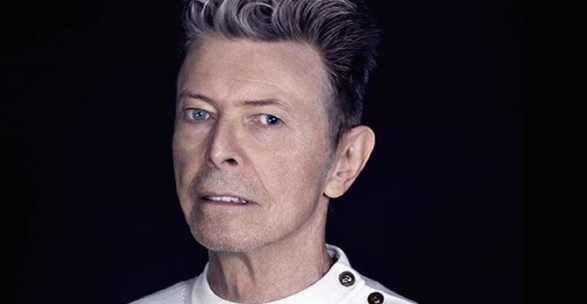
David Bowie was more than just a musician; he was a cultural supernova who redefined what it meant to be a “rock star.” Throughout his fifty-year career, he acted as a mirror for the world’s changing tastes, constantly shedding his skin to reveal a new persona. From the extraterrestrial glam of Ziggy Stardust to the soulful “plastic soul” of the Young Americans era and the stark, avant-garde experimentation of the Berlin Trilogy, Bowie’s influence is woven into the very fabric of modern music, fashion, and art.
However, behind the lightning bolt face paint and the alien mystique was a man named David Jones—a voracious reader, a tech visionary, and a deeply private individual. While many know his hits like “Space Oddity” or “Heroes,” the true biography of David Bowie is filled with strange coincidences, secret fears, and ahead-of-the-curve innovations. To celebrate the Starman, here are ten facts that explore the hidden layers of one of the most enigmatic figures in history.
1. His Famous Eyes Weren’t Actually Different Colors
One of the most striking parts of the David Bowie aesthetic was his eyes. Many people believe he had heterochromia (eyes of two different colors), but this is a medical myth. Bowie actually suffered from a permanent condition called anisocoria, which meant one of his pupils was perpetually dilated. This gave the illusion that his left eye was dark or brown, while his right eye was blue.
The origin of this look wasn’t genetic—it was a punch in the face. In 1962, his childhood friend George Underwood punched David in the eye during a fight over a girl they both liked. The injury required multiple surgeries and left the pupil paralyzed. Remarkably, Bowie didn’t hold a grudge. He later thanked George, saying the “otherworldly” look gave him a distinct visual edge that helped his career. Underwood even went on to design the artwork for some of Bowie’s most famous albums, including Hunky Dory.
2. He Changed His Name to Avoid Being a Monkee
When David first started his career in the early 1960s, he performed under his birth name, David Jones. However, just as he was starting to gain traction, a young American actor and singer named Davy Jones became a massive star with the TV band The Monkees. David realized that having two “Davy Joneses” in the charts would lead to a branding disaster.
To stand out, he looked toward the American frontier for inspiration. He chose the name “Bowie” after the 19th-century American pioneer Jim Bowie and his famous Bowie knife. David famously remarked that he liked the idea that the knife “cuts both ways,” a fitting metaphor for his fluid approach to gender, music, and identity. This name change in 1965 marked the official birth of the icon we know today, separating the boy from Brixton from the legend of the stage.
3. He Launched His Own Internet Service Provider in 1998
Long before “Web 2.0” or social media, David Bowie was a tech visionary. In 1998, he launched BowieNet, his very own Internet Service Provider (ISP). While most of the world was still struggling with dial-up, Bowie was offering fans high-speed access (for the time) and exclusive content.
BowieNet wasn’t just a fan club; it was a pioneering social network. Users were given a “@davidbowie.com” email address and could interact with Bowie in chat rooms—something unheard of at the time. He predicted that the internet would change the relationship between artist and audience forever, famously telling the BBC in 1999 that the internet was an “alien life form” that would “crush our ideas of what mediums are all about.” He saw the digital revolution coming decades before it arrived.
4. His Fear of Flying Led to the “Station to Station” Era
Despite being a global superstar, Bowie spent a significant portion of the 1970s terrified of flying. After a terrifying flight in 1972, he decided to travel almost exclusively by train and boat. This logistical nightmare actually shaped the David Bowie discography. His famous journey on the Trans-Siberian Express in 1973 exposed him to Eastern European culture and folk music, which influenced his later work.
This travel preference also defined the era of the Thin White Duke. While traveling by train between Los Angeles and Europe, he lived in a state of isolated transit, which contributed to the cold, detached, and “European” sound of the Station to Station album. It wasn’t until the 1980s that he finally overcame his phobia, but his years spent “on the rails” provided the atmospheric isolation that defined his most critically acclaimed mid-career work.
5. He Was a “Secret” Painter and Art Collector
While the world saw him as a musician and actor, Bowie was a classically trained artist who painted throughout his life. His style was heavily influenced by German Expressionism, and he often used painting as a way to work through “creative blocks” in his music. If he couldn’t finish a song, he would paint the mood of the track until the lyrics came to him.
Bowie was also a serious art collector, but he kept his collection private. It wasn’t until after his death in 2016 that the public realized the scale of his passion. When his estate auctioned part of his collection at Sotheby’s, it featured masterpieces by Jean-Michel Basquiat, Damien Hirst, and Frank Auerbach. For Bowie, art wasn’t an investment; it was a “mental nourishment” that fueled his songwriting and stage designs.
6. He Turned Down a Knighthood and a CBE
Many British rock legends, such as Paul McCartney and Elton John, have accepted knighthoods from the Queen. However, David Bowie famously turned down both a CBE (Commander of the Order of the British Empire) in 2000 and a Knighthood in 2003. When asked why, his answer was simple and characteristically rebellious.
“I would never have any intention of accepting anything like that,” he told The Sun. “I seriously don’t know what it’s for. It’s not what I spent my life working for.” Bowie viewed himself as a citizen of the world rather than a subject of the crown. He preferred to remain an outsider, feeling that becoming “Sir David” would be a betrayal of the anti-establishment spirit that defined his early years in the London underground scene.
7. He Invented “Bowie Bonds” to Manage His Royalties
Bowie wasn’t just a creative genius; he was a pioneer in music finance. In 1997, he collaborated with banker David Pullman to create “Bowie Bonds.” These were asset-backed securities that allowed investors to buy a share of his future royalty income from his pre-1990 albums.
By selling these bonds, Bowie received an immediate $55 million payout, which he used to buy back shares of his catalog owned by a former manager. This was the first time a musician had “securitized” their intellectual property. While the bonds eventually lost value as the music industry shifted to digital streaming, the move was a masterclass in financial independence, ensuring that Bowie—not a record label—controlled his creative legacy.
8. He Predicted the Rise of Music Streaming in 2002
In a famous interview with The New York Times in 2002, Bowie made a startlingly accurate prediction about the future of the music industry. He stated that “music itself is going to become like running water or electricity,” and warned fellow artists that they should be “prepared for a lot of touring because that’s really the only unique situation that’s going to be left.”
At the time, Napster was in its infancy and Spotify didn’t exist, but Bowie understood that the “commodity” of the physical CD was dying. He realized that the digital transformation would make recorded music ubiquitous and nearly free, shifting the value back to the live experience. This foresight allowed him to navigate the industry’s collapse more successfully than many of his peers.
9. His “Blackstar” Album Was a Carefully Orchestrated Farewell
On January 8, 2016—his 69th birthday—David Bowie released his final album, Blackstar. Two days later, the world was shocked to learn he had passed away from liver cancer. While the public had no idea he was ill, the album’s lyrics and music videos were filled with clues that he was saying goodbye.
Produced by longtime collaborator Tony Visconti, Blackstar was described as a “parting gift” to his fans. From the haunting imagery of a “Lazarus” rising from a hospital bed to the themes of mortality and transcendence, Bowie turned his own death into a final piece of performance art. Even in his final moments, he remained in total control of his narrative, ensuring that his exit from the world was as poetic and mysterious as his entry into fame.
10. There is an Asteroid and a Spider Named After Him
Bowie’s influence extends literally into the heavens and the natural world. In 2015, an asteroid formerly known as 2008 YN3 was officially renamed Asteroid 342843 Davidbowie. It sits in the main asteroid belt between Mars and Jupiter, a fitting tribute to the man who gave us “Life on Mars?” and “Starman.”
Back on Earth, German arachnologist Peter Jäger named a species of bright yellow hunting spider from Malaysia Heteropoda davidbowie. Jäger chose the name to raise awareness about endangered spider species, noting that the spider’s “striking” appearance reminded him of the vibrant makeup and costumes of the Glam Rock era. Whether in deep space or the jungles of Southeast Asia, the name Bowie remains a symbol of the rare and the extraordinary.
Further Reading
- Bowie: A Biography by Marc Spitz
- The Complete David Bowie by Nicholas Pegg
- David Bowie: A Life by Dylan Jones
- Starman: David Bowie – The Definitive Biography by Paul Trynka
- On Bowie by Simon Critchley
Keep the Discovery Going!
Here at Zentara, our mission is to take tricky subjects and unlock them, making knowledge exciting and easy to grasp. But the adventure doesn’t stop at the bottom of this page. We are constantly creating new ways for you to learn, watch, and listen every single day.
Watch & Learn on YouTube
Visual learner? We publish 4 new videos every day, plus breaking news shorts to keep you smarter than the headlines. From deep dives to quick facts, our channel is your daily visual dose of wonder.
Click here to Subscribe to Zentara on YouTube
Listen on the Go on Spotify
Prefer to learn while you move? Tune into the Zentara Podcast! We drop a new episode daily, perfect for your commute, workout, or coffee break. Pop on your headphones and fill your day with fascinating facts.
Click here to Listen on Spotify
Every click, view, and listen helps us keep bringing honest knowledge to everyone. Thanks for exploring with us today—see you out there in the world of discovery!




Leave a Reply